
Optimizing Domain Landing Pages: Driving Sales Beyond Just Leads
In the dynamic world of domain investing, a compelling “for sale” landing page isn’t just a digital billboard; it’s a critical sales tool that can dramatically impact your bottom line. The question of how to effectively measure the success of these pages — whether by generated leads or actual closed sales — is a central debate among domainers. This article delves into the nuances of optimizing domain landing pages, drawing insights from industry leaders and offering actionable strategies for domain investors aiming to convert more browsers into buyers. Understanding the distinction between merely attracting interest and closing a deal is paramount, especially when every percentage point in conversion can translate into significant revenue gains.
The GoDaddy Revelation: A 47% Surge in Lead Conversion
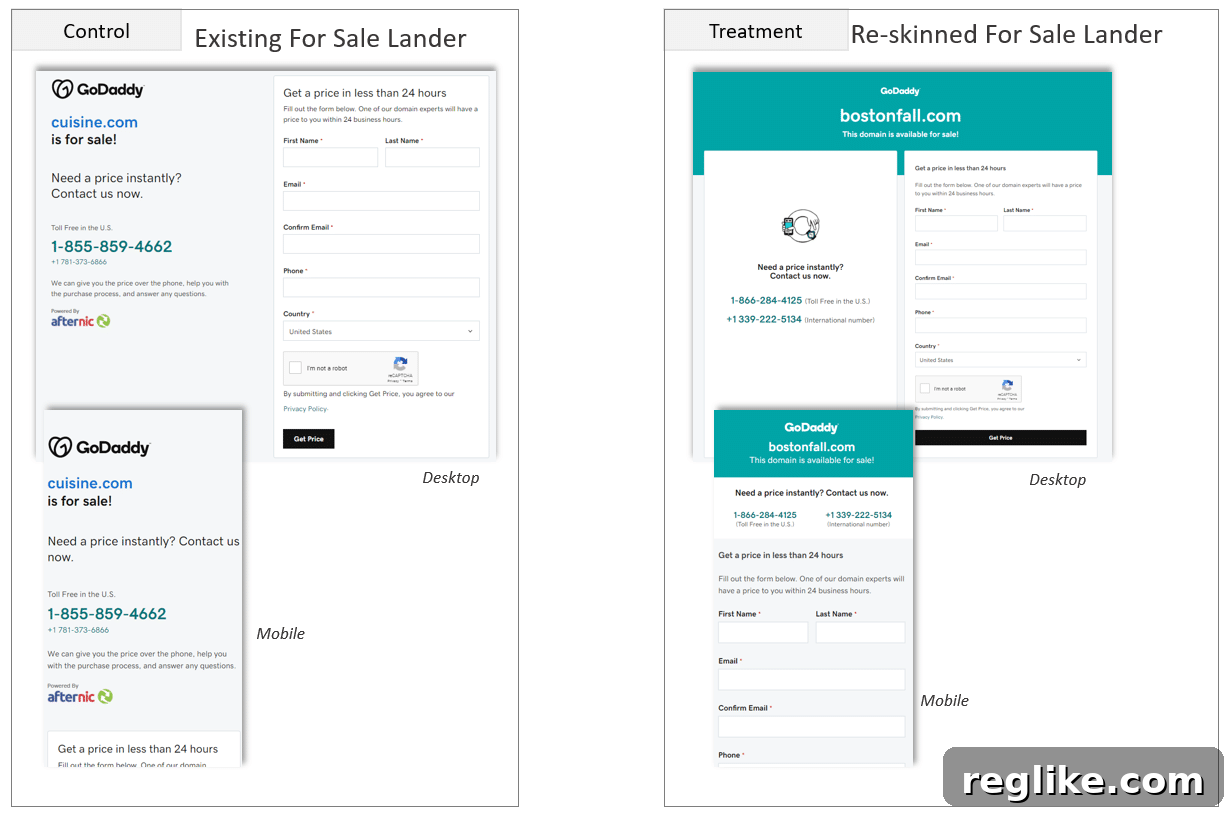
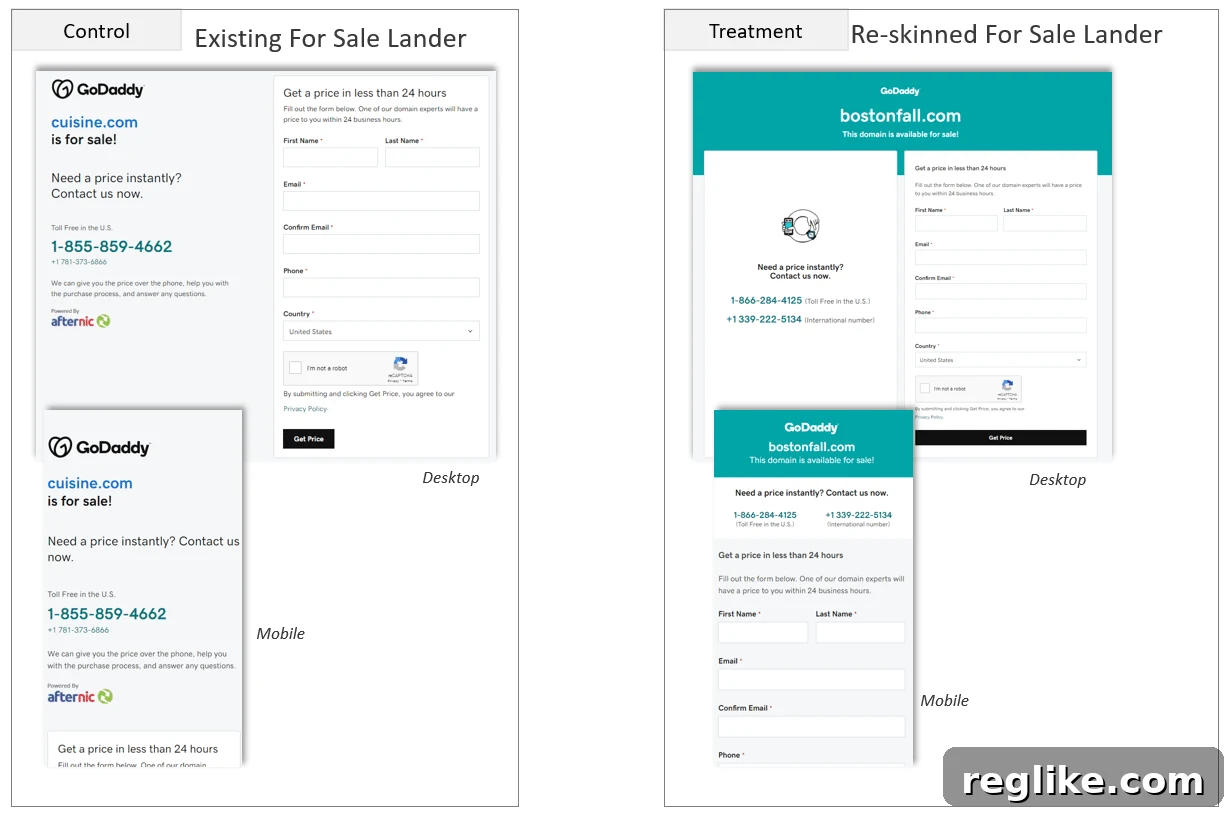
A few months ago, GoDaddy introduced a redesigned “for sale” landing page specifically for domain names. Following rigorous A/B testing, the company announced an impressive 47% increase in conversions. This remarkable figure was measured by the number of visitors who completed the inquiry form, signaling a significant improvement in capturing initial buyer interest. While a nearly 50% uplift in lead generation is undeniably substantial and a testament to effective Conversion Rate Optimization (CRO), it immediately prompts a deeper inquiry for domain investors: how do these elevated lead numbers truly translate into tangible domain sales?
The GoDaddy case study underscores the immense potential of finely-tuned landing pages, even for assets as unique as domain names. Such a dramatic increase in engagement likely stems from several key improvements:
- Enhanced User Experience (UX): A cleaner, more intuitive design often reduces cognitive load, making it easier and more pleasant for visitors to interact with the page. This could involve simplified form fields, clearer instructions, or a more aesthetically pleasing layout.
- Clearer Call-to-Action (CTA): Optimizing the placement, wording, and visual prominence of the “inquire now” or “make an offer” button can dramatically influence click-through rates and form submissions.
- Improved Trust Signals: Subtle design elements, security indicators, or transparent messaging can foster a greater sense of trust, encouraging visitors to provide their contact information.
- Mobile Responsiveness: Ensuring the page functions flawlessly and looks appealing across all devices, from desktops to smartphones, is crucial given today’s multi-device browsing habits.
This success highlights that even in a niche market like domain investing, the principles of effective web design and CRO are universal. However, for individual investors, the challenge remains to convert these leads into profitable transactions.
Leads vs. Sales: The Core Dilemma for Domain Investors
The distinction between generating leads and closing actual sales is perhaps the most critical aspect for any domain investor. While a robust lead funnel is often seen as a necessary precursor to more sales, many experienced domainers hold a nuanced perspective. They argue that a highly motivated buyer, someone who has specifically typed in a desired domain name with clear intent to acquire it, might be less influenced by minor design tweaks or elaborate sales pitches. Such a buyer is driven by strong intrinsic need, and their primary goal is simply to confirm availability and initiate contact, regardless of the page’s persuasive power.
This viewpoint holds considerable merit, especially for ultra-premium or exact-match domains (EMDs) that possess undeniable inherent value. For these domains, the buyer’s intent is so high that the landing page’s primary function is simply to facilitate communication rather than to “sell” the domain. However, this scenario represents only a fraction of most domain portfolios.
For the vast majority of domains—those that require a bit more persuasion, cater to a broader audience, or fall into competitive niches—an optimized landing page becomes an indispensable asset. As domain investors, our ultimate metric of success isn’t merely the volume of inquiries, but the actual revenue generated from closed deals and the overall return on investment (ROI) for our portfolio.
Bridging the Gap: From Inquiry to Acquisition
The journey from a visitor landing on your domain page to completing a purchase involves several distinct stages. A high lead conversion rate is excellent for filling the top of your sales funnel, but it represents only the initial step. The subsequent stages—lead qualification, efficient follow-up, effective negotiation, and secure transaction processing—are equally, if not more, crucial in transforming a potential buyer into a paying customer. Therefore, while GoDaddy’s reported 47% increase in leads is a significant achievement for their platform, individual domain investors must critically evaluate their entire sales process to convert those leads into successful, closed transactions.
Essential Features of High-Converting Domain Landing Pages
What specific elements and strategies can domain investors employ to create landing pages that don’t just generate leads but actively drive sales and streamline the acquisition process for buyers? Here are key considerations for crafting effective domain sales landers:
1. Crystal Clear Call-to-Action (CTA)
The primary purpose of your domain landing page is to guide the visitor towards a specific action. The CTA must be prominent, unambiguous, and ideally positioned “above the fold” – visible without scrolling. The most effective CTA will vary depending on your domain’s perceived value and your overall sales strategy:
- “Make an Offer” / “Inquire”: This CTA is best suited for higher-value, premium domains where price negotiation is expected and often necessary. The GoDaddy example primarily utilizes this approach.
- “Buy Now”: Ideal for lower to mid-priced domains where a quick, hassle-free transaction is highly desirable. This option removes friction and facilitates impulse purchases, streamlining the entire sales pipeline.
- “Call Us”: For domains that might require immediate clarification, bespoke solutions, or complex discussions, a direct phone number provides a rapid path to human interaction.
2. Simplicity and Professional Design
A cluttered, visually overwhelming, or poorly designed page can deter potential buyers instantly. Prioritize a clean, professional, and minimalist design that keeps the focus squarely on the domain name itself, a concise message, and the primary CTA. Unnecessary images, animations, or excessive text should be avoided. Crucially, your landing page must be responsive, ensuring it renders perfectly and functions intuitively across all devices – desktops, laptops, tablets, and smartphones.
3. Trust and Credibility Signals
Buyers need to feel absolutely secure and confident when considering a purchase or submitting personal information. Integrating clear trust and credibility signals is non-negotiable:
- SSL Certificate (HTTPS): Ensure your domain’s landing page is secured with an SSL certificate. The “https://” prefix and padlock icon are fundamental indicators of a secure connection.
- Privacy Policy: A clearly linked, comprehensive privacy policy demonstrates transparency and assures visitors their data will be handled responsibly.
- Professional Contact Information: Beyond a contact form, provide alternative professional contact methods, such as an email address or a dedicated business phone number.
- Testimonials/Case Studies (if applicable): If you have positive feedback from previous domain buyers or successful acquisition stories, subtly showcasing them can build immense social proof.
- Integration with Reputable Marketplaces: Leveraging established platforms like GoDaddy, Afternic, Sedo, or Squadhelp inherently adds a layer of institutional trust and security.
4. Value Proposition and Benefits
Even for a domain name, subtly conveying its potential value and specific benefits can significantly increase buyer interest and justify the asking price. Consider including:
- Industry Relevance: Briefly articulate the specific industries, businesses, or niches for which the domain is ideally suited.
- Memorability & Brandability: Highlight the domain’s ease of recall, phonetic appeal, or strong branding potential.
- Keyword Richness/SEO Benefits: If the domain is an exact match domain (EMD) or contains highly valuable keywords, explain its potential SEO advantages.
- Exclusivity: Emphasize its uniqueness and scarcity.
5. Strategic Engagement Features: Beyond the Form
While traditional inquiry forms are standard, some advanced features actively accelerate the sales process and provide a superior buyer experience:
- Live Chat: As effectively demonstrated by platforms like Squadhelp, integrating a live chat feature provides immediate engagement. Potential buyers can ask questions, clarify doubts, and even initiate negotiation in real-time. This instant gratification can significantly improve conversion rates by addressing hesitations and concerns on the spot, turning passive visitors into active prospects.
- Direct Phone Contact: Afternic has long championed the power of direct human connection in domain sales. Their landing pages often prominently feature options to get buyers on the phone, recognizing that complex or high-value sales frequently benefit from personal interaction, detailed discussions, and direct negotiation. A phone call can build rapport, answer intricate questions, and overcome objections far more effectively than asynchronous email exchanges.
The Power of “Buy Now” for Lower to Mid-Priced Domains
One of the most frequently requested and logical features from domain investors, particularly for their lower to mid-priced inventory, is the option for a direct “Buy Now” button. The prevailing trend with many domain landers, including GoDaddy’s newly improved version, largely focuses on lead generation through inquiry forms. While this approach is well-suited for premium, high-value domains that necessitate negotiation, it can introduce unnecessary friction and delays for domains priced under a certain threshold, perhaps $5,000 or $10,000, where buyers expect a more straightforward transaction.
Implementing robust “Buy Now” functionality would offer several compelling advantages for both buyers and sellers:
- Reduced Friction: It eliminates the often time-consuming back-and-forth email process, allowing buyers to complete a purchase instantly and autonomously.
- Facilitates Impulse Buys: For domains that perfectly fit a buyer’s immediate need or vision, the ability to purchase instantly capitalizes on impulse and reduces the chance of second thoughts.
- Increased Efficiency for Investors: Automates the sales process for a significant segment of their portfolio, freeing up valuable time and resources to focus on higher-value negotiations and strategic acquisitions.
- Clear Pricing & Transparency: For buyers, knowing the price upfront and having the option to purchase immediately is often preferred, enhancing trust and simplifying decision-making.
- Higher Sales Volume: Streamlining the transaction process can lead to a higher volume of sales, especially for domains in the mid to lower price ranges.
It would be a strategic and highly welcomed move for major domain platforms, including GoDaddy, to introduce or significantly enhance “Buy Now” options, perhaps seamlessly integrated into their new, more effective lander designs. This would cater to a substantial portion of the domain market and align more closely with the immediate transaction expectations that are standard in nearly all other forms of e-commerce today.
Measuring Beyond Leads: True Success Metrics for Domain Investors
While lead generation is an important initial indicator, domain investors must track a broader and more comprehensive set of metrics to truly gauge the success of their landing pages and overall domain sales strategy. Focusing solely on lead volume can be misleading if those leads don’t translate into actual revenue:
- Sales Conversion Rate: This is the ultimate benchmark – the percentage of unique visitors to your landing page who ultimately purchase a domain. It directly measures your page’s effectiveness at closing deals.
- Average Sale Price (ASP): Are your improved landing pages helping you achieve better prices for your domains? An optimized page might attract more serious buyers willing to pay a premium.
- Time to Sale: How quickly do domains sell after being listed on a particular lander? A shorter sales cycle indicates greater efficiency and a highly effective sales funnel.
- Lead-to-Sale Conversion Rate: This metric calculates the percentage of generated leads that ultimately convert into closed deals. It’s crucial for assessing the quality of your leads and the effectiveness of your follow-up and negotiation processes.
- Buyer Feedback: Qualitative insights gleaned directly from buyers about their experience with your landing page, communication, and sales process can be invaluable for continuous improvement.
- Bounce Rate and Time on Page: While not direct sales metrics, these are strong indicators of engagement. A high bounce rate (visitors leaving quickly) or a very short average time on page might suggest a disconnect, poor user experience, or irrelevant content.
The Future of Domain Landing Pages: Data-Driven Optimization and Innovation
The continuous evolution of domain landing pages, exemplified by GoDaddy’s recent improvements, underscores a fundamental truth in online business: continuous testing, data analysis, and optimization are key to maximizing results. The 47% lead increase is a powerful reminder that even seemingly minor design or process changes can yield significantly better outcomes. As domain investors, we must embrace a proactive, data-driven approach, constantly refining our sales pages to better meet buyer expectations, build trust, and streamline the path to purchase.
I am always keen to explore this fascinating topic further and would genuinely welcome any concrete data or insightful case studies that domain “for sale” landing page platforms or individual investors can share. Understanding the direct correlation between specific on-page optimizations, engagement features, and final transaction values is vital for the sustainable growth and profitability of domain investing. Let’s move beyond just lead numbers and focus on the metrics that truly matter: completed sales.
Feel free to reach out via email to share your experiences, best practices, and any valuable data points you might have. Through collective knowledge and open discussion, we can all contribute to pushing the boundaries of effective domain sales and optimization strategies.