
The Unconventional Charm of Ahh.com: A Coca-Cola Marketing Masterclass
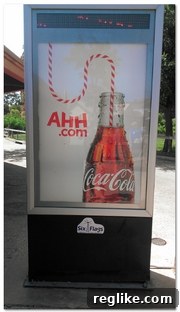
There are few sensations as universally recognized and deeply satisfying as that refreshing sigh – the “Ahh” – following a perfectly chilled drink. This intrinsic human experience, often associated with pure delight and refreshment, has been masterfully captured and leveraged by one of the world’s most iconic brands: Coca-Cola. A recent family trip, including an exhilarating visit to Six Flags, brought this brilliant piece of digital marketing back to the forefront of my mind. Amidst the thrills and laughter, a simple domain name resurfaced, reminding me of its ingenious simplicity and profound impact: Ahh.com.
This isn’t merely a domain; it’s a testament to innovative branding and a clever departure from conventional domain name strategies. Ahh.com stands out not because it’s an acronym or a dictionary word, which are typical uses for highly coveted three-letter domains, but because it perfectly encapsulates an emotion, a feeling. In a digital landscape increasingly cluttered with keywords and complex branding, Ahh.com cuts through the noise with an elegant, almost primal simplicity. It serves as a powerful reminder that sometimes, the most effective marketing speaks directly to the senses and emotions, bypassing the need for explicit declarations.
Beyond the Acronym: Decoding Ahh.com’s Domain Strategy
In the realm of domain names, particularly the exclusive category of three-letter domains (LLLs), the primary value often lies in their potential to serve as acronyms for corporations (e.g., IBM.com, CNN.com) or as highly concise abbreviations for common words or concepts. These domains are prized for their scarcity, ease of recall, and inherent brand authority. However, Ahh.com diverges significantly from this well-trodden path. It is not an acronym for “American Health Habit” or any other corporate entity; nor is it a shorthand for a complex term. Instead, it is a pure onomatopoeia – a word that mimics the sound it describes.
This unconventional choice poses an interesting challenge to traditional domain name evaluation metrics, such as the “radio test.” The radio test assesses how easily a domain name can be understood, spelled, and remembered when heard aloud without visual cues. For many, a domain like Ahh.com might initially seem to fail this test. How would one spell “Ahh” if heard on the radio? Is it “A-H-H” or “A-H-A”? Yet, Coca-Cola’s strategic genius lies in its ability to transcend these conventional limitations. They understood that with sufficient brand power and a cohesive marketing campaign, the very sound of “Ahh” is intrinsically linked to the experience of enjoying their product, making the spelling almost secondary to the emotional resonance.
The success of Ahh.com isn’t just about the domain itself; it’s about the powerful association forged between the domain and the brand’s core promise of refreshment and satisfaction. It taps into a universal human response, creating an immediate, visceral connection that few other domain names could hope to achieve. This approach highlights a crucial lesson for modern digital branding: while keywords and literal descriptions have their place, evoking an emotion or an experience can create a far deeper and more memorable impact, especially when backed by a global brand with Coca-Cola’s reach and legacy.
The Coca-Cola “Ahh” Campaign: A Symphony of Short and Long Domains
What makes Coca-Cola’s use of Ahh.com even more fascinating is that it’s not an isolated instance. It’s part of a broader, multi-faceted digital campaign that plays on the very essence of the “Ahh” sound. The brand has ingeniously registered and utilized a spectrum of “Ahh” domains, escalating in their length and, arguably, their audaciousness. These include variations like:
- ahhhhhh.com
- ahhhhhhhhhhhhhhhhhhhhh.com
- ahhhhhhhhhhhhhhhhhhhhhhhhhhhhhhhhhhhhhhhhhhhhhhhhhh.com
And yes, these are not hypothetical examples; Coca-Cola genuinely employs this entire range of domains. This layered strategy is nothing short of brilliant. While the longer domains might unequivocally “fail” the radio test and the recall test for most brands, for Coca-Cola, they serve a distinct purpose. They hyperbolize the feeling of “Ahh,” extending it, almost visually representing the prolonged sigh of satisfaction that accompanies a truly refreshing sip. This creates a playful, memorable, and highly shareable experience, transforming a simple sound into an interactive digital journey.
This “Ahh” ecosystem of domains effectively reinforces Coca-Cola’s global brand image, which is deeply rooted in happiness, joy, and refreshment. It’s a testament to how creative domain name strategies can transcend mere website addresses to become integral components of a brand’s narrative and consumer engagement. By offering a range of “Ahh” experiences, Coca-Cola appeals to different levels of engagement and amplifies the core message of ultimate refreshment, solidifying the emotional connection consumers have with their product in a remarkably innovative way.
The Strategic Value of Three-Letter Domains (LLLs)
Three-letter domain names, or LLLs, represent a highly exclusive and valuable segment of the domain market. Their inherent scarcity – there are only 17,576 possible combinations for .com LLLs (26 x 26 x 26) – makes them extremely desirable. This scarcity translates into high demand and significant investment value, often fetching substantial sums in the aftermarket. Beyond their financial worth, LLLs offer several compelling strategic advantages for brands and businesses seeking to establish a robust online presence.
Firstly, LLLs are supremely memorable. Their brevity makes them easy to recall, type, and communicate, reducing the chances of typos or misremembering. This ease of use directly contributes to higher direct traffic and improved brand recall. In a world saturated with information, a short, punchy domain name can be a powerful asset for cutting through the digital clutter and staying top-of-mind with consumers. They serve as excellent branding tools, instantly conveying professionalism and a strong, established presence.
Secondly, LLLs often project an image of authority and trustworthiness. Many established global brands utilize LLLs, such as HP.com, GE.com, or UPS.com. This association subconsciously links other LLL users with similar levels of credibility and market leadership. For startups or emerging businesses, acquiring an LLL can provide an instant boost to their perceived status, helping them compete with more established players. They are not just addresses; they are digital assets that convey power, longevity, and a premium brand identity. Furthermore, in the context of SEO, while the direct keyword value of an LLL might not always be immediately apparent, their ability to generate direct traffic and strong brand signals can indirectly contribute to better search engine rankings, as search engines increasingly value brand recognition and user engagement.
From Sound to Brand: Onomatopoeia in Digital Branding
The concept of using onomatopoeia as a branding tool, particularly in the digital realm, is a fascinating and underexplored avenue. While most brands strive for descriptive or evocative names, Coca-Cola’s Ahh.com demonstrates the profound impact of tapping into universal sounds and emotions. Onomatopoeic words like “Ahh,” “Zoom,” “Woosh,” or “Zap” inherently carry a dynamic quality; they are not just names, but actions and feelings condensed into sound. This makes them incredibly potent for creating immediate, sensory connections with an audience.
For Ahh.com, the chosen sound is directly tied to the physiological and psychological experience of consuming a refreshing beverage. It’s a sound of relief, satisfaction, and pleasure. This makes it universally understood, transcending language barriers and cultural nuances to a significant extent. The challenge in using such a non-traditional domain is ensuring that the brand context is clear, which Coca-Cola achieves through its immense global presence and consistent messaging. Without this brand power, an onomatopoeic domain might struggle to convey its purpose.
However, the reward for successfully deploying such a strategy is immense. It creates a brand experience that is not just intellectual but visceral. Consumers don’t just read the brand; they “feel” it. This emotional resonance is invaluable in fostering deep brand loyalty and memorability. Ahh.com thus stands as a pioneering example of how creativity in domain name selection, combined with strong marketing, can transform a simple sound into a powerful and globally recognized brand identifier, encouraging other brands to think beyond literal meanings and explore the rich tapestry of sensory branding in their digital strategies.
Crafting Digital Identity: Lessons from Ahh.com for Modern Brands
In today’s hyper-digital world, a brand’s domain name is far more than just a web address; it’s a foundational element of its digital identity, playing a crucial role in shaping consumer perception, facilitating direct engagement, and supporting overall marketing objectives. The case of Ahh.com offers invaluable lessons for modern brands, regardless of their size or industry, on how to approach domain name strategy with creativity and foresight.
One of the primary takeaways is the emphasis on brand recall and direct traffic over purely keyword-driven domains. While SEO considerations are vital, an easily remembered and highly branded domain like Ahh.com ensures that consumers can directly navigate to the brand’s online presence, bypassing search engines altogether. This direct navigation signals strong brand recognition and trust, factors that search engines are increasingly valuing in their ranking algorithms. Ahh.com teaches us that a domain should ideally be an extension of the brand’s core message and values, rather than just a functional address.
Furthermore, Ahh.com exemplifies how traditional marketing principles, such as emotional connection and sensory branding, can be seamlessly integrated with digital assets. It encourages businesses to think outside the conventional box of naming conventions and consider how their domain name can evoke feelings, sounds, or experiences directly relevant to their product or service. Even for businesses without the budget for a premium LLL domain, the principle remains: choose a domain that is distinctive, easy to remember, and resonates with your target audience on a deeper level. Whether it’s through a creative wordplay, a unique combination, or an evocative phrase, the goal is to create a domain that tells a part of your brand’s story and contributes positively to its digital ecosystem, ensuring a strong and cohesive online presence that stands out in a crowded marketplace.
The “Radio Test” Revisited: When Rules Are Meant to Be Broken
The “radio test” is a long-standing guideline in domain name selection, advising brands to choose names that are unambiguous when spoken aloud. It’s a sensible rule designed to prevent confusion and ensure ease of access for potential customers. However, Ahh.com challenges this conventional wisdom, demonstrating that with sufficient brand equity and a robust marketing strategy, some rules are not just bent but strategically broken. For a nascent brand, a domain like Ahh.com would likely be a significant gamble, fraught with potential for misspellings and missed opportunities. But for a titan like Coca-Cola, it transforms into an asset.
Coca-Cola’s massive marketing budgets, global recognition, and consistent messaging have created such a strong association between the “Ahh” sound and their product that the inherent ambiguities of the domain become largely irrelevant. Consumers, hearing “Ahh” in connection with Coca-Cola, are more likely to correctly infer “A-H-H.com” due to the powerful brand context. This is a masterclass in leveraging existing brand equity to make a bold and unconventional domain choice not just viable, but highly effective. It highlights the interplay between marketing investment, established brand trust, and the perceived effectiveness of a domain name.
This case serves as an important reminder that while guidelines like the “radio test” are valuable for general guidance, they are not immutable laws. For brands with the resources and strategic vision to cultivate a strong brand narrative, there is room for creative interpretation and even deliberate defiance of these norms. Ahh.com isn’t just a domain name; it’s a symbol of how innovative branding, when executed with confidence and comprehensive support, can redefine what constitutes a “good” domain and achieve extraordinary results in terms of brand engagement and recall.
The Evolving Landscape of Domain Names and Brand Storytelling
The digital landscape is constantly evolving, with new top-level domains (TLDs) emerging and consumer behaviors shifting. Yet, the foundational importance of a strong, memorable domain name remains undisputed. Domain names are no longer just technical addresses; they are integral parts of a brand’s story, a key component in its digital narrative, and a direct gateway to its online world. The success of Ahh.com illustrates a forward-thinking approach to domain strategy, emphasizing emotional resonance and user experience above rigid adherence to traditional naming conventions.
In an era where brand storytelling is paramount, a domain name can become a succinct summary or an evocative hint of what a brand represents. It contributes to the overall perception of a brand’s innovation, relevance, and authenticity. Brands that invest in thoughtful domain strategies, whether by securing highly valuable LLLs or crafting creative, memorable names, are better positioned to build stronger online presences, foster deeper customer relationships, and sustain long-term growth. The enduring power of .com domains, particularly short and brandable ones, signifies their continued role as prime digital real estate, driving credibility and direct traffic.
As we look to the future, brands will continue to explore new ways to leverage their digital assets for maximum impact. Ahh.com provides a blueprint for how a domain can transcend its technical function to become a powerful marketing tool, a symbol of brand identity, and a truly unforgettable part of the consumer experience. It encourages us to see domain names not as static addresses, but as dynamic elements of a comprehensive branding strategy that adapts, innovates, and inspires connection.
The Lasting “Ahh” Moment in Digital Marketing
Reflecting on Ahh.com, its brilliance lies not just in its simplicity but in its audacious departure from the norm. It’s a domain that doesn’t just point to a website; it points to a feeling, a moment of universal satisfaction that Coca-Cola has expertly claimed as its own. This creative use of a three-letter domain name, eschewing acronyms or literal meanings for a pure onomatopoeia, is a masterclass in emotional branding in the digital age.
From a personal reminder during a family vacation to a detailed exploration of its strategic genius, Ahh.com serves as an inspiring example for marketers and entrepreneurs alike. It teaches us that while guidelines exist, true innovation often comes from understanding those guidelines well enough to know when and how to break them effectively. It underscores the immense value of strategic domain name choices, especially short, memorable ones, in building brand identity, fostering emotional connections, and creating lasting impressions.
Ultimately, Ahh.com is more than just a unique website address; it’s a testament to the power of simplicity, emotion, and strategic creativity in digital marketing. It encapsulates the very essence of refreshment and leaves a lasting “Ahh” moment in the minds of those who encounter it, reinforcing Coca-Cola’s enduring legacy as a purveyor of happiness and satisfaction, one sip – and one memorable domain – at a time.