
Effortless 1099 Compliance: A Guide for U.S. Domain Investors and Small Businesses
Navigating the complexities of tax compliance can often feel daunting, especially for U.S. domain investors and small business owners who frequently engage freelancers, independent contractors, or professional service providers. One critical area often overlooked until year-end is the requirement to issue Form 1099. If you’re paying individuals or entities for services rendered, understanding your 1099 obligations is not just good practice; it’s a legal necessity.
Fortunately, what once was a tedious, paper-intensive process requiring significant time or an accountant’s fees has been revolutionized. Today, staying compliant with 1099 reporting is easier, more affordable, and more efficient than ever, thanks to a new generation of online services designed to streamline the entire process. This comprehensive guide will demystify 1099 requirements, highlight key exemptions, and introduce you to practical online solutions that ensure you remain compliant without the headache.
Understanding Your 1099 Obligations: Who, What, and Why
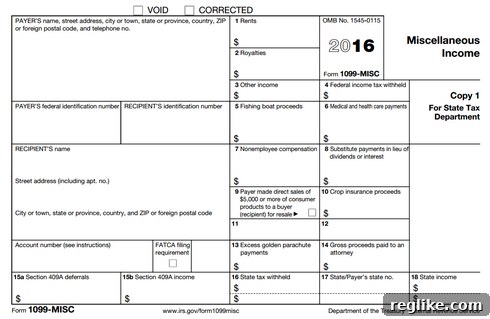
At its core, Form 1099 is an informational tax form used by the Internal Revenue Service (IRS) to report various types of income other than wages, salaries, and tips. For most domain investors and small businesses, the primary form of concern is the 1099-NEC (Nonemployee Compensation), though 1099-MISC (Miscellaneous Income) might also apply for certain payments like rent. The purpose is to ensure that non-employee income is accurately reported to the IRS, preventing potential tax evasion and maintaining fairness in the tax system.
Who Needs to Issue a 1099?
Generally, if you are a U.S. person or entity operating a business—even if it’s a sole proprietorship, partnership, or LLC—and you pay an independent contractor or vendor for services, you may be required to issue a 1099. The key threshold for most payments is $600 or more in a calendar year to a single recipient. This applies broadly to a wide array of individuals and entities that provide services to your business operations.
Common Recipients Requiring a 1099
To give you a clearer picture, here are common scenarios where you would likely need to send a 1099:
- Web Developers and Designers: If you’ve paid a freelancer to build, maintain, or troubleshoot your domain-related websites, a 1099 is typically required if payments exceed $600.
- Office Landlords: For those who rent office space for their domain investing business, rent payments totaling $600 or more to an individual landlord will necessitate a 1099-MISC.
- Legal Professionals: Payments to a law firm or individual attorney for services such as responding to a UDRP, handling a cease & desist letter, or any other legal consultation. This is a crucial area, as legal fees are almost always subject to 1099 reporting, regardless of the law firm’s entity structure (more on this below).
- Content Creators: Freelance writers, editors, graphic designers, or videographers who provide content for your domain projects, websites, or marketing materials.
- Domain Brokers and Consultants: Individuals or firms who assist you in buying, selling, appraising, or consulting on domain names.
- Marketing and SEO Specialists: Anyone helping you promote your domains or build traffic to your online properties.
- Virtual Assistants: Remote support staff who handle administrative tasks, research, or customer service.
The underlying principle is straightforward: if you’re compensating someone for services as an independent contractor, and they are not your employee, then you are likely responsible for reporting that payment to the IRS.
Navigating 1099 Exemptions: What You Need to Know
While the requirements seem broad, there are important exemptions and nuances that can determine whether a 1099 is necessary. Understanding these can save you time and prevent unnecessary filings.
The $600 Threshold and U.S. Person/Entity Rule
As mentioned, the primary threshold is $600. If you pay a U.S. person or entity less than $600 in a calendar year, you typically don’t need to issue a 1099. Conversely, the “U.S. person or entity” stipulation is vital. Payments to foreign individuals or entities generally do not require a 1099 but might require different forms, such as Form W-8BEN, to establish their foreign status and confirm no U.S. tax withholding is necessary.
Understanding Business Entity Exemptions
One of the most common areas of confusion revolves around payments to corporations. Generally, you are not required to send a 1099 to most corporations, including those organized as S-Corporations or C-Corporations. The IRS considers these entities sophisticated enough to track their own income for tax purposes. This exemption simplifies reporting for many business-to-business transactions.
The Law Firm Exception: A Critical Distinction
However, there’s a significant exception to the corporate exemption: payments to attorneys or law firms. Regardless of whether a law firm operates as a corporation, an LLC, or a partnership, payments for legal services totaling $600 or more *always* require a 1099-NEC. This is a specific rule designed to ensure greater transparency in legal transactions and is an area where non-compliance can easily occur if not carefully noted.
LLCs and “Disregarded Entities”: A Deeper Dive
Limited Liability Companies (LLCs) often create confusion regarding 1099 obligations. Many individual service providers form LLCs for liability protection, but for tax purposes, many of these are treated as “disregarded entities” by the IRS. A disregarded entity is an LLC with a single owner that has not elected to be taxed as a corporation. In such cases, the IRS “disregards” the LLC’s separate existence for tax purposes and treats it as a sole proprietorship. This means that if you pay an individual who operates as a single-member LLC, and that LLC is a disregarded entity, you *are* required to issue a 1099-NEC, just as you would for an individual sole proprietor.
How do you know if an LLC is a disregarded entity? The most reliable way is to obtain a completed W-9 form from the recipient. On the W-9, the recipient indicates their tax classification (individual/sole proprietor, C corp, S corp, partnership, etc.). If they check the “Individual/sole proprietor” box and also write “LLC” next to it, or check “Limited liability company” and indicate “S-corp,” “C-corp,” or “Partnership” as their tax classification, you follow the rules for that chosen classification. If they check “Limited liability company” and leave the tax classification blank, or indicate “single-member LLC,” they are likely a disregarded entity, and a 1099 is required.
For a complete and authoritative list of requirements and exemptions, always refer directly to the IRS instructions for Form 1099-NEC and 1099-MISC, which can be found here on the IRS website.
The Two-Step 1099 Process: Simpler Than You Think
The entire 1099 compliance process can be broken down into two essential steps:
- Collect a W-9 Form: Before or at the time of payment, you must obtain a completed W-9 form from each U.S. person or entity you pay for services. This form provides you with their correct name, address, and Taxpayer Identification Number (TIN)—typically a Social Security Number (SSN) or Employer Identification Number (EIN)—along with their tax classification (e.g., individual, corporation, LLC). This information is crucial for accurate 1099 filing.
- Issue the 1099 Form: By January 31st of the following year, you must send the appropriate 1099 form (usually 1099-NEC) to each eligible recipient and also file it with the IRS. For example, payments made in 2024 must have 1099s issued by January 31, 2025.
Failure to meet these deadlines can result in penalties from the IRS, making timely action critical.
The Evolution of 1099 Filing: From Tedious to Seamless
It wasn’t that long ago that handling 1099s was a considerable administrative burden. Many years ago, when businesses began issuing these forms, the process typically involved:
- Manually gathering W-9 forms, often via fax or physical mail.
- Recording payee information by hand or in basic spreadsheets.
- Ordering pre-printed 1099 forms from the IRS or an office supply store.
- Typing or writing out each 1099 in triplicate (one for the recipient, one for the state, one for the IRS, and one for your records).
- Carefully mailing each form to the recipient via postal service, often requiring certified mail for proof of delivery.
- Transmitting the aggregated information to the IRS, which frequently involved more paper forms and mailing.
- Hiring an accountant or bookkeeper to manage the entire process due to its complexity and time consumption.
This traditional approach was time-consuming, prone to errors, costly in terms of supplies and postage, and generally inefficient. For small business owners or domain investors with limited administrative support, it could easily become a significant source of stress during tax season.
Fortunately, technological advancements have transformed 1099 compliance from a dreaded annual chore into a manageable and even straightforward task. The rise of specialized online services has eliminated much of the manual effort, bringing automation, accuracy, and convenience to the forefront.
Streamlining Your 1099s with Online Services: Introducing Track1099
The landscape of tax compliance has significantly improved with online platforms designed specifically for 1099 processing. These services simplify every step, from W-9 collection to IRS e-filing, offering an invaluable solution for busy entrepreneurs. One such highly recommended platform that makes this process incredibly simple and cost-effective is Track1099.
How Online Services Like Track1099 Work
Track1099 exemplifies the efficiency of modern 1099 solutions. Here’s a breakdown of its seamless workflow:
- Payer Initiates Request: As the payer, you simply enter your basic information and the recipient’s email address into the platform.
- Automated W-9 Collection: Track1099 takes over by sending a secure request to your recipient, asking them to electronically provide all the necessary W-9 information, including their name, address, and TIN. This eliminates the need for you to chase down physical forms or worry about data entry errors.
- Secure E-Delivery of 1099s: Once you’ve entered the payment amounts, the service generates the 1099 forms. Recipients receive their 1099s electronically through a secure portal, fulfilling the delivery requirement without any printing or mailing on your part.
- IRS E-Filing: The platform also handles the electronic filing of your 1099s directly with the IRS, ensuring timely submission and adherence to all regulatory standards. This is a massive time-saver and significantly reduces the risk of filing errors.
Key Advantages of Using Online 1099 Services
- Unmatched Convenience: Manage everything from your computer, eliminating paper forms, printing, and postal trips.
- Enhanced Accuracy: Automated data collection and validation minimize human error, leading to more accurate filings.
- Time-Saving: The entire process, from W-9 collection to IRS filing, is significantly faster than manual methods.
- Cost-Effective: For many small businesses, the cost of an online service is substantially less than hiring an accountant solely for 1099 preparation, or the combined costs of paper, postage, and your valuable time.
- Secure Data Handling: Reputable services like Track1099 employ robust security measures to protect sensitive taxpayer information.
- Record Keeping: All filed forms and related communications are digitally stored and easily accessible for your records.
Affordable Pricing for Domain Investors
One of the most appealing aspects of Track1099, especially for domain investors who might only need to issue a few forms, is its transparent and affordable pricing model. For example:
- Collecting up to 25 W-9 forms online costs just $9. Alternatively, if you prefer to collect W-9s yourself through other means, you can avoid this fee entirely.
- Issuing the actual 1099 forms is priced affordably: $3.99 for the first three 1099 forms, and then $1.99 for each additional one.
This structure means that for most domain investors or small businesses with a limited number of contractors, your total out-of-pocket expense for full 1099 compliance will likely be less than $25. This small investment provides immense peace of mind and frees you from a time-consuming administrative task.
Conclusion: Embrace Simplicity for Stress-Free Compliance
Staying compliant with IRS regulations, particularly when it comes to reporting non-employee compensation, is a fundamental responsibility for U.S. domain investors and small business owners. While the thought of 1099 forms might initially evoke feelings of dread or confusion, the reality in today’s digital age is far more encouraging.
Online services like Track1099 have transformed a once-arduous annual task into a simple, efficient, and highly affordable process. By leveraging these tools, you can easily collect necessary W-9 information, accurately generate and securely deliver 1099 forms to your contractors, and electronically file with the IRS—all without getting bogged down in paper trails or complex tax jargon.
Don’t let tax season catch you off guard. Proactively embrace the convenience and accuracy offered by online 1099 solutions. By doing so, you’ll not only meet your legal obligations but also free up valuable time and resources, allowing you to focus on what you do best: growing your domain portfolio and expanding your business ventures.
Disclaimer: This article provides general information and guidance regarding 1099 compliance. It is not intended as tax, legal, or financial advice. Always consult with a qualified tax professional or attorney for advice tailored to your specific situation.