
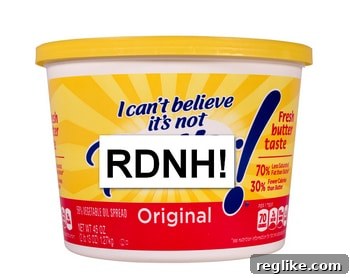
Unjustified Leniency: A Deep Dive into the Controversial SellUp.com UDRP Decision and Reverse Domain Name Hijacking
The digital landscape is a complex realm where brand identity and domain names are inextricably linked. For businesses, securing a relevant domain name is paramount, and the Uniform Domain-Name Dispute-Resolution Policy (UDRP) was established to provide an efficient mechanism for resolving disputes when a domain name infringes upon a trademark. However, the UDRP system, while designed to protect legitimate trademark holders, also carries the inherent risk of being abused. This is precisely why the concept of Reverse Domain Name Hijacking (RDNH) exists – to safeguard domain registrants from baseless or malicious attempts to seize their rightfully owned domain names.
In recent times, there have been concerning instances where UDRP panelists appear to exhibit an undue leniency towards Complainants, even when clear signs of bad faith are present. One particular case, involving the domain name SellUp.com, starkly illustrates this growing concern. This decision has raised significant questions about the consistent application of UDRP principles and, more specifically, the criteria used for identifying and penalizing Reverse Domain Name Hijacking. This article will delve into the intricacies of this controversial ruling, examining why it stands as a troubling precedent and what it signifies for the future of domain name disputes.
Understanding the Uniform Domain-Name Dispute-Resolution Policy (UDRP)
Before dissecting the specifics of the SellUp.com case, it’s essential to grasp the foundational elements of the UDRP. Established by the Internet Corporation for Assigned Names and Numbers (ICANN) in 1999, the UDRP provides an administrative alternative to traditional litigation for resolving disputes over domain name registrations. Its primary goal is to address “cybersquatting,” the practice of registering domain names that are identical or confusingly similar to existing trademarks with the intent to profit from the goodwill of those marks.
For a Complainant to succeed in a UDRP action and have a domain name transferred or canceled, they must satisfy a three-pronged test, proving each of the following:
- The domain name is identical or confusingly similar to a trademark or service mark in which the Complainant has rights.
- The Respondent (the domain name registrant) has no rights or legitimate interests in respect of the domain name.
- The domain name has been registered and is being used in bad faith.
The first element, concerning identity or confusing similarity, is often the most straightforward to establish. In the vast majority of UDRP cases, Complainants would not even initiate a dispute unless they believe this threshold is met. It primarily involves a visual and phonetic comparison of the domain name with the Complainant’s trademark, often disregarding generic Top-Level Domains (gTLDs) like .com, .net, or .org. This element, while crucial, serves merely as an initial gateway, and its fulfillment does not, by itself, grant automatic victory to the Complainant, nor should it absolve them of other potential misconduct.
The Critical Role of Reverse Domain Name Hijacking (RDNH)
Just as the UDRP is designed to protect trademark holders from cybersquatters, the concept of Reverse Domain Name Hijacking (RDNH) is in place to protect legitimate domain registrants from abusive UDRP filings. RDNH occurs when a Complainant initiates a UDRP proceeding in bad faith, attempting to improperly acquire a domain name that the Respondent has a legitimate right to. This typically involves trying to “hijack” a domain name through an administrative process rather than through negotiation or purchase.
A finding of RDNH signifies that the Complainant knew or should have known that they could not establish one of the three required UDRP elements, yet they proceeded with the complaint anyway, often with ulterior motives. Such motives might include leveraging the UDRP process to harass a competitor, to avoid paying a fair price for a desirable domain, or simply to take a speculative chance on winning a domain without a legitimate basis. When a panel makes an RDNH finding, it sends a clear message that the UDRP system is not a tool for corporate bullying or opportunistic domain seizure. Unfortunately, as the SellUp.com case reveals, this critical protective mechanism is not always applied with the rigor it demands.
The Contested SellUp.com UDRP Case: A Flawed Decision
Case Overview: SellUp.com and the Complainant’s Dubious Claims
The dispute over the domain name SellUp.com brought to light several concerning aspects regarding the application of UDRP policy. The domain name in question had been registered for a remarkable 19 years, a significant period that typically strengthens a Respondent’s claim to legitimate ownership, especially in the absence of a Complainant’s prior rights. The Complainant in this case initiated a UDRP complaint, seeking to gain control of this long-held domain.
The First Element: A Closer Look
As anticipated, the Complainant successfully satisfied the first UDRP element: demonstrating that the domain name SellUp.com was confusingly similar to a mark in which they claimed rights. As previously discussed, this element is often a “slam dunk” for Complainants, as few would pursue a UDRP if there wasn’t at least a superficial resemblance to their trademark. It’s a low bar to clear, and meeting it does not inherently signal good faith or the legitimacy of the overall complaint.
Panelist Nahm’s Questionable Rationale
Despite the presence of glaring red flags indicating potential bad faith on the part of the Complainant, National Arbitration Forum panelist Ho Hyun Nahm declined to issue an RDNH finding. The panelist’s reasoning, as quoted in the decision, was particularly perplexing:
As the Panel finds that Complainant has prevailed on the “identical/confusingly similar” prong of the Policy ¶ 4(a)(i), Complainant does not seem to have been motivated by bad faith, but rather by excessive and unjustified optimism about a case that was always dubious.
This justification is highly problematic. Equating “excessive and unjustified optimism” with a lack of bad faith dramatically lowers the threshold for finding RDNH, potentially encouraging more speculative and abusive filings. It suggests that as long as a Complainant genuinely (albeit mistakenly) believes they might win, their actions cannot be deemed malicious. However, bad faith in the context of RDNH often stems from a willful disregard for established UDRP precedent and a lack of evidence for the remaining two crucial elements, regardless of optimism. The very purpose of RDNH is to penalize Complainants who pursue claims that they know, or should reasonably know, lack merit based on the totality of the UDRP requirements.
Undeniable Signs of Bad Faith
The SellUp.com case presented not one, but two undeniable indicators of the Complainant’s bad faith, which should have warranted an RDNH finding:
- Failure to Demonstrate Prior Rights: The domain name SellUp.com had been registered for 19 years. A fundamental principle of trademark law and UDRP is the concept of “first in time, first in right.” For a Complainant to succeed, they generally must demonstrate that their trademark rights predate the Respondent’s registration of the domain name. The Complainant in this case utterly failed to provide any evidence of trademark rights to “SellUp” that existed prior to the Respondent’s nearly two-decade-old domain registration. This alone should have been a significant factor pointing towards the weakness, if not outright bad faith, of their claim to the domain.
- Attempt to Trademark an Unowned Domain: Perhaps the most egregious act of bad faith was the Complainant’s attempt to obtain a U.S. trademark for the exact term “SellUp.com” – a domain name they did not own. This action demonstrates a clear intent to improperly acquire the domain. Seeking a trademark for a specific domain name that is already registered by another party, without any prior legitimate claim to that specific string as a trademark, strongly indicates an intent to leverage the trademark registration process to then file a UDRP complaint and seize the domain. This calculated maneuver goes far beyond mere “optimism”; it suggests a deliberate strategy to circumvent legitimate domain acquisition methods. Such behavior is precisely what RDNH is designed to deter.
Misapplication of Precedent?
In his decision, Panelist Nahm referenced a 2003 case where an RDNH finding was also denied despite the Complainant meeting the first element. However, there was a critical distinction in that earlier case: the panel explicitly noted that “there is a real dispute between the parties.” This implies a genuine, albeit perhaps misguided, conflict over legitimate rights. In stark contrast, the SellUp.com case lacked any indication of a “real dispute” over legitimate rights; instead, it presented a Complainant attempting to claim a domain name for which they had no prior rights and actively tried to create a manufactured right through a trademark application for an unowned domain. The panelist’s reliance on a selectively interpreted precedent, without acknowledging these crucial differences, further undermines the soundness of the SellUp.com decision.
The Broader Implications for Domain Name Disputes
The SellUp.com decision, and others like it where panelists shy away from making RDNH findings in the face of clear bad faith, carries significant implications for the integrity and effectiveness of the UDRP system. Firstly, it creates a dangerous precedent that could embolden opportunistic Complainants. If the mere act of meeting the easily satisfied first UDRP element is enough to shield a Complainant from an RDNH finding, even when other elements point to severe misconduct, then the deterrent effect of RDNH is severely weakened. This could lead to an increase in speculative UDRP filings, placing an undue burden on legitimate domain owners who must then expend time, resources, and legal fees to defend against baseless claims.
Secondly, such decisions erode trust in the UDRP process itself. The system is designed to be fair and balanced, protecting both trademark holders and domain registrants. When panelists appear to show undue leniency, particularly by overlooking deliberate attempts to manipulate the system, it undermines the perceived fairness of the process. For smaller businesses or individual domain owners, facing a UDRP complaint from a large corporation, the prospect of defending against a potentially abusive filing without the assurance of RDNH protection can be daunting.
Finally, the consistency of UDRP panel decisions is vital. Varying interpretations of RDNH criteria, or a reluctance to apply them rigorously, can lead to confusion and uncertainty, making it harder for both Complainants and Respondents to predict outcomes and understand their rights and obligations. The spirit of the UDRP, which aims for swift and equitable resolution, is best served when panelists apply the policy’s tenets, including the protection against RDNH, with unwavering consistency and a clear understanding of what constitutes bad faith.
Conclusion
The SellUp.com UDRP decision represents a troubling instance where the critical safeguard of Reverse Domain Name Hijacking was seemingly overlooked or misinterpreted. The Complainant’s inability to prove prior rights to the “SellUp” mark and, more egregiously, their attempt to trademark a domain name they did not own, are clear indicators of bad faith that should have led to a decisive RDNH finding. To dismiss such actions as mere “excessive and unjustified optimism” is to fundamentally misunderstand the purpose and importance of RDNH.
For the UDRP system to remain a credible and effective mechanism for resolving domain name disputes, panelists must demonstrate a consistent and robust application of all its provisions, including those pertaining to Reverse Domain Name Hijacking. Shielding Complainants from accountability for actions that clearly demonstrate an attempt to abuse the system not only risks encouraging further misconduct but also undermines the very principles of fairness and equity that the Uniform Domain-Name Dispute-Resolution Policy was established to uphold. The SellUp.com case serves as a stark reminder that vigilance is crucial in protecting the rights of all parties in the evolving landscape of online brand identity and domain ownership.