
Navigating the Digital Landscape: How USMCA.com Transformed from Parked Domain to Traffic Magnet
The digital realm is a dynamic space where strategic foresight can yield remarkable results. Our journey with USMCA.com serves as a compelling testament to this principle. What began as a domain acquisition quickly evolved into a full-fledged website, demonstrating how active development can lead to significantly more traffic and elevated online presence. This article delves into the insights gained since our initial report in October, offering a comprehensive update on the site’s performance and the fascinating dynamics of domain development.
The Genesis of a Digital Strategy: From Domain Acquisition to Website Launch
The story of USMCA.com began on a pivotal day: the announcement of the United States-Mexico-Canada Agreement itself. Recognizing the immense potential and inherent value of such a highly relevant, acronym-based domain, the acquisition was swift, completed through a “buy now” transaction. Initially, the domain was parked, a common practice for newly acquired assets. During this phase, numerous purchase inquiries surfaced, yet none fully met the strategic requirements or valuation expectations. This period of passive holding presented a crucial juncture: simply waiting for the right offer, or embarking on a proactive development path.
The decision to build a website on USMCA.com was driven by a bold hypothesis: could a developed site attract a substantially larger and more engaged audience than the inherent type-in traffic received by a parked page? This experiment sought to move beyond mere speculation, aiming to tangibly demonstrate the enhanced value proposition of an active digital property. For the technical foundation, we opted for GoDaddy WordPress hosting coupled with the intuitive Beaver Builder plugin. This choice was deliberate, prioritizing ease of use, rapid deployment, and a robust, scalable platform capable of supporting dynamic content and handling fluctuating traffic loads. WordPress offered the flexibility for content management and SEO optimization, while Beaver Builder allowed for quick, professional page design without extensive coding, making it ideal for a swift market entry and iterative improvements.
Understanding the USMCA: A Critical Context for Domain Value
To fully appreciate the significance of USMCA.com, it’s essential to understand the underlying agreement it represents. The USMCA, or United States-Mexico-Canada Agreement, is a landmark trade accord designed to modernize and replace the North American Free Trade Agreement (NAFTA). This new agreement addresses contemporary economic realities, including digital trade, intellectual property, labor standards, and environmental protections, aiming to foster closer economic ties and ensure fair competition among the three nations. Its negotiation and signing marked a pivotal moment in international trade policy, sparking widespread interest from businesses, policymakers, academics, and the general public across North America and beyond.
The profound political and economic implications of the USMCA agreement translate directly into high public interest and, consequently, significant search volume. As a shorthand for such a consequential agreement, “USMCA” quickly became a household acronym, driving natural curiosity and direct navigation. Owning the exact-match domain name, USMCA.com, thus provided an unparalleled advantage. It positioned the website as an authoritative, easily discoverable resource for anyone seeking information, updates, or analysis on the agreement. This inherent relevance was the bedrock upon which our digital strategy was built, promising a steady stream of organic interest even before active promotion.
The Experiment Unfolds: Initial Expectations vs. Real-World Performance
With the website launched on GoDaddy WordPress using Beaver Builder, the experiment entered its active phase. The initial content strategy focused on providing clear, concise information about the USMCA, its key provisions, and its anticipated impact. The goal was to establish the site as a reliable, go-to source, capable of capturing the diverse intent of searchers – from those seeking basic definitions to those looking for deeper analysis. The core hypothesis was rigorously tested: could a proactively developed domain genuinely outperform a passively parked one in terms of attracting significantly more “eyeballs”?
Early performance indicators were closely monitored. While initial daily traffic hovered modestly around 100 pageviews, these figures were already a substantial improvement over typical parked domain performance, which often sees minimal engagement beyond direct type-ins. This early success validated the fundamental premise that even rudimentary content, when paired with a highly relevant domain, could generate organic interest. The real excitement, however, lay in anticipating and observing how the site would react to major news events surrounding the USMCA, serving as a real-time barometer of public engagement and the domain’s increasing authority.
Riding the News Cycle: The Impact of Key Events on Traffic
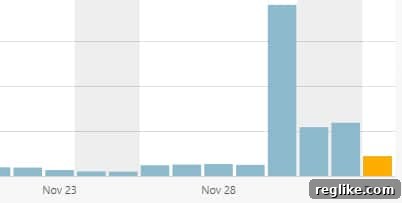
A crucial moment arrived last Friday, when U.S. President Donald Trump, Canadian Prime Minister Justin Trudeau, and Mexican President Enrique Peña Nieto formally signed the agreement during the G-20 summit. This high-profile event immediately triggered a significant surge in public interest and, predictably, a dramatic spike in traffic to USMCA.com. While the typical daily pageview count for the site ranged around 100, this single news event propelled traffic to an impressive peak approaching 2,000 pageviews, as vividly illustrated by our internal analytics. This direct correlation between major news cycles and website visits underscores a vital lesson in domain development and content strategy: relevance, timeliness, and authority are paramount.
The graphic representation of our page views clearly showed this dramatic upward trend, reinforcing the site’s ability to act as a crucial informational hub during periods of heightened public inquiry. Such spikes are not just numerical increases; they represent real people actively seeking information, updates, or context about the USMCA. Looking ahead, we anticipate similar and potentially even larger spikes as the agreement progresses through the U.S. congressional approval process. Each debate, vote, and public discourse surrounding the USMCA will inevitably drive renewed interest, positioning USMCA.com to capture a significant portion of that search activity. This reactive traffic pattern offers a compelling argument for maintaining dynamic, updated content that mirrors the ongoing narrative of the agreement.
Deconstructing Traffic Sources: Beyond Just Type-Ins
Understanding where traffic originates is fundamental to any successful digital strategy. For USMCA.com, the traffic landscape is predominantly shaped by two powerful forces: direct navigation (type-ins) and search engine referrals. While the inherent memorability and topical relevance of “USMCA.com” naturally foster type-in traffic – users directly entering the URL into their browser – the more substantial and intriguing growth has come from search engines. This blend signifies a healthy and diversified audience base, validating the site’s dual appeal as both a direct resource and a discoverable asset.
The Power of Direct Navigation (Type-Ins)
The term “type-in” traffic refers to visitors who arrive at a website by directly typing its URL into their browser. For a domain like USMCA.com, this is an incredibly valuable source. The acronym “USMCA” is so widely recognized in the context of the trade agreement that individuals often intuit that USMCA.com would be the primary online destination for information. This direct intent means visitors are already highly engaged and specifically looking for content related to the agreement, making them a high-quality audience. The brand recognition embedded in the domain itself acts as a natural magnet, minimizing the need for extensive branding efforts beyond simply existing and providing valuable content.
Dominance of Search Engines (Bing & DuckDuckGo)
Perhaps one of the most interesting revelations from our analytics has been the surprising dominance of Bing and DuckDuckGo as primary search referral sources, often surpassing Google for specific queries related to USMCA. While Google typically holds the lion’s share of global search traffic, this particular niche appears to attract a different search behavior or audience demographic. DuckDuckGo, known for its privacy-focused approach, often pulls its results from Bing, suggesting a strong alignment between these platforms and users interested in official or government-related information. This insight is crucial for SEO strategy, as it highlights the importance of optimizing not just for Google, but also for these alternative search engines, ensuring broader visibility and capturing diverse user segments.
Unpacking Search Queries: The Nuances of User Intent
The types of search queries driving traffic to USMCA.com offer a deeper understanding of user intent. While a significant portion consists of the broad term “USMCA,” indicating general informational searches, a substantial and valuable segment comes from long-tail searches. These more specific queries, such as “USMCA trade agreement details,” “USMCA vs NAFTA comparison,” or “impact of USMCA on automotive industry,” reveal users seeking detailed, niche information. Optimizing for these long-tail keywords is paramount for capturing highly qualified traffic and positioning the site as an authoritative source for specific aspects of the agreement. Furthermore, we observed a considerable number of searches for “USMCA.com” directly, indicating that users are not only aware of the agreement but are also actively seeking out the specific domain, further reinforcing its growing authority and recognition in the digital space.
To maximize these diverse traffic streams, our ongoing strategy involves continuous keyword research, content expansion to cover more long-tail queries, and technical SEO best practices to ensure high rankings across all relevant search engines. The robust HTML structure, clear headings, and concise paragraphs contribute significantly to search engine readability and user experience.
The Strategic Imperative: Monetization and Future Prospects
While the development of USMCA.com has proven to be an incredibly insightful and successful endeavor in terms of traffic generation and digital presence, the ultimate goal remains strategic monetization through the sale of the domain name. The current development serves not as an end in itself, but as a powerful demonstration of the domain’s intrinsic value and potential. A developed, high-traffic website offers a far more compelling value proposition than a dormant, parked domain. It provides tangible proof of concept, immediate audience engagement, and established search engine authority, all of which are invaluable assets to a potential buyer.
The ideal buyer for USMCA.com would be a group or entity that can leverage its established authority and traffic to its fullest potential. This could include, but is not limited to, government agencies involved in trade policy, international trade associations, legal firms specializing in cross-border commerce, news organizations seeking a definitive online hub for trade news, or educational institutions offering resources on international economics. For such an entity, acquiring a pre-existing, traffic-rich platform like USMCA.com offers an immediate head start, eliminating the need for months or even years of SEO building and audience development.
Beyond the direct financial goal, this entire exercise has been an “interesting exercise” in the truest sense. It has provided invaluable lessons in various aspects of digital strategy, including the nuances of domain development, the intricacies of SEO for niche topics, effective content strategy tailored to news cycles, and the real-time dynamics of market response to online content. It underscores the principle that even a seemingly simple acronym domain, when strategically developed, can unlock significant value and serve as a powerful digital asset. This journey reaffirms that in the evolving digital landscape, proactive engagement and content development are key drivers of success and ultimately, enhanced market value.
Conclusion: A Blueprint for Domain Development Success
The transformation of USMCA.com from a newly acquired domain into a prominent online destination generating significant traffic offers a compelling blueprint for strategic domain development. Our journey underscores several critical takeaways: the immense value of an exact-match, acronym-based domain; the power of leveraging news cycles for traffic spikes; the importance of diversified traffic sources (type-ins and search); and the strategic advantages of developing a website over merely parking a domain. The decision to employ GoDaddy WordPress hosting and Beaver Builder facilitated rapid deployment and content management, proving instrumental in this success story.
As the USMCA agreement continues its journey through ratification and implementation, USMCA.com stands ready to serve as an authoritative and highly visible resource. Its demonstrated ability to attract and engage a relevant audience significantly enhances its value, making it an attractive asset for any organization seeking to dominate the digital conversation around this crucial trade agreement. This case study serves as a powerful reminder that with foresight, strategic planning, and consistent effort, a domain can transcend its status as a simple address and evolve into a dynamic, high-value digital property.