
The landscape of tax reporting for online sellers, particularly those dealing in digital assets like domain names, has never been more complex. Reissued 1099-Ks, outdated mailing addresses, and crucial notifications ensnared in spam filters are creating unprecedented frustration and compliance challenges for countless taxpayers. This shift demands a clear understanding of new IRS regulations and proactive measures to avoid potential complications.
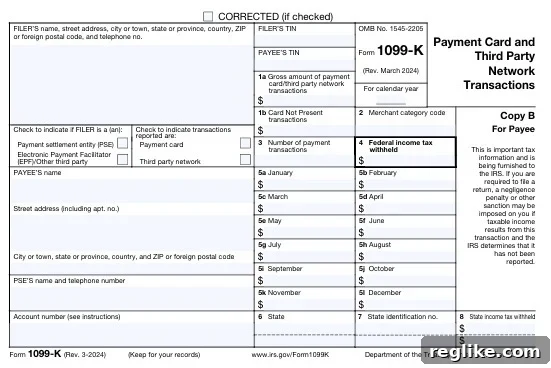
As the U.S. tax season draws to a close, many taxpayers find themselves grappling with last-minute filings or contemplating extensions. This year, however, presents a distinct challenge for a significant segment of online sellers due to the widespread issuance of IRS Form 1099-K, a document that reports payments processed by Third-Party Settlement Organizations (TPSOs) such as PayPal, credit card processors, and various online marketplaces, including prominent platforms like eBay and Afternic.
The 1099-K form serves as a critical reporting tool for the Internal Revenue Service (IRS), designed to capture income generated through digital payment networks. While introduced in 2011, its impact has expanded dramatically. For the 2023 tax year, the threshold for issuing a 1099-K was set for recipients with at least 200 transactions totaling over $20,000. However, the impending 2024 tax year will see this threshold plummet to a mere $5,000, irrespective of the number of transactions. This significant reduction explains why a multitude of individuals and small businesses are encountering these forms for the first time this year, navigating a new era of digital transaction transparency. Unsurprisingly, this major shift in reporting requirements has been accompanied by considerable confusion and a less-than-smooth rollout from several key players.
Afternic’s 1099-K Rollout: A Cascade of Errors and Frustrations for Domain Sellers
GoDaddy’s Afternic marketplace, a pivotal platform for domain name transactions, unfortunately exemplifies many of the issues plaguing the initial wave of 1099-K distributions. Their process this year was marked by several critical missteps, leading to widespread confusion and an increased burden on their sellers.
The Address Dilemma: Physical Mail in a Digital World
One of the primary frustrations stemmed from Afternic’s decision to exclusively mail paper 1099-Ks, rather than offering digital access or uploading them directly to user accounts. This seemingly minor detail created a significant hurdle for many long-standing sellers who, over the years, had not updated their mailing addresses. Given the nature of domain selling—where payments are handled electronically and direct mail correspondence is rare—there had been little to no impetus for users to ensure their physical address on file was current. Afternic compounded this issue by sending the 1099-Ks to the account address, even if it conflicted with the payment address used for electronic disbursements, further disconnecting the physical document from the actual recipient.
Gross vs. Net Income Reporting Blunder: A Critical Distinction
Adding to the complexity, Afternic initially issued incorrect forms. The original 1099-Ks provided to sellers listed the net amount received after Afternic had already deducted its commissions and fees for various transactions. This is a crucial reporting error. IRS regulations clearly mandate that marketplaces and TPSOs report the gross amount – the full sales price before any commissions, processing fees, or other deductions are applied. Sellers are then responsible for reporting this gross income and subsequently deducting their legitimate business expenses, such as commissions, as part of their tax filing. Afternic eventually acknowledged this mistake and, commendably, mailed corrected forms, but not without causing considerable distress.
Late and Misdirected Notifications: A Communication Breakdown
The notification process surrounding these errors proved to be another significant point of failure. Afternic did not inform users of the initial mistake or the subsequent mailing of corrected forms until March 20th. This date is critically important as it falls five days after the March 15th tax deadline for S-Corps and well after many individual taxpayers had already completed and filed their returns. To exacerbate the problem, the email announcement regarding these vital corrections was dispatched via a third-party server, leading to its unfortunate redirection into numerous users’ spam folders. This meant many sellers remained unaware of the critical corrections until it was too late, forcing them to re-evaluate their filed returns.
The Personal Toll: Amended Returns and Undue Stress
The real-world impact of these issues is substantial. One Afternic seller shared their ordeal, explaining they had to file an amended return to accurately reflect the correct gross amount of their sales and then properly deduct the commissions as a business expense. This story underscores the administrative burden placed on sellers due to Afternic’s errors. In another instance, a seller only learned about Afternic’s 1099-K issuance – sent to an outdated address – after a conversation with a fellow domain professional. For those who had already filed their S-Corp returns, this meant additional paperwork, potential professional fees, and unnecessary stress during an already demanding tax season.
The PayPal Predicament: Unraveling Duplicate 1099-K Reporting
Beyond Afternic’s specific issues, another layer of complexity has emerged for domain sellers: the pervasive problem of duplicate 1099-K reporting, particularly for those who receive payouts via PayPal. Sellers in this situation often find themselves receiving a 1099-K from the marketplace (like Afternic) and an additional 1099-K from the payment processor (like PayPal). This leads to a scenario where roughly twice the actual payments received by the taxpayer are reported to the IRS, significantly inflating their apparent income and raising red flags that could trigger an IRS audit.
The root of this problem lies in an ongoing debate and, arguably, ambiguous language within IRS guidelines concerning which entity is primarily responsible for issuing a 1099-K when a marketplace facilitates payments through a third-party processor rather than direct bank transfers. My understanding, shared by many tax professionals, suggests that only the payment processor, in this case, PayPal, should ultimately be responsible for issuing the 1099-K for transactions they directly handle. However, the lack of crystal-clear guidance has led many marketplaces, including Afternic, to adopt a cautious approach: “when in doubt, issue the form.” While this might be perceived as the safest legal strategy for the companies involved, it inadvertently creates significant complications, confusion, and potential audit risks for the actual sellers who are trying to accurately report their income.
The potential ramifications of such duplicate reporting are severe. An IRS audit, even if resolved favorably for the taxpayer, is a time-consuming, anxiety-inducing process that often requires significant documentation and, potentially, legal or accounting fees. Taxpayers are left in the unenviable position of having to proactively explain discrepancies that originate from inconsistencies in reporting by the very entities mandated to help them comply with tax laws.
Navigating the 1099-K Maze: Essential Steps for Domain Sellers
The core challenge for most domain sellers isn’t an intent to misrepresent their income; rather, it’s the potential for these incorrectly or redundantly issued 1099-Ks to trigger unwarranted IRS scrutiny. Discrepancies between what the IRS perceives as income (based on multiple 1099-Ks) and what the taxpayer actually earned can lead to investigations. If you typically report your net proceeds as revenue, the updated Afternic 1099-K, reporting gross amounts, will undoubtedly show a higher figure than you initially accounted for. Similarly, receiving 1099-Ks from both Afternic and PayPal could lead the IRS to erroneously conclude you received double your actual income.
Immediate Actions for Affected Sellers:
1. **Review All 1099-Ks Carefully:** Collect every 1099-K form received from all marketplaces and payment processors. Cross-reference them with your own meticulous records of sales, commissions paid, and net receipts. Identify any forms reporting gross income where you typically deal with net, or any instances of duplicate reporting from multiple entities for the same transactions.
2. **Understand and Apply Gross vs. Net Principles:** Remember that the IRS wants to see your gross revenue reported, from which you then deduct legitimate business expenses. This includes marketplace commissions, payment processing fees, domain registration costs, and any other directly related operational expenses. Ensure your own records reflect this breakdown.
3. **Address Duplication and Discrepancies Proactively:** If you have not yet filed your taxes and have identified duplicate 1099-Ks or other significant discrepancies, it is crucial to address them on your return. You can attach a statement or note explaining the situation, clarifying that the income reported on one form is already accounted for in another, or that certain amounts represent gross figures from which expenses have been deducted. Be prepared to provide supporting documentation if requested.
4. **What if You’ve Already Filed?:** For those who have already submitted their returns and subsequently discovered errors or received corrected/new 1099-Ks, filing an amended return (IRS Form 1040-X) is necessary. This ensures your tax records accurately reflect your true income and deductions, mitigating future audit risks. While an additional administrative burden, it is vital for compliance.
5. **Maintain Meticulous Records:** This cannot be stressed enough. Keep detailed records of all domain sales, purchase prices, marketplace commissions, payment processor fees, and any other relevant expenses. This documentation will be your strongest defense should the IRS question any aspect of your reported income.
6. **Consider a Tax Extension:** If the complexities of these 1099-K issues are overwhelming and you haven’t yet filed, consider filing for a tax extension (Form 4868). This provides additional time to gather all necessary documents, reconcile discrepancies, and, if needed, seek professional advice, thereby reducing the pressure of an immediate deadline.
7. **Seek Professional Tax Advice:** Given the ambiguities and potential for audit, consulting a qualified tax professional is highly recommended. An experienced accountant or tax advisor can help you navigate these complex reporting issues, ensure compliance, and minimize your tax liabilities while explaining any notes or statements needed for your return.
Looking Ahead: Improvements and Continued Vigilance
While the immediate prospect of Afternic reissuing 1099-Ks showing $0 for transactions also reported by PayPal seems unlikely for this tax year, there is a glimmer of hope for future improvements. A GoDaddy spokesperson indicated via email, “We’re reviewing every aspect of 1099-Ks this year and expect improvements in the next round.” This suggests that both marketplaces and payment processors are recognizing the need for clearer, more streamlined processes. However, until such improvements are fully implemented and IRS guidance becomes unequivocally clear, domain sellers must remain vigilant, proactive, and well-informed. Happy tax day, and may your financial records be clear and compliant!