
Revolutionizing Mobile Web Navigation: The Power of a Dynamic TLD Key
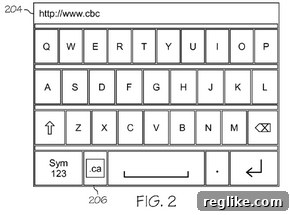 In the fast-evolving landscape of mobile technology, efficiency and user experience stand as paramount concerns. As our smartphones become the primary gateway to the internet, every millisecond saved and every keystroke reduced contributes significantly to a smoother, more intuitive browsing experience. While we’ve witnessed remarkable advancements in screen technology, processing power, and data speeds, the fundamental act of typing out a website address has remained largely unchanged for decades. This is precisely where telecommunications giant Blackberry, known for its pioneering work in mobile communication, sought to innovate with a groundbreaking patent application filed with the U.S. Patent and Trademark Office: a predictive and dynamic top-level domain (TLD) key. This ingenious concept aims to transform how users interact with web addresses, adapting in real-time to enhance speed and accuracy.
The Current State: Static TLDs in a Dynamic World
For years, mobile users have grown accustomed to dedicated “.com” keys embedded within their virtual or physical keyboards. Android devices, in particular, have often featured this convenient shortcut, streamlining access to arguably the most ubiquitous TLD. Apple, too, historically offered similar functionality on its earlier iPhones and iPads. However, recent design shifts in iOS now require users to press and hold the “.” key, subsequently presenting a list of common extensions like “.com,” “.org,” or “.net” for selection. While functional, this method introduces an extra step, breaking the flow of typing and potentially slowing down navigation, especially for those who frequently visit websites with diverse TLDs. This static approach, though familiar, appears increasingly outdated in an internet landscape where hundreds of new TLDs have emerged, offering greater choice and specificity.
The core limitation of these traditional methods lies in their inflexibility. They assume that “.com” is always the most likely or desired extension, or they force users through a multi-step process to access alternatives. In an era where users expect intelligent, adaptive interfaces, the idea of a fixed TLD key feels somewhat anachronistic. Every additional tap, every momentary pause to consider which TLD to select, represents a tiny friction point that accumulates over countless browsing sessions, detracting from the overall user experience. Blackberry’s patent seeks to directly address this friction by introducing an intelligent, context-aware solution that anticipates user intent, offering a glimpse into a more streamlined future for mobile web navigation.
Blackberry’s Innovative Vision: A Dynamic and Predictive TLD Key
At the heart of Blackberry’s patent lies a deceptively simple yet profoundly powerful idea: to make the “.com” or similar TLD key dynamically change based on a prediction of which domain name the user intends to visit. Imagine a keyboard that doesn’t just offer predictive text for words but also for the very structure of the web address you’re typing. This isn’t merely a cosmetic change; it’s a fundamental shift in how mobile devices assist users in reaching their online destinations. The system leverages sophisticated algorithms to analyze the characters being input, cross-referencing them with a vast database of domain names, user browsing history, and geographical context to offer the most relevant TLD in real-time.
Consider a practical scenario: if you begin typing “CBC” into your browser’s address bar, the phone or other device, recognizing this as a common abbreviation for the Canadian Broadcasting Corporation, might intelligently change the touchscreen “.com” key to a “.ca” key. This immediate, context-sensitive adjustment eliminates the need to manually navigate to the correct TLD, saving precious seconds and enhancing accuracy. The system learns and adapts, making the browsing experience not just faster, but also more intuitive and less prone to errors. This proactive assistance moves beyond simple auto-completion for words, extending intelligence to the very architecture of the web itself, creating a truly smart keyboard experience tailored to web navigation.
Beyond .COM: Practical Examples of Predictive Domain Switching
The beauty of Blackberry’s dynamic TLD concept lies in its versatility and potential for diverse applications, extending far beyond simple geographical associations. The predictive mechanism can be finely tuned to recognize various patterns and user behaviors:
-
Geographic Relevance: As illustrated with the “CBC” example, the system can leverage a user’s location or the geographical associations of typed text. If a user in the UK types “bbc”, the key might switch to “.co.uk”. Similarly, typing a specific city name followed by a common service might suggest a local TLD, like “.paris” or “.london” if those TLDs were to gain widespread adoption for local businesses.
-
Organizational Association: Beyond country codes, the patent envisions recognizing specific organizational types. If you start typing “wikip,” the system might swiftly switch the TLD key to “.org” for Wikipedia. This applies to other well-known non-profits, educational institutions (e.g., typing “harvard” suggesting “.edu”), or governmental bodies (e.g., typing “nasa” suggesting “.gov”). The intelligence here comes from a robust database of popular domains and their associated TLDs, constantly updated and refined.
-
Personalized Browsing Habits: Perhaps one of the most powerful aspects is the system’s ability to learn from individual user behavior. If you frequently visit a news website ending in “.info” or a technology blog with a “.tech” TLD, the dynamic key could prioritize these extensions when you begin typing relevant keywords. This creates a deeply personalized browsing experience, where the keyboard adapts not just to general patterns but to your unique digital footprint. The device acts as a smart assistant, anticipating your next move based on your historical interactions with the web.
The patent also acknowledges the complexities of implementation. For instance, the system could wait until a substantial portion of the second-level domain (the part before the TLD, like “wikipedia”) is typed before suggesting a TLD other than the default “.com”. This helps to minimize incorrect predictions and ensures the suggestion is highly relevant, striking a balance between speed and accuracy. The underlying algorithms would likely employ a combination of frequency analysis, user history, geographic location data, and a vast registry of known domain names to make these intelligent, on-the-fly decisions.
Enhancing User Experience: The Power of Predictive Input
The benefits of a dynamic TLD key extend far beyond mere convenience. It represents a significant step forward in optimizing the mobile user experience, particularly in the context of web navigation:
-
Unparalleled Speed and Efficiency: By eliminating extra taps or prolonged presses, users can type full web addresses significantly faster, leading to a more fluid and less interrupted browsing session. Every saved keystroke adds up, especially for frequent internet users.
-
Reduced Cognitive Load: Users no longer need to consciously think about which TLD to select or where to find it. The relevant TLD is presented to them, intuitively appearing where they expect it, reducing mental effort and allowing them to focus on the content they wish to access.
-
Minimized Errors: Predictive TLD suggestions can drastically reduce typing errors, especially when dealing with less common TLDs or when users are in a hurry. This leads to fewer “page not found” errors and a more reliable browsing experience.
-
Enhanced Accessibility: For users with motor skill impairments or those who find small touchscreen keys challenging, a predictive system reduces the number of precise taps required, making mobile web browsing more accessible and less frustrating.
-
Future-Proofing: As the internet continues to diversify with new TLDs, a static key becomes increasingly limiting. A dynamic system, however, is inherently designed to adapt and incorporate new extensions, keeping the user experience seamless irrespective of how the domain name landscape evolves.
Technical Nuances: Adapting to Diverse Input Methods
Blackberry’s legacy lies in devices with physical keypads, and the patent ingeniously addresses this. While a touchscreen phone can visually alter a key, a device with a fixed physical keyboard presents a different challenge. The patent describes a way to show a dynamic TLD on the screen, visually indicating the suggested extension, even if the physical key remains constant (e.g., labeled “.com”). This dual approach demonstrates Blackberry’s foresight in designing a solution that could span various form factors, ensuring the innovation wasn’t limited to touch-only devices. For touchscreen interfaces, the design challenge revolves around how such a dynamic key is presented. For shorter TLDs like “.ca,” “.org,” or “.net,” the key size change might be minimal. However, longer TLDs such as “.computer,” “.photography,” or “.engineering” would require significant key resizing, potentially impacting the usability of adjacent keys. This suggests that the initial implementation for touchscreens might prioritize shorter, more frequently used TLDs to maintain a consistent and comfortable keyboard layout, while longer TLDs might still require a secondary selection method, albeit one that is still contextually suggested.
The Evolving TLD Landscape and Future Adaptability
It’s important to note that Blackberry filed this patent application in November 2011, a period just before the massive expansion of generic Top-Level Domains (gTLDs). The patent itself doesn’t explicitly contemplate the hundreds of new TLDs like “.app,” “.guru,” “.tech,” “.blog,” or “.xyz” that have since entered the market. However, the underlying principles of the dynamic key are perfectly suited to adapt to this evolving landscape. I suspect that if a “.guru” website, for example, were to become incredibly popular, or if a user frequently visited sites under this TLD, the dynamic key mechanism could easily integrate it into its predictive database. The system’s core intelligence — learning from user behavior, popular domains, and contextual clues — means it’s inherently scalable to new extensions. This adaptability makes the patent’s concept even more relevant today than it was a decade ago, addressing the ever-growing diversity of web addresses. The proliferation of new TLDs, while offering brand managers and individuals new ways to identify themselves online, also introduces complexity for the average user trying to remember or type a full domain name. A dynamic TLD key simplifies this, acting as a guide through the increasingly rich and varied domain name ecosystem.
Implications for Mobile Browsing and Beyond
The implications of a widely adopted dynamic TLD key are profound. It signifies a move towards truly intelligent mobile interfaces that actively assist users in complex tasks like web navigation. Such a feature could become a standard expectation in future smartphone operating systems, much like predictive text for words has become today. Beyond just TLDs, the underlying technology of anticipating user intent could be applied to other areas of mobile interaction, creating even more personalized and efficient digital experiences. From suggesting relevant apps based on context to anticipating user queries in search engines, the principle of proactive, dynamic assistance holds immense potential. Blackberry’s 2011 patent application 20140123065 offers not just a technical solution, but a philosophical blueprint for how mobile devices can become more intuitive partners in our daily digital lives, making our interactions with the vastness of the internet smoother and more efficient than ever before.
Conclusion: A Glimpse into Smarter Mobile Interactions
Blackberry’s patent for a dynamic and predictive top-level domain key represents a forward-thinking approach to enhancing mobile web browsing. By moving beyond static, one-size-fits-all TLD input methods, this innovation promises a more efficient, accurate, and personalized user experience. In a world where every second counts and digital convenience is king, a keyboard that intelligently adapts to your browsing intent is not just a novelty, but a crucial step towards a more intuitive mobile future. While the patent was filed over a decade ago, its core concept remains remarkably relevant, offering a powerful vision for how our devices can become smarter partners in navigating the ever-expanding digital landscape, bridging the gap between user intent and digital execution with unprecedented fluidity.