
Ethos Capital Acquires .Org Registry: A New Era of Domain Economics and Uncapped Profit Potential
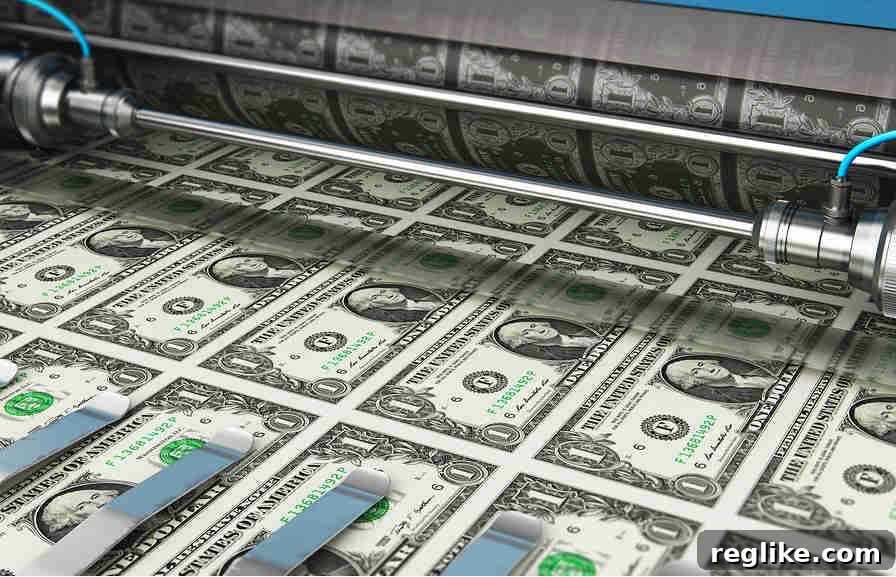
In a move that sent ripples across the internet infrastructure landscape, the Internet Society officially announced yesterday its decision to sell the .Org domain registry to a private equity firm, Ethos Capital. While the exact acquisition price remains undisclosed, industry insiders and analysts widely agree that the figure was undoubtedly substantial, soaring into the realm of nine or even ten figures. This landmark deal is not merely a transfer of ownership; it represents a fundamental shift in the economics of one of the internet’s most vital namespaces, effectively handing Ethos Capital what many are now calling a “license to print money.”
Understanding the Enduring Value of the .Org Domain
The .Org top-level domain (TLD) holds a unique and highly esteemed position within the internet’s hierarchy. It is consistently ranked as the second most valuable and widely used namespace globally, surpassed only by the ubiquitous .com. As of the end of July, the .Org registry boasted an impressive registration base of approximately 10.5 million domains. This vast number underscores its critical role in the digital ecosystem, hosting everything from established non-profits and educational institutions to community groups and even commercial entities.
While the name “.Org” inherently suggests an association with non-profit organizations, the reality is far more expansive. The registration policy for .Org domains has long been open, allowing virtually anyone to register one for nearly any purpose. This broad accessibility has led many organizations, including some for-profit businesses, to opt for a .Org domain, either as their primary online identity or as a supplementary address. They might choose it for its perceived trustworthiness, community focus, or simply because their desired .com address was unavailable. This widespread and diverse adoption contributes significantly to the domain’s inherent stability and value, distinguishing it from more niche TLDs.
The Lucrative Economics of a Domain Registry
To fully grasp the immense financial potential embedded within this acquisition, let’s delve into the underlying economics of the .Org namespace. Based on current figures, if we round down the active registrations to a conservative 10 million domains and apply the wholesale price of $9.93 per domain, the .Org registry currently generates an annual revenue stream of approximately $100 million. This figure alone makes it an attractive asset, but the profitability story doesn’t end there.
The operational costs associated with running a domain registry are, by industry standards, remarkably minimal compared to the revenue generated. The primary expense involves backend services, such as the contract with Afilias, which currently stands at around $18 million annually. It’s noteworthy that such contracts are often subject to renegotiation, typically resulting in cost reductions over time, especially under new ownership eager to optimize margins. Beyond this, a few million dollars are allocated to ICANN, the global governing body for domain names, along with a modest marketing budget directed towards registrars to promote the name and a lean staff to manage operations. Estimating the staffing element at around $3-4 million, these costs could potentially be streamlined further, particularly if the registry operations are integrated into a larger existing infrastructure, such as that of Donuts or another established registry operator.
The Game-Changing Factor: Removal of Pricing Caps
However, Ethos Capital’s interest in the .Org registry goes far beyond merely acquiring a stable asset generating $100 million a year with relatively low overhead. The true game-changer, and the core of the “license to print money” narrative, lies in a critical development that preceded this acquisition: ICANN’s decision to remove the long-standing pricing caps on .Org domains. This pivotal change grants the new owners unprecedented autonomy, allowing them to charge virtually whatever they deem fit for .Org registrations and renewals. This move effectively transforms the .Org registry into an asset with almost limitless revenue growth potential, a rarity in the highly regulated domain name industry.
Historically, pricing caps were intended to protect registrants from arbitrary price increases, especially for TLDs considered vital public resources. Their removal for .Org has been a contentious issue within the internet community, sparking debates about the balance between market forces and public interest. For Ethos Capital, however, this regulatory shift represents a golden opportunity to significantly enhance profitability, unburdened by the restrictions that still apply to other major TLDs, including the far larger .com registry.
Ethos Capital’s Roadmap for Profit Maximization
With the pricing caps lifted, Ethos Capital is now in a powerful position to implement various strategies to maximize its return on investment. The most direct and impactful approach will undoubtedly be a wholesale price increase for .Org domains. To avoid immediate backlash and allow the market to digest the acquisition news, a common strategy would be to wait for a year or so until the initial buzz subsides before implementing a significant price adjustment.
Strategic Price Increases and Market Response
Consider the potential impact of such increases. If Ethos Capital were to raise the wholesale price by 50% to $15 per domain, or even double it to $20, the resulting revenue surge would be substantial. Critics might argue that such a move would lead to a mass exodus of registrations. However, industry analysis suggests that the impact on total .Org registrations would likely be minimal, certainly not proportionate to the price hike.
Companies and organizations utilizing a .Org domain have often invested significant resources into building their brand identity around it. The cost and effort involved in migrating an entire online presence to a new domain name, updating branding, and informing stakeholders far outweigh an annual increase of five or ten dollars. While some individuals might drop superfluous domains, and domain investors might become more selective, it is reasonable to expect a retention rate that keeps overall registration numbers robust. Conservatively, even if a 10% decline in registrations occurred (which is arguably on the higher side), 9 million domains at $20 each would still yield an impressive $180 million in annual revenue. Crucially, the operational costs for the registry would barely budge, leading to a dramatic increase in profit margins.
Mitigating Potential Uproar and Enhancing Value
Anticipating potential public outcry, particularly from non-profit organizations, Ethos Capital could implement strategic initiatives designed to temper criticism. One such approach might involve offering free .Org domains to qualifying non-profits through an application process. While seemingly altruistic, the practical uptake of such an offer might be limited. Most non-profits, particularly smaller ones, are resource-constrained and might find the administrative burden of an hour-long application process too costly in terms of time and effort for an annual saving of twenty dollars. Their focus would likely remain on mission-critical activities rather than navigating a bureaucratic process for a relatively minor financial benefit.
Another aspect to consider is the ability for existing registrants to renew their domains for up to 10 years in advance at today’s prices. While this might appear to be a loophole, in practice, only a small fraction of registrants opt for such long-term renewals. The vast majority prefer annual or biennial renewals, providing Ethos Capital with the flexibility to implement price changes that affect the majority of its customer base in the near future.
To ensure a continuous flow of new registrations and maintain market share, the registry can also employ common industry tactics. Offering discounted first-year registrations, a prevalent practice across the domain industry, can attract new users. This can be facilitated through rebates to registrars, allowing them to offer retail prices in the $10-$15 range for initial registrations. Additionally, the registry can leverage expiring .Org domains by holding them back and applying premium pricing tiers when they become available again. While the effectiveness of this strategy has evolved due to services that transfer domains before deletion, a residual value still exists in capturing high-demand expired names.
Moreover, the initial price increase is merely the first step. Ethos Capital can implement a strategy of modest, incremental price adjustments, such as a 10% increase per year. Over time, these gradual raises can cumulatively lead to substantial revenue growth without triggering significant market resistance.
The Broader Market and Valuation Implications
When one starts to calculate the potential revenue and profit streams from these strategies, it becomes evident why this acquisition is likely a solid ten-figure deal. To put this into perspective, consider Verisign, the company that operates the highly dominant .com registry. Verisign is currently valued on the stock market at a staggering $22 billion. Crucially, even Verisign does not possess the carte blanche to raise prices on .com domains at will; it operates under certain regulatory constraints. Ethos Capital, by contrast, has acquired an asset with a massive existing user base and, critically, unfettered pricing power. This combination creates an extraordinarily rare and valuable economic engine in the digital space.
The acquisition of the .Org registry by Ethos Capital marks a significant moment in the evolution of internet governance and domain name economics. It highlights the growing interest of private equity in foundational internet infrastructure and underscores the immense financial power that comes with owning and operating a major top-level domain, especially one now free from pricing restrictions. For Ethos Capital, this isn’t just an investment; it’s a strategic acquisition that positions them to unlock unprecedented profit potential, truly earning them a license to print money from the very fabric of the internet.