
Unpacking Yahoo!’s Ad Campaign: The Nuances of Domain Ownership and Web Hosting
A recent advertising campaign by Yahoo!, promoting its web hosting services, has sparked considerable discussion within the domain name industry. The ad, brought to attention by domain expert Nat Cohen, appears to inadvertently highlight a controversial aspect of domain acquisition by suggesting Yahoo! assists “domain squatters” in establishing their online presence. This article delves into the intricacies of this ad, the implications of its language, and the broader context of domain investing versus cybersquatting, while emphasizing the pivotal role of web hosting in today’s digital landscape.
The campaign, presented as a series of slides, aims to showcase the ease with which individuals can register a domain and subsequently build a website using Yahoo!’s tools. However, its choice of terminology has resonated peculiarly with domainers, who often grapple with public perception and the distinction between legitimate investment and illicit practices.
Analyzing the Yahoo! Ad Campaign: A Slide-by-Slide Breakdown
The campaign unfolds in a sequential narrative, illustrating a user’s journey from domain registration to website creation. While the first slide was not fully captured, its essence sets the stage:
Slide 1: “Jerry registered a domain in 2006.”
This opening statement immediately establishes a timeline and introduces a hypothetical individual, Jerry, as the domain registrant. It implicitly touches upon the concept of early adoption in domain acquisition, a common strategy for domain investors who foresee future value in certain web addresses. The year 2006 is significant, predating many of the contemporary debates and policies surrounding domain ownership, yet also marking a period of intense growth in the domain market. This slide suggests a long-term hold or perhaps a speculative purchase, common practices among those who invest in digital real estate.
Slide 2: “Jerry needs a website.”
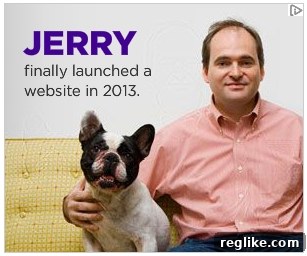
Following registration, the narrative progresses to Jerry’s need for an actual website. This is where web hosting services like Yahoo!’s come into play. A domain name without hosting is merely an address; it requires server space and associated services to host files, databases, and content that comprise a functional website. This slide underscores the symbiotic relationship between domain registration and web hosting, both essential components for establishing an online presence. For domain investors, even a simple landing page can significantly increase a domain’s perceived value and potential for monetization.
Slide 3: “Yahoo! helps Jerry build it.”
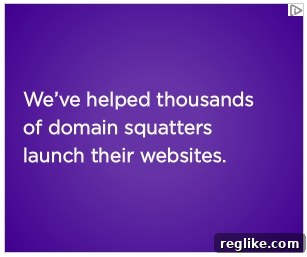
Here, Yahoo! positions itself as the enabler, simplifying the often-complex process of website creation. This slide emphasizes the user-friendliness of their platform, suggesting that anyone, regardless of technical expertise, can transform a registered domain into a live website. This messaging is designed to attract a broad audience, from small business owners to hobbyists and, indeed, domain investors looking to develop their digital assets. It highlights the accessibility of tools provided by hosting companies, which abstract away the underlying technical complexities of web development.
Slide 4: “And thousands of squatters are building theirs too.”

This final slide delivers the punchline that caught the attention of the domain community. By explicitly using the term “squatters,” Yahoo! injects a contentious word into an otherwise benign advertisement. While the intent might have been to convey a sense of widespread adoption or perhaps even a quirky, edgy humor, it inadvertently touches upon a sensitive nerve in the domain world. The ad’s implication is that Yahoo! has facilitated website creation for a vast number of individuals who might be labeled “squatters” by some, whether accurately or not.
Domain Squatting vs. Domain Investing: A Crucial Distinction
The term “domain squatting” carries a negative connotation, often associated with “cybersquatting,” which is the abusive registration of domain names with the intent to profit from the goodwill of someone else’s trademark. Cybersquatting is generally illegal and subject to policies like the Uniform Domain-Name Dispute-Resolution Policy (UDRP). It involves bad faith, such as registering `nike-shoes.com` to sell counterfeit goods or extort money from Nike.
However, the broader term “domain squatters” in casual discourse is sometimes misapplied to legitimate “domain investors” or “domainers.” Domain investing is the practice of acquiring domain names, often generic or highly descriptive terms (e.g., `cars.com`, `insurance.info`), with the expectation that they will increase in value over time or can be developed into profitable online ventures. These investors operate within legal and ethical boundaries, anticipating market trends and identifying valuable digital real estate. They buy domains that are either available for registration or from other owners, often with the intent to develop them, lease them, or sell them at a profit to end-users who will benefit from a premium, memorable web address.
The Yahoo! ad, by simply stating “squatters,” blurs this critical distinction. It’s highly unlikely that Yahoo! intends to openly endorse illegal cybersquatting. More probably, the term was used colloquially to refer to individuals who register domains speculatively or without an immediate, clear-cut development plan, which aligns more closely with the general perception (though often misinformed) of domain investing. Nonetheless, for an industry striving for professional recognition, such terminology from a major tech company can be a point of frustration.
The Role of Web Hosting Providers: A Neutral Platform
Web hosting providers like Yahoo! offer an essential service: the infrastructure for websites to exist online. They are, by and large, neutral platforms. When an individual registers a domain name and purchases a hosting plan, the provider’s primary function is to ensure their services facilitate the creation and maintenance of a website. They typically do not, and cannot reasonably, vet the intent behind every domain registration or website built on their servers, beyond ensuring compliance with their terms of service regarding illegal content.
For Yahoo!, the objective of this ad campaign is clear: to attract more customers to its web hosting and website builder services. By showing how easy it is for “Jerry” – and by extension, “thousands of squatters” – to build a website, they are highlighting the accessibility and utility of their tools. From a business perspective, anyone who needs a website, regardless of their domain acquisition strategy, is a potential customer.
Why Build a Website on a Registered Domain? Beyond Squatting
Even for legitimate domain investors, building a basic website or a landing page on their acquired domains is a common and often beneficial practice. There are several compelling reasons for this:
- Increased Perceived Value: A developed domain, even with minimal content, appears more professional and established than a parked page displaying ads or a blank slate. This can significantly increase its market value for potential buyers.
- Proof of Use and Intent: In potential UDRP disputes, demonstrating “use” of a domain (even a simple, non-infringing website) can be a factor in proving legitimate intent rather than bad-faith registration.
- Search Engine Optimization (SEO): Even a simple, content-rich landing page can begin to rank for relevant keywords, generating organic traffic. This traffic can be valuable, either for direct monetization through advertising or as a lead generation tool for potential buyers of the domain.
- Lead Generation and Monetization: A well-designed landing page can serve as a contact point for inquiries about the domain, facilitate offers, or even host a small business related to the domain’s keyword. This provides a direct avenue for monetization beyond simple domain parking.
- Brand Building: For domains intended for future projects, a placeholder website can start to build brand recognition and establish an online presence long before a full-scale development project begins.
- Market Testing: A simple site can be used to gauge interest in a particular niche or business idea associated with the domain name, providing valuable market feedback.
These reasons illustrate that the act of building a website on a registered domain is a strategic move for many domain owners, transcending any negative connotations of “squatting.” It’s about maximizing the value and utility of a digital asset.
SEO and the Importance of Online Presence for Digital Assets
In the digital age, a domain name is more than just an address; it’s a digital asset. Its value can be greatly enhanced by an active online presence. Search engine optimization (SEO) plays a crucial role here. A domain with a well-structured website, even if it’s a simple informational site, has a much higher chance of ranking in search results than a completely undeveloped domain. This visibility can lead to:
- Increased Organic Traffic: Users searching for keywords related to the domain name may discover the website.
- Higher Authority: Over time, a developed site can acquire backlinks and establish domain authority, further increasing its value.
- Better Valuation: When selling a domain, a strong SEO profile and existing traffic are significant selling points.
Therefore, web hosting services, by enabling website creation, are indirectly contributing to the SEO potential and overall marketability of domain names, regardless of whether the owner is a “domainer” or an entrepreneur.
Conclusion: Navigating Terminology in the Digital Frontier
The Yahoo! ad campaign, while effective in highlighting the accessibility of their web hosting services, inadvertently sparked a conversation about terminology in the domain industry. While Yahoo! likely aimed for a catchy, perhaps even self-aware, jab at the broad category of domain registrants, the term “squatters” carries weight and blurs the lines between legitimate domain investing and illicit cybersquatting.
Ultimately, web hosting providers like Yahoo! play a vital role in the internet ecosystem, empowering millions to bring their ideas and businesses online. They provide the necessary tools for individuals like “Jerry” to transform a registered domain into a functional website. Whether Jerry is a speculative investor, a brand protector, or an aspiring entrepreneur, the ability to easily build an online presence is a foundational service that drives the digital economy. The takeaway from this ad, for the domain community, is a reminder of the ongoing need to educate the public and major corporations about the nuanced and legitimate aspects of domain investing, ensuring that the critical distinction between ethical practices and abusive cybersquatting remains clear.
So, yes, Yahoo! does help thousands of people build websites on their registered domains. And while the choice of the word “squatters” might raise an eyebrow, it underscores the universal need for accessible web hosting solutions in an ever-expanding digital world.