
Australia’s .au Domain Namespace Navigates Stability and COVID-19 Surge in FY 2019-2020
The Australian digital landscape witnessed a period of relative stability for its national domain namespace, .au, throughout the 2019-2020 financial year. Despite a flat overall trajectory in domains under management, the latter half of the year, particularly the second quarter, saw a significant surge in new registrations, largely attributed to the unprecedented challenges and shifts brought about by the global COVID-19 pandemic. This dynamic period is thoroughly detailed in the annual report recently released by .Au Domain Administration Limited (auDA), the policy authority and industry self-regulatory body for the .au domain space.
auDA’s annual report serves as a crucial barometer for the health and evolution of Australia’s online identity. It offers valuable insights into the adoption, growth, and management of .au domain names, which are fundamental to the nation’s digital economy. The 2019-2020 financial year, concluding in June, presents a compelling narrative of a mature domain market adapting to rapidly changing global circumstances, highlighting both inherent resilience and newfound agility.
A Stable Yet Stagnant Landscape: Domains Under Management
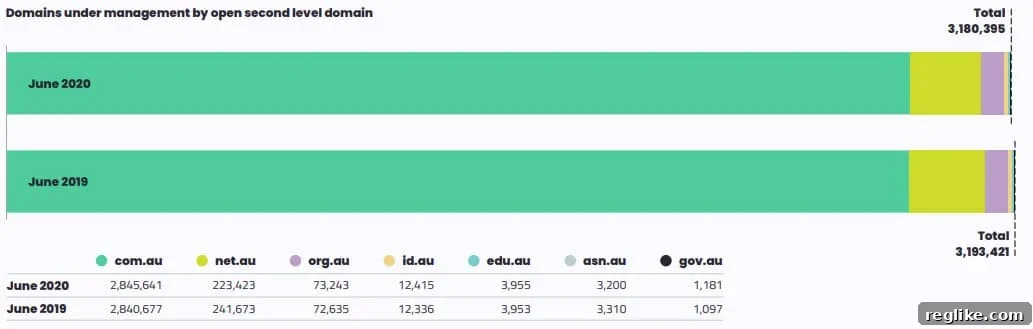
According to auDA’s comprehensive analysis, the total number of .au domains under management remained largely flat throughout the financial year. The reported figures indicate a marginal decrease, moving from approximately 3.193 million domains at the start of the period to 3.180 million by June 2020. This stability, or slight contraction, suggests a mature market where the pace of new domain uptake is balanced by expiring registrations and deletions. For a national top-level domain (nTLD) like .au, maintaining a consistent base of over 3 million active domains underscores its foundational role for businesses, organisations, and individuals across Australia.
Understanding “domains under management” is key to interpreting these figures. It represents the total count of active domain names within the .au namespace at a given time, encompassing new registrations, renewals, and transfers, while accounting for expirations and deletions. A flat trend can indicate several things: a saturated market, economic headwinds impacting new business formation, or perhaps a temporary plateau before future growth phases. The period preceding the widespread impact of COVID-19 showed a steady, predictable pattern of domain usage.
Diving Deeper: Sub-domain Dynamics
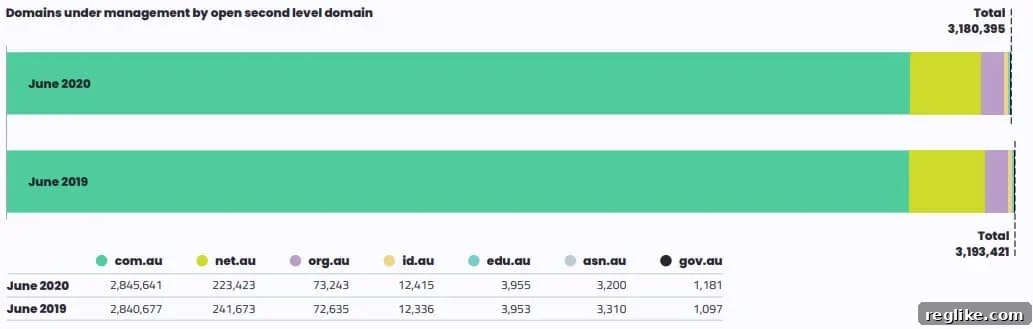
Currently, .au domain names are registered exclusively at the third level, meaning registrants typically choose domains like “yourbusiness.com.au” or “yourorg.org.au” rather than direct “yourbusiness.au.” This structure has fostered distinct identities for different types of entities within the Australian online ecosystem. The auDA report breaks down the performance of key sub-domains, revealing nuanced shifts within the overall flat landscape.
The venerable .com.au domain, traditionally the preferred choice for Australian commercial entities, demonstrated commendable resilience. Its domain base experienced a slight increase compared to the previous year, reinforcing its status as the most trusted and widely adopted domain for businesses operating in Australia. This consistent performance highlights the enduring value of .com.au for branding, search engine optimisation (SEO), and establishing credibility in the Australian market.
In contrast, the .net.au sub-domain saw a noticeable decline, falling from 242,000 domains to 223,000. Historically, .net.au has been popular among network infrastructure providers and businesses with a strong focus on internet-related services. The reasons for this decline could be multifaceted, ranging from a natural consolidation within the tech sector, a preference among new startups for the more universally recognised .com.au, or perhaps a general shift in how businesses categorize their online presence. This trend warrants further observation to understand its long-term implications for this specific segment of the .au namespace.
The COVID-19 Catalyst: A Surge in Q2 Registrations
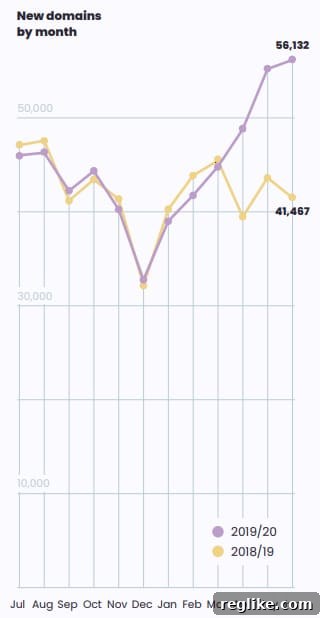
While the overall namespace remained flat, the latter part of the financial year witnessed a dramatic shift in registration activity, particularly during the second quarter. The onset and rapid global spread of the COVID-19 pandemic acted as an unforeseen catalyst, driving an unprecedented demand for online presence. As lockdowns became widespread and businesses were forced to rethink their operations, the imperative to establish or bolster an online footprint became paramount.
The auDA report clearly illustrates this surge. Comparing June 2020 to June 2019, new .au domain registrations soared from 41,467 to a remarkable 56,132 – a significant year-over-year increase. This spike reflects a rapid digitisation across various sectors of the Australian economy. Businesses, from small local shops to larger enterprises, scrambled to launch e-commerce platforms, communicate updated services, or transition to remote working models. Individuals also sought to establish online presences for new ventures, community initiatives, or personal projects during a time of increased digital engagement.
This acceleration in domain registrations underscores the critical role of domain names as the digital storefronts and foundational addresses for any online activity. The pandemic unequivocally highlighted that in a crisis, a robust and accessible online presence is not just a competitive advantage but a fundamental requirement for survival and continuity. The Q2 surge demonstrates the agility of the Australian market in responding to rapidly evolving consumer behaviours and operational demands.
auDA’s Financial Performance and Policy Changes
Beyond domain statistics, the auDA annual report also touched upon the organisation’s financial performance. It noted a spike in revenue for the financial year, which might typically indicate a period of exceptional growth. However, the report clarified that this revenue figure was somewhat “obfuscated” by a change in revenue recognition policies. Revenue recognition policies dictate how and when an organisation accounts for income, particularly relevant for subscription-based services like domain registrations, which often involve multi-year payments. A change in these policies can lead to reported revenue figures that appear higher or lower in a given year, not necessarily reflecting an underlying increase or decrease in actual cash flow or operational activity. auDA’s transparency in noting this adjustment is important for accurate financial analysis.
As the steward of the .au namespace, auDA’s financial health is vital for its ongoing operations, which include maintaining the technical infrastructure of the registry, developing and enforcing policy, promoting cybersecurity, and engaging with stakeholders to ensure the .au space remains reliable and trustworthy. Stable funding allows auDA to invest in critical services that benefit all Australian internet users and domain registrants.
Conclusion: Resilience and Adaptation in the Australian Digital Frontier
The 2019-2020 financial year was a watershed period for Australia’s .au domain namespace. While the overall number of domains under management reflected a mature and stable market, the dramatic increase in new registrations during the COVID-19 pandemic’s initial impact underscored the essential nature of online presence in modern society. This period of dual trends – overall flatness contrasted with a significant late-year surge – paints a picture of resilience and rapid adaptation within the Australian digital economy.
The insights from auDA’s annual report are invaluable for businesses planning their digital strategies, for policymakers shaping the future of Australia’s internet, and for anyone interested in the foundational elements of our online world. As Australia continues to navigate an increasingly digital future, the .au domain remains a critical asset, reflecting the nation’s identity and facilitating its ongoing participation in the global digital landscape. The trends observed in 2019-2020 serve as a powerful reminder of how external events can profoundly influence digital adoption and the enduring importance of a robust, well-managed national domain space.
For a complete and detailed understanding of the year’s performance, the full annual report is available online (PDF document).