
Clothing Company’s UDRP Bid for Shorter Domain Name Fails
In a significant ruling that underscores the complexities of domain name disputes and intellectual property law, a clothing company’s attempt to acquire a shorter, more desirable domain through the Uniform Domain-Name Dispute-Resolution Policy (UDRP) has been unsuccessful. This case serves as a crucial reminder for businesses about the importance of proactive domain registration, understanding UDRP requirements, and respecting legitimate interests in the digital landscape.
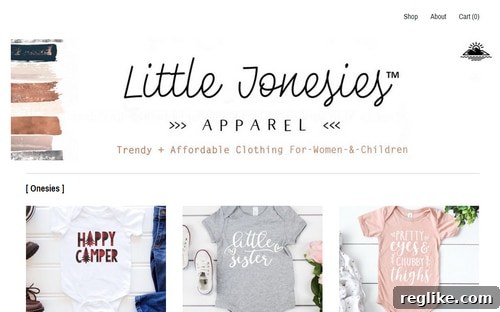
The Case in Focus: LittleJonesies.com Under Scrutiny
The dispute involved Little Jonesies LLC, a company specializing in children’s and women’s apparel. The Complainant currently operates its online presence under the domain name LittleJonesiesCo.com and sought to obtain the more concise and potentially brand-enhancing domain, LittleJonesies.com. The target domain was registered and owned by David Jones of Idaho. Little Jonesies LLC initiated a UDRP complaint, alleging that David Jones was engaging in cybersquatting – the practice of registering a domain name associated with a well-known trademark with the intent of profiting from the goodwill of that mark.
A critical timeline emerged during the proceedings: David Jones registered LittleJonesies.com in January 2016. While Little Jonesies LLC claimed a “first use in commerce” date of 2015 for its brand, the company surprisingly did not secure its own primary domain, LittleJonesiesCo.com, until April 2016. This means David Jones had already registered the disputed domain several months *before* the Complainant established its direct online presence under a similar domain. This chronological detail would become a pivotal factor in the UDRP panel’s ultimate decision, undermining the Complainant’s claims of bad faith.
Demystifying the Uniform Domain-Name Dispute-Resolution Policy (UDRP)
To fully appreciate the nuances of this case, it’s essential to understand the framework of the UDRP. Established by the Internet Corporation for Assigned Names and Numbers (ICANN), and administered by accredited providers such as the World Intellectual Property Organization (WIPO), the UDRP serves as an expedited, administrative alternative to traditional court litigation for resolving certain domain name disputes. Its primary objective is to combat clear instances of “cybersquatting,” where individuals or entities register domain names in bad faith specifically to exploit another’s trademark rights.
The Three Essential Elements for a Successful UDRP Complaint
For any Complainant to prevail under the UDRP, they bear the burden of proving, on the balance of probabilities, all three of the following cumulative elements:
- The domain name is identical or confusingly similar to a trademark or service mark in which the Complainant has rights. This initial hurdle requires a clear resemblance between the disputed domain and the Complainant’s established trademark, whether registered or acquired through common law use.
- The Respondent (the current domain registrant) has no rights or legitimate interests in respect of the domain name. This element is crucial and often contentious. Legitimate interests can arise from using one’s own name, operating a legitimate business under the domain, demonstrating prior use for bona fide purposes, or being commonly known by the domain name.
- The domain name has been registered and is being used in bad faith. This is perhaps the most challenging element to prove. Bad faith registration and use typically involve intentions such as selling the domain to the trademark owner for an inflated price, disrupting a competitor’s business, or attracting internet users for commercial gain by creating a likelihood of confusion with the Complainant’s mark. Simple passive holding of a domain is not always sufficient to prove bad faith without additional compelling evidence.
A failure to prove even one of these three elements conclusively results in the denial of the complaint, meaning the domain name remains with its current registrant. This high bar ensures that the UDRP is not misused as a tool for general domain acquisition or upgrading.
Analysis of Little Jonesies LLC’s Failure: Critical Weaknesses Identified
The UDRP panelist, David H. Bernstein, ultimately ruled in favor of the Respondent, David Jones, citing several critical deficiencies in Little Jonesies LLC’s complaint. These weaknesses offer invaluable lessons for businesses contemplating any form of domain dispute resolution.
1. The “Jones” Factor: A Powerful Legitimate Interest
One of the most significant oversights by Little Jonesies LLC was its failure to adequately address or even acknowledge that the domain registrant’s surname is “Jones.” This seemingly simple detail often provides a compelling and inherent argument for a legitimate interest in a domain name. Individuals generally possess a right to register and use domain names that incorporate their personal names, especially if they have plausible plans for personal use, a family business, or any other legitimate purpose that aligns with their identity.
While David Jones did not submit a formal response to the UDRP complaint, he informally communicated his intention to use the domain for a business venture. The panel could readily infer a legitimate interest based on his surname alone, particularly when juxtaposed with the absence of robust evidence for bad faith on the Complainant’s part. For instance, had David Jones simply stated he registered the domain because he has children and it resonated with a family-oriented concept, this would likely also have constituted a legitimate interest, further weakening the Complainant’s ability to satisfy the second UDRP element.
2. The Damning Timeline: Registration Precedes Online Presence
Despite Little Jonesies LLC’s claim of “first use in commerce” for its brand in 2015, a fundamental issue arose from the fact that David Jones registered LittleJonesies.com in January 2016. Crucially, the Complainant did not register its own operational domain, LittleJonesiesCo.com, until April 2016. This timeline is paramount when attempting to prove the “bad faith registration” element of the UDRP.
For a Complainant to successfully demonstrate bad faith registration, they typically need to show that the Respondent registered the domain name *with their specific trademark in mind* and with the deliberate intent to exploit that mark. When a domain is registered *before* the Complainant has even established its own dedicated online presence with a similar domain, or before its trademark rights are widely and publicly known, it becomes exceedingly difficult to argue that the Respondent registered the domain in bad faith *targeting* that particular brand. While common law trademark rights can indeed predate formal registration, proving a sufficiently widespread and recognizable mark that a third party would register a domain solely to exploit it, prior to the trademark holder even securing their own primary domain, is an exceptionally steep challenge. This suggests that David Jones likely registered the domain for his own reasons, independent of Little Jonesies LLC’s emerging brand, thereby making the “bad faith registration” claim largely unsubstantiated.
3. Absence of Evidence for Bad Faith Use
Another critical failing in the Complainant’s case was its inability to provide any concrete evidence that LittleJonesies.com was being used in bad faith. At the time the UDRP complaint was filed, the domain simply resolved to an error page. The UDRP policy meticulously differentiates between mere passive holding of a domain and active bad faith use. While there are certain exceptional circumstances where passive holding might be construed as bad faith (e.g., for an extremely well-known trademark with no plausible legitimate use by the registrant), simply pointing to a non-active website is rarely sufficient on its own. This is especially true when the registrant has a plausible legitimate interest and the domain was registered prior to the Complainant’s online establishment.
Genuine bad faith use typically involves overt actions such as actively attempting to mislead consumers, disrupting the Complainant’s business operations, or offering to sell the domain to the Complainant or a competitor for an exorbitant price. An error page, when coupled with a legitimate surname and an earlier domain registration date, simply does not meet the high threshold required to prove bad faith under the UDRP.
Crucial Lessons Learned: The Imperative of Proactive Domain Strategy
This UDRP case, overseen by Panelist David H. Bernstein, with legal representation for the Complainant provided by Thorpe North & Western LLP, offers invaluable insights for all businesses and individuals navigating the digital landscape.
For Businesses and Brand Owners:
- Prioritize Early Domain Registration: It is paramount to secure your desired domain names, including key variations (e.g., .com, .net, .org, country-code TLDs, shorter versions, common misspellings), as early as possible in your brand development process. Delaying this crucial step, especially until after your brand is more established or after a similar domain has been registered by another party, significantly weakens your position in any potential future disputes.
- Conduct Thorough Due Diligence: Before initiating any UDRP complaint, it is essential to meticulously research the Respondent and the complete history of the disputed domain. Understanding potential legitimate interests (such as a matching surname) or earlier registration dates can prevent wasted resources, mitigate financial costs, and protect your company’s reputation.
- Deeply Understand UDRP Elements: Do not erroneously assume that the UDRP is a simple or guaranteed tool to acquire a better or shorter domain name. Each of the three mandatory elements must be rigorously and independently proven. The UDRP is explicitly not designed as a mechanism for “domain upgrades” if the current registrant holds a legitimate claim or if bad faith cannot be unequivocally demonstrated.
- Integrate Trademark and Domain Strategy: While formal trademark registration provides robust intellectual property rights, it does not automatically override earlier, legitimately held domain registrations. A truly comprehensive brand protection strategy must seamlessly integrate both proactive trademark registration and strategic domain name acquisition from the outset.
For Domain Registrants:
- Document Your Intent: If you register a domain name, particularly one that could potentially be confused with a future brand, it is highly advisable to document your legitimate reasons and clear plans for its use. This could include formal business plans, personal use intentions, or simply the inherent connection to your own name or family.
- Respond to Disputes Formally: Even if you are confident in the strength of your case, submitting a formal response in a UDRP proceeding is crucial. A formal reply allows you to articulate your position, present evidence, and strengthen your defense directly to the panel. While David Jones’s informal statement was sufficient in this instance, a formal reply would have provided a more robust and comprehensive defense.
Conclusion: UDRP is for Cybersquatting, Not Strategic Domain Upgrades
The Little Jonesies.com case serves as a stark reminder that the UDRP is meticulously designed to combat genuine cybersquatting – the abusive registration of domain names to exploit and profit from others’ trademarks – rather than to facilitate brand owners’ desires for shorter, cleaner, or more premium domain names that are already legitimately held by others. The panel’s decision not to find Reverse Domain Name Hijacking (RDNH), which occurs when a Complainant abuses the UDRP process by bringing a complaint in bad faith, suggests that while Little Jonesies LLC’s case was significantly weak, it was not necessarily brought with malicious intent to harass the registrant. Nonetheless, the outcome clearly illustrates the critical importance of a proactive and well-informed intellectual property strategy in our increasingly digital and competitive age.
Businesses must commit to securing their digital assets strategically and early in their brand lifecycle. Relying on post-hoc dispute mechanisms like the UDRP to rectify missed opportunities in domain acquisition is often a costly, time-consuming, and ultimately unsuccessful endeavor. A brand’s digital presence begins with its domain, and its proactive protection should be a paramount concern from day one.