
Nubank’s Shifting Legal Battle: Florida Lawsuit Withdrawn Amidst Active Georgia Dispute Over Nubank.com
In a surprising development that adds another layer of complexity to its ongoing efforts to secure the Nubank.com domain name, the prominent Brazilian banking company, Nubank (officially Nu Pagamentos S.A.), has abruptly withdrawn an in rem lawsuit filed in Florida. This action comes just six days after the initial filing, casting a spotlight on the company’s legal strategy as it simultaneously pursues a separate, direct case against the domain’s alleged owner in Georgia. The decision to dismiss the Florida suit raises significant questions, especially considering the contrasting claims made by Nubank in each legal proceeding and its history in previous domain name disputes.
This evolving dispute began to draw considerable attention last week when news broke of Nubank initiating the in rem (against the thing) lawsuit in Florida. This particular type of legal action is typically reserved for situations where the domain name registrant’s identity is unknown or beyond the court’s personal jurisdiction. However, the context surrounding Nubank’s Florida filing was immediately peculiar: it came after the company had already been found guilty of Reverse Domain Name Hijacking (RDNH) in a Uniform Domain Name Dispute Resolution Policy (UDRP) proceeding concerning Nubank.com. The swift withdrawal of the Florida case only magnifies the intrigue, prompting a deeper dive into Nubank’s multifaceted legal endeavors to protect its valuable digital asset.
Nubank: A Fintech Giant’s Battle for Brand Identity
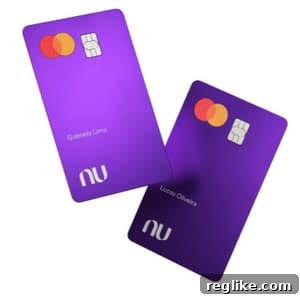
Nubank has rapidly grown into one of Latin America’s most valuable fintech companies, renowned for its innovative digital banking services and distinctive purple credit cards. With millions of customers across Brazil, Mexico, and Colombia, the company’s brand identity is intrinsically linked to its name. In the digital age, a company’s primary domain name often serves as its most crucial online asset and the cornerstone of its brand. For a powerhouse like Nubank, securing the exact-match domain “Nubank.com” is not merely a preference but a strategic imperative for brand protection, customer trust, and market consolidation. This fundamental drive underlies their persistent legal pursuit of the domain, even in the face of previous setbacks and legal complexities.
The company, often hailed as a disruptive force in traditional banking, has invested heavily in building its brand recognition. Consequently, the ownership of a domain name that directly mirrors its established trademark becomes a point of significant strategic importance. The perceived threat of consumer confusion, dilution of brand value, or potential misuse of the domain name would naturally compel Nubank to take vigorous action, though the nature and consistency of that action are now under scrutiny.
The Shadow of Reverse Domain Name Hijacking (RDNH)
A critical piece of the puzzle in this ongoing saga is Nubank’s earlier encounter with the Uniform Domain Name Dispute Resolution Policy (UDRP). The UDRP is an administrative procedure established by ICANN to resolve disputes over the registration of domain names. It provides a relatively quick and cost-effective alternative to traditional litigation for trademark holders who believe a domain name was registered and is being used in bad faith. To succeed in a UDRP complaint, the complainant must prove three elements: (1) the domain name is identical or confusingly similar to a trademark in which the complainant has rights; (2) the registrant has no rights or legitimate interests in respect of the domain name; and (3) the domain name has been registered and is being used in bad faith.
In a notable ruling, Nubank’s UDRP complaint for Nubank.com failed, and the company was furthermore found guilty of Reverse Domain Name Hijacking (RDNH). RDNH is a serious finding by a UDRP panel, indicating that the complainant abused the UDRP process in an attempt to unfairly wrestle a domain name away from its legitimate owner. It serves as a deterrent against frivolous or malicious UDRP filings by trademark holders who know their claims lack merit or are seeking to harass a domain owner. This finding significantly damaged Nubank’s credibility in the domain name dispute arena and raised questions about its legal tactics. It suggests that Nubank initiated the UDRP complaint without a reasonable belief that it could succeed on all three required elements, effectively trying to “hijack” the domain in reverse. An RDNH finding can have lasting implications, potentially influencing how courts and future dispute panels view a complainant’s actions.
The Abrupt Florida In Rem Lawsuit and Its Withdrawal
Following the RDNH finding, Nubank pivoted to federal court litigation, seeking alternative avenues to acquire the Nubank.com domain. The in rem lawsuit filed in Florida was initiated under the Anticybersquatting Consumer Protection Act (ACPA), specifically 15 U.S.C. § 1125(d)(2). This section allows a trademark owner to file a lawsuit directly against a domain name (the “thing” or “rem”) when the registrant cannot be found, cannot be served with process, or is outside the personal jurisdiction of a U.S. court. It’s designed to provide a remedy when a traditional in personam (against the person) lawsuit, which requires personal jurisdiction over the registrant, is not feasible.
In its Florida lawsuit, filed on May 17, 2021, Nubank’s lawyers made the following assertions:
This Court has in rem jurisdiction over the Domain Defendant pursuant to 15 U.S.C. § 1125(d)(2)(A) because NUBANK.COM is registered using a privacy service so Nubank is unable to confirm the identity of the registrant.
and
A personal named George Daniel Hudson Jr. claims to be the owner of NUBANK.COM. However, due to a privacy service that blocks public information about the registrant under the WHOIS database, Nubank is unable to confirm whether Mr. Hudson or some other person or entity is the owner of the NUBANK.COM domain.
These statements were, frankly, puzzling to legal observers. The domain name owner, George Daniel Hudson Jr., had been clearly identified and acknowledged during the preceding UDRP process. Furthermore, he had publicly linked his LinkedIn profile from a website previously hosted on Nubank.com, making his identity easily ascertainable. The claim of being “unable to confirm the identity” due to a privacy service, while technically true for the WHOIS record itself, seemed disingenuous given the readily available public information and Nubank’s prior direct engagement with Mr. Hudson through the UDRP and, as we will explore, another concurrent lawsuit.
Crucially, Nubank abruptly dismissed the Florida lawsuit on May 23, 2021, a mere six days after its initial filing. While the precise reasons for this swift withdrawal remain officially undisclosed, it strongly suggests a realization by Nubank’s legal team that pursuing an in rem action under these specific circumstances was legally untenable or strategically unwise. It is highly probable that the glaring contradiction between their Florida claims (not knowing the registrant) and the facts known to them (and indeed, to the public) became too significant to ignore, potentially opening them up to scrutiny from the court.
The Georgia Lawsuit: A Direct Confrontation with George Daniel Hudson Jr.
The true heart of the contradiction, and the more robust legal battle, lies in a separate, active lawsuit filed by Nubank against George Daniel Hudson Jr. in the U.S. District Court for the Northern District of Georgia. This lawsuit, initiated on March 31, 2021, names Hudson directly as the defendant, alleging trademark infringement, cybersquatting, and other related claims concerning the Nubank.com domain. The very existence of this Georgia case definitively proves that Nubank was not, in fact, “unable to confirm the identity of the registrant” when they filed the Florida case. They knew Mr. Hudson’s identity well enough to sue him personally in federal court, directly undermining the basis for their in rem pleading.
The allegations of trademark infringement stem from Nubank’s assertion that Hudson’s use of “Nubank.com” infringes on their registered trademark rights. Cybersquatting, as defined by the ACPA, involves registering, trafficking in, or using a domain name with a bad-faith intent to profit from the goodwill of another’s trademark. For Nubank to succeed in this Georgia case, they must demonstrate that Hudson’s registration and use of Nubank.com meets the stringent criteria for cybersquatting, including a clear showing of bad-faith intent, a hurdle that can be difficult to overcome, especially after an RDNH finding.
The juxtaposition of these two lawsuits – the Florida in rem claim of an unknown registrant versus the Georgia in personam lawsuit against a specifically named individual – creates a significant legal and ethical quandary for Nubank. Pleading ignorance of a defendant’s identity in one jurisdiction while actively litigating against that very same individual in another jurisdiction for the same asset is highly problematic. It can undermine a party’s credibility with the court and potentially expose them to sanctions or adverse findings regarding their conduct, as legal pleadings are expected to be accurate and consistent.
Adding to the legal back-and-forth, Mr. Hudson has not been silent. On May 12, 2021, he filed a response and counterclaims (pdf) in the Georgia lawsuit. While the specifics of his counterclaims are not fully detailed in the publicly available information, such actions often involve allegations of abusive litigation, declarations of non-infringement, or even claims for damages incurred due to Nubank’s persistent legal challenges. Given the prior RDNH finding, it is plausible that Hudson’s counterclaims could leverage this precedent, arguing that Nubank’s continued legal pursuit constitutes a form of harassment or an attempt to bypass the UDRP outcome. This indicates that Hudson is prepared to vigorously defend his ownership of Nubank.com and challenge Nubank’s actions on multiple fronts.
Legal and Strategic Implications
The entire sequence of events – an RDNH finding, a contradictory in rem filing, its rapid withdrawal, and an ongoing direct lawsuit – suggests a complex and perhaps evolving, if not at times inconsistent, legal strategy on Nubank’s part. It raises several critical questions for legal analysts and stakeholders:
- Was the Florida in rem lawsuit filed out of an abundance of caution, or was it a poorly coordinated attempt to open an alternative front in the dispute, potentially hoping for a default judgment against the “unknown” registrant?
- Did Nubank’s legal team fully assess the implications of the conflicting claims being made in different courts, or was there a breakdown in internal communication regarding the defendant’s known identity?
- What impact will this withdrawal, and the preceding RDNH finding, have on Nubank’s standing and credibility in the ongoing Georgia lawsuit, where their claims of bad-faith cybersquatting must now withstand intense scrutiny?
For George Daniel Hudson Jr., Nubank’s actions undoubtedly represent a significant financial and emotional burden. Defending against a large, well-funded corporation’s legal team is an arduous process, even when one believes they are in the right. His counterclaims are a testament to his determination to protect his rights and potentially hold Nubank accountable for what he might perceive as aggressive and unfounded legal tactics. This protracted legal battle highlights the considerable resources required to defend against corporate giants in domain name disputes.
The Broader Landscape of Domain Name Disputes
This case serves as a compelling illustration of the intricate and often contentious nature of domain name disputes. It highlights the tension between trademark rights, which are powerful tools for brand protection, and domain name registration principles, which often prioritize the “first come, first served” rule unless bad faith can be proven. The ACPA was enacted precisely to address cybersquatting, providing a legal framework in U.S. courts, but its application, especially concerning who can be sued and how, remains subject to judicial interpretation and the specific facts of each case.
Moreover, the case underscores the importance of legal consistency and ethical pleading. Courts expect parties to present facts truthfully and consistently across all filings. Discrepancies, especially those as stark as claiming ignorance of a defendant’s identity in one case while suing them directly in another, can have severe repercussions for the party making such claims, potentially affecting the outcome of the lawsuit and damaging their reputation.
Conclusion: A Battle Far From Over
Nubank’s abrupt withdrawal of its Florida in rem lawsuit for Nubank.com marks a significant turn in its long-running dispute over the critical domain name. While the Florida chapter may be closed, the core battle continues fiercely in Georgia, where Nubank faces George Daniel Hudson Jr. directly with allegations of trademark infringement and cybersquatting. The history of this dispute, including the UDRP’s RDNH finding and the strategic misstep in Florida, suggests that Nubank’s path to acquiring Nubank.com remains fraught with challenges. As Mr. Hudson pushes back with his own counterclaims, this high-stakes legal confrontation promises to be a closely watched case, potentially setting precedents for how powerful brands navigate the complex intersection of trademark law, domain name rights, and strategic litigation in the digital age. The outcome of the Georgia lawsuit will undoubtedly shape the future of Nubank.com and offer valuable insights into domain name jurisprudence.
The full Georgia lawsuit filing can be reviewed here (pdf), and Hudson’s response and counterclaims here (pdf).