
Domain Name Giants Pour Millions into Washington Lobbying to Influence Internet Policy
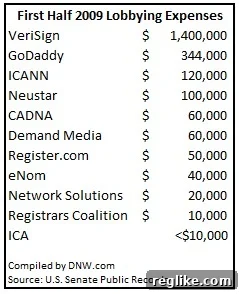 The foundational layers of the internet, particularly the domain name system, are critical components of our global digital infrastructure. Consequently, policies and regulations governing this space are fiercely debated and heavily influenced by key industry players. A recent comprehensive analysis, based on public records filed with the U.S. Senate, reveals that domain name related companies collectively spent over $2 million in the first half of the year alone on lobbying efforts in Washington. This substantial investment highlights the industry’s profound commitment to shaping legislative and regulatory outcomes that will dictate the future direction of the internet.
This in-depth study, initially brought to light by Domain Name Wire, meticulously calculates the lobbying expenses incurred by various domain name companies and other organizations with significant interests in domain-related issues. The findings underscore a strategic and financial dedication to advocating for specific agendas, ranging from the introduction of new domain extensions to the protection of online privacy and the combatting of cybercrime. As the digital economy continues its rapid expansion, the stakes for domain registrars, registries, and internet governance bodies have reached unprecedented levels, making active engagement in the policy-making process indispensable.
Understanding the High Stakes: Why Domain Name Lobbying Matters
Lobbying serves as a vital conduit through which organizations articulate their concerns and advocate for their interests directly to legislators and policymakers. For the domain name industry, this advocacy is particularly crucial given the internet’s dynamic evolution and its pervasive impact on global commerce, communication, and national security. Companies and non-profits within this sector actively engage in lobbying to ensure that emerging legislation and regulatory frameworks are conducive to their operations, stimulate innovation, safeguard consumer rights, and effectively address burgeoning threats in the digital realm.
The issues at the heart of this lobbying are both diverse and intricate. They span from highly technical aspects of domain name system (DNS) architecture to broader societal concerns such as data privacy, intellectual property rights, and comprehensive cybersecurity measures. The millions of dollars invested reflect a sophisticated understanding that policy decisions enacted in Washington D.C. possess the power to trigger ripple effects, impacting not only individual businesses and their profitability but also the entire global internet ecosystem and its billions of users worldwide. These efforts are a testament to the ongoing battle to define the rules of the digital frontier.
Key Players and Their Legislative Battlefronts
VeriSign’s Enduring Influence on Core Internet Infrastructure
As the operator of the authoritative registries for the ubiquitous .com and .net top-level domains—foundational elements of the internet’s addressing system—VeriSign (NASDAQ: VRSN) is consistently the most significant spender in the domain name lobbying landscape. In the first half of 2009, the company allocated an impressive $1.4 million towards its lobbying endeavors. VeriSign’s legislative agenda is notably expansive, encompassing critical areas such as “Domain Name Addressing, Data legislation, Authentication Internet Content Legislation, Internet taxation, Internet e-mail legislation, e-commerce, and phishing legislation.”
This comprehensive list reflects VeriSign’s indispensable position at the core of the internet. Influencing policy on data legislation, for instance, is paramount for defining how data is managed, stored, and secured across its vast registry operations. Similarly, advocating for favorable internet taxation and e-commerce policies directly impacts the economic environment in which its domain services thrive. While the $1.4 million expenditure signifies a robust commitment, it also represents a decrease from the nearly $3.8 million VeriSign spent in the full preceding year, indicating a potential recalibration of their lobbying intensity or a strategic shift in their policy priorities, though their dedication to influencing internet policy remains unwavering.
GoDaddy’s Broad Legislative Push for Registrars and Innovation
As one of the world’s preeminent domain registrars and web hosting providers, GoDaddy exerts considerable influence on Capitol Hill. The company spent $344,000 during the first half of the year on lobbying efforts designed to advance its diverse business interests and the broader domain market. GoDaddy’s advocacy targets a wide array of issues, including policy discussions surrounding “new gTLDs” (generic Top-Level Domains), the crucial ICANN Joint Project Agreement (JPA), regulations concerning targeted online advertising, the protection of trademarks and copyrights, comprehensive patent reform, and the highly sensitive issue of WHOIS database privacy.
The company’s strong push for “new gTLDs” underscores its strategic interest in expanding the digital landscape beyond traditional domain extensions like .com and .org, thereby unlocking new revenue streams and branding opportunities for businesses and individuals alike. Advocacy for “WHOIS database privacy” highlights ongoing concerns over the public accessibility of domain registrant information—a contentious topic that necessitates balancing transparency with the imperative of personal data protection. To amplify its collective voice, GoDaddy strategically co-founded the “Internet Domain Name Registrars Coalition” alongside Network Solutions and, initially, Oversee.net (Moniker). Although Oversee.net has since withdrawn from the group, this coalition exemplifies a proactive move by major registrars to present a unified front on pivotal policy matters affecting the industry.
ICANN: Navigating the Complexities of Global Internet Governance
The Internet Corporation for Assigned Names and Numbers (ICANN), a global multi-stakeholder organization responsible for coordinating the maintenance and procedures of several databases related to the internet’s namespaces and numerical spaces, is also a significant participant in Washington’s lobbying landscape. ICANN spent $120,000 year-to-date on a broad range of “Internet governance issues.” Its comprehensive agenda includes shaping policies on “new gTLDs, consumer protection and domain name competition, security and spam, independence from UN/ITU/government capture, post-JPA cooperation with USG, cybersecurity and accountability/transparency.”
ICANN’s lobbying endeavors are inextricably linked to its global mission of ensuring a stable, secure, and interoperable internet. Issues such as “independence from UN/ITU/government capture” are paramount for preserving the multi-stakeholder model of internet governance, thereby preventing any single national or intergovernmental entity from dominating policy decisions. Their advocacy surrounding “cybersecurity and accountability/transparency” directly addresses persistent threats to online safety and the critical need for clear, equitable processes in managing domain names. Furthermore, ICANN’s engagement with specific legislative actions, such as “S.773, the Cybersecurity Act of 2009,” illustrates its direct involvement with proposed laws that could profoundly impact the foundational layers of the internet’s operation and governance.
Other Key Industry Stakeholders: Diverse Interests and Shared Influence
Beyond the most prominent spenders, numerous other companies and organizations actively participate in the lobbying arena, each pursuing distinct objectives that collectively contribute to the broader policy discourse:
- Register.com: Allocated $50,000 to influence “Legislation to authorize the Small Business Administration to assist unemployed individuals start on-line businesses.” This initiative highlights the potential for domain registrars to align with broader economic development goals, thereby connecting domain ownership with entrepreneurship and job creation.
- Demand Media & eNom: Demand Media spent $60,000, while its eNom division contributed an additional $40,000, specifically lobbying about “new generic top-level domains.” As a prominent content and domain services company, their strategic interest lies in the expansion of the domain name space, which creates new avenues for content creation, brand differentiation, and registration services.
- Neustar: As the authoritative registry for popular domains such as .biz and .us, Neustar invested $100,000 towards “FCC nominations and ICANN issues.” Their lobbying focus underscores the critical intersection of telecommunications regulation (managed by the FCC) and internet governance (managed by ICANN), both of which are vital for a registry operator’s ongoing operations and strategic direction.
- Network Solutions: Another long-established domain registrar, Network Solutions spent $20,000, indicating its continued, albeit more modest, presence and engagement within the lobbying landscape.
Advocacy Groups Shaping Policy: Protecting Rights and Combating Abuse
CADNA: Combating Cybersquatting and Safeguarding Brands
The Coalition Against Domain Name Abuse (CADNA) serves as a crucial voice for brand owners and businesses grappling with malicious domain practices. CADNA spent $60,000 to proactively address issues related to “cybersquatting” and relevant ICANN policy. Cybersquatting, defined as the bad-faith registration, trafficking in, or use of a domain name with the intent to profit from the goodwill of another’s trademark, poses a significant threat to intellectual property rights and erodes consumer trust. CADNA’s lobbying efforts are specifically aimed at strengthening protections against such abuses, often working within the ICANN framework to advocate for more robust dispute resolution mechanisms and stringent enforcement policies. It is noteworthy that some of CADNA’s individual members, such as the Intercontinental Hotels Group, also conduct their own direct domain name lobbying, illustrating a multi-faceted approach to tackling this persistent issue.
ICA: Championing Internet Commerce and Domain Investor Rights
The Internet Commerce Association (ICA) plays a vital role in advocating for the rights and interests of domain name investors, registrants, and all participants in the legitimate domain name aftermarket. While historically a highly active voice, the ICA appears to have scaled back its direct lobbying efforts this year, spending less than $5,000 each quarter. This observed reduction could be indicative of strategic reallocations of resources, a shift in immediate policy priorities, or a focus on other forms of advocacy. Nevertheless, their core mission to protect the rights of legitimate domain name owners and to foster a thriving internet commerce environment remains central to their overall advocacy.
Broader Corporate Engagement: Domain Issues Beyond the Core Industry
The profound influence of domain name policy extends far beyond the dedicated industry players. Other major corporations and influential organizations also strategically allocate portions of their broader lobbying budgets to address domain name issues, recognizing their fundamental interconnectedness with wider business interests. The engagement of companies like HP and the highly influential United States Chamber of Commerce underscores that domain name policy is not a niche concern but rather a fundamental aspect of digital commerce, brand protection, and intellectual property management for corporations across virtually all economic sectors.
The Stakes of Domain Name Lobbying: Shaping the Internet’s Future for All
The millions of dollars consistently invested in domain name lobbying are far more than mere expenditures; they represent strategic investments in shaping the fundamental architecture and the overarching regulatory environment of the internet. These concerted efforts directly influence a vast spectrum of critical elements, from the accessibility and cost of domain names to the sophisticated security measures safeguarding them, the degree of privacy afforded to domain owners, and the complex legal frameworks governing online content and commerce. The collective voice and financial commitment of these diverse entities in Washington play a pivotal role in defining the delicate balance between fostering innovation and implementing necessary regulation, championing commercial interests versus ensuring the public good, and upholding the rights of individuals against the operational needs of corporations.
Understanding precisely who is lobbying, the specific issues they are addressing, and the significant financial resources they are deploying provides invaluable insight into the powerful forces that continually drive and reshape internet policy. It illuminates the intricate interplay of technological advancement, commercial imperatives, legal precedents, and political dynamics that collectively govern our increasingly digital lives. Furthermore, it underscores the continuous, often behind-the-scenes, battle to define the very future and operational principles of the World Wide Web.
As the digital landscape relentlessly evolves, so too will the complex and critical issues debated in the halls of power. The ongoing financial commitment demonstrated by leaders within the domain name industry in Washington D.C. ensures that their perspectives and interests remain central to these crucial discussions, ultimately impacting every single user and business that relies upon the internet for communication, commerce, and innovation.