
Navigating a Domain Change: StateWP’s Journey to Rebranding and Specialization
This is part of a series about companies changing their domain names. See other stories in the series here.
The Strategic Pivot: From General Web Design to WordPress Specialization
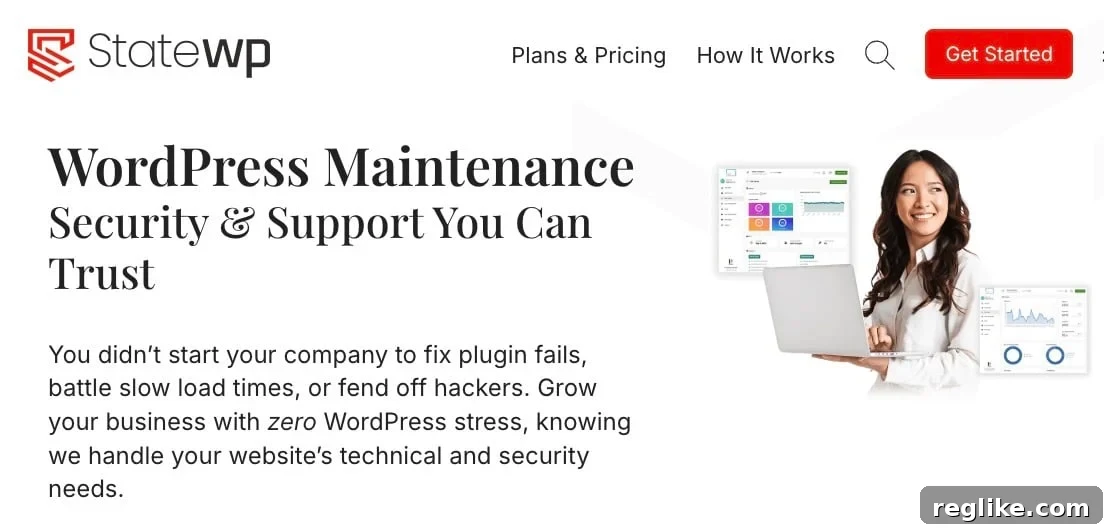
In the rapidly evolving digital landscape, businesses often reach a point where their initial identity no longer perfectly aligns with their core mission or strategic direction. Such was the journey of State Creative, a web design and development firm that recognized the need for a significant transformation. This evolution wasn’t merely a superficial rebranding; it represented a complete strategic pivot, leading to a new identity and, crucially, a new domain name: StateWP.com.
Garrett Goldman, Managing Partner of StateWP, articulates the profound reasoning behind this shift. “Our domain switch wasn’t just about branding,” Goldman asserts. “It reflected a complete pivot in what our company does.” This statement highlights that a domain name is more than just a web address; it’s a powerful statement of a company’s focus, reflecting its expertise and core service offerings to the world.
Initially, State Creative operated as a versatile web design and development agency, catering to a wide array of client requirements. While this broad approach fostered diverse experience, the team at State Creative increasingly identified a specific niche where their skills could create maximum impact: WordPress website security and maintenance. They observed a growing demand for specialized expertise in safeguarding and optimizing websites built on WordPress, the internet’s most popular content management system.
The decision to specialize was a carefully considered strategic move. As Goldman explains, “Over time, however, we found our niche in WordPress website security and maintenance and made the strategic decision to shift our focus entirely.” This specialization allowed StateWP to concentrate its resources, deepen its knowledge base, and offer unparalleled service in a critical, high-demand sector. By narrowing their focus from general web development to a specific, vital aspect of WordPress management, they positioned themselves as authoritative experts in a competitive market, setting the stage for sustainable growth and client trust.
Crafting the New Identity: The Birth of StateWP.com
With a clear and specialized vision for their future, the imperative to align their brand identity became paramount. The name “State Creative” had served its purpose but no longer precisely conveyed their newfound, dedicated expertise. A new name was needed that would instantly communicate their specialization while retaining a thread of continuity with their past.
The team skillfully sought a balance between preserving their heritage and establishing a clear, forward-looking identity. “We wanted to keep some continuity, so we transitioned from State Creative to StateWP,” Goldman recounts. The “State” component provided a recognizable link for existing clients and partners, ensuring a smooth transition in perception. However, the addition of “WP” was the transformative element. It explicitly signaled their unwavering commitment and specialization in WordPress, eliminating any ambiguity about their primary service offering. This concise yet impactful change profoundly influenced how the company would be perceived by both clients and search engines.
A significant factor that facilitated this rebranding was the fortunate availability of StateWP.com. “The domain StateWP.com was available, which made the decision even easier,” Goldman notes. Securing a direct, brandable, and keyword-relevant domain like StateWP.com is immensely valuable for brand recognition, memorability, and, crucially, for search engine optimization (SEO). A domain that clearly articulates a business’s focus immediately provides context to both users and search algorithms, building a strong foundation for digital visibility and authority.
The Immense Undertaking: Preparing for a Domain Migration
Even for an organization that regularly guides clients through complex digital transitions, undertaking a domain name change for oneself is an monumental endeavor. It extends far beyond merely redirecting an old web address to a new one; it encompasses a holistic digital migration that impacts virtually every facet of an online presence. Garrett Goldman frankly admits, “Even as a company that helps clients with this kind of transition, it was a lot of work.” This candid admission highlights the sheer scale of the operation and the meticulous planning required to navigate such a change successfully.
The preparation phase for StateWP’s domain change was exceptionally thorough, driven by a comprehensive checklist designed to ensure every detail was addressed. This systematic approach is crucial for minimizing disruption, safeguarding digital assets, and maintaining brand continuity. Their extensive preparations included:
- Updating All Third-Party Platforms and Tools: This foundational step involved reconfiguring credentials, settings, and integrations across all external digital services integral to their daily operations. Platforms such as Google Drive, Asana, Slack, and various CRM or marketing automation tools, which house critical data, project management information, and internal communications, all required meticulous updates to reflect the new company name and associated email addresses linked to the StateWP.com domain. Overlooking these updates could lead to data inconsistencies, access issues, and significant operational inefficiencies.
- Printing New Business Cards: While seemingly a minor detail, new business cards serve as a tangible and professional representation of the updated brand identity. This physical alignment ensures that all contact information presented in person aligns seamlessly with the new digital identity and domain.
- Updating Google My Business Listing and Other Directory Profiles: For optimal local search visibility and general online discoverability, revising the Google My Business profile is non-negotiable. Similarly, maintaining consistency across all relevant online directories (e.g., Yelp, industry-specific listings, chambers of commerce websites) is vital for robust local SEO and ensuring potential clients always find accurate, up-to-date information. Inconsistent or outdated listings can confuse customers and negatively impact search engine rankings.
- Notifying Customers, Contacts, and Partners: Proactive and transparent communication is a cornerstone of a successful rebrand. Informing existing clients, industry contacts, and strategic partners about the change helps manage expectations, reassures them of business continuity, and provides them with updated contact details. This comprehensive outreach can be executed through targeted email campaigns, prominent website announcements, and personalized direct communication.
- Reviewing and Updating Online Presence Everywhere the Old Name or Domain Appeared: This constitutes a monumental audit, requiring a diligent scan across the entire internet for any mentions of “State Creative” or the previous domain. This encompasses meticulously updating social media profiles (LinkedIn, Twitter, Facebook, Instagram), revising author bios on guest posts, updating online articles, republishing press releases with the new branding, and addressing any other digital footprint where the old name might still reside. Consistency across all digital channels is paramount for reinforcing the new brand and preventing user confusion or distrust.
The Post-Migration Gauntlet: Overcoming Unforeseen Challenges
The work associated with a domain change does not conclude the moment the “switch is flipped.” In many respects, the post-migration phase demands even greater vigilance, requiring continuous monitoring and swift responses to any emerging issues. StateWP experienced this reality firsthand. “After the switch, we easily spent more time combing back through everything, such as checking redirects, fixing broken links, updating email footers, and refreshing internal documents,” Goldman reveals.
This phase of meticulous post-launch oversight is indispensable for several critical reasons:
- Checking and Validating Redirects: The implementation of 301 permanent redirects from every relevant URL on the old domain to its corresponding new URL is the most crucial technical SEO step. These redirects instruct search engines that content has permanently relocated, thus aiming to transfer as much “link equity” and ranking power as possible. Rigorous testing is mandatory to ensure every significant URL from the legacy site correctly points to its new destination. Faulty redirects can lead to frustrating 404 “page not found” errors for users and a devastating loss of hard-earned SEO rankings.
- Fixing Broken Internal Links: Even with perfectly executed 301 redirects, internal links embedded within the website’s existing content may still point to the old domain. These must be systematically identified and updated to the new domain to guarantee a seamless user experience and ensure proper internal link equity flow, which is vital for SEO. While controlling external links pointing to the old site is more challenging, monitoring incoming backlinks and proactively reaching out to referring webmasters can help minimize negative impacts.
- Updating Email Footers and Signatures: This seemingly minor detail is often overlooked but is crucial for maintaining a professional and consistent brand image. Outdated email footers containing the previous domain can create confusion, direct recipients to defunct addresses, and subtly undermine the new brand identity.
- Refreshing Internal Documents and Templates: All company documents, standard operating procedures, presentation templates, and internal knowledge bases must be meticulously updated to reflect the new brand and domain. This ensures internal consistency, streamlines operations, and prevents staff from inadvertently disseminating outdated or incorrect information, which could reflect poorly on the company.
The Domain Authority Dilemma: Rebuilding SEO from Scratch
Despite the most diligent planning and flawless execution, certain challenges are intrinsically linked to a domain migration, regardless of how meticulously it’s managed. The most formidable hurdle for StateWP, a challenge shared by many organizations undergoing similar transitions, was the unavoidable impact on domain authority. “We planned carefully and executed well, so the transition was smooth overall. But the toughest part was something we couldn’t fully control: starting over with domain authority,” Goldman states.
Domain Authority (DA) is a search engine ranking score, pioneered by Moz, which estimates how likely a website is to rank well in search engine results pages (SERPs). It’s a composite metric derived from numerous factors, including the number and quality of linking root domains and the overall backlink profile. While 301 redirects are designed to preserve and transfer link equity, they rarely convey 100% of it. Consequently, a new domain often begins with a diminished trust factor in the eyes of search engines, even if the underlying content remains identical or improves.
Goldman’s firsthand experience vividly illustrates this harsh reality: “Even though we were meticulous with our 301 redirects and SEO prep, the new domain meant we had to rebuild our authority from zero. It’s taken a couple of years to regain what we lost, and we’re still working on it.” This serves as a potent caution for any entity contemplating a domain change. Rebuilding domain authority is an extended process, demanding consistent creation of high-quality, relevant content, sustained efforts in ethical link building, and unwavering adherence to SEO best practices. It invariably entails a temporary, but often significant, dip in organic search traffic and keyword rankings, which can directly affect lead generation, customer acquisition, and overall revenue streams.
The Verdict: A Necessary Move Despite the Hurdles
Despite the arduous nature of the journey and the ongoing commitment required to fully restore and enhance their digital footprint, Garrett Goldman remains steadfast in his conviction that the domain change was the correct and necessary decision. “Still, I don’t regret the move. Our business model changed significantly, and the rebrand was absolutely necessary,” he concludes. This perspective powerfully underscores that for certain businesses, the strategic long-term benefits of a rebrand and a new, more aligned domain name unequivocally outweigh the temporary, albeit substantial, SEO challenges.
For StateWP, the decision to align their brand name so precisely with their specialized service in WordPress security and maintenance provided a clearer market identity, enabled them to attract their ideal clientele more effectively, and allowed them to truly establish leadership within their chosen niche. The investment of time, effort, and resources into the transition, while considerable, was seen as an essential step toward achieving sustainable growth and market dominance in their focused field.
Expert Advice for a Successful Domain Change
Drawing from StateWP’s invaluable firsthand experience, Garrett Goldman offers essential advice for any organization contemplating a domain switch. His recommendations underscore the paramount importance of thorough preparation, meticulous execution, and a realistic understanding of the potential challenges and pitfalls inherent in such a transition.
If you’re thinking about changing your domain, here’s my advice:
- Don’t Wing It – Create a Comprehensive Checklist: A domain migration is inherently complex and should never be approached without an exhaustive, detailed plan. Your checklist must be all-encompassing, covering every imaginable aspect of your digital presence. This includes, but is not limited to, a thorough SEO strategy (including keyword remapping, a comprehensive content audit, and a detailed redirect plan), email system configurations (addresses, aliases, and signatures), analytics tracking setup (Google Analytics, Google Search Console for the new domain), meticulous redirect implementation and rigorous testing, updating all login credentials for third-party services, ensuring branding consistency across all digital and physical assets, updating all social media profiles, and considering any legal implications of the change. Overlooking even a single element can lead to cascading problems and significant setbacks.
- Test Everything Before Flipping the Switch: Never operate under the assumption that everything will function flawlessly. Utilize a staging environment to meticulously simulate the entire domain change process. Test all redirects, verify internal links, test all forms, and confirm the functionality of every interactive element. Conduct comprehensive user acceptance testing (UAT) to ensure the user experience remains seamless and intuitive. Critically, verify that all third-party integrations (e.g., payment gateways, CRM systems, marketing automation platforms) continue to function correctly with the new domain.
- Map Your Redirects Carefully and Monitor Them After Launch: This point cannot be overemphasized. Develop a highly detailed spreadsheet that meticulously maps every important URL from your old domain to its corresponding new URL. Implement 301 permanent redirects for all content that has permanently moved. Post-launch, continuously monitor these redirects using professional tools like Google Search Console, Screaming Frog, or other SEO crawlers to identify and promptly rectify any broken links, redirect chains, or redirect loops that could severely degrade performance and user experience. Regular audits are absolutely essential for maintaining ongoing SEO health.
- If Possible, Hire Someone Who’s Done This Before: The intricate nuances of a domain migration often necessitate specialized expertise. Engaging an experienced SEO consultant or a web development firm with a proven track record in successful migrations can be a game-changer. “It’s easy to overlook details, and small mistakes can snowball into bigger problems,” Goldman wisely cautions. An expert can anticipate potential issues, streamline the entire process, and effectively mitigate the inherent risks associated with potential SEO losses, ultimately saving invaluable time, significant financial resources, and considerable stress in the long run. Their professional guidance ensures that industry best practices are adhered to for every technical aspect, from server configurations to intricate content updates.
In conclusion, while the prospect of changing a domain name can appear formidable, particularly given the challenges of rebuilding domain authority and navigating complex technicalities, it can undeniably be a necessary and ultimately highly beneficial step for a business undergoing a profound strategic transformation. “With the right preparation, it’s totally manageable,” Garrett Goldman confidently affirms. However, he offers a final, critical piece of advice: “But underestimating the work can hurt your digital footprint far more than you expect.” A truly successful domain migration stands as a testament to meticulous planning, diligent execution, unwavering post-launch vigilance, and an unwavering commitment to maintaining a robust, healthy online presence throughout the entire, multifaceted process.