
Unlocking Digital Value: A Startup’s Guide to Domain Name Aftermarket Pricing
In today’s hyper-digital landscape, a robust online presence is not merely an advantage; it’s a fundamental necessity for any aspiring business. At the heart of this digital identity lies the domain name – your company’s virtual address and often the first point of interaction with potential customers. For startup entrepreneurs, navigating the complex world of domain acquisition, especially within the dynamic aftermarket, can be a daunting task. Understanding the true value and potential cost of a premium domain name is crucial for setting realistic budgets and making informed strategic decisions that impact long-term success.
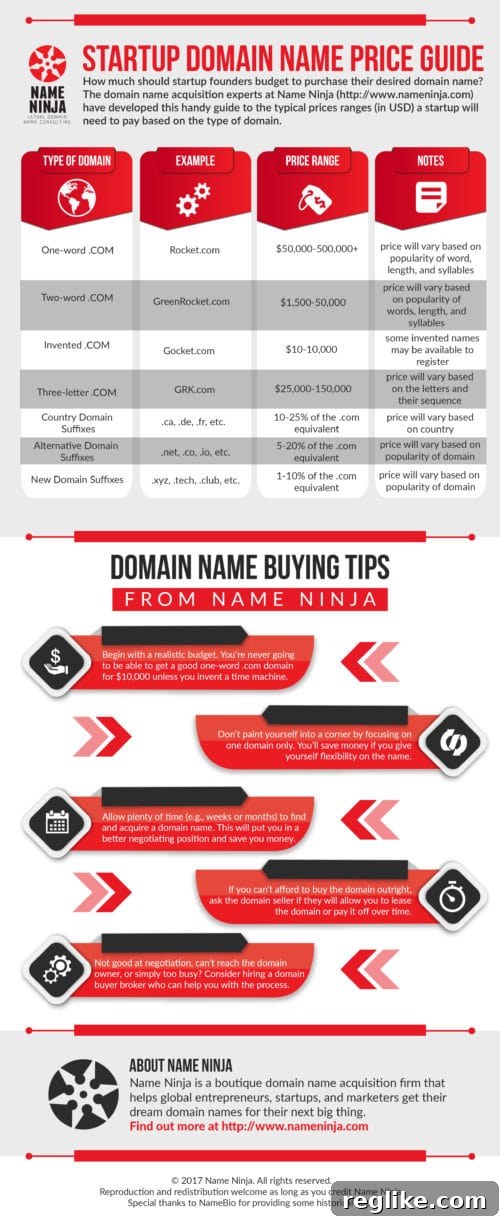
The journey of educating end-users about the intrinsic value of domain names often presents a significant challenge for seasoned domain investors and industry experts alike. This is precisely why resources that demystify domain pricing are invaluable. Enter Name Ninja, a respected domain buyer broker, which has thoughtfully released comprehensive guidelines designed to shed light on aftermarket domain valuations. These guidelines serve as an essential reference point for both nascent businesses and established enterprises contemplating their digital footprint.
Name Ninja’s Strategic Insights: Demystifying Domain Valuation
Name Ninja’s meticulously crafted pricing guidelines are specifically tailored to assist startups in acquiring the ideal domain name for their burgeoning ventures. However, their utility extends far beyond new businesses, offering clarity and reasonable price expectations to established companies looking to upgrade or expand their domain portfolios. The guidelines expertly categorize popular domain types, such as highly coveted one-word .com domains, two-word .com combinations, and innovative invented names within the .com extension, providing transparent benchmarks for each.
Bill Sweetman, the visionary founder of Name Ninja, undoubtedly encounters countless entrepreneurs who dream of securing a prime one-word .com for their business, only to discover their initial budget falls significantly short of market realities. This invaluable guide acts as a foundational tool, helping these ambitious founders cultivate realistic expectations from the outset. As a domain owner and negotiator myself, I foresee frequently referring to these precise guidelines whenever I enter discussions to divest one of my own prized domain assets, leveraging their authoritative framework to ensure fair and informed transactions. These guidelines are not just numbers; they are a strategic asset in any domain acquisition or divestment process.
The Digital Gateway: Why Your Domain Name Matters More Than You Think
Your domain name is far more than just a web address; it’s a cornerstone of your digital brand identity. It’s the first impression you make online, a critical factor in customer recall, and a powerful tool for marketing and search engine optimization (SEO). For startups, choosing the right domain name can be the difference between blending into the background and standing out in a crowded market. A well-selected domain name is an investment that pays dividends in credibility, visibility, and brand equity.
Branding and Memorability: Crafting an Unforgettable Identity
A short, memorable, and relevant domain name significantly enhances brand recall. Think of iconic brands; their domain names are often simple, intuitive, and directly reflect their business. A strong domain makes it easier for customers to find you, tell others about you, and return to your site. It embodies your brand’s essence and contributes to its perceived professionalism and trustworthiness. An obscure, hard-to-spell, or overly complicated domain can deter potential customers before they even reach your website, leading to lost opportunities and a diluted brand message. The ability to verbally share your domain easily is also a hidden gem for organic word-of-mouth marketing.
SEO Advantage: Building Authority and Visibility
While exact-match domains (EMDs) are less critical for SEO than they once were, a keyword-rich or brandable domain can still offer a distinct advantage. It signals to search engines and users what your business is about, contributing to higher click-through rates and better organic visibility. A reputable, long-standing .com domain often carries inherent authority and trust, which can subtly influence search engine rankings over time. Furthermore, a clean, professional domain inspires confidence, reducing bounce rates and encouraging deeper engagement—factors that indirectly boost SEO performance by improving user experience signals.
Trust and Credibility: The Foundation of Online Business
In the digital realm, trust is paramount. A professional domain name, particularly a .com, instantly lends credibility to your business. It suggests stability, legitimacy, and a serious commitment to your online operations. Conversely, a less common, generic, or free domain extension might inadvertently raise red flags for discerning customers, suggesting a less established, temporary, or even questionable operation. Investing in a premium domain communicates confidence, a long-term vision, and professionalism, which are all essential for building customer loyalty and attracting potential investors and partners.
Navigating the Domain Aftermarket: Where Digital Assets Change Hands
The domain aftermarket is a bustling ecosystem where previously registered domain names are bought and sold. Unlike registering a new domain directly from a registrar, acquiring an aftermarket domain means purchasing it from its current owner. This market is incredibly dynamic, driven by factors such as demand, perceived value, brandability, and scarcity. For startups, the aftermarket often holds the key to securing a truly premium domain name that might no longer be available through standard registration channels, providing a significant competitive edge.
Why Domains are Traded in the Aftermarket:
- Branding Opportunities: Many highly desirable, short, and memorable domains were registered years ago and are now only available on the aftermarket. These offer unparalleled branding potential.
- Business Acquisitions: When a business is sold, its domain name is often a crucial asset in the transaction, highlighting its integral role in corporate identity.
- Brand Upgrades: Established businesses might seek to improve their online presence by acquiring a more impactful, brand-defining domain that better reflects their growth or market position.
- Typo Squatting & Protection: Some domains are bought to protect a brand from cybersquatting or to capture traffic from common misspellings, safeguarding intellectual property.
- Investment: Domain investors acquire and hold domains they believe will appreciate in value, much like real estate, betting on future market trends and demand.
- Rebranding Initiatives: Companies undergoing a rebrand often need a new domain name that aligns with their fresh identity and strategic direction.
Decoding Domain Value: Key Factors Beyond Simple Categories
While Name Ninja’s guidelines offer excellent starting points, understanding the nuances that contribute to a domain’s value is essential for any savvy buyer. Domain valuation is an art as much as a science, influenced by a multitude of interconnected factors that can significantly sway its final price.
The Power of .COM: Why It Remains King
The .com extension undeniably holds the highest perceived value and global recognition. It is the default for most internet users and businesses, signaling credibility and broad reach. While new generic top-level domains (gTLDs) have emerged, .com remains the gold standard, often commanding significantly higher prices due to its ubiquity and established trust. Startups aiming for global appeal and maximum brand authority should prioritize a .com domain whenever possible, as it inherently projects an image of stability and widespread accessibility.
Length and Memorability: Shorter is Sweeter
Generally, shorter domain names are more valuable. They are easier to remember, type, and communicate verbally, reducing the chance of errors and enhancing user experience. One-word and two-word .com domains, as highlighted by Name Ninja, are premium assets due to their extreme scarcity and immense brandability. The easier a domain is to recall, the more traffic it’s likely to generate through direct navigation, providing a consistent source of organic visitors.
Keywords and Brandability: Striking the Right Balance
A domain name that incorporates relevant keywords (e.g., “WebDesign.com”) can provide an SEO boost and instantly communicate a business’s purpose, making it immediately understandable to potential customers. However, pure keyword domains are sometimes less unique or brandable. The ideal domain often strikes a delicate balance, being both descriptive enough to convey meaning and unique enough to form a strong, memorable brand identity. Invented names, if catchy and pronounceable, can become incredibly powerful brands (think “Google” or “Spotify”), but their initial value might be harder to quantify without market proof of their potential brand strength.
Market Demand and Trends: The Dynamic Element
Domain values are not static; they are heavily influenced by current market demand, industry trends, and even cultural relevance. A domain related to a booming industry (e.g., AI, FinTech, sustainability, e-commerce) will naturally attract higher interest and prices due to increased buyer competition. Scarcity also plays a major role; unique, highly brandable names are finite resources, driving their value up as more businesses vie for a limited supply.
Traffic and History: Pre-existing Value and Potential Pitfalls
Some aftermarket domains come with existing web traffic, a valuable asset for a startup looking for an immediate audience and a head start in online visibility. A domain’s history, including its age, previous usage, and backlink profile, can also impact its value, potentially offering SEO advantages if the history is clean and authoritative. However, it’s crucial to research a domain’s history thoroughly, as a negative past (e.g., association with spam, penalties from search engines) can be a significant liability that takes considerable effort to overcome.
Of course, there will always be exceptions to each price range and category, as the market is fluid and unique opportunities or challenges arise. Factors like emotional value to a specific buyer, aggressive negotiation tactics, or an immediate need can all influence the final price. However, Name Ninja’s guide provides an invaluable, comprehensive overview that serves as an excellent starting point for any serious entrepreneur seeking clarity in the often-opaque world of domain acquisition.
The Strategic Advantage of Name Ninja’s Price Guide for Startups
For startup entrepreneurs, a clear understanding of domain pricing offers several critical advantages that can profoundly impact their early strategic decisions and financial planning:
- Realistic Budgeting: The guide helps founders allocate an appropriate and realistic budget for their domain, preventing sticker shock and ensuring they don’t underestimate this vital initial investment.
- Informed Negotiation: Armed with market data and benchmarks, startups can approach sellers with confidence and knowledge, understanding what constitutes a fair price and strengthening their negotiation position significantly.
- Avoiding Overpayment: Without established benchmarks, it’s easy for an eager startup, driven by passion, to overpay for a desired domain. The guide acts as a safeguard against inflated prices and emotional buying decisions.
- Strategic Planning: Knowing the typical cost associated with various domain types allows startups to strategically plan their branding and marketing efforts around an attainable yet impactful digital identity, aligning their aspirations with market realities.
- Focus on Core Business: By simplifying the complex world of domain valuation, the guide allows entrepreneurs to spend less time guessing and more time building and innovating their actual business, optimizing their valuable time and resources.
Beyond Acquisition: The Long-Term Value of Your Domain Choice
While the initial cost of a domain is a key consideration, startups must also think about the long-term implications and strategic benefits of their domain choice. A well-chosen domain:
- Supports Scalability: Ensure your domain name isn’t too niche if you plan to expand your product or service offerings. A broader, more versatile name allows for future growth without the need for a costly rebrand.
- Protects Your Brand: Consider acquiring related domain names (e.g., common misspellings, variations, or key TLDs beyond .com) to protect your brand identity from competitors, cybersquatters, or potential brand confusion.
- Enhances Marketing Campaigns: An easy-to-remember and pronounceable domain is a powerful asset in all marketing channels, from print advertisements and radio spots to digital campaigns and social media mentions, ensuring consistent brand messaging.
- Facilitates Professional Communication: A custom email address (e.g., [email protected]) built on your domain exudes professionalism and trust, reinforcing your brand in every interaction.
- Boosts Investor Confidence: A strong, premium domain name can signal seriousness and foresight to potential investors, enhancing the perceived value and stability of your startup.
In conclusion, for any startup entrepreneur aiming to build a successful and enduring online presence, the domain name is a foundational asset whose strategic selection cannot be overstated. Understanding its true value, especially within the aftermarket, is paramount for prudent financial planning and brand development. Resources like Name Ninja’s domain pricing guidelines provide an indispensable compass, guiding businesses through the often-opaque waters of domain valuation with clarity and expert insight. By leveraging such authoritative resources, startups can make smart, strategic investments in their digital identity, laying a robust foundation for future growth, sustained success, and a strong competitive position in the dynamic digital landscape.