
Unmasking Illicit Operations: How Domain Data Led to a Massive Sex Trafficking Bust
In a compelling display of modern digital forensics, publicly available WHOIS and confidential registrar records have proven instrumental in connecting the intricate web of domain names used to facilitate a large-scale prostitution and sex trafficking ring. This significant case underscores the critical role that internet infrastructure data plays in dismantling sophisticated online criminal enterprises and bringing their perpetrators to justice.
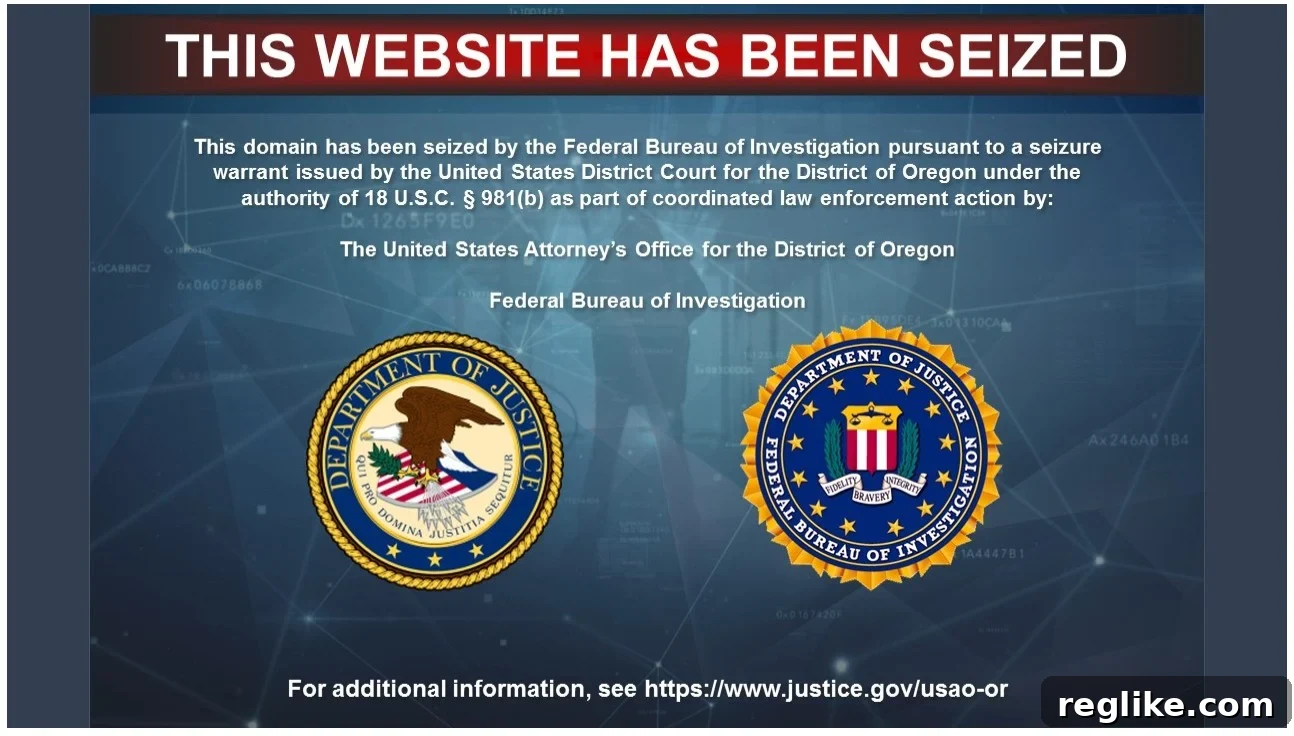
The advent of the digital age has, unfortunately, provided fertile ground for illicit activities, offering perpetrators new avenues for operating with perceived anonymity and global reach. For years, individuals engaged in sex trafficking and prostitution have skillfully leveraged the internet to expand and manage their unlawful businesses. However, as vividly demonstrated in a recent landmark legal action, their digital footprints often leave an indelible trail that dedicated law enforcement agencies can meticulously follow. The United States government has taken decisive action, filing an in rem forfeiture lawsuit against approximately 500 domain names, which it alleges were integral to a pervasive and long-running sex trafficking and prostitution enterprise operating across multiple jurisdictions.
The Anatomy of a Cybercrime: Unraveling a Multi-Year Domain Network
This elaborate criminal network was far from a small, isolated operation. Investigators revealed that over a substantial period spanning six years, the conspirators involved in this ring invested more than $25,000 solely in registering these hundreds of domain names. This substantial financial commitment highlights the extensive digital infrastructure built to support and conceal their illegal activities. A meticulous review of the seized domain names exposed a consistent and telling pattern: the vast majority were registered through either Domain.com or HiChina, two prominent and widely used domain registrars. The choice of registrars, while seemingly an incidental detail, often provides valuable initial clues to investigators attempting to piece together the modus operandi of a criminal network, as certain registrars may be favored for their pricing, ease of use, or perceived privacy options.
The FBI’s remarkable success in connecting these seemingly disparate domain names into a cohesive criminal network offers a fascinating and crucial insight into modern digital detective work. Rather than relying solely on traditional investigative methods, law enforcement agencies are increasingly embracing the power of open-source intelligence (OSINT) tools and fostering critical partnerships with internet service providers (ISPs) and domain registrars. By meticulously analyzing publicly available WHOIS information, cross-referencing this data with specialized analytical platforms like DomainTools, and ultimately securing confidential, non-public records from registrars and hosting providers through legal channels, the FBI was able to systematically map the entire digital landscape of this illicit operation. This comprehensive, multi-layered approach underscores the rapidly evolving landscape of cybercrime investigation and the ingenuity required to stay ahead of sophisticated criminals.
The FBI’s Digital Forensics Masterclass: Tracing the Invisible Threads of Crime
The process by which the FBI uncovered and systematically dismantled this extensive network serves as a masterclass in modern digital forensics. The investigation began with an initial, seemingly small lead – a single email address – and progressively unraveled into the discovery of hundreds of interconnected domains, culminating in a clear and irrefutable financial trail. The following detailed account, carefully synthesized from official FBI reports and legal filings, illustrates the methodical and precise steps taken by investigators:
On or about November 2018, the Federal Bureau of Investigation (FBI) initiated a targeted inquiry by accessing publicly available information pertinent to twenty-five specific domains. These domains were all initially associated with a distinctive email address: [email protected]. This initial linkage proved to be a critical starting point for the broader investigation.
Leveraging DomainTools—a powerful and sophisticated open-source platform specifically engineered to query and analyze WHOIS records, passive Domain Name System (DNS) data, IP addresses, historical hosting data, and a wide array of other crucial DNS-related intelligence—investigators made a pivotal and revealing discovery. They conclusively determined that all twenty-five initial domains under scrutiny were hosted on a single, common IP address: 64.50.176.48. Critically, this IP address was found not merely to be hosting these initial twenty-five domains, but astonishingly, hundreds of other domain names as well. This immediate discovery strongly suggested a centralized and coordinated operation, rather than a collection of isolated or unrelated instances of illicit activity.
Further painstaking inquiries, specifically through obtaining confidential records directly from Domain.com, provided an undeniable breakthrough in identifying the individual behind the network. For all twenty-five initial domain names, the subscriber was definitively identified as Weixuan Zhou. The associated contact information included a specific email address, [email protected], and a telephone number, 213-431-0920. The billing details for this account further solidified the connection to Zhou, listing Weixuan Zhou as the cardholder with a precise billing address: ti yu lu no. 613 Guang Zhou, China. This comprehensive information provided a crucial link to an identifiable individual and a specific geographical location, effectively bridging the gap between the digital and physical worlds.
The investigation rigorously expanded beyond the initial twenty-five domains. By broadening their analysis to include the hundreds of other domain names hosted on the same shared IP address (64.50.176.48), investigators uncovered a striking and highly consistent pattern. The overwhelming majority of these additional domains shared identical or remarkably similar registration information. They were consistently registered to Weixuan Zhou through Domain.com, LLC, and historical registrant email information frequently pointed to either [email protected] or [email protected]. This pervasive pattern unequivocally indicated a single individual or a closely managed entity orchestrating a vast, interconnected network of domains for a common illicit purpose.
To further solidify their case and follow the financial trail, credit card activity associated with Weixuan Zhou was meticulously examined and analyzed. Financial records revealed consistent and significant payments made to Domain.com for these numerous domains, dating from August 2012 through June 2018, collectively totaling $11,202.04. A specific example highlighted in the investigation involved Zhou’s Wells Fargo credit card making multiple payments to Domain.com in September 2014. The balance of this credit card in September 2014 was subsequently paid down from Weixuan Zhou’s Wells Fargo checking account. Significantly, the source of these funds was definitively traced back to a series of cash deposits made at various banks across multiple U.S. states, including Texas, Colorado, Oregon, Washington, and California. These geographically dispersed cash deposits strongly indicated a sophisticated money laundering operation, designed to funnel illicit profits from the sex trafficking ring into the legitimate financial system to fund the ongoing domain infrastructure and overall operation.
The financial investigation extended even further, incorporating comprehensive PayPal records, which provided an even broader and more detailed picture of the payments funding the extensive operation. Beginning approximately February 15, 2018, and continuing through October 10, 2018, the PayPal account explicitly linked to [email protected] executed a total of 147 transactions, collectively amounting to $6,150.14, directly to Domain.com. Furthermore, returns from subsequent legal subpoenas revealed that from around January 31, 2016, through September 2017, the PayPal account associated with [email protected] sent 169 transactions, amounting to an additional $10,241.74, also to Domain.com. Cumulatively, the total payments made to Domain.com from Zhou’s two identified PayPal accounts approximated a staggering $16,391.88, further solidifying the extensive financial links and underscoring the substantial scale and investment in this illicit enterprise.
The Synergy of Digital Footprints: WHOIS, IP, and the Indisputable Financial Trail
This intricate case powerfully illustrates how various layers of digital information, when meticulously pieced together and analyzed, can form an undeniable and comprehensive narrative for law enforcement. The public WHOIS database, despite certain limitations and the common use of privacy services, remains a foundational investigative tool. It provides initial clues about domain registrants, their contact information, and registration dates, often serving as the first critical breadcrumb in a longer, complex trail. While some registrants actively attempt to obscure their true identities, patterns in their registration choices, the reuse of specific email addresses, or even subtle inconsistencies in their provided data can prove to be highly revealing to trained investigators.
Moving beyond static WHOIS data, dynamic and advanced tools like DomainTools, which systematically query passive DNS records and analyze historical IP address data, offer a far more expansive and dynamic view of domain ownership and activity. Passive DNS refers to a system that continuously records historical DNS queries and responses, thereby documenting changes over time in domain-to-IP mappings. By carefully observing which domains have shared IP addresses, common name servers, or identical mail exchange records, investigators can swiftly identify clusters of related websites that very likely belong to the same individual or entity. In this specific instance, the crucial discovery of hundreds of domains sharing a single, common IP address (64.50.176.48) was a game-changer, immediately signaling a centralized hub for extensive illicit activity rather than a series of disconnected efforts.
Ultimately, the meticulous financial trail—encompassing both credit card payments and extensive PayPal transactions—provided the irrefutable evidence needed to definitively connect the digital infrastructure to a real-world individual and unequivocally establish the clear profit motive behind the illicit operation. The diligent tracking of payments to Domain.com, totaling over $27,000 when combining both credit card and PayPal records, vividly demonstrated the significant and sustained financial investment in building and maintaining this illicit online network. Furthermore, the critical discovery of cash deposits made across multiple states not only pointed to the geographically widespread nature of the illegal enterprise but also strongly indicated sophisticated money laundering activities designed to legitimize the substantial proceeds of crime generated from the sex trafficking and prostitution ring.
Combating Online Exploitation: A Collaborative and Evolving Effort
The resounding success of this investigation highlights the growing sophistication and adaptability of law enforcement agencies in effectively tackling complex cybercrime. It underscores that combating these types of criminal enterprises is a multi-faceted and continuous battle that demands a comprehensive approach:
- Advanced Technological Expertise: Agencies must continuously invest in cutting-edge digital forensics tools and provide extensive training to personnel in advanced open-source intelligence gathering techniques and cybercrime investigation methodologies.
- Robust Inter-agency Cooperation: Seamless collaboration between federal agencies (such as the FBI), state, and local law enforcement is absolutely crucial for coordinating efforts and sharing vital intelligence across diverse jurisdictions, both domestically and internationally.
- Critical Public-Private Partnerships: The willing and timely cooperation of domain registrars, hosting providers, and financial institutions in responding to legal subpoenas and providing vital records is indispensable for tracking and identifying criminals who exploit digital platforms. This partnership, while often governed by strict legal frameworks and privacy concerns, is essential for effective law enforcement.
- Proactive International Collaboration: Given the inherently global nature of the internet, cross-border cooperation with international law enforcement bodies and regulatory authorities is increasingly vital for efficiently identifying and dismantling international criminal networks that operate beyond national boundaries.
This pivotal case serves as a powerful deterrent and a stark, unambiguous reminder to those who mistakenly believe they can operate with impunity in the digital realm. Every interaction, every domain registration, every financial transaction leaves an identifiable and traceable digital trace. While criminals continuously evolve their methods of evasion and concealment, the tools and techniques available to law enforcement are also advancing rapidly, steadily eroding the illusion of anonymity that many online perpetrators rely upon. The persistent pursuit of justice in the digital age is a testament to the dedication of those fighting against online exploitation.
Conclusion: The Enduring Importance of Digital Vigilance and Relentless Pursuit
The decisive forfeiture action against these 500 domain names is far more than just a legal victory; it stands as a powerful testament to the relentless pursuit of justice against perpetrators of sex trafficking and prostitution. By meticulously following the digital breadcrumbs left by domain registrations, correlating IP addresses, and painstakingly analyzing financial transactions, investigators were able to expose and ultimately dismantle a deeply entrenched and extensive criminal operation that thrived on the vulnerabilities of its victims. This case unequivocally demonstrates that even in the vast, often opaque, and rapidly evolving world of the internet, dedicated digital forensics, combined with unwavering resolve, can effectively unmask identities, dismantle sophisticated illicit networks, and bring perpetrators to justice. It reinforces the critical and ongoing need for continuous vigilance, advanced investigative techniques, and robust legal frameworks in the pervasive fight against all forms of online exploitation.