
Stay vigilant: A sophisticated scam targeting website and domain owners is actively circulating. Understanding its tactics is your first line of defense.
In the evolving landscape of digital threats, a particularly deceptive phishing attempt has resurfaced, preying on the concerns of website administrators and domain registrants regarding their intellectual property. This scam, which masquerades as an official notice from a non-existent entity called the “US Copyright Registry,” is designed to instill fear and coerce recipients into revealing sensitive information or making unnecessary payments. For anyone managing an online presence, recognizing and disarming such threats is paramount.
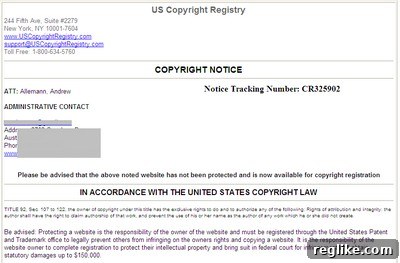
Recently, an email landing in my WHOIS-associated inbox immediately raised red flags despite its meticulously crafted appearance. Bearing the hallmarks of an official communique, it carried the authoritative header of the “US Copyright Registry.” While the language and presentation aimed for legitimacy, a closer inspection quickly revealed its fraudulent nature. This is not a new tactic, but it is one that continues to catch unsuspecting domain name owners off guard, highlighting the persistent need for heightened cybersecurity awareness.
Anatomy of Deception: Unpacking the Fake Copyright Notice
The fraudulent notice is strategically worded to mimic legal documents, creating an illusion of governmental authority. It begins with a seemingly professional advisory, stating:
“Please be advised that the above noted website has not been protected and is now available for copyright registration”
This opening line is a clever hook, designed to immediately trigger concern among website owners who are naturally protective of their content. The scam then proceeds to cite what appears to be legitimate legal framework:
———————————————————-
IN ACCORDANCE WITH THE UNITED STATES COPYRIGHT LAW
———————————————————-

TITLE 92, Sec. 107 to 122, the owner of copyright under this title has the exclusive rights to do and to authorize any of the following: Rights of attribution and integrity: the author shall have the right to claim authorship of that work, and prevent the use of his or her name as the author of any work which he or she did not create.
Here lies a significant part of the deception. While sections 107-122 of Title 17 (not Title 92) of the U.S. Code indeed pertain to copyright law, the scam selectively quotes provisions out of context and misrepresents their implications. U.S. copyright law grants automatic copyright protection to original works of authorship the moment they are created and fixed in a tangible medium. Registration with the actual U.S. Copyright Office is not mandatory for basic protection, although it offers significant benefits, such as the ability to sue for infringement and recover statutory damages and attorney’s fees.
The notice further attempts to manipulate recipients by laying the burden of protection squarely on the owner, blurring the lines between copyright and trademark offices:
“Be advised: Protecting a website is the responsibility of the owner of the website and must be registered through the United States Patent and Trademark office to legally prevent others from infringing on the owners rights and copying a website. It is the responsibility of the website owner to complete registration to protect their intellectual property and bring suit in federal court for infringement and obtain statutory damages up to $150,000.”
This statement is fundamentally flawed and designed to mislead. Copyrights are registered with the U.S. Copyright Office, a division of the Library of Congress, not the United States Patent and Trademark Office (USPTO), which handles patents and trademarks. The scam intentionally conflates these distinct federal agencies to lend an air of authenticity while spreading misinformation. The mention of “statutory damages up to $150,000” is also a common scare tactic, exploiting legitimate legal figures to imply grave consequences for non-compliance with their fraudulent demands.
The Ultimate Coercion: “Final Notice” and False Disclaimers
The scam reaches its peak with a “kicker” designed to induce panic and prompt immediate action:
“You are required to advise the US Copyright Registry of your intent to license this website if registration is administered through the UCR as this is your final notice.”
The phrase “final notice” is a classic social engineering technique, creating a sense of urgency and threatening impending negative repercussions if the recipient fails to act swiftly. This tactic preys on the fear of missing a critical deadline or incurring penalties. Following this, a seemingly generous “note” attempts to further manipulate the victim:
“Note: you may disregard this notice. If you disregard this notice or fail to reply: UCR and the United States Patent and Trademark office will NOT be liable for infringement of your website, interruption of business activity or business losses.”
This disclaimer is nothing short of audacious. By stating that the “UCR” (a fictitious entity) and the legitimate USPTO will not be liable, the scammers attempt to absolve themselves of responsibility while simultaneously implying that ignoring their notice somehow jeopardizes the victim’s legal standing. In reality, ignoring a fraudulent email has no bearing on actual copyright protection or legal liability. The entire premise is built on misinformation and psychological pressure.
The notice concludes by requesting a call to 1-800-634-5760. The definitive advice for anyone receiving such an email is simple and unequivocal: delete it immediately. Engaging with these scammers, even by calling the number, only confirms your email address is active and potentially makes you a target for further fraudulent attempts.
Behind the Curtain: Unmasking the Perpetrators
Curiosity often leads us to investigate the origins of such scams. A brief inquiry into the entities behind the “US Copyright Registry” reveals a tangled web of deceptive practices. While the WHOIS record for USCopyrightRegistry.com itself is hidden behind privacy services—a common tactic for malicious actors seeking anonymity—other related domain versions offer crucial clues.
The WHOIS records for domains like USCopyrightRegistry.net, .us, and .org consistently point to the same registrant details:
- Registrant Name: Domain Notification
- Registrant Organization: Domain Notification
- Registrant Street1: 130 Church Street
- Registrant Street2: Suite 280
- Registrant City: New York
- Registrant Postal Code: 10007
- Registrant Country: US
- Registrant Phone: +1.8002705944
- Registrant Email: [email protected]
The registration of multiple top-level domains (TLDs) under similar names by the same entity is highly suspicious. It strongly suggests an affiliation with the primary .com site, indicative of a coordinated scam operation aimed at maximizing their reach and deceptive potential. Further investigation into “NotificationCenter.us” reveals another layer of this fraudulent network. Their website broadly claims to be a “notification processor established to provide domain registrants with updates and information that could potentially affect their online presence.” This vague and authoritative-sounding description is eerily similar to other well-documented domain-related scams, such as those historically associated with “Domain Registry Support.” These operations typically thrive on exploiting public WHOIS data to send unsolicited, misleading notices to domain owners.
Moreover, the mailing address cited in the USCopyrightRegistry.com email notice remarkably matches the address listed on DomainSolutionsCentral.com, another entity notorious for domain-related scams. Like USCopyrightRegistry.com, DomainSolutionsCentral.com also utilizes WHOIS privacy services provided by Enom, further cementing the pattern of concealment and interconnected fraudulent activities. This network of seemingly disparate but ultimately linked websites underscores the organized nature of these ongoing cyber threats.
Interestingly, past data from services like DomainTools indicated that USCopyrightRegistry.com was at one point listed for sale on Sedo, a prominent domain marketplace. While the listing may have since been removed, the fact that it was listed could, in principle, provide clues about the perpetrator’s identity if Sedo were to investigate the listing history.
Protecting Your Digital Assets: A Guide for Domain Owners
Navigating the digital world requires constant vigilance, especially for domain and website owners. Here’s how you can proactively protect yourself from the “US Copyright Registry” scam and similar fraudulent schemes:
- Question Everything: Always approach unsolicited emails with skepticism, particularly those demanding urgent action or threatening legal repercussions. Legitimate official notices rarely come via generic emails and typically wouldn’t resort to such aggressive tactics.
- Verify the Source: If an email purports to be from a government agency or official body, do not click on any links within the email. Instead, independently navigate to the official website of that agency (e.g., U.S. Copyright Office, USPTO) and look for information regarding the notice or contact them directly using officially published contact details. Remember, the U.S. Copyright Office is distinct from the USPTO.
- Understand Copyright Law: Educate yourself on the basics of copyright protection. In the U.S., copyright protection is automatic upon creation. While registration with the U.S. Copyright Office is beneficial for enforcement, it is not required for basic protection, nor is it handled by an entity like the “US Copyright Registry” or the USPTO for general website content.
- Utilize WHOIS Privacy: Consider enabling WHOIS privacy services for your domain registrations. This service hides your personal contact information from the public WHOIS database, making it harder for scammers to obtain your details and target you with unsolicited communications.
- Identify Red Flags: Be wary of common scam indicators:
- Urgent or threatening language.
- Requests for immediate payment or sensitive personal information.
- Grammatical errors or awkward phrasing (though sophisticated scams may have perfect grammar).
- Generic salutations instead of your specific name.
- Suspicious sender email addresses that don’t match the purported organization’s domain.
- Mismatched links (hover over links to see the actual URL before clicking).
- Never Respond or Call: Do not reply to these emails or call the numbers provided. Doing so only validates your contact information and may lead to further harassment.
- Report Scams: Help combat cybercrime by reporting fraudulent emails. You can forward phishing emails to the Anti-Phishing Working Group (APWG) at [email protected]. You should also report them to your email provider and potentially to the Federal Trade Commission (FTC) or ICANN, especially if they involve domain names.
- Regular Security Audits: Periodically review your website’s security, update software, and use strong, unique passwords for all your online accounts.
Conclusion: Vigilance is Your Strongest Shield
The “US Copyright Registry” scam is a stark reminder of the constant threats lurking in the digital realm. Its sophisticated approach, blending official-sounding language with misleading legal references and veiled threats, makes it particularly dangerous for those unfamiliar with actual copyright procedures. However, by understanding the tactics employed by these fraudsters and adopting a proactive approach to cybersecurity, you can effectively safeguard your intellectual property and maintain your peace of mind.
Remember, legitimate organizations do not resort to scare tactics or false claims to demand action. Your awareness and skepticism are your most powerful tools against online deception. Stay informed, stay vigilant, and always prioritize the security of your digital assets. If an email seems too urgent, too good to be true, or simply “off,” trust your instincts and delete it. Protecting your website and intellectual property begins with recognizing the threats that aim to exploit them.