
Unwrapping Disappointment: Domain Gifts Domainers Would Rather Not Receive
The holiday season often brings with it the joy of giving and receiving, but for those deeply immersed in the world of domain names, certain gifts can elicit more groans than gratitude. While a thoughtful domain-related present can be highly appreciated, there are some offerings that miss the mark entirely, potentially causing frustration or even financial loss. As we reflect on what makes a truly valuable gift for a domain enthusiast, let’s explore a list of presents that are best left off any domainer’s wish list, along with the crucial reasons why they fall short.
Understanding these pitfalls isn’t just about avoiding awkward gift exchanges; it’s about recognizing the critical aspects of trustworthiness, value, and practicality within the dynamic domain industry. From defunct services to questionable self-promotion and overwhelming noise in marketplaces, these examples serve as important lessons for anyone navigating the intricate landscape of digital assets.
1. A Gift Certificate to a Discredited Registrar (e.g., RegisterFly)
Imagine receiving a gift certificate for a significant amount, only to find it’s for a service that has been widely discredited or, worse, ceased to exist meaningfully. For domainers, a gift certificate to a registrar like RegisterFly serves as a stark reminder of industry failures and consumer protection issues. RegisterFly, once a prominent registrar, faced a dramatic downfall, losing its ICANN accreditation due to widespread customer complaints about poor service, inaccessible domains, and transfer difficulties.
Their official statement regarding the loss of accreditation, often displayed on their website, attempted to spin the narrative, suggesting the cessation of their registrar operations was a strategic choice rather than a punitive action:
RegisterFly.com was for 6 years a reseller of domain names for multiple different domain registrars. In those 6 years we registered in excess of 2 million names, in fact in 2006 alone we added almost 1 million names. We used the backend and systems of our registrar partners to register and manage domain names through those six years. In January of 2006 we become operational as a registrar and registered names directly under our own accreditation. In February of 2007 we ended our relationship with one of the vendors due to the relationship becoming more of a competitor vs a vendor. In May of 2007, we reached an agreement with another registrar to assume the management of some names in our portfolio that were under our own accreditation.
There was an order granted to ICANN that requires we show this statement on our homepage, is misleading to consumers for several reasons
>We did a bulk transfer of names that were under our accreditation to another registrar, hence we do not function as an ICANN accredited registrar. After the conclusion of the bulk transfer there was no need for us to remain an accredited registrar since the benefits did not merit the cost and effort required
This explanation, however, conveniently sidestepped the critical fact that ICANN, the global governing body for domain names, explicitly revoked their accreditation due to severe operational failures and customer service deficiencies. The “bulk transfer” of domains they refer to was not a voluntary business decision but a forced action to protect millions of domain owners from losing control of their digital assets. Customers experienced immense stress, financial loss, and wasted time trying to reclaim or transfer their domains away from the beleaguered company. Gifting a certificate to such a entity is not only useless but also potentially insulting, highlighting a lack of understanding of the recipient’s professional landscape and the importance of reliable service providers in domain investing.
2. A “Bob Parsons’ 16 Rules” Poster
In the entrepreneurial world, there’s a fine line between inspiring leadership and self-aggrandizing marketing. While figures like Steve Jobs or Bill Gates might command respect worthy of biographical content, not every successful businessperson’s personal philosophy warrants mass-market merchandise. The “Bob Parsons’ 16 Rules” poster, once sold by GoDaddy, the company he founded, falls into this latter category. While Bob Parsons undeniably built a colossal domain empire, the idea of selling a poster detailing his business maxims seemed to many domainers as an unnecessary piece of corporate memorabilia.
The rules themselves, often generic and universally applicable, such as “Never give up” or “Take things a day at a time,” lack the profound insights or unique wisdom that would justify their purchase as a motivational tool. Such advice, while sound, can be found in countless self-help books or motivational speeches for free. The expectation that domainers would shell out money for a visually basic poster proclaiming these truisms felt somewhat disconnected from the practical, analytical nature of domain investing.
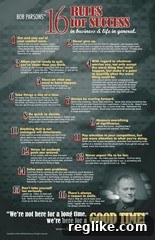
The sentiment around such products often reflects a broader skepticism within the community towards overtly promotional items that offer little tangible value. An anecdote from a conference, where a GoDaddy employee jokingly suggested the company might have only sold “maybe enough for one per employee,” underscores the lukewarm reception these posters likely received. For a domainer, who values tangible assets and actionable strategies, a poster with generic advice might be seen as clutter rather than an inspirational keepsake. True value in the domain world comes from effective strategies, market knowledge, and smart investments, not from aphorisms easily found elsewhere.
3. A Membership to a Dubious “Domain Investor Club” (e.g., SiteVestors’ Domain Investor Club)
The allure of exclusive access and insider information can be very strong in niche markets like domain investing. This makes “domain investor clubs” or similar membership programs seem like attractive gifts. However, many such offerings turn out to be significant disappointments, if not outright scams. A personal experience with SiteVestors’ Domain Investor Club serves as a cautionary tale for anyone considering such a gift.
The initial pitch was compelling: for $499, a year-long membership promised updated lists of domains with traffic from reputable marketplaces like Afternic and Domain Cargo. This sounded like a dream for domainers constantly on the hunt for undervalued assets. Yet, the reality was far from the promise. Upon joining, only a handful of domains were listed, and updates were nonexistent. Weeks, then a month, passed without any new content, rendering the membership essentially useless. The experience necessitated initiating a chargeback through PayPal to even garner a response from SiteVestors, which eventually led to a temporary update of the site.
However, the brief revival was short-lived, and the service quickly became inactive again. When contacted about the ongoing inactivity, the company admitted the club had been dormant for months and suggested a refund should have already been processed – a refund that had clearly not occurred without persistent prompting. This entire ordeal, from the initial promise to the struggle for a refund, highlights the fundamental problems with such services: a lack of consistent value delivery, poor customer service, and deceptive business practices (especially keeping a sales page active for an inactive service).
Gifting a membership to a club like this is not just a waste of money; it’s also a gift of frustration and potential disillusionment for the recipient. It represents a common pitfall in the domain investing world where the promise of easy riches or exclusive insights often masks a lack of real substance. Domainers thrive on reliable data, transparent dealings, and active communities, none of which are present in such a deceptive offering. Therefore, it’s crucial to exercise extreme caution and conduct thorough due diligence before investing in or gifting memberships to any “exclusive” domain investment clubs.
4. Approximately 99% of Domains Listed on General Domain Forums (e.g., DNForum)
Domain forums, such as DNForum, were once vibrant hubs for legitimate domain transactions, offering a direct marketplace for buyers and sellers. However, over time, the quality of listings on many of these platforms has significantly deteriorated, transforming them into digital junkyards overflowing with speculative registrations of dubious value. For a serious domainer, sifting through these listings has become an incredibly time-consuming and often fruitless endeavor, making them a source of frustration rather than opportunity.
The problem stems from an influx of low-quality domains, often registered with minimal thought and then optimistically listed for sale with exaggerated claims. Headlines like “Great domains CHEAP!” or “Liquidation sale – top domains for $25!” frequently lead to disappointment. Clicking through reveals names such as “mydog8urhomework.com” or “hillaryclinton4prez2008.com” – domains that are either too specific, too long, unbrandable, or tied to fleeting trends with no long-term value. These names typically hold no intrinsic worth, lack traffic, and offer zero potential for development or resale at a profit.
This saturation of undesirable domains makes it nearly impossible to identify genuinely valuable assets. The time and effort required to navigate hundreds of pages of these “dud” listings detract from a domainer’s ability to focus on high-quality opportunities on more curated marketplaces. It also creates a perception that the entire domain market is full of low-value assets, which is far from the truth when considering premium domain names and emerging trends.
The core issue is a lack of effective gatekeeping or quality control. Many argue there should be a fundamental rule against listing domains registered mere hours or days before being posted for sale. Such a rule would help curb speculative “flipping” of domains without any added value or demonstration of potential, encouraging sellers to present domains with established merit or genuine long-term potential. Until such measures are widely adopted, a gift of “access” to these overcrowded, uncurated forums is less a gift and more an invitation to waste valuable time and energy in a digital haystack with very few needles.