
Major financial institutions are increasingly exploring the strategic advantages of .brand top-level domain (TLD) names. This shift represents a significant evolution in corporate digital identity, promising enhanced security, brand control, and a more streamlined user experience. One such financial giant leading this transition is Barclays.
Barclays Embraces .Brand TLDs: A Deep Dive into Digital Identity and SEO Implications
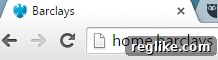
Barclays, a titan in the global banking sector based in Britain with a market capitalization of approximately $77 billion, has initiated a significant move into the realm of new generic top-level domains. The bank has begun integrating and utilizing its dedicated .barclays and .barclaycard top-level domain names, signaling a strategic commitment to fortifying its digital presence and enhancing customer trust in the evolving online landscape.
The Strategic Imperative Behind .Brand TLDs
The advent of .brand TLDs, sanctioned by ICANN (Internet Corporation for Assigned Names and Numbers), marked a pivotal moment for global enterprises. These exclusive domains, such as .barclays, .apple, or .bmw, offer an unparalleled opportunity for companies to control their digital footprint more effectively than ever before. For large organizations like Barclays, the decision to invest in and transition to a .brand TLD is not merely a technical one; it’s a strategic move aimed at addressing critical aspects of online security, brand consistency, and customer experience.
According to a story in FinExtra, Troels Oerting, Barclays Group CIO, articulated the core vision behind this transition. He stated that these new domain names are intended to create “a simplified online user experience, making it crystal clear to our customers that they are engaging with a genuine Barclays site.” This clarity, coupled with the inherent advantages of controlling their own online environment, empowers Barclays to “provide an even more secure service.” This statement encapsulates the primary benefits that .brand TLDs promise: a clear, unambiguous digital identity that combats phishing and counterfeiting, alongside the ability to craft a uniquely branded and secure online ecosystem for users.
Barclays’ Initial Rollout: Opportunities and Challenges
Barclays’ adoption of its .brand TLDs is visibly underway, though the initial implementation raises some intriguing questions regarding optimal SEO practices and user migration. A quick search reveals that Google has already indexed several pages under .Barclays. The bank appears to be using a “home” subdomain as the second-level domain name, such as home.barclays. This approach aims to provide a memorable entry point for users, directly linking to the core brand identity.
However, an immediate observation highlights a potential area for strategic refinement. The content available at home.barclays seems to be a direct duplicate, or “carbon copy,” of the content found on its established primary domain, barclays.com. While this might simplify initial setup, it introduces significant challenges for search engine optimization.
The story is similar for .Barclaycard. This domain shows a more extensive initial deployment, with 213 indexed pages in Google. Yet, just like with .barclays, pages found at home.barclaycard appear to be exact replicas of their counterparts on barclaycard.com. For instance, the page located at home.barclaycard/news/2012-18.html is identical in content to barclaycard.com/news/2012-18.html.
The Perils of Duplicate Content: An SEO Perspective
From an SEO standpoint, this strategy of presenting identical content across multiple domains, or even subdomains, is generally considered ill-advised. Search engines like Google strive to provide users with the most relevant and unique content. When duplicate content is detected, search engines face a dilemma: which version of the page should they rank? This can lead to:
- Diluted SEO Value: Instead of consolidating link equity and authority to one strong page, it’s split across multiple identical pages, weakening the ranking potential of each.
- Search Engine Confusion: Google’s algorithms may struggle to determine the “canonical” version of the content, potentially leading to lower rankings for all versions.
- Suboptimal Indexing: Search engines might choose not to index all duplicate pages, or they might index an unintended version.
- User Experience Issues: While the content is the same, users might encounter confusion if they arrive at different URLs with identical information, especially when trying to bookmark or share.
The current implementation illustrates this challenge. When searching Google for a specific title from one of these duplicate pages, such as “Barclaycard launches the latest version of its ePDQ payment processing system,” Google currently prioritizes and displays the original .com page in its search results. This indicates that despite the new .brand TLDs being indexed, they are not yet establishing independent authority or outranking the legacy domains for established content.
Best Practices for a Seamless .Brand TLD Transition and SEO Success
For companies like Barclays to fully harness the power of their .brand TLDs while maintaining or improving their search engine visibility, a carefully orchestrated SEO strategy is paramount. Here are key best practices:
1. Implement 301 Redirects Effectively
The most crucial step for migrating content from an old domain to a new one is the proper use of 301 (permanent) redirects. These redirects tell search engines that a page has permanently moved to a new URL, transferring most of the old page’s link equity and ranking power to the new one. For Barclays, this would mean redirecting specific pages from barclays.com to home.barclays, ensuring a smooth transition of SEO value and user traffic.
2. Utilize Canonical Tags Strategically
While 301 redirects are ideal for full migrations, canonical tags can be used in situations where duplicate content is temporarily necessary or when consolidating multiple URLs (e.g., different versions of a product page) under a single “master” URL. A canonical tag in the HTML header tells search engines which version of a page is the preferred one for indexing, even if similar content exists elsewhere. However, for a complete brand TLD transition, redirects are generally more effective.
3. Develop Unique Content Strategies
To truly leverage a .brand TLD, companies should consider developing unique content or services specifically for the new domain. This could involve creating a highly secure login portal, a dedicated customer service hub, or innovative new product launches exclusively housed under the .brand domain. This not only avoids duplicate content issues but also reinforces the unique value proposition of the .brand TLD.
4. Update Internal Linking Structures
As content moves, all internal links across the website must be updated to point to the new .brand TLD URLs. This helps search engines discover the new content more quickly and correctly, while also guiding users to the right pages.
5. Inform Search Engines via Google Search Console
Tools like Google Search Console (formerly Webmaster Tools) offer functionalities to notify Google about domain changes and submit new sitemaps. Using these tools proactively can significantly accelerate the indexing and ranking of the new .brand TLD content.
6. A Phased Transition Approach
Instead of an abrupt switch, a phased transition allows for monitoring performance, identifying issues, and making adjustments. Gradually migrating sections of the website to the .brand TLD while maintaining a robust redirect and canonicalization strategy can mitigate risks.
Maximizing the Value of .Brand Domains Beyond Migration
The true power of .brand TLDs extends far beyond simply redirecting existing content. When implemented thoughtfully, they can become cornerstone assets for a brand’s digital strategy:
- Enhanced Brand Trust and Security: .Brand TLDs provide an undeniable visual cue of authenticity, significantly reducing the risk of phishing attacks and improving customer confidence in online interactions, especially for sensitive financial transactions. Users can be certain they are on an official Barclays site if they see .barclays.
- Simplified User Experience: Once fully established, a .brand TLD can offer a more intuitive and memorable navigation experience. Imagine all Barclays services residing under a clear, branded domain structure.
- Marketing and Innovation Hubs: These domains can be used for innovative marketing campaigns, product launches, or even dedicated platforms for specific services that reinforce the brand’s identity. For example, a new banking product could launch exclusively on `innovate.barclays`.
- Email Security and Trust: Email addresses using the .brand TLD (e.g., `name@barclays`) can increase trust and combat email spoofing, providing another layer of security for corporate communications.
- Consolidated Digital Footprint: In the long term, a .brand TLD allows a company to consolidate various sub-brands and services under a single, unified, and controlled digital umbrella, simplifying management and strengthening brand cohesion.
User Adoption and the Future of Digital Identity
While the technical and SEO aspects are critical, user adoption remains a key factor. Consumers are deeply ingrained with typing `.com`. Educating users about the benefits of .brand TLDs, particularly for security, will be essential. Barclays’ CIO Troels Oerting’s emphasis on “crystal clear” engagement with a “genuine Barclays site” directly addresses this, highlighting the need for clear communication campaigns.
The journey for Barclays, and indeed for any major corporation adopting a .brand TLD, is a marathon, not a sprint. It involves not just technical migration but also a strategic shift in how digital identity is perceived, managed, and communicated to the end-user. The potential benefits in terms of security, trust, and brand control are immense, but realizing them requires a sophisticated understanding of SEO, content strategy, and user behavior.
In conclusion, Barclays’ move into .barclays and .barclaycard signifies a forward-thinking approach to digital branding and security. However, to truly capitalize on this investment, a refined transition strategy that meticulously addresses duplicate content and implements robust SEO best practices will be crucial. The successful adoption of .brand TLDs will ultimately redefine how major companies interact with their customers online, paving the way for a more secure, trustworthy, and branded internet experience.