
U.S. Lawmakers Launch Inquiry into Verisign’s .com Domain Registry Contract
Concerns Mount Over Monopoly Power and Potential Price Hikes in Critical Internet Infrastructure
In a significant move poised to scrutinize the foundational elements of the internet’s naming system, three influential Republican lawmakers have officially opened an inquiry into Verisign’s (NASDAQ: VRSN) crucial contract to manage the .com domain name registry. This investigation signals growing concerns within the U.S. Congress regarding the dynamics of market competition, potential monopolistic practices, and the financial impact on businesses and consumers relying heavily on the digital landscape.
The .com domain stands as the most recognized and widely used top-level domain (TLD) globally, serving as the digital cornerstone for millions of websites, businesses, and personal identities. Its stable and equitable operation is paramount for the seamless functioning and continued growth of the global digital economy. The inquiry, therefore, touches upon a core component of internet infrastructure that impacts virtually every online interaction.
Congressional Oversight: The House Energy and Commerce Committee Takes Action
Leading this high-stakes inquiry are prominent figures from the House Energy and Commerce Committee. Chair Cathy McMorris Rodgers (R-WA), known for her leadership in technology and telecommunications policy, is spearheading the effort. She is joined by Subcommittee on Communications and Technology Chair Bob Latta (R-OH) and Subcommittee on Oversight and Investigations Chair Morgan Griffith (R-VA). Their collective involvement underscores the multi-faceted nature of the concerns, encompassing issues of technology regulation, market oversight, and governmental accountability.
The committee’s jurisdiction extends broadly over areas including telecommunications, internet policy, and consumer protection, making it a natural forum for such an investigation. Their letter to the National Telecommunications and Information Administration (NTIA) emphasizes a deep-seated interest in ensuring that the governance of critical internet resources aligns with principles of fair competition and consumer welfare.
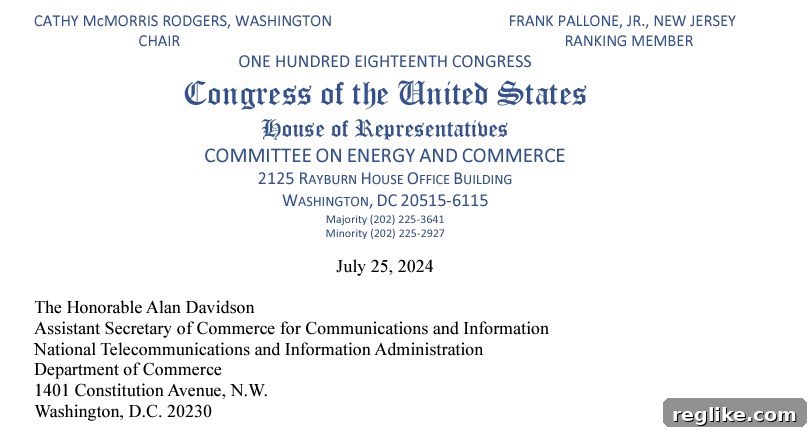
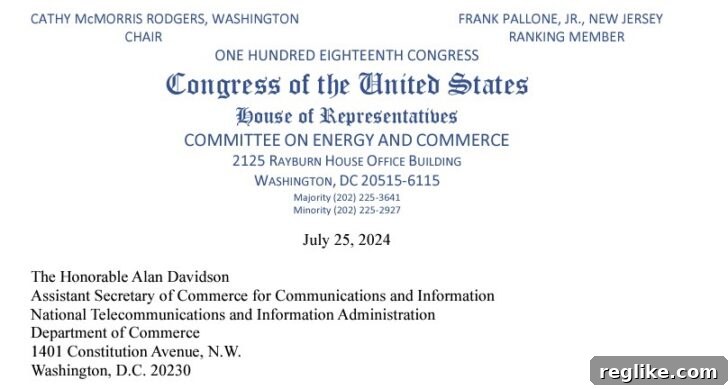
On [Today’s Date, if known from original source, otherwise generalize], the lawmakers dispatched a detailed letter (available in PDF format) to the National Telecommunications and Information Administration (NTIA). This communication explicitly requests the NTIA to furnish comprehensive information regarding its ongoing agreement with Verisign. The NTIA, a division of the U.S. Department of Commerce, plays a pivotal role in shaping domestic and international internet and telecommunications policy, including its oversight responsibilities concerning the domain name system.
The NTIA’s Pivotal Role and the Core of the Inquiry
The letter to the NTIA articulates a clear expectation for the agency’s role in safeguarding the integrity and competitiveness of the domain name system. It highlights the NTIA’s dual responsibilities: advising the Internet Corporation for Assigned Names and Numbers (ICANN) – the global multi-stakeholder organization responsible for coordinating the maintenance and procedures of several databases related to the namespaces and numerical spaces of the Internet – and its direct involvement as a party to the Cooperative Agreement with Verisign.
The lawmakers’ letter succinctly captures their principal concerns:
With both a role in advising ICANN and as a party to the Cooperative Agreement, the NTIA bears responsibility for supporting a domain name system that enables the growth of online commerce. Both individual consumers and businesses depend on responsible management of the .com system. Monopolistic elements and excessive domain name price increases stifle the ability of potential .com registrants to conduct business online.
This powerful statement directly addresses the potential for a lack of competition in the .com registry market to lead to adverse outcomes. The term “monopolistic elements” refers to Verisign’s unique position as the exclusive operator of the .com registry, a status it has held for many years. Given the immense popularity and trust associated with .com, new domain extensions have found it challenging to truly compete on an equal footing, cementing Verisign’s dominant market share.
The concern over “excessive domain name price increases” directly impacts the digital economy. Every small business, entrepreneur, and online venture requires a domain name to establish its digital presence. Unchecked price hikes, enabled by a lack of competitive pressure, could significantly increase operational costs for millions, potentially hindering startups, limiting expansion for existing businesses, and ultimately stifling the very growth of online commerce that the NTIA is charged with supporting. This could disproportionately affect small and medium-sized enterprises (SMEs) and individuals, widening the digital divide.
To gain a deeper understanding of the situation and the NTIA’s oversight processes, the committee has posed five specific questions. Among these critical inquiries are requests for information regarding any consultations the NTIA has held with the Department of Justice (DOJ) concerning the Verisign contract. Such consultations would typically involve discussions about antitrust implications, market fairness, and competitive practices. The involvement of the DOJ suggests that lawmakers are considering the potential for antitrust violations or practices that could harm competition.
Furthermore, the committee is asking whether the NTIA has commissioned or conducted any market studies to assess the competitive landscape, pricing impacts, or the overall health of the .com domain market. The absence or presence of such studies could provide crucial insights into how thoroughly the NTIA has evaluated the broader economic implications of its agreement with Verisign and the impact on the internet ecosystem.
Understanding the Verisign .com Contract: Renewal and Pricing
The existing contract between Verisign and the NTIA, which grants Verisign the exclusive right to operate the .com registry, is slated for renewal later this year. This upcoming renewal point is a critical juncture, as it represents one of the few opportunities for substantial review or renegotiation of terms. The current agreement contains provisions that allow for automatic renewal under specific conditions, which have long been a point of contention for various stakeholders.
A key clause in the existing agreement dictates that the contract automatically renews at its current terms unless both parties — Verisign and the NTIA — mutually agree to introduce changes. This “presumptive right of renewal” has often been cited by Verisign as a safeguard for its long-term operational stability and investment in the .com infrastructure. However, critics argue that it severely limits the NTIA’s leverage to negotiate more favorable terms for the public interest, effectively creating a perpetual monopoly without genuine competitive bidding.
Adding to the complexity are the specific pricing mechanisms embedded within the contract. Should the agreement be renewed as per its existing terms, Verisign would be permitted to increase prices by 7% in each of the last four years of a six-year extension period. While a 7% annual increase might appear modest in isolation, its cumulative effect over four years can lead to substantial increases for domain registrants, compounding costs over time and potentially creating significant financial burdens for millions of businesses and individuals dependent on .com domains.
Advocacy Groups and Verisign’s Response: A Battle of Interests
The congressional inquiry follows on the heels of increasing pressure from various advocacy groups. Just last month, three prominent organizations publicly urged the U.S. government to halt the automatic renewal of the Verisign contract. These groups, often representing consumer interests, small businesses, and broader internet freedom, articulated similar concerns to those now being voiced by the lawmakers: the perils of an entrenched monopoly, the potential for price gouging, and the need for greater accountability in the management of essential internet resources.
In response to these growing calls for intervention, Verisign has consistently maintained its position. The company argues that the established contract terms cannot be unilaterally altered and require mutual agreement from both Verisign and the NTIA. Furthermore, Verisign asserts its presumptive right of renewal, emphasizing the stability and reliability it has provided in operating the .com registry for decades. From Verisign’s perspective, this long-standing operational history and the existing contractual framework ensure predictability and foster continued investment in the robust infrastructure necessary to keep the .com domain functioning flawlessly.
The Road Ahead: Implications for Internet Governance and the Digital Economy
As the inquiry unfolds, the NTIA’s response to the congressional committee will be closely watched by industry stakeholders, consumer advocates, and policymakers alike. The information provided, particularly regarding DOJ consultations and market studies, could significantly influence the debate around the .com contract renewal. It could also set a precedent for how the U.S. government approaches oversight of other critical internet infrastructure components.
The outcome of this inquiry holds broad implications not only for Verisign’s future operations and profitability but also for the wider landscape of internet governance and the digital economy. A robust, competitive, and fairly priced domain name system is fundamental to fostering innovation, enabling economic growth, and ensuring equitable access to online opportunities for everyone.
Coincidentally, Verisign is scheduled to report its earnings later today. While the earnings report will primarily focus on the company’s financial performance, the ongoing inquiry and public scrutiny over its .com contract could introduce an additional layer of investor consideration, potentially impacting market sentiment beyond the immediate financial figures.
Conclusion: Balancing Stability with Competition and Consumer Protection
The House Energy and Commerce Committee’s inquiry into Verisign’s .com domain registry contract represents a critical moment for U.S. internet policy. It highlights the inherent tension between ensuring the operational stability of a vital internet resource and promoting fair competition and protecting consumers from potentially excessive pricing. The lawmakers’ focus on monopolistic elements and price increases underscores a commitment to fostering an online environment where businesses of all sizes can thrive without undue financial burdens.
As the NTIA prepares its response, the broader internet community will be keenly awaiting the details, hoping for a resolution that strikes a harmonious balance between the long-term reliability of the .com domain and the principles of a competitive, open, and accessible internet for all.