
Kellogg Loses Eggo.com Domain Dispute: A Landmark Ruling on Brand Protection and UDRP
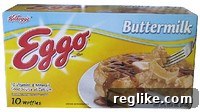
In a significant legal battle that highlights the intricate challenges of brand protection in the digital age, Kellogg North America Company, the global food giant renowned for its iconic “Eggo” frozen waffles, has lost its bid to acquire the domain name Eggo.com. This recent decision by the National Arbitration Forum delivers a crucial reminder about the nuances of domain name law and the Uniform Domain-Name Dispute-Resolution Policy (UDRP), underscoring that trademark ownership alone does not guarantee control over every related domain.
Kellogg’s pursuit of Eggo.com was rooted in the common corporate desire to consolidate its digital presence and protect its valuable trademark. The company asserted that the domain name had been registered in bad faith, primarily noting that it appeared to be “for sale” shortly after its initial registration in 2001. This claim was supported by historical snapshots from services like Archive.org, which indicated the domain was listed through DomainDeluxe. Such evidence often forms the backbone of UDRP complaints, aiming to demonstrate a lack of legitimate interest and an intent to profit from a brand’s reputation.
However, the dispute took an unexpected turn as the facts of the historical ownership records came to light. It was revealed that the current domain holder legitimately purchased Eggo.com from DomainDeluxe in 2002 for $1,400. More critically, records from Archive.org presented compelling evidence that the domain has been actively and consistently used since at least early 2003 to host a legitimate consulting company also operating under the name “eggo.” This established a clear, bona fide use of the domain name that significantly predated the domain dispute, demonstrating an independent business operation distinct from Kellogg’s famed waffle brand.
Deconstructing the UDRP Panel’s Decision: Legitimate Interests vs. Trademark Rights
The panelist at the National Arbitration Forum carefully evaluated the arguments presented by both Kellogg (the Complainant) and the current domain registrant (the Respondent) against the three fundamental criteria for domain transfer under UDRP. For a complainant to succeed, they must prove:
- The disputed domain name is identical or confusingly similar to a trademark or service mark in which the complainant has rights.
- The respondent has no rights or legitimate interests in respect of the domain name.
- The domain name has been registered and is being used in bad faith.
In this particular Eggo.com case, the panel’s findings were pivotal:
- Identical or Confusingly Similar: The panel unequivocally found that the domain name
is identical to Kellogg’s EGGO trademark. This initial hurdle is often the most straightforward for a well-established brand to clear in UDRP proceedings, as the phonetic and visual similarity leaves little room for doubt. - Complainant’s Rights: There was no dispute regarding Kellogg’s legitimate rights to the EGGO mark, given its extensive history and widespread consumer recognition as a brand for frozen waffles.
- Respondent’s Rights or Legitimate Interests: This was the decisive factor. The panel determined that the Respondent successfully demonstrated legitimate rights and interests in the domain name. The consistent and active use of “eggo.com” for a genuine consulting business since 2003 provided compelling evidence of a bona fide offering of services. The fact that this use commenced shortly after the legitimate acquisition of the domain in 2002, and years before Kellogg initiated the dispute, strongly supported the Respondent’s claim. This ruling highlights that having an established, independent business using a domain name, even if it corresponds to a well-known trademark, can be a powerful defense against UDRP claims, particularly if there is no direct competition or intent to mislead consumers.
- No Bad Faith Registration and Use: Critically, the panel found no evidence to suggest that the domain name was registered or used in bad faith. “Bad faith” under UDRP encompasses actions like registering a domain primarily to sell it to the trademark owner, to prevent the trademark owner from using their mark in a domain, or to disrupt a competitor’s business. Given the Respondent’s transparent and long-standing use of the domain for an active consulting firm, the panel concluded there was no intention to exploit Kellogg’s trademark or engage in typical cybersquatting behavior.
The essence of the panel’s decision reinforces a cornerstone principle of UDRP: merely possessing a powerful trademark does not automatically grant universal dominion over every domain name that incorporates that mark, especially when another entity demonstrates legitimate, non-infringing use. The outcome serves as a stark reminder that UDRP is designed to combat abusive domain registrations, not to facilitate trademark owners in consolidating all desirable domain names regardless of existing legitimate uses.
Broader Implications for Brand Protection in the Digital Ecosystem
This Kellogg-Eggo.com dispute offers invaluable lessons for all brand owners, from established corporations to nascent startups, regarding the intricacies of domain name management and proactive brand protection. In today’s hyper-connected world, a brand’s digital presence is as critical as its physical one. Relying solely on trademark registration is often insufficient; a comprehensive strategy must include meticulous domain acquisition, covering primary domains, common misspellings, and relevant variations. Furthermore, continuous monitoring of the domain landscape is imperative to identify potential infringements or cybersquatting early, enabling swift action before a third party establishes a defensible legitimate interest.
For Kellogg, the “Eggo” brand is a cornerstone of its portfolio, cultivated over decades through memorable marketing, including the iconic “L’eggo my Eggo” slogan. Maintaining a robust digital footprint is crucial for marketing, consumer engagement, and direct interactions. While Kellogg’s primary online hub for its waffles is successfully established at leggomyeggo.com, the strategic value of owning the simpler, more direct eggo.com for brand recall and intuitive navigation is undeniable. However, this case clearly demonstrates that strategic desirability, by itself, is not sufficient grounds for domain transfer under the UDRP framework.
Future Domain Acquisition Strategies: Learning from the Eggo.com Precedent
In the wake of this setback, Kellogg and other brand owners facing similar challenges may need to re-evaluate their approaches to domain acquisition and dispute resolution. The UDRP is not intended as a blanket tool for “digital brand cleanup” or a mechanism to simply aggregate all domain names related to a mark if genuine third-party interests are present. Its primary function is to deter and remedy abusive registrations characterized by clear bad faith intent to profit from or unfairly disrupt a trademark owner’s business.
The original analysis points out that Kellogg might find more favorable outcomes in pursuing domains such as MyEggo.com or Eggos.com. Let’s delve into why these cases might present a different legal landscape for Kellogg:
- MyEggo.com: This domain, currently owned by Edward Hollreiser, displays a message that reads, “As in let go of my eggo! Personally, I prefer a bagel over a waffle but there is a lot to be said for the Eggo!” While appearing to be a personal opinion, the explicit reference to Kellogg’s famous “L’eggo my Eggo” slogan, coupled with a discussion about waffles and a personal preference, could be interpreted as an attempt to capitalize on the goodwill and recognition of the Eggo brand. If no genuine, independent business or personal interest unrelated to Kellogg’s trademark can be demonstrated, a UDRP panel might find that this content satisfies the “no legitimate interest” and “bad faith use” criteria. The specific reference to the slogan strongly suggests an intent to associate with, and potentially benefit from, the brand’s established identity.
- Eggos.com: This domain is reportedly a parked page that conspicuously includes advertisements for waffles. Parked pages, especially those that generate pay-per-click revenue from ads directly related to a trademarked product, are frequently considered strong evidence of bad faith under UDRP. The absence of a legitimate, active business associated with the domain holder, combined with the clear intention to profit from ads related to a trademark, typically indicates “typosquatting” or “cybersquatting.” In such scenarios, proving a lack of legitimate interest and the presence of bad faith registration and use becomes significantly easier for the trademark owner, as the intent to unfairly benefit from the brand’s reputation is often explicit.
These examples vividly illustrate the critical distinctions in UDRP cases. The presence of a legitimate, active business operating under a domain, as demonstrated by the Eggo.com respondent, provides a robust defense. Conversely, domains that merely host personal opinions subtly leveraging a brand’s fame, or parked pages generating revenue from related advertisements, generally offer weaker defenses and are more susceptible to successful UDRP challenges by trademark holders.
Conclusion: A Call for Diligence and Strategic Foresight in Domain Management
Kellogg’s unsuccessful attempt to secure the Eggo.com domain serves as an important case study, illuminating the limitations and complexities inherent in the Uniform Domain-Name Dispute-Resolution Policy. It emphatically underscores that while trademark rights are foundational to brand protection, they do not automatically grant absolute dominion over every corresponding domain name, particularly when a third party has established legitimate, non-infringing use. This decision reinforces the paramount importance of thorough due diligence, early and proactive domain registration strategies, and continuous monitoring for all brand owners seeking to safeguard their digital assets.
For entities like Kellogg, understanding the precise criteria of UDRP and strategically targeting only those domains that unequivocally meet the “no legitimate interest” and “bad faith” thresholds is essential for successful domain recovery. The Eggo.com ruling stands as a clear testament that in the realm of domain law, the determination is not solely about who possesses the trademark, but equally about who can demonstrate a genuine, independent, and justifiable claim to a specific piece of the expansive digital landscape.