
X-Files Actor David Duchovny Finally Secures Personal Domain Name After Two Decades
In a significant victory for personal branding and celebrity digital rights, acclaimed actor David Duchovny has successfully reclaimed his official domain name, DavidDuchovny.com, a remarkable 21 years after its initial registration. This long-awaited transfer, mandated by a National Arbitration Forum panelist, marks a pivotal moment for the Golden Globe-winning star, granting him essential control over his digital identity in an increasingly interconnected world.
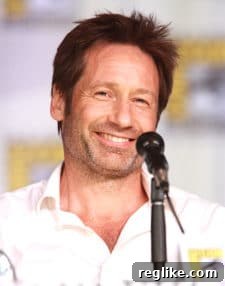
The domain in question was previously held by Alberta Hot Rods, a Canadian firm notorious for its history of acquiring and holding domain names associated with public figures in what has been consistently ruled as cybersquatting. Duchovny’s legal team presented a compelling case to the National Arbitration Forum, asserting that the firm’s ownership constituted an illegitimate use of his well-established personal brand and trademark. The forum’s decision reinforces the robust protections available under the Uniform Domain-Name Dispute-Resolution Policy (UDRP), a mechanism designed to combat such predatory practices.
The UDRP Ruling: A Clear Victory Against Cybersquatting
The National Arbitration Forum’s ruling unequivocally ordered the transfer of DavidDuchovny.com to the actor. This decision came after a thorough review of the evidence, which undoubtedly demonstrated that Alberta Hot Rods had no legitimate rights or interests in the domain name and that its registration and use were in bad faith. For celebrities, controlling their personal domain is paramount. It serves as the official online hub for their work, personal statements, and fan engagement. The absence of such control can lead to confusion, misinformation, and the exploitation of their public image.
The UDRP process, established by the Internet Corporation for Assigned Names and Numbers (ICANN), provides an efficient and cost-effective alternative to traditional litigation for resolving domain name disputes. To prevail under UDRP, a complainant must generally prove three key elements: first, that the domain name is identical or confusingly similar to a trademark or service mark in which the complainant has rights; second, that the registrant has no rights or legitimate interests in respect of the domain name; and third, that the domain name has been registered and is being used in bad faith. Duchovny’s case clearly met all these criteria, leading to the favorable outcome.
Alberta Hot Rods: A Pattern of Predatory Domain Practices
The firm behind the illegitimate ownership, Alberta Hot Rods, has a well-documented history of engaging in cybersquatting activities targeting high-profile individuals. Their business model appears to involve registering domain names associated with celebrities, often with the intent to profit from them either by selling them back to the celebrity or by redirecting traffic to other sites. This strategy has repeatedly backfired, as evidenced by a string of UDRP losses. Among the illustrious list of celebrities who have previously forced Alberta Hot Rods to relinquish their domain names are Hollywood luminaries such as Halle Berry, Pamela Anderson, Sandra Bullock, Cameron Diaz, Tom Cruise, and Kevin Spacey.
The consistent failure of Alberta Hot Rods in these disputes often stems from their lack of response to the complaints filed against them. In this particular instance, Alberta Custom Hot Rods again failed to respond to the complaint, a common tactic that, while perhaps intended to delay or complicate proceedings, often works against the registrant by allowing the panel to draw adverse inferences based solely on the evidence provided by the complainant. This pattern of non-response further underscores the clear lack of legitimate interest and bad faith intent in their domain registration practices.
The Two-Decade Wait: Why So Long?
One of the most intriguing aspects of this case is the extraordinary duration it took for David Duchovny to reclaim his domain. Registered in 1996, DavidDuchovny.com sat outside his control for a remarkable 21 years. This extended delay raises questions and prompts speculation about the factors at play. It’s possible that early in his career, the significance of a personal domain name was not as widely recognized or prioritized as it is today. Alternatively, there might have been previous, unsuccessful attempts to acquire the domain through informal means or through legal channels that did not proceed to a formal UDRP complaint.
It could also be a strategic decision, perhaps prompted by a new management team, increased emphasis on digital presence, or the planning of new projects that necessitate a centralized online hub. The evolving landscape of celebrity branding, where direct fan engagement and content distribution are increasingly critical, likely made the need for DavidDuchovny.com more urgent than ever. While there is no statute of limitations under the UDRP, the passage of such a considerable amount of time before filing a complaint is unusual, yet it does not diminish the validity of the claim when bad faith registration and use are clearly demonstrable.
The Crucial Role of Personal Domains for Celebrities in the Digital Age
For an actor of David Duchovny’s caliber, known globally for iconic roles like Fox Mulder in “The X-Files” and Hank Moody in “Californication,” securing his personal domain name is more than just a matter of principle; it’s a strategic imperative. In today’s digital ecosystem, a personal domain serves multiple vital functions:
- Brand Control: It ensures that official information about his career, projects, and public statements originates from an authoritative source, preventing misinformation and brand dilution.
- Fan Engagement: A dedicated website offers a direct channel for fans to connect, access exclusive content, and stay updated on his latest endeavors without navigating third-party sites.
- Professional Hub: It acts as a centralized platform for agents, casting directors, and media outlets to find professional information, press kits, and contact details.
- SEO Advantages: Owning and optimizing DavidDuchovny.com enhances his visibility in search engine results, ensuring that when fans or industry professionals search for him, they find his official online presence first.
- Monetization and Projects: It provides a potential platform for promoting books, films, music, or other personal projects directly, offering new avenues for creative and commercial endeavors.
- Protection Against Impersonation: By controlling his exact name as a domain, it significantly reduces the risk of others impersonating him online or using his name for malicious or misleading purposes.
In essence, DavidDuchovny.com becomes the cornerstone of his digital legacy, a digital equivalent of his public persona, offering stability and authenticity in a constantly changing online environment.
Broader Implications: The Ongoing Battle Against Cybersquatting
David Duchovny’s success in reclaiming his domain name is a testament to the enduring effectiveness of the UDRP and serves as a crucial reminder for all public figures and trademark holders about the importance of protecting their digital assets. Cybersquatting remains a persistent issue, with individuals and entities attempting to capitalize on others’ fame or brand recognition. However, cases like this underscore that vigilance and timely legal action can indeed rectify such injustices.
The National Arbitration Forum, along with other UDRP providers like the World Intellectual Property Organization (WIPO), plays a critical role in maintaining order and fairness in the domain name system. Their consistent rulings against bad-faith registrants deter future attempts at cybersquatting and provide a clear framework for redress. For David Duchovny, this victory is not just about a website; it’s about solidifying his digital footprint and ensuring that his online presence truly reflects his identity and accomplishments for years to come.
The saga of DavidDuchovny.com, spanning over two decades, concludes with the rightful owner finally taking control. This outcome not only benefits the actor but also sends a strong message to cybersquatters worldwide: legitimate rights and established trademarks will ultimately prevail in the digital realm.