
Verisign Patents Advanced System for Early Homograph Attack Detection in Domain Names
In an era where digital identity and online trust are paramount, the landscape of cyber threats is constantly evolving. Among the insidious forms of attack, homograph attacks stand out for their deceptive simplicity and potent threat. These attacks exploit visual similarities in domain names, luring unsuspecting users to malicious websites that mimic legitimate ones. Recognizing the urgent need for robust defense mechanisms, the U.S. Patent and Trademark Office has recently granted Verisign (NASDAQ: VRSN) a pivotal patent, number 10,599,836 (pdf), for “Identification of visual international domain name collisions.” This groundbreaking patent introduces an innovative system designed to detect such deceptive domain registrations shortly after they occur, marking a significant leap forward in safeguarding the integrity of the internet.
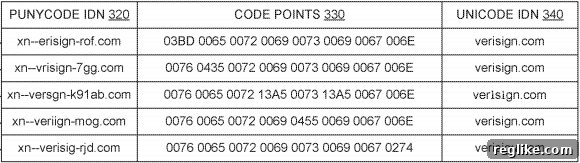
Understanding Homograph Attacks: A Deep Dive into Digital Deception
To fully appreciate the significance of Verisign’s patent, it’s crucial to understand the mechanics and insidious nature of a homograph attack. At its core, a homograph attack involves a malicious actor registering a domain name that is visually indistinguishable, or nearly so, from a legitimate, well-known domain. The trick lies in leveraging the flexibility of Internationalized Domain Names (IDNs).
IDNs allow domain names to be registered using characters from various scripts, such as Latin, Cyrillic, Greek, Arabic, and others, extending the reach of the internet to non-English speaking populations. While a monumental step towards global inclusivity, IDNs introduce a unique set of security challenges. Many top-level domains (TLDs) permit the registration of domain names that incorporate characters from more than one script, or characters that look identical across different scripts (e.g., the Latin ‘a’ and the Cyrillic ‘а’).
When an IDN containing non-ASCII characters is used in contexts like web browsers or email clients, it is converted into a standard ASCII-compatible encoding known as Punycode. Punycode prefixes the domain with “xn--” followed by an ASCII representation of the international characters. For instance, a domain like “façade.com” might convert to “xn--fade-gra.com”. Attackers exploit this conversion and the visual similarities of characters from different scripts to create deceptive domains.
Consider the vivid example outlined in Verisign’s patent:
…a malicious entity could register the IDN “xn- -oogle-wmc .com” via a registration service. When a web browser displays this IDN, the punycode element “-wmc” would direct the web browser to place a Latin small capital letter “G” in front of the characters “oogle”—resulting in the domain name Googl e.com. Users accessing Google .com would then be directed to the IDN registered by the malicious user rather than to the expected home page of google.com.
This scenario perfectly illustrates how subtle visual manipulation, facilitated by IDNs and Punycode, can trick users into believing they are visiting a trusted site when, in reality, they are redirected to a malicious clone. Such deceptive practices can lead to phishing scams, distribution of malware, data theft, and severe reputational damage for legitimate brands.
Verisign’s Innovative Patent: Harnessing Visual Recognition for Security
Verisign’s newly granted patent, officially titled “Identification of visual international domain name collisions,” directly addresses the core challenge of homograph attacks: their visual nature. The patented system proposes a sophisticated method that mirrors human perception, making it exceptionally effective at identifying these visually similar, yet technically distinct, domain names. Unlike traditional text-based comparisons that might miss subtle cross-script homographs, Verisign’s approach adds an invaluable layer of visual analysis.
The essence of Verisign’s innovative method lies in its two-pronged strategy:
- Domain Name to Image Conversion: The system first takes a domain name – whether a newly registered IDN or a domain being monitored – and converts it into a visual representation, essentially generating an image of how the domain would appear in a standard web browser or user interface. This step is critical because it captures the exact visual cues that attackers aim to exploit. By rendering the domain as an image, the system bypasses the complexities of Punycode and script variations, focusing purely on the graphical presentation.
- Optical Character Recognition (OCR) and Similarity Analysis: Once the domain name is converted into an image, the system employs advanced Optical Character Recognition (OCR) technology. OCR processes the image to extract the characters and their visual attributes. This data is then compared against a database of legitimate, high-value domain names. The comparison isn’t just character-by-character; it’s a sophisticated analysis of visual similarity, taking into account font rendering, character spacing, and the overall “look and feel” of the domain name. The system is designed to identify even minute graphical discrepancies or striking visual resemblances between a new registration and existing trusted domains.
This visual detection method offers several distinct advantages. Firstly, it provides a proactive defense. By integrating this system into the domain registration process, potential homograph attacks can be flagged and mitigated shortly after registration, preventing malicious domains from ever reaching a wider audience. Secondly, it is less susceptible to evolving attack vectors that might cleverly bypass purely algorithmic character-set checks. The visual approach directly tackles the core deception—what the user *sees*—making it a powerful tool in the ongoing battle against sophisticated phishing schemes.
The Broader Landscape of Internationalized Domain Name (IDN) Security Challenges
While IDNs have undeniably democratized internet access, enabling billions to navigate the web in their native languages, they have simultaneously opened new avenues for cybercriminals. The inherent complexity of Unicode, which encompasses thousands of characters from numerous writing systems, makes the task of distinguishing legitimate domains from malicious fakes incredibly challenging. Different scripts often contain characters that are visually identical or highly similar (homoglyphs), even though they represent different underlying code points. For example, the Latin ‘o’, the Cyrillic ‘о’, and the Greek ‘ο’ can appear indistinguishable in many fonts.
This complexity extends beyond mere visual resemblance. Security researchers have documented numerous techniques where attackers combine characters from different scripts within a single domain name (mixed-script IDNs) to create URLs that are almost impossible for the average user to differentiate from a legitimate one. Traditional security tools, which often rely on simple string matching or predefined character sets, struggle to keep pace with these nuanced attacks. The burden of vigilance often falls on the end-user, who may lack the technical expertise or visual acuity to spot these subtle deceptions. This underscores the critical need for advanced, automated detection systems like the one patented by Verisign, which can operate at scale and with a level of precision that surpasses human capability.
Furthermore, the responsibility for mitigating IDN security risks extends to various stakeholders. Domain registries, who manage the technical and policy aspects of top-level domains, and registrars, who provide domain registration services to the public, play crucial roles. They must implement robust policies and technical safeguards to prevent the registration of malicious homograph domains. Browser developers also bear a significant responsibility, as browsers are the primary interface through which users interact with domain names. Implementing clear warnings, displaying Punycode for suspicious IDNs, or even blocking known deceptive domains are vital steps in protecting users.
Industry-Wide Efforts and the Collaborative Fight Against Homographs
Verisign is not alone in recognizing the gravity of homograph attacks. The patent landscape and industry initiatives indicate a growing consensus among key players about the urgent need to address this threat. Notably, Morgan Stanley recently applied for a patent with similar objectives, focusing on domain name similarity detection. This parallelism highlights how critical this issue has become across different sectors, from domain infrastructure providers like Verisign to financial institutions like Morgan Stanley, which are prime targets for phishing and brand impersonation.
Beyond patent applications, leading domain operators are actively integrating homograph protection into their services. Donuts, which operates over 200 top-level domains, is a prominent example. Their “Domains Protected Marks List” (DPML) product already includes homograph protection, preventing the registration of domain names that are visually or phonetically similar to protected trademarks across their extensive portfolio of TLDs. Furthermore, Donuts has publicly announced plans to expand its homograph protections in the future, indicating a continuous commitment to enhancing domain security. These proactive measures by registries and registrars are essential for building a more secure and trustworthy internet ecosystem.
The fight against homograph attacks is inherently a collaborative effort. It requires constant innovation from technology companies like Verisign, robust policy implementation by domain registries, proactive services from registrars, and vigilant security features from web browsers. Sharing threat intelligence, developing common standards for IDN security, and fostering cross-industry partnerships are all crucial elements in staying ahead of cybercriminals who continuously adapt their tactics.
Protecting Users and Brands: The Critical Impact of Homograph Attacks
The real-world consequences of successful homograph attacks are severe, affecting both individual internet users and established organizations. For users, falling victim to a homograph attack can lead to:
- Phishing and Credential Theft: Users might enter their login credentials, credit card details, or other sensitive information onto a fake website, believing it to be legitimate.
- Malware Distribution: Malicious domains can host drive-by downloads or trick users into installing malware, ransomware, or spyware onto their devices.
- Financial Loss: Direct financial fraud can occur if users make purchases or transfer funds on a fraudulent site.
- Identity Theft: Stolen personal information can be used for broader identity theft schemes.
For businesses and brands, the impact can be equally devastating:
- Reputational Damage: Customers losing trust in a brand after being victims of scams associated with its likeness.
- Loss of Revenue: Customers might be diverted to competitor sites or abandon transactions out of fear.
- Legal and Compliance Issues: Companies might face legal repercussions or compliance penalties if their brand is used in phishing scams, especially if they are perceived to have insufficient protection.
- Security Breaches: Employee credentials stolen via homograph attacks could provide a gateway into corporate networks.
Therefore, advanced detection systems like Verisign’s are not just technical achievements; they are vital tools in protecting the digital economy and ensuring online safety for billions. They provide an automated, scalable solution that reduces the burden on individual users and adds a critical layer of defense at the source – the domain registration stage.
The Future of Domain Name Security and Advanced Threat Detection
The granting of Verisign’s patent for homograph attack detection signifies a pivotal moment in the ongoing evolution of domain name security. As the internet continues to expand globally, with an increasing diversity of scripts and characters used in domain names, the challenges posed by homograph attacks are only expected to grow. Therefore, the future of domain name security will heavily rely on the continuous development and deployment of sophisticated threat detection mechanisms.
Looking ahead, we can anticipate several key trends and advancements:
- Integration of AI and Machine Learning: While Verisign’s patent utilizes OCR, the next generation of detection systems will likely integrate more advanced Artificial Intelligence (AI) and Machine Learning (ML) techniques. These technologies can learn from vast datasets of legitimate and malicious domains, identifying complex patterns and anomalies that might elude rule-based systems. AI-driven algorithms could become even more adept at recognizing nuanced visual similarities, predicting new attack vectors, and rapidly adapting to evolving threats.
- Proactive, Real-Time Monitoring: The emphasis will shift further towards real-time monitoring of domain registrations across all TLDs. Instantaneous analysis and flagging of suspicious domains upon registration will be crucial in minimizing the window of opportunity for attackers.
- Standardization and Collaboration: There will likely be a push for greater standardization in how homograph attacks are identified and mitigated across different registries and registrars. Enhanced collaboration among cybersecurity firms, domain industry bodies (like ICANN), and browser developers will be vital to establish best practices and deploy comprehensive defenses.
- User Education and Browser Safeguards: Alongside technological advancements, continuous user education on recognizing phishing attempts and promoting the use of browser security features will remain important. Browsers may further enhance their ability to detect and warn users about potentially deceptive domains, potentially by incorporating outputs from systems like Verisign’s.
- Focus on Multi-Dimensional Analysis: Future systems may combine visual analysis (like Verisign’s), linguistic analysis, and behavioral analysis (e.g., monitoring traffic patterns to newly registered domains) to create a multi-layered defense system.
Verisign’s patent represents a significant stride in securing the digital frontier. By focusing on the visual aspect of domain names, it tackles the very essence of homograph deception. This innovation, coupled with ongoing research, industry collaboration, and user awareness, forms the bedrock of a more secure and trustworthy internet experience for everyone.