
New ownership breathes new life into the .link domain, aiming for widespread adoption beyond traditional websites and pioneering its role in the future of digital identity.
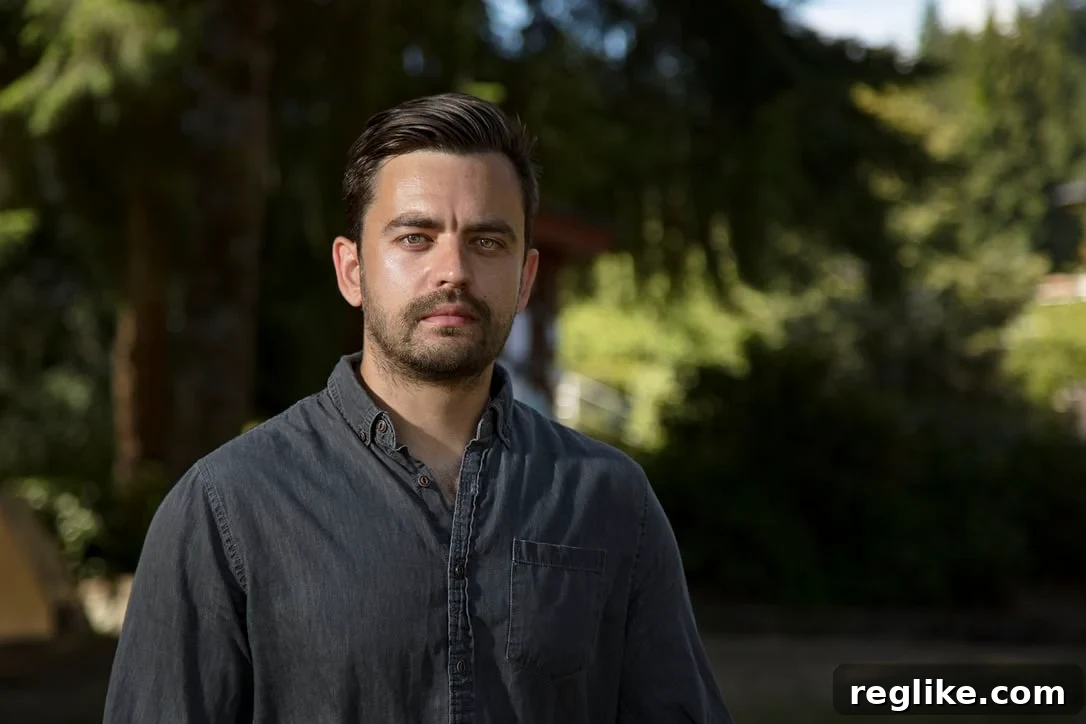
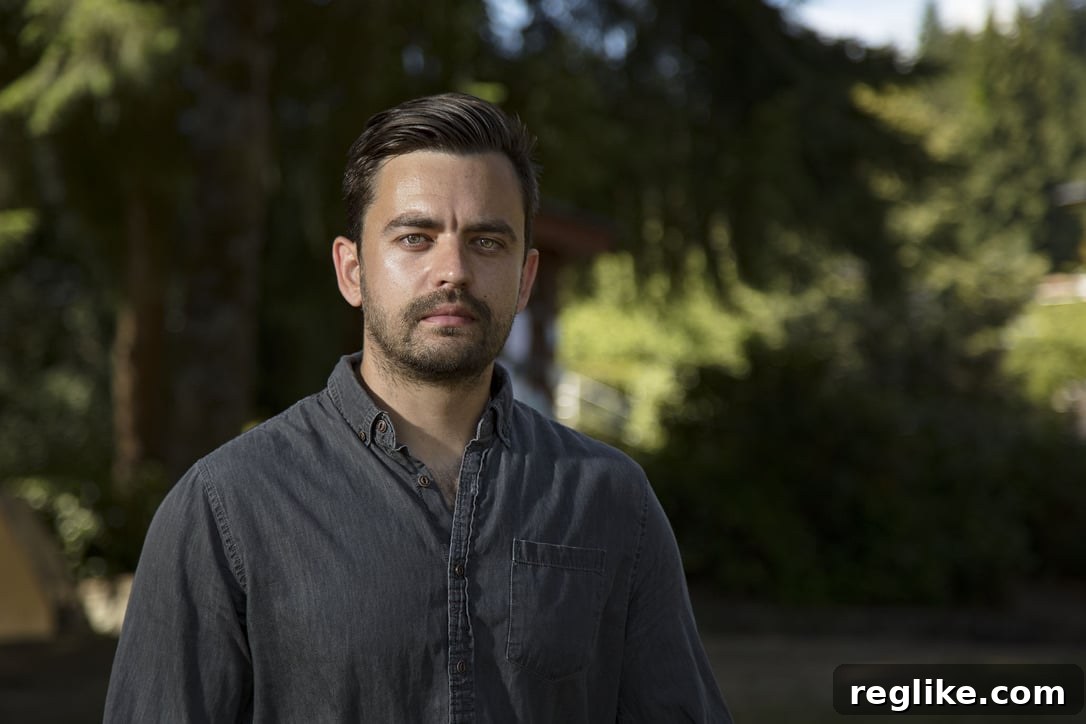
In the dynamic world of domain investments, the acquisition of an entire Top-Level Domain (TLD) is a significant event. While the traditional .com space has historically been a lucrative playground for experienced investors like Yoni Belousov, his recent bold move into new TLDs marks a strategic shift. Belousov, renowned for his astute investments in the traditional domain market, recently made headlines by acquiring the .link extension during the UNR auction last year, with the deal officially concluding earlier this year.
This major acquisition signals not just a change in ownership, but a transformative vision for the .link domain’s future. To delve into the intricate details of their strategy and the future landscape for this versatile TLD, we recently sat down with Belousov and Vaughn Liley, the General Manager of Nova.Link, the new entity managing the .link TLD. Their insights reveal a meticulous plan to elevate .link from a niche extension to a ubiquitous digital asset, fundamentally redefining its role in the online ecosystem.
A Strategic Leap into New TLD Opportunities
Belousov shared that his interest in new top-level domains had been brewing for some time. “I was planning to get into this business sometime, probably was looking more towards the next round of applications,” he explained, indicating a long-term strategic outlook towards expanding his domain portfolio. However, the unpredictable timeline for the next ICANN application round, coupled with UNR’s unexpected decision to auction off its entire TLD portfolio, presented an unforeseen, yet compelling, opportunity that accelerated his plans.
Seizing this moment, Belousov actively participated in the competitive auction for .link. To his slight surprise, he emerged as the winning bidder for the valuable extension. While the precise acquisition price remains confidential, Belousov candidly acknowledged the intensely competitive nature of the new TLD market. He emphasized that the inherent value of such an acquisition isn’t merely in its current profitability, but in its untapped potential and the capacity for future growth. “This business is extremely competitive to the point that I’m not sure you can actually acquire an extension based on the current profitability of the extension itself,” he stated. “A lot of the value is really almost locked in, in the form of what’s possible in the event you make it very successful.” This perspective underscores a profound belief in the future expansion and versatile utility of the .link domain, positioning it as an investment in innovation rather than immediate returns.

Ambitious Growth Trajectories and a Paradigm Shift in Domain Usage
Belousov and Liley are not shy about their ambitious aspirations for the .link domain. They aim to dramatically increase its reach, projecting growth from the current 200,000 registrations to a formidable one million within the next five years. Their long-term vision extends even further, targeting an impressive ten million registrations. Crucially, this growth strategy is not predicated on the prevalent tactic of some other registries: offering domains at rock-bottom prices. Instead, their approach is rooted in a fundamental redefinition of how domains are perceived and utilized, focusing on value and practical application.
For anyone who has closely observed the trajectory of new Top-Level Domains since their introduction nearly a decade ago, such aggressive growth targets might seem audacious. Many nTLDs have struggled to gain significant market share, often falling short of initial projections. However, Belousov and Liley propose a compelling answer to this skepticism: a paradigm shift in how we think about domains and their applications. They firmly believe that the .link domain, by its very nature and semantic clarity, is uniquely positioned to spearhead this transformation. It’s not just about owning a website; it’s about creating a relevant, memorable, and functional digital connection that simplifies online interactions.
Unlocking the Power of “Link in Bio” and Digital Connectivity
Perhaps the most significant and immediate opportunity identified by the Nova.Link team lies in leveraging the burgeoning market for “link in bio” services. In an era dominated by social media, users frequently encounter the limitation of a single clickable link in their profile biographies across platforms like Instagram, TikTok, and Twitter. This restriction has spurred the creation of services that allow users to curate a single, comprehensive landing page featuring multiple links to their various online destinations—other social media profiles, personal websites, e-commerce stores, portfolios, or digital content.
This “link in bio” ecosystem represents a massive and rapidly expanding market. Platforms such as LinkTree, a prominent player in this space, boast over 27 million users. The sheer scale and valuation of these services highlight their importance: TechCrunch, in an article discussing LinkTree’s latest funding round, which valued the company at an astounding $1.3 billion, mused, “Who would’ve thought that an entire swath of startups would spring up all because Instagram, TikTok and Twitter only let you link to one website in your bio?” This illustrates the immense demand for a consolidated digital presence, particularly for influencers, creators, businesses, and individuals navigating the multi-platform digital landscape.
Currently, users of these services typically end up with a cumbersome subdomain (e.g., linktree.com/yourprofile) or, even less ideally, a subdirectory on the main domain of the service provider. This offers limited branding, can be hard to remember, and lacks a personal touch. Nova.Link envisions a game-changing solution: partnering with these “link in bio” services to enable them to offer users their own personalized, second-level .link domains (e.g., yourname.link, yourbrand.link). This strategic integration would provide users with enhanced branding, a professional aesthetic, and greater control over their digital identity, elevating their online presence from generic to distinguished.
Beyond “link in bio” services, the team also sees substantial opportunities with link shorteners. Imagine a custom, branded short link like event.link/launch or campaign.link/promo, offering not just brevity but also a powerful, relevant brand statement. By positioning .link as the go-to extension for all forms of digital connection, Nova.Link aims to embed it into the fabric of daily online interaction, making it the intuitive choice for any kind of digital link.
Rethinking Registrar Onboarding and Customer Experience for the Future
The exclusive distribution of .link domains through registrars creates a significant opportunity for these partners. Nova.Link encourages registrars to fundamentally rethink the traditional customer onboarding process. Historically, the typical customer journey involves registering a domain primarily to build a comprehensive website. This undertaking, even with modern website builders, can be perceived as daunting and time-consuming, leading many to opt for simpler, free alternatives like a Facebook page or a basic social media profile, rather than investing in a full website.
What if, instead, registrars could offer a low-friction entry point by helping customers establish a simple, yet powerful, web presence centered around a customized “link in bio” page with a .link domain? Yoni Belousov passionately articulated this vision: “I think link in bio is going to be even bigger than websites as a whole, as a category.” He drew an insightful parallel: “People thought everybody would have a blog. But instead, everybody has a Twitter account, right? Why? Because it’s way easier. And it’s kind of like a micro-level version of a blog. So the link in bio thing is, in my opinion, the same thing to websites as a Twitter account is to blogs.” This perspective suggests a future where a personalized .link bio page serves as a primary, easily managed digital hub for many individuals and small entities, offering a simple yet professional online footprint.
Vaughn Liley further elaborated on the strategic advantages for registrars. A “link in bio” account, powered by a .link domain, offers an incredibly low-friction entry point for new customers. Once these customers are onboarded and experience the benefits of a professional, easy-to-manage digital identity, registrars gain a prime opportunity to upsell them on a suite of other products and services, such as email hosting, advanced analytics, or even full website development in the future. “In a nutshell, we would like to see .link become the de facto standard in anything link-related,” Liley summarized, encompassing not only “link in bio” services but also link shorteners and branded links across the entire digital ecosystem.
Crucially, the company emphasizes that it has no plans to directly compete with existing “link in bio” providers or link shorteners. Instead, their strategy is collaborative: to empower these services by supplying them and their users with premium .link domains, thereby enhancing the overall value proposition for everyone involved and fostering a symbiotic relationship within the digital linking industry.
Bridging Web 2 and Web 3: The Vision for “Web 2.5” with .link
Beyond the immediate opportunities in social media and branded links, Nova.Link is also looking towards the future of the internet, specifically the evolving landscape of Web 3. Belousov, with his active engagement in cryptocurrencies and NFTs, recognizes a significant, albeit controversial, opportunity in integrating Web 3 blockchain domains with traditional Web 2 infrastructure, creating a more cohesive digital experience.
The current digital realm presents a clear dichotomy: Web 3 domains, which are decentralized and often tied to blockchain identities, offer unique functionalities like direct wallet linking and decentralized hosting but also come with their own set of limitations. Traditional Web 2 domains, while robust for websites and email, lack the decentralized, identity-centric features of Web 3. “I feel like there is a very big problem from the perspective of, you have Web 3 domains and you have, let’s call them Web 2 domains…and as far as I can tell at the moment they have nothing to do with each other,” Belousov observed, highlighting the current fragmentation.
His vision is to “connect the two,” effectively creating what he playfully refers to as “Web 2.5.” This hybrid approach aims to leverage the strengths of both paradigms, allowing them to complement each other. “Now, Web 3 domains have their own services; Web 2 domains have their own. I’m very interested in connecting the two. So linking Web 2 with Web 3, maybe call it Web 2.5, because I feel like we could leverage Web 3 domains and give them some Web 2 functionality. We can do the same thing for our own extension and give [registrants] Web 3 functionality of some sort.”
Belousov highlighted a practical example: many Web 3 domains currently lack native email capabilities, a fundamental feature of Web 2 for communication. By bridging this gap, .link could facilitate the integration of traditional email services with decentralized identities, providing a more complete online identity. Conversely, traditional .link domains could gain certain Web 3 functionalities, such as linking to decentralized applications or immutable content, enhancing their utility in the evolving digital economy. This innovative approach positions .link at the forefront of the future internet, enabling users to seamlessly navigate between decentralized applications and traditional web services, all under one cohesive digital identity.
Any discussion regarding Web 3 and the .link domain inevitably brings to mind eth.link. This particular domain was registered with the explicit purpose of simplifying the connection between traditional Web 2 users and .eth blockchain websites. The domain is currently embroiled in a complex legal battle, a situation the .link registry observes from a distance. As a registry, Nova.Link is not directly involved in the dispute between the former registrant and the two domain name registrars, but they express hope for a swift and equitable resolution, recognizing the importance of such bridging services for the wider adoption of Web 3 technologies and the overall health of the domain ecosystem.
Rebuilding Trust and Expanding Shelf Space with Registrars
Before Nova.Link can fully execute its ambitious plans, a critical prerequisite is expanding the accessibility of .link domains. This means securing broader “shelf space” across more domain registrars globally. The historical context here is important: in 2017, several prominent registrars, most notably GoDaddy, opted to delist all domain names managed by UNR (then Uniregistry). This decision came after UNR announced significant price increases across its portfolio. Ironically, even though prices for .link itself barely budged during that particular price hike, it was swept up in the broader delisting due to the registry-wide policy. This past event created a hurdle for .link’s widespread availability, as many potential users couldn’t easily find or register these domains.
Under its new ownership, Nova.Link is actively working to rectify this and rebuild registrar relationships. Vaughn Liley has been spearheading efforts to re-engage registrars and encourage them to once again offer .link domains, highlighting the renewed vision and stable pricing structure. A key element of this strategy is a commitment to competitive and transparent pricing, designed to foster trust and encourage widespread adoption. Currently, standard .link registrations are available at a wholesale price of $7, with a single premium tier set at $100. (It’s important to note that registrars apply their own markup to these wholesale prices, which may vary.) The registry may consider introducing additional premium tiers in the future, but they assure that existing registrations will be “grandfathered in,” protecting current registrants from unexpected price changes—a crucial factor for building long-term trust and stability in the market and ensuring predictability for both registrars and end-users.
A Relaunch Paved with Vision, Expertise, and Strategic Investment
Since his successful bid for the .link extension, Yoni Belousov has poured considerable effort and resources into its relaunch, demonstrating his deep commitment to its future. His first strategic move was to assemble a formidable team, bringing Vaughn Liley onboard as General Manager. Liley’s extensive experience, honed through previous roles at industry giants like MMX, UNR, and ICM Registry, makes him an invaluable asset in navigating the complexities of the TLD market and fostering robust registrar relationships. Belousov has also brought in key investors, including Jeff Gabriel, a respected domain broker and co-founder of Saw.com, whose financial backing and industry acumen further strengthen Nova.Link’s foundation and provide strategic guidance.
These investors have made a significant wager, betting on Belousov’s vision that .link can transcend its current status and evolve into something far more impactful and integral to the digital landscape. The questions now facing Nova.Link are profound: Can they successfully persuade domain registrars to adopt a new mindset, moving beyond the traditional purpose of a domain name solely for comprehensive websites? Will the myriad of “link-related” services, from link-in-bio platforms to shorteners, recognize and integrate .link as a crucial value-add for their users, enhancing branding and digital identity?
The ambition is clear: to position .link as the definitive identifier for all things connected in the digital world. This goes beyond simple navigation; it’s about creating a streamlined, branded, and versatile digital presence that adapts to the evolving needs of internet users. Only time will truly reveal if Nova.Link can effectively “link” the .link domain to a future where it is an indispensable component of every individual’s and brand’s online presence, bridging existing digital divides and pioneering new forms of digital interaction and identity.