
IONOS Goes Public: A Landmark IPO and Its Far-Reaching Impact on the Domain Industry
A significant development unfolded today as IONOS, a prominent player in the web hosting and cloud services landscape, successfully completed its initial public offering (IPO) in Germany. This strategic move by United Internet, IONOS’s former parent company, marks a new chapter for several well-known entities within the domain and hosting ecosystem, including the highly influential domain aftermarket platform, Sedo.
For many individuals and businesses operating online, several domain name companies they’ve likely interacted with are now consolidated under this newly public entity. The IONOS group comprises a powerful portfolio of brands, each contributing uniquely to its comprehensive offering. These include Sedo, a global leader in the domain aftermarket; InterNetX, a well-regarded registrar and provider of server solutions; IONOS itself, a major hosting and cloud provider; Strato, another significant web host; united-domains, offering a wide array of domain registration services; Arsys, a key player in the Spanish market; and Fasthosts, a prominent UK-based hosting company, among others.
Understanding the Strategic Spin-Off: United Internet’s Vision for IONOS
The decision by United Internet to spin off IONOS and pursue an IPO is a calculated strategic maneuver. By separating IONOS, United Internet aims to unlock distinct value for both entities. For IONOS, going public provides access to new capital markets, enabling greater financial flexibility for investments in technology, infrastructure, and potential acquisitions. This independence allows IONOS to pursue a more focused growth strategy, tailored specifically to the competitive and rapidly evolving web presence and cloud services sectors. It also brings enhanced visibility and credibility on a global stage, potentially attracting top talent and new business partnerships.
United Internet, on the other hand, can now concentrate its efforts on its remaining core businesses, streamlining operations and maximizing efficiency. This type of corporate restructuring is common among diversified conglomerates looking to create more agile and specialized companies capable of responding quickly to market dynamics. The move signals United Internet’s confidence in IONOS’s standalone potential and its ability to thrive as an independent public company.
Sedo and the Thriving Domain Aftermarket: A Glimpse into Transparency
One of the most anticipated outcomes of the IONOS IPO, particularly for industry watchers and domain investors, is the increased transparency regarding the performance of Sedo. As a significant component of the newly public entity, Sedo’s financial contributions and operational metrics will likely become more visible, offering unprecedented insights into the health and trends of the global domain aftermarket. Previously, these figures were often subsumed within the broader results of United Internet, making it challenging to gauge Sedo’s exact impact.
The domain aftermarket is a vital segment of the internet economy, facilitating the buying and selling of previously registered domain names. It serves a diverse clientele, from entrepreneurs seeking the perfect brand name to corporations protecting their intellectual property, and investors looking to capitalize on valuable digital assets. Sedo has long been at the forefront of this market, providing a platform for auctions, brokerage services, and domain appraisals. Its robust infrastructure and extensive network of buyers and sellers have solidified its position as a go-to resource for anyone involved in premium domain transactions.
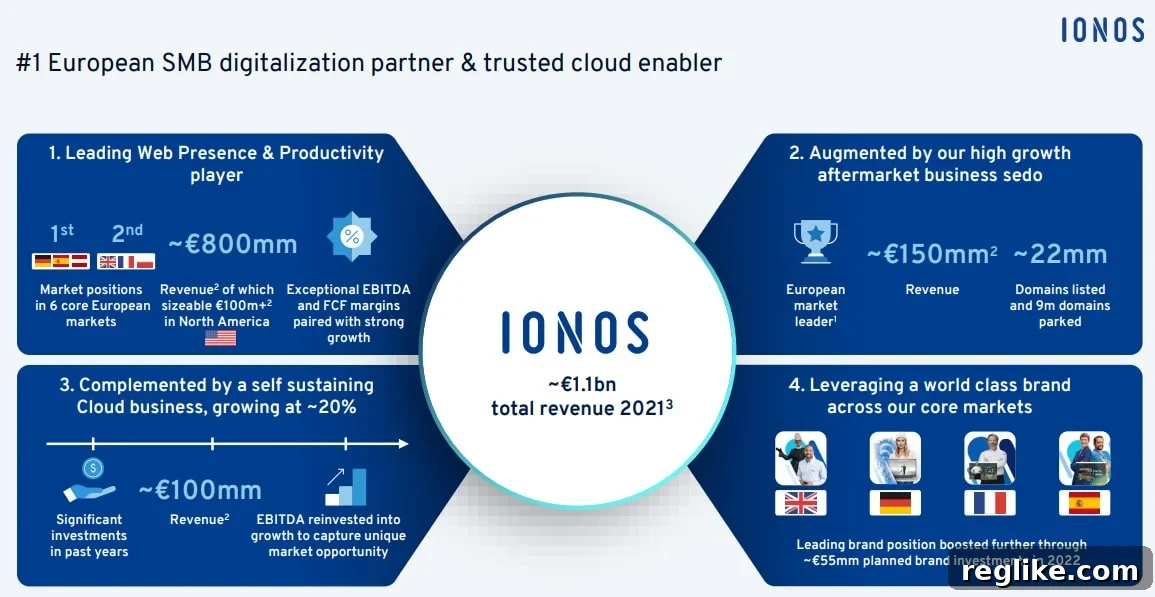
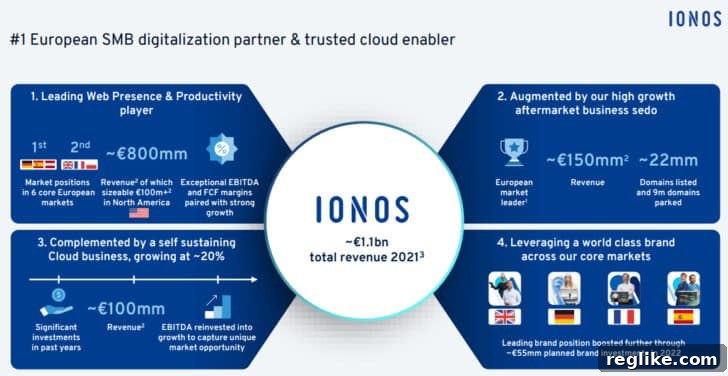
Insights from last year’s pitch for the IONOS IPO underscored Sedo’s considerable contribution, estimating its annual revenue at approximately $150 million. This substantial figure highlights the lucrative nature of the domain aftermarket and Sedo’s dominance within it. Furthermore, the pitch revealed an impressive growth trajectory, with the aftermarket selling 48% more domains in 2021 compared to 2019. This significant increase points to a flourishing secondary market, driven by rising demand for memorable, brandable, and SEO-friendly domain names. Factors contributing to this growth include the continuous digital transformation of businesses, the proliferation of new online ventures, and the increasing recognition of domain names as valuable digital real estate.
For domain investors, this newfound transparency from a publicly traded entity like IONOS could be invaluable. Detailed reporting on Sedo’s performance metrics, such as average selling prices, transaction volumes across different TLDs, and trends in specific market segments, could provide critical data for making informed investment decisions. It could also validate the overall health and maturity of the domain investing landscape, potentially attracting more institutional interest and capital into the space.
Navigating the Public Markets: Valuation and Initial Reception
Entering the public market is always a moment of intense scrutiny, and IONOS’s IPO was no exception. United Internet had initially set ambitious targets, hoping for a valuation of around $4 billion for IONOS. This figure was notably similar to the valuation of United Internet itself at the time, reflecting the high expectations placed on the spun-off entity’s growth potential and market position. However, the dynamics of the market often lead to adjustments, and the actual pricing told a different story.
IONOS ultimately priced its shares at a lower valuation, approximately $2.8 billion. This discrepancy can be attributed to several factors. The broader economic climate, characterized by rising interest rates and inflation concerns, has led to a more cautious approach from investors towards tech and growth stocks. Furthermore, the web hosting and cloud computing sectors are intensely competitive, featuring established giants and agile startups alike. Investors likely factored in these market conditions and competitive pressures, leading to a more conservative valuation.
Adding to the initial challenges, shares of IONOS slipped in early trading. This immediate dip is not uncommon for IPOs, especially in volatile market conditions. It can reflect a number of things: initial investor apprehension, profit-taking by early investors, or simply the market finding its equilibrium for a new stock. While initial trading performance can set a tone, it is often not indicative of a company’s long-term success or failure. Public companies navigate a complex journey, and their true value is often realized over months and years as they execute their strategies, demonstrate consistent growth, and adapt to market changes.
The lower valuation and initial trading dip present both challenges and opportunities for IONOS. While it may require a more compelling narrative to attract and retain investors in the short term, it also means the company starts its public life with a more attainable valuation, potentially allowing for greater upside as it proves its capabilities. It underscores the importance of a clear strategy, disciplined execution, and transparent communication with the market.
What This Means for IONOS’s Future and the Broader Industry
As a newly public company, IONOS enters an exciting yet challenging phase. With direct access to public capital, it has the resources to accelerate its innovation in web hosting, cloud infrastructure, and domain services. This could translate into enhanced product offerings, improved customer support, and more aggressive expansion into new markets. For its diverse portfolio of brands, including Sedo, InterNetX, and Strato, being part of a public entity could mean increased investment in technology, marketing, and global reach.
The IPO of IONOS also carries significant implications for the broader domain and hosting industry. It highlights the continued importance and profitability of these foundational internet services. Other major players in the space will undoubtedly be watching IONOS’s trajectory closely, potentially influencing their own strategies regarding market consolidation, private equity involvement, or even future public offerings. Enhanced transparency from IONOS, particularly regarding Sedo’s performance, could set a new standard for data sharing within the domain aftermarket, benefiting researchers, investors, and industry participants alike.
Increased competition within the cloud and web presence sectors is inevitable, and IONOS’s public status will put it under greater scrutiny to perform. This pressure can be a catalyst for efficiency, innovation, and customer-centric strategies. As IONOS strives to demonstrate its value to shareholders, consumers of its services can expect continuous improvements and competitive pricing. This landmark IPO solidifies IONOS’s position as a major force in the digital infrastructure landscape, poised to shape the future of web presence and cloud computing for years to come.
In conclusion, the IONOS IPO is more than just a financial transaction; it’s a pivotal moment that reshapes the competitive landscape of the domain and hosting industry. It offers a fresh perspective on the value of digital infrastructure assets, provides unprecedented transparency into key market segments like the domain aftermarket, and sets the stage for intensified innovation and competition. As IONOS embarks on this new journey as a public entity, its performance will be closely watched, not only by its shareholders but by the entire digital ecosystem it serves.