
Google Domains Officially Graduates from Beta: A Seven-Year Journey to Stability
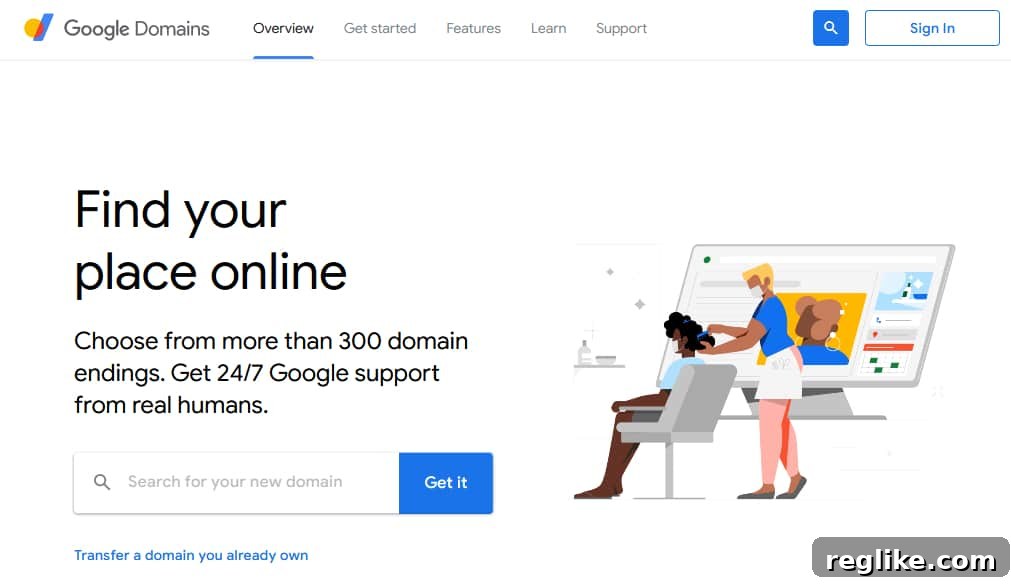
In a long-awaited announcement that has reverberated across the tech and domain industries, Google Domains officially declared its graduation from beta status yesterday. For many, the immediate reaction was likely a surprised, “Wait, Google Domains was still in beta?” This sentiment perfectly encapsulates Google’s rather unique approach to product development and release cycles, often extending the ‘beta’ label far beyond conventional industry standards. While the company’s official blog post cited a 2015 beta launch, meticulous observers and industry veterans point to an actual debut in 2014, making its beta period an impressive, or perhaps infamous, seven years. This prolonged ‘testing’ phase, despite the service managing millions of paid subscriptions, has long been a curious paradox for users and competitors alike, blurring the lines between a truly experimental product and a fully functional, market-leading service.
Google’s history with the term “beta” is almost legendary. Gmail, one of its most widely used services, famously remained in beta for over five years, even as it became a global standard for email communication. Google Domains has now surpassed even that benchmark, marking its official ‘stable’ release after a marathon seven-year run. The use of “beta” often implies a product is still under active development, prone to changes, and perhaps not fully supported. However, for a service handling critical infrastructure like website domains and processing millions of transactions annually, the beta tag felt more like a quaint formality than a true reflection of its operational maturity. This peculiar strategy by Google has often led to speculation about its internal product development philosophy – perhaps using the beta label to manage user expectations, gather extensive feedback, or simply to iterate aggressively without the pressure of a “final” release.
The tech world remembers vividly the apprehension that rippled through the domain registration industry when Google first unveiled its plans in the summer of 2014. The primary concern was straightforward: would a tech behemoth like Google, with its immense resources and unparalleled user reach, rapidly dominate the market and squeeze out existing registrars? Many feared a swift and aggressive takeover of market share. However, Google Domains’ ascent was not an immediate sprint but rather a steady, calculated climb. It didn’t instantly disrupt the established order, but once it found its footing, its growth became undeniable and significantly impacted the competitive landscape.
Initially, the market share gains were modest, leading some to believe Google’s entry wouldn’t be as impactful as first feared. Yet, behind the scenes, Google Domains was steadily building momentum. Its strategy, though gradual, proved incredibly effective. The numbers speak volumes about its eventual success:
- By early 2018, Google Domains had already secured a place among the top 10 registrars for .com domains under management. This marked a significant milestone, proving its viability in a highly competitive space.
- Just a year later, in late 2018, the service surpassed the impressive milestone of 2 million .com domains under management, solidifying its position as a major player.
- Today, Google Domains boasts over 5 million .com domains under management, a staggering figure that firmly places it as the 8th largest registrar globally by this metric. This sustained growth trajectory highlights Google’s persistent commitment and the growing trust users place in its domain services.
It’s crucial to emphasize that these impressive statistics pertain specifically to .com domains, the most popular and widely sought-after top-level domain (TLD). The sheer volume of .com registrations managed by Google Domains underscores its significant footprint in the global digital infrastructure. While .com remains a primary focus, Google Domains also offers a vast array of other TLDs, catering to a diverse global audience and various business needs, further expanding its overall impact on the domain registration ecosystem.
So, how did Google Domains achieve such a commanding position in the market, despite its slow start and long beta phase? The answer lies in a multi-faceted approach, leveraging Google’s inherent strengths and integrating the domain service into its broader ecosystem. One undeniable advantage was its unparalleled visibility within Google’s own search engine results. When users search for “buy domain name” or “domain registration,” Google Domains often appears prominently, either as a direct search result, an advertisement, or through seamless integration with other Google services. This organic and paid visibility provides an enormous competitive edge, guiding potential customers directly to its platform.
Beyond search visibility, a critical factor in Google Domains’ success has been its strategic integration with other popular Google services. This synergy offers an incredibly streamlined experience for users, particularly small businesses and individuals looking to establish an online presence. For instance, when setting up a Google Workspace account, users are seamlessly prompted to register a domain through Google Domains. Similarly, those using Google Sites to build a website can easily connect their custom domain. This deep integration extends to services like Blogger, Google Cloud Platform, Google Ads, and Search Console, creating a cohesive and user-friendly ecosystem where managing a website’s entire digital footprint feels intuitive and interconnected. This “one-stop-shop” approach reduces friction for users, making Google Domains an attractive choice for those already invested in the Google ecosystem.
Furthermore, Google Domains has differentiated itself through its transparent pricing and bundled features. Unlike some competitors that might offer introductory rates followed by significant renewal price hikes or charge extra for essential add-ons, Google Domains typically provides clear, competitive pricing with free privacy protection included with every domain registration. This transparency, coupled with features like free email forwarding, robust DNS management, and easy integration with Google’s secure and reliable infrastructure, offers significant value to customers. The user interface (UI) and user experience (UX) are also hallmarks of Google products – clean, minimalist, and easy to navigate, appealing to both novice users and experienced webmasters.
The transition from beta to a fully stable product signifies a crucial step for Google Domains. For existing users, this move is likely to bring increased confidence in the service’s longevity and stability. It suggests that Google is fully committed to the product, potentially leading to faster feature development, enhanced support, and a more robust roadmap. For new customers, the “out of beta” label removes any lingering perception of instability or experimental status, positioning Google Domains as a mature, reliable, and trustworthy option for acquiring and managing their digital identity.
Looking ahead, Google Domains’ graduation from beta solidifies its position as a formidable force in the domain registration market. Its continued growth, driven by Google’s massive reach, ecosystem integration, and user-centric approach, will likely continue to challenge long-established registrars. As the digital landscape evolves, Google’s commitment to simplifying the process of getting online, from domain registration to website hosting and email services, will be a key differentiator. The industry will be watching closely to see how Google further innovates and expands its offerings, potentially integrating new AI capabilities or expanding into more niche digital identity services. For businesses and individuals seeking to establish or enhance their online presence, Google Domains now stands as a fully endorsed, robust, and increasingly indispensable platform.