
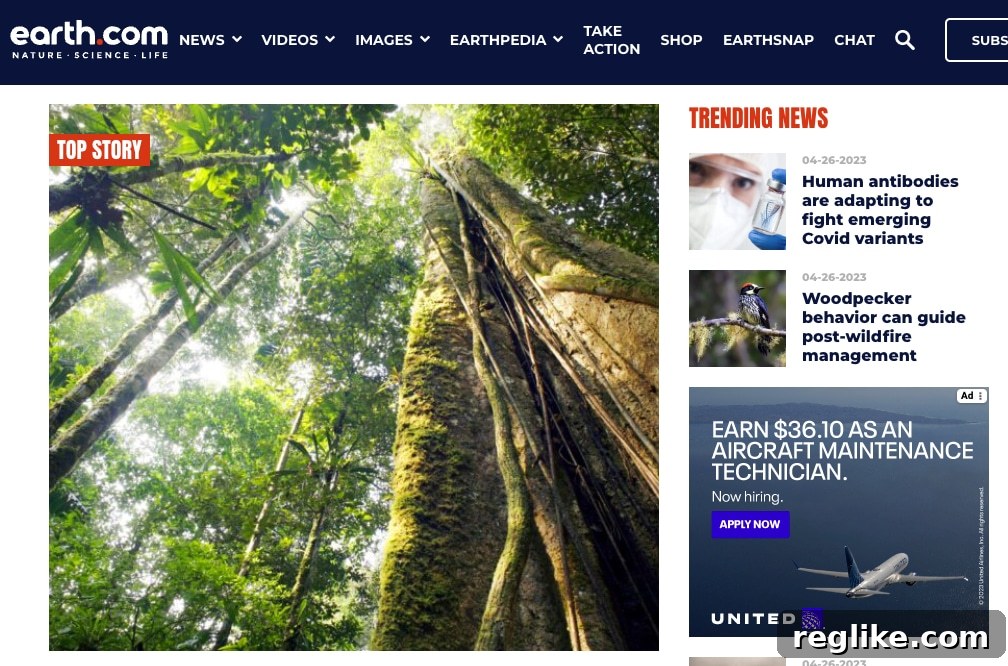
Premium Domain at Risk: Earth.com’s Bankruptcy Puts $5 Million Debt to Innovation HQ in Limbo

A High-Stakes Battle: Earth.com’s Bankruptcy and the $5 Million Domain Name Debt
In a significant development for the digital asset landscape, the prominent online entity Earth.com has officially filed for bankruptcy in Colorado. This move sends ripples through the domain name industry, particularly affecting Innovation HQ, Inc., a seasoned domain investor now entangled in a complex financial dispute over a long-term domain agreement. The core of this high-stakes situation revolves around a substantial $5 million debt owed for the invaluable Earth.com domain name, positioning Innovation HQ as the primary creditor in what promises to be a closely watched bankruptcy proceeding.
This case underscores the immense value attached to premium domain names and the intricate financial structures often employed in their acquisition. For years, Earth.com has served as a recognized online platform, making the underlying financial agreement for its domain a critical component of its operational history. The bankruptcy filing brings to light the inherent risks and rewards associated with domain investing and the unique challenges posed when such agreements encounter financial distress.
The Unfolding Drama: Earth.com’s Financial Woes and the Domain Deal
The recent bankruptcy filing by Earth.com, lodged in a Colorado court, has cast a shadow of uncertainty over a significant “rent to own domain name sales agreement.” According to official documents, Earth.com is indebted to Innovation HQ, Inc. for a staggering $5 million, a sum directly tied to the highly coveted digital address, earth.com. This disclosure immediately places Innovation HQ at the forefront of the creditor list, facing a potentially arduous path to resolution and recovery of its substantial investment.
The exact terms and duration of this rent-to-own agreement remain somewhat opaque within the public record. Given that Earth.com has been an active and recognizable online presence for numerous years, it is presently unclear whether the stated $5 million represents the total, cumulative amount stipulated in the original agreement or if it reflects an outstanding balance. The longevity of Earth.com’s operation under this domain suggests a long-standing arrangement, adding layers of complexity to the unfolding bankruptcy narrative and raising questions about how the agreement was structured from the outset.
Navigating “Rent-to-Own” Domain Agreements: A Deep Dive into the Model
Rent-to-own agreements for premium domain names offer an alternative acquisition path for businesses that may not have the immediate capital for an outright purchase. This model allows a buyer (lessee) to gain immediate operational control of a domain by making regular payments over a specified period, with the understanding that full ownership will transfer upon the completion of all payments. For sellers (lessors) like Innovation HQ, it can represent an opportunity to generate recurring revenue from a valuable asset while potentially securing a higher total sale price over time compared to a lump-sum transaction.
What is a Rent-to-Own Domain Agreement?
At its core, a rent-to-own domain agreement is a hybrid financial instrument combining elements of a lease and a purchase option. The buyer typically makes an initial down payment, followed by a series of monthly or annual installments. During this period, the buyer usually directs the domain’s nameservers to their hosting, effectively operating the website and email associated with the domain. The legal ownership, however, often remains with the seller until the final payment is made. This arrangement can be particularly appealing for startups or businesses looking to secure a high-value domain for branding and marketing without a prohibitive upfront cost, spreading the investment over several years.
Benefits and Appeal for Buyers and Sellers
For buyers, the primary benefit is accessibility. A company like Earth.com, aiming for a category-defining domain, might find a $5 million upfront purchase challenging. A rent-to-own model allows them to budget for the acquisition over time, gaining immediate branding and operational advantages. For sellers, it’s an opportunity to unlock value from their domain portfolio, potentially achieving a greater return on investment through incremental payments, while maintaining a degree of control until the full purchase price is realized. It can also expand the pool of potential buyers for very expensive domains, as it lowers the barrier to entry.
Critical Safeguards: Why Escrow Matters
The efficacy and security of rent-to-own domain agreements largely hinge on the implementation of robust safeguards. Typically, a reputable escrow agent or a trusted third party is engaged to hold the domain name in trust. In such arrangements, if the lessee defaults on payments, the escrow agent is empowered to immediately revert control of the domain back to the lessor, minimizing potential losses and legal complications for the seller. This mechanism provides vital protection, ensuring that the seller’s valuable asset is not indefinitely tied up or lost in the event of non-payment.
Alternatively, some agreements dictate that the lessor retains full legal control of the domain, only updating nameservers at the lessee’s request to point to their hosting. This method places more direct control in the hands of the seller, but it can be cumbersome and still expose the seller to recovery challenges if the buyer becomes uncooperative. The specifics of Earth.com’s agreement with Innovation HQ are not fully public, but the current bankruptcy filing suggests that robust, immediate reversion mechanisms might not have been in place or fully effective, leading to Innovation HQ’s position as a major creditor seeking repayment rather than an immediate reclamation of the asset.
The Undeniable Value of Premium Domain Names
The $5 million price tag associated with Earth.com is a testament to the enduring and escalating value of premium domain names in the digital economy. Domains are not just web addresses; they are foundational digital real estate, representing brand identity, market position, and significant competitive advantages. A concise, memorable, and highly relevant domain name like “Earth.com” holds intrinsic value far beyond its registration cost.
Why Earth.com Commands a High Price Tag
Domains such as Earth.com are considered “category-killer” or “exact match” domains. Their appeal stems from several critical factors. Firstly, they offer unparalleled branding and memorability, making it effortless for users to recall and type the address. This direct navigation significantly reduces reliance on search engines, translating into more direct traffic and lower marketing costs. Secondly, such domains often carry inherent authority and trust, immediately signaling credibility to visitors. From an SEO perspective, an exact-match domain can also provide a subtle but distinct advantage, making it easier for search engines to understand the core topic of the website.
Innovation HQ’s original acquisition of Earth.com for $800,000 in 2005 further illustrates the appreciating nature of these digital assets. Over nearly two decades, the market value of premium domains has surged, driven by increased digital reliance and competition for prime online real estate. The significant jump from an $800,000 purchase price to a $5 million debt obligation highlights the dynamic nature of domain valuations and the potential for substantial returns on strategic investments in this niche.
Innovation HQ: A Domain Investor’s High-Stakes Bet
Innovation HQ, Inc. epitomizes the role of a sophisticated domain investor, identifying, acquiring, and monetizing valuable web properties. Their initial investment of $800,000 for Earth.com in 2005 was a calculated move, indicative of their expertise in recognizing the long-term potential of specific digital assets. This type of strategic acquisition involves significant capital and a keen understanding of market trends, branding potential, and the future trajectory of the internet.
The Role of Domain Investing in the Digital Economy
Domain investing involves more than just buying and selling web addresses; it’s about curating a portfolio of digital assets that can either be developed into businesses, leased for recurring revenue, or sold for capital gains. Investors like Innovation HQ play a crucial role in allocating prime digital real estate efficiently, connecting valuable domains with the businesses that can best utilize them. This often involves considerable risk, as market fluctuations, legal complexities, and the financial health of counterparties can all impact an investment’s outcome.
The Creditor’s Predicament: What Bankruptcy Means for Innovation HQ
As the largest creditor, with a $5 million claim, Innovation HQ now faces the challenging and often protracted process of bankruptcy litigation. While being the top creditor offers a degree of influence, it by no means guarantees full recovery of the debt. In bankruptcy proceedings, assets are typically liquidated or reorganized to satisfy creditors according to a hierarchy. Innovation HQ will need to actively participate in the bankruptcy court, proving its claim and potentially negotiating with other creditors and Earth.com’s leadership to maximize its recovery. This could involve an extended period of legal maneuvering, further tying up their capital and resources.
The initial investment of $800,000 in 2005, followed by the significant outstanding debt, underscores the long-term commitment and financial exposure Innovation HQ has had with this particular asset. The resolution of this bankruptcy case will serve as a crucial test of their ability to navigate complex financial distress scenarios and recover value from their premium domain portfolio.
Decoding the Bankruptcy Process: Creditors and Claims
Earth.com’s filing for bankruptcy typically falls under Chapter 11 of the U.S. Bankruptcy Code, which allows businesses to reorganize their finances while continuing operations. This process is designed to help a company shed debt and re-emerge as a viable entity, but it often comes at the expense of creditors, who may receive only a fraction of what they are owed.
Understanding Chapter 11 Reorganization
Chapter 11 aims for rehabilitation rather than liquidation. The debtor (Earth.com) proposes a plan of reorganization to the court, outlining how it will pay its creditors over time. This plan must be approved by creditors and the court. During this period, the debtor benefits from an “automatic stay,” preventing creditors from pursuing collections outside of the bankruptcy process. For Innovation HQ, this means halting any direct attempts to reclaim the domain or demand payment, instead channeling all efforts through the court system.
The Hierarchy of Creditors: Secured vs. Unsecured
In bankruptcy, creditors are prioritized. Secured creditors, whose debts are backed by collateral (like a mortgage on a property), generally have the highest priority. Unsecured creditors, whose debts are not backed by specific assets, are lower in priority. The “rent to own domain name sales agreement” will likely determine Innovation HQ’s standing. If the domain itself was held as collateral or through a tight escrow that failed to revert, Innovation HQ might argue for a secured position. However, if it’s simply a contractual debt for “rent-to-own” payments without such collateral, it could be deemed an unsecured claim, putting it behind secured creditors and potentially administrative costs of the bankruptcy.
Adding to the complexity, Innovation HQ stands as the largest creditor by a significant margin. While their claim totals $5 million, the second-largest creditor, ContentIQ Marketing, is owed a comparatively modest $230,000. This vast disparity highlights the singular importance of the domain name transaction in Earth.com’s financial structure and Innovation HQ’s profound exposure. The concentration of debt with one entity can influence the dynamics of creditor committees and negotiations, yet it does not automatically guarantee full restitution.
Lessons from Telluride: Implications for the Domain Industry
The Earth.com bankruptcy serves as a potent case study for the broader domain industry, offering crucial lessons for both buyers and sellers of premium digital assets. The intricacies of this particular rent-to-own agreement, combined with the company’s financial struggles and prior legal issues, underscore the paramount importance of meticulous due diligence and legally sound transaction structuring.
Due Diligence and Legal Scrutiny in Domain Transactions
For any entity considering the acquisition or sale of a high-value domain, this situation emphasizes the necessity of comprehensive due diligence. Buyers must thoroughly investigate the financial health and legal history of the seller, while sellers must vet the buyer’s financial capacity and business stability. The fact that the owner of Earth.com had been sued multiple times, as noted by Business Den, highlights potential red flags that could have been identified and mitigated through rigorous background checks and legal counsel prior to entering such a significant financial agreement. Legal counsel is not just advisable but essential for drafting and reviewing complex domain agreements, particularly those involving multi-year payment plans or unique ownership structures.
The Future of Rent-to-Own Models
This case will undoubtedly prompt a closer examination of rent-to-own models within the domain market. While these agreements offer flexibility, they also carry inherent risks that must be addressed through stringent contractual terms and robust third-party mechanisms. The incident reinforces the best practices of utilizing trusted escrow services to hold the domain during the payment period, ensuring that control can revert swiftly and seamlessly to the seller upon default. Clear, unambiguous clauses regarding default, ownership transfer, and dispute resolution are vital to protect both parties and minimize the chances of a lengthy, costly legal battle.
Ultimately, the high-profile nature of Earth.com’s bankruptcy and the substantial debt owed for its domain will likely influence how future premium domain transactions are structured. It may lead to a greater emphasis on outright purchases, more stringent requirements for rent-to-own agreements, or increased reliance on specialized domain escrow services that understand the unique nuances of digital asset ownership. The outcome of Innovation HQ’s claim, detailed in the bankruptcy filing, will set an important precedent for the industry.
Conclusion: The Enduring Value and Perils of Premium Domains
The unfolding bankruptcy of Earth.com and the resulting $5 million debt to domain investor Innovation HQ serve as a powerful reminder of both the immense value locked within premium domain names and the significant financial complexities that can arise in their acquisition and management. This case underscores that domains are critical business assets, demanding the same level of strategic planning, legal scrutiny, and financial caution as any physical real estate or major corporate acquisition.
For domain investors like Innovation HQ, the situation highlights the calculated risks inherent in their business model, where substantial capital is deployed with the expectation of significant returns, but always with the specter of financial distress from counterparties. For the broader digital economy, it emphasizes the importance of secure transaction mechanisms, such as robust escrow services, and thorough due diligence to protect all parties involved in high-value domain agreements. As the bankruptcy proceedings progress, the resolution of Earth.com’s debt and the fate of its valuable domain will be closely watched, offering further insights into the evolving landscape of digital asset investment and corporate financial health.