
Joseph Peterson delves into Web.com’s dynamic aftermarket domain sales for May, revealing intriguing trends and valuable insights for domain investors and digital strategists alike.
The aftermarket for domain names is a fascinating realm where digital assets change hands, often revealing surprising stories of corporate oversight, strategic investments, and the enduring power of brand recognition. Joseph Peterson’s comprehensive analysis of Web.com’s May aftermarket sales offers a unique window into these dynamics, highlighting both cautionary tales and lucrative opportunities. Understanding these trends is crucial for anyone looking to navigate the complex landscape of domain investing, from seasoned professionals to newcomers seeking their next digital property.
High-Profile Lapses: The Cost of Corporate Negligence
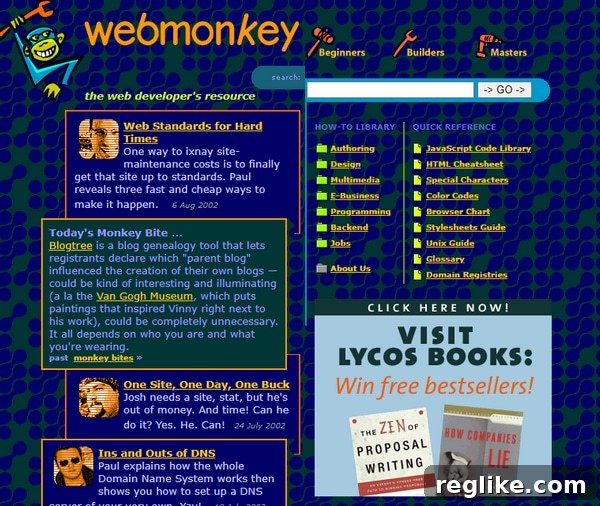
One of the most striking sales of the month was WebMonkey.com, which fetched an impressive $65,500 at auction. For many early internet users, WebMonkey was an indispensable resource, a go-to tutorial site for learning website development and SEO techniques under Lycos’s ownership. Despite its historical significance and a turbulent operational history, including re-openings and re-closures, the domain eventually landed with Condé Nast in 2008, a media giant behind brands like Wired and The New Yorker. What makes this sale truly astonishing is that a company of Condé Nast’s stature would allow such a valuable digital asset, reportedly inactive since 2013, to expire rather than incur the minimal renewal fee of roughly $10. This oversight underscores a recurring theme in corporate domain management: a surprising lack of attention to vital digital portfolios.
The trend of valuable domains slipping through corporate fingers isn’t isolated. MartianWatches.com, once associated with a prominent brand, sold for $8.3k, while TataDocomo.com, representing a former major mobile network operator in India, went for $2.1k. The latter case is particularly baffling, given that the domain was actively in use until its customers merged with Bharti Airtel as recently as 2019. These instances serve as stark reminders that even large corporations can suffer from poor domain portfolio management, creating unexpected opportunities for savvy aftermarket buyers.
The Enduring Value of Abandoned Domains: Brand Equity and Backlinks
When domains linked to once-thriving websites are abandoned, they don’t simply vanish into the digital ether. Instead, they become prime targets in the aftermarket, coveted for their inherent value, primarily derived from old brand equity and existing backlinks. These factors can significantly boost a newly acquired domain’s search engine optimization (SEO) potential, offering a head start that new domains simply cannot provide. Beyond SEO benefits, a strong brand name, even a defunct one, can still carry recognition and trust, making it appealing for resuscitation or repurposing.
Interestingly, there’s also a speculative angle: bidders might compete for domains they suspect former owners will eventually want back. In such scenarios, the acquiring party aims to profit by selling the domain back to the original company, often at a substantial markup. It’s not uncommon for the very company that let a domain expire to find itself bidding against others to regain control of its lost asset. This dynamic highlights the complex interplay of value, speculation, and corporate accountability within the domain aftermarket.
Navigating Brand-Specific Domains: The Perils of UDRP
While the allure of acquiring domains closely tied to well-known brands is strong, it comes with significant risks, particularly the potential for UDRP (Uniform Domain-Name Dispute-Resolution Policy) proceedings. These legal processes can result in the loss of a domain without compensation if it’s found to infringe on a trademark. Joseph Peterson wisely advises caution against domains narrowly identified with a single, prominent brand.
However, last month’s auctions reveal that not all bidders share this prudence. Several sales raised eyebrows:
- NBCSN.com ($2.4k): Closely mirrors the NBC Sports Network, which rebranded as NBCSN. This presents a clear trademark conflict risk.
- HaaretzDaily.com ($9.0k): Strongly resembles “Haaretz,” the longest-running Israeli newspaper, whose primary domain is Haaretz.com.
- BarclaysBank.com ($3.0k): Bears a strong resemblance to the British investment bank, Barclays, operating at Barclays.co.uk.
- StMarysMadison.com ($2.6k): Clearly references St. Mary’s hospital in Madison, Wisconsin.
- SpheralSolar.com ($2.0k): Too close to the solar-power company “Spheral,” found at SpheralPower.com.
- DeaStore.com ($2.6k): Likely an attempt to capitalize on “TheDeaStore.com.”
While some, like GNLaw.com ($2.0k), might argue for legitimate alternative uses, others, such as AntonyAndTheJohnsons.com ($3.8k), for a band active for over two decades, stretch the bounds of coincidence. Such purchases are often driven by fan speculation or direct infringement intent, highlighting a contentious grey area in domain acquisition. Buyers in these situations must weigh potential profits against the substantial legal risks involved.
Strategic Domain Investments: Broad Utility and Lead Generation
Successful domain investment often steers clear of such legal minefields, focusing instead on names with broad utility and clear market applicability. These domains often describe a product, service, or concept, making them ideal for building authority sites, e-commerce platforms, or lead generation engines.
- ChinaArt.com ($6.3k): Represents a vast market, appealing to art dealers, collectors, and cultural institutions globally. Its descriptive nature makes it highly searchable and authoritative.
- WholesaleRealEstate.com ($2.3k): A highly targeted domain for investors and brokers in the wholesale real estate sector, promising strong lead generation.
- JewishSchool.com ($3.0k): Serves a specific demographic globally, offering a clear value proposition for educational institutions and parents.
- ShippingCosts.com ($2.3k) & MovingCosts.com ($2.1k): These are exemplary lead generators. People frequently search for price quotes for shipping and moving services, making these domains natural hubs for such inquiries.
- ROSystems.com ($5.3k): A natural authority site for reverse-osmosis water purification. The industry frequently uses the term “RO systems,” making this domain instantly recognizable and relevant for businesses in this niche.
- CookiesDelivery.com ($3.8k): While the plural might seem slightly awkward, it reflects common search queries. This domain holds excellent potential for e-commerce, catering to the growing demand for food delivery services.
These examples illustrate the power of descriptive, keyword-rich domains that directly address consumer needs or industry terms, making them SEO magnets and valuable business assets.
Timely Acquisitions and Niche E-commerce Opportunities
The aftermarket also reflects current events and specific industry needs. In an election year in the USA, domains like CityManager.com ($7.0k) and CityCouncil.com ($4.0k) gain particular relevance, potentially serving political campaigns, civic organizations, or news portals.
For e-commerce, highly descriptive and intuitive domains are golden.
- CordlessDrills.com ($2.6k): Self-explanatory and perfect for a specialized power tool retailer.
- Chainless.com ($3.6k): Less obvious but highly effective once one discovers its association with chainless bikes in search results, pointing to a niche e-commerce opportunity.
- BeeHouse.com ($4.3k): An ideal domain for businesses catering to beekeepers, selling equipment, or promoting apiculture.
Even broader terms like HealthLawyer.com ($4.0k), despite its wide scope, are memorable and can serve as a strong brand for legal services. These sales underscore the diverse utility and potential profitability of domains that cater to specific markets or timely interests.
Unlocking Potential with Brandable Domains
“Brandable” domains, especially those comprising two distinct words, form a significant segment of the aftermarket. These domains aim for memorability, distinctiveness, and evoke a particular image or function.
Last month’s top-performing brandables included:
- DataMatrix.com ($9.6k)
- BuildingWorks.com ($9.6k)
- GenerationNext.com ($7.4k): A popular phrase referring to contemporary youth.
- CollegeView.com ($7.1k)
- ApartmentFinders.com ($6.3k)
- BlueRaven.com ($4.0k): Sounds like an evocative name for a pub or creative agency.
- BankFreedom.com ($3.9k)
- InfoScan.com ($3.6k)
- HoneyHill.com ($2.2k): Also notable as the site of a Civil War battle, adding a layer of historical intrigue.
- PixelSoft.com ($2.2k): A name that, while perhaps a few decades late to mimic “Microsoft,” still carries a tech-savvy vibe.
- PornHunter.com ($2.0k)
Some brandables leverage bland but positive adjectives, which can work effectively for clear propositions like AgileSales.com ($3.5k). However, for broader terms like SuperiorBank.com ($2.9k), InnovativeHealth.com ($2.9k), and SageAnalysis.com ($2.8k), the adjectives can feel vague, potentially diluting their branding power. Conversely, simple prefixes like “My” or “Your” can create highly personalized and effective brandables, as seen with MyAdvocate.com ($18.5k) and YourTour.com ($7.1k), demonstrating how perceived ownership can drive value.
Even shorter brandables often feel like single, unique words, offering a premium sense of identity: Certik.com ($10.5k), DataGo.com ($5.3k), EverGo.com ($3.8k), Outlanders.com ($3.0k), Musican.com ($2.5k). Domains like Breedr.com ($2.8k) and Musican.com are just a letter shy of common words, giving them an innovative, modern feel. Finance-related examples include FinServ.com ($3.0k), FinShop.com ($2.5k), and Financeable.com ($2.2k). Other unique finds include UMark.com ($2.7k), which aligns with existing photo watermarking software but could easily be repurposed, and Caino.com ($3.2k), which, despite appearing as a neologism, is actually a commune in northern Italy, offering surprising depth.
Beyond Exact Matches: Understanding Brand Overlap and Legitimate Uses
It’s critical to distinguish between targeting a pre-existing brand unfairly and legitimately acquiring a domain that happens to match a common name. Many websites, products, and organizations share similar or identical names without conflict. A matching domain can be purchased by any one of them for an upgrade, or by a newcomer for an entirely non-overlapping project. This nuances the discussion around trademark infringement and UDRP.
Consider Antea.com ($4.8k). This could be a significant upgrade for several existing entities like antea-int.com, anteaprevencion.com, or anteagroup.com. Similarly, Corpy.com, which corresponds to an AI company in Japan already operating at Corpy.co and Corpy.co.jp, is a prime candidate for them. However, it’s entirely plausible for an unrelated venture to utilize the name. And for a domain like NamasteYoga.com ($3.0k), the brand name is so ubiquitous and cliché that there are undoubtedly dozens of local yoga studios named “Namaste” across the globe (e.g., namasteyogastudio.net, namaste-yoga.net, namasteyogastudio.com). In such cases, acquiring the .com version is less about targeting and more about securing a highly descriptive and popular term within a specific niche.
The Apex of Domain Value: Single-Word .COMs
Single-word .COMs consistently remain a prime niche for domain investors due to their unparalleled memorability, authority, and versatility. These domains are often considered the “holy grail” of the aftermarket.
- Shekel.com ($15.0k): Representing the national currency of Israel and Palestine, this domain is directly tied to money and daily use by millions. It holds immense potential for forex trading platforms, banking services, general finance, or even as a cultural or regional magazine, offering a non-financial brand identity.
- StandIn.com ($2.6k): This domain, along with CarryOns.com ($2.8k) (referring to small airport luggage), demonstrates the value of common phrases or words, even those functioning as dangling prepositions. CarryOns.com, in particular, is ripe for e-commerce, offering a clear and intuitive brand for travel accessories.
Even more obscure single-word .COMs can hold hidden potential:
- Seratonin.com ($2.2k): Linked to the hormone imbalance associated with depression, this domain could be valuable for medical information sites, mental health resources, or pharmaceutical companies.
- Libation.com ($3.7k): An archaic term for a drink poured as an offering to gods, appearing in museums and classical literature. While challenging, it could inspire a unique brand for an artisanal beverage company, a high-end bar, or a cultural events platform.
- GangPlank.com ($3.6k): Equally archaic but widely recognized thanks to pirate lore. This domain could be transformed into a brand for gaming, adventure tourism, or even a creative tech startup.
- Selves.com ($2.0k): This introspective term carries significant potential as a title for a book, movie, game, or a platform focused on personal development and identity exploration.
The creative challenge lies in transforming these unique, single-word assets into compelling 21st-century brands.
Short & Sweet: Acronyms, Numerics, and Pinyin
The demand for short domains, including three-letter (3L), three-character (3C), numeric, and pinyin domains, persists, albeit at a slower pace since the peak of the “Chinese surge” in 2015. These domains are prized for their brevity, memorability, and often, their international appeal.
The second-highest sale last month was the 3-letter .COM: KPH.com ($25.0k). This category continues to attract premium prices. Other short domains included a hyphenated 3-character: F-M.com ($3.7k), and an alphanumeric 3-character: BL7.com ($2.5k). Numeric domains also found buyers, with 13320.com ($2.8k) (5-digit) and 5211314.com ($2.5k) (7-digit) demonstrating demand for easy-to-remember number combinations. Additionally, two pinyin domains, popular in Chinese markets, were sold: BaiMeng.com ($7.1k) and HuanMao.com ($6.4k), reflecting ongoing interest from international investors.
LLLL.coms and Alternative TLDs
The market for four-letter .COMs (LLLL.coms) continues to be active, though last month’s top sales did not include domains in the vowelless “CHIPs” style, which has been a noticeable trend. The significant sales in this category were: REAF.com ($12.7k), EHUO.com ($5.0k), KUIK.com ($4.4k), TOPQ.com ($4.3k), and AQOL.com ($2.0k). This aligns with recent observations regarding the shifting preferences within the LLLL.com segment.
Beyond .COM, the “Not .COMs” category saw seven sales, predominantly .ORG and .NET, with no new generic Top-Level Domains (nTLDs) making the list. This highlights the sustained trust and utility associated with older, established TLDs:
- Inhalants.org ($14.5k)
- Nectac.org ($12.7k)
- FERI.org ($4.6k)
- AfricaAction.org ($3.5k)
- JE.net ($8.3k)
- OAK.net ($4.9k)
The sale of AmericanHS.org ($8.8k) was notably high, suggesting a specific backstory or strong institutional interest, perhaps from a high school network or an organization focused on American heritage. While nTLDs have expanded the domain landscape, .ORG and .NET continue to offer reliable alternatives for specific purposes, such as non-profit organizations (.ORG) or technical networks (.NET).
The Human Element: Personal Names as Digital Assets
Interestingly, a significant contingent of personal names appeared among last month’s sales, demonstrating their potential value for personal branding, family-oriented websites, or businesses named after founders. These ranged from the uniquely spelled Elanor.com ($2.7k) to more common surnames like Hendriks.com ($5.3k), Harter.com ($4.5k), Siger.com ($3.4k), and Pangburn.com ($3.1k).
The third-highest sale of the month was Rowan.com ($22.7k). While one might immediately think of actor Rowan Atkinson (Mr. Bean), it’s more plausibly connected to yarn brands, or potentially a prestigious family name, a growing corporation, or even a popular fictional character. The versatility of a strong, single personal name as a domain makes it an attractive asset for a wide range of uses.
Joseph Peterson’s May analysis of Web.com aftermarket sales underscores the dynamic and multifaceted nature of domain investing. From the shocking expiry of iconic brands to the strategic acquisition of descriptive terms and the enduring appeal of short, memorable names, the aftermarket continues to offer a wealth of opportunities for those who understand its intricacies and are willing to navigate its challenges. Successful domain investment demands a keen eye for market trends, an understanding of potential legal pitfalls, and a creative vision for turning digital assets into thriving online ventures.