
Twitter’s Ongoing Battle Against Typosquatting: The Twiter.com Domain Dispute Takes a New Turn
In the ever-evolving landscape of digital branding, a recent development in an arbitration case concerning the domain name Twiter.com — a classic example of typosquatting targeting the social media giant Twitter — has captured significant attention. Originally terminated, the case has now been refiled at the esteemed World Intellectual Property Organization (WIPO) forum, signaling a renewed and potentially more aggressive pursuit by Twitter to reclaim what is rightfully a deceptive imitation of its brand.
This saga underscores the relentless challenges major brands face in protecting their intellectual property and online identity from malicious actors. The termination and subsequent refiling suggest a strategic maneuver, likely prompted by the acquisition of crucial new information that could significantly bolster Twitter’s position in the dispute, turning an already strong case into a near “slam dunk” for the complainant.
Unraveling the Twiter.com Saga: Termination, Refiling, and the Emergence of New Evidence
Arbitration cases, particularly those handled under the Uniform Domain-Name Dispute-Resolution Policy (UDRP) at bodies like WIPO, typically reach termination for specific reasons. The most common scenario is when the domain owner agrees to voluntarily transfer the disputed domain name to the complainant, thereby resolving the conflict without the need for a full panel decision. However, the circumstances surrounding the Twiter.com case appear to deviate from this norm.
Reports indicate that the initial termination of the Twiter.com case was not followed by an immediate transfer of the domain. Instead, the company opted to refile the case shortly after. This unusual sequence of events strongly suggests that the termination was a precursor to a strategic pause, allowing Twitter to gather or process new, critical information. It is highly probable that the domain name registrar, Power Brand Center, disclosed updated details about the domain’s ownership, which proved to be a pivotal factor in the complainant’s decision to re-initiate proceedings.
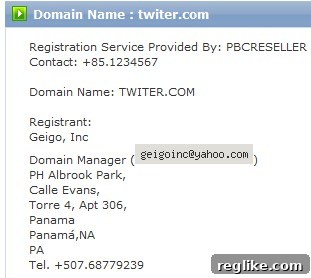
The Whois record for Twiter.com now openly lists Geigo, Inc., a Panamanian company, as the domain’s owner. This information is crucial because Whois records provide a public database of registered domain names and their owners. For brand owners like Twitter, access to accurate and current Whois data can be instrumental in demonstrating the bad faith registration and use of a domain, which is a key criterion for a successful UDRP complaint.
Compounding the deceptive nature of this typosquatting effort, the domain Twiter.com continues to resolve to a suspicious CPA (Cost Per Action) survey page. This page is meticulously designed to mimic the aesthetics and branding of the legitimate Twitter platform, thereby luring unsuspecting users into interacting with potentially harmful content or schemes. Such deceptive practices are at the heart of why brand protection and rapid response to domain disputes are paramount in the digital age.
The Peril of Typosquatting: Understanding Twiter.com’s Malicious Intent
Typosquatting, also known as URL hijacking, is a form of cybersquatting that relies on mistakes made by internet users when typing a website address into a web browser. Instead of reaching the intended site, users are directed to an alternative website, often designed to appear legitimate. Common typosquatting tactics include:
- Misspellings: Using common typing errors (e.g.,
Gooogle.cominstead ofGoogle.com). - Hyphenations: Adding or removing hyphens (e.g.,
Face-book.com). - Alternative Top-Level Domains (TLDs): Registering a brand name under a different TLD (e.g.,
twitter.netinstead oftwitter.com). - Homoglyphs: Using characters that look similar (e.g., using a capital ‘I’ instead of a lowercase ‘l’).
The Twiter.com domain falls squarely into the misspelling category, exploiting a common typing error where users might omit one of the ‘t’s in ‘Twitter’. The malicious intent behind such a registration is multi-faceted. Firstly, it capitalizes on user error to divert traffic intended for the legitimate brand. Secondly, as seen with the CPA survey page, it’s used for deceptive purposes. These survey pages often promise rewards or exclusive content but primarily serve to collect personal data, distribute malware, or funnel users into subscription traps, generating revenue for the typosquatter at the expense of user trust and brand reputation.
For Twitter, a global platform with hundreds of millions of users, the existence of Twiter.com poses significant threats:
- Brand Reputation Damage: Users who land on the deceptive site may associate the negative experience (scams, pop-ups) with the legitimate Twitter brand.
- Security Risks for Users: The CPA page could lead to phishing attempts, malware downloads, or identity theft.
- Loss of Traffic and Revenue: While difficult to quantify for a single typo, cumulative typosquatting can divert significant legitimate traffic.
- Legal and Enforcement Costs: Brands must constantly invest resources in monitoring and enforcing their rights against such infringements.
The Uniform Domain-Name Dispute-Resolution Policy (UDRP): A Mechanism for Brand Protection
The UDRP is an administrative procedure established by the Internet Corporation for Assigned Names and Numbers (ICANN) to resolve disputes regarding the registration and use of domain names. It provides a streamlined, cost-effective alternative to traditional litigation for trademark owners whose brands are being exploited through domain names. WIPO is one of the leading providers of UDRP dispute resolution services.
To succeed in a UDRP complaint, a complainant (like Twitter) must satisfy three core elements:
- The domain name is identical or confusingly similar to a trademark or service mark in which the complainant has rights. In this case, “Twiter.com” is undeniably confusingly similar to Twitter’s globally recognized trademark.
- The domain name registrant has no rights or legitimate interests in respect of the domain name. This is often demonstrated by showing that the registrant is not commonly known by the domain name, is not making a legitimate noncommercial or fair use of the domain, and is not using it in connection with a bona fide offering of goods or services.
- The domain name has been registered and is being used in bad faith. Evidence of bad faith can include registering the domain primarily for the purpose of selling it to the trademark owner for profit, preventing the trademark owner from reflecting their mark in a corresponding domain name, or intentionally attempting to attract for commercial gain internet users to the registrant’s website by creating a likelihood of confusion with the complainant’s mark.
The UDRP process is designed to be efficient, typically concluding within 60 days. The remedies are limited to the cancellation of the domain name or its transfer to the complainant, making it a powerful tool for brand owners to reclaim infringing domains without the complexities and high costs of court litigation.
Why New Whois Information is a Game Changer for Twitter’s Case
The revelation of new Whois information, particularly the identification of Geigo, Inc. as the current owner and the registrar Power Brand Center, is a significant development. The original article notes that “The whois record is different from the one that’s been in place for a couple years.” This suggests a recent change in ownership or a new registration under a different entity, which profoundly impacts the “bad faith” criterion of the UDRP.
When a domain name has been held for an extended period under a particular Whois record, especially if that record was generic or privacy-protected, proving bad faith can sometimes be more challenging. An older registration might allow for arguments of legitimate prior rights or a lack of specific intent to target a brand that became famous later. However, a recent change in the Whois record, indicating a new registrant, significantly strengthens Twitter’s position.
A recent transfer or registration by Geigo, Inc. makes it far easier for Twitter to argue that the domain was acquired specifically with Twitter’s existing brand in mind, and with the clear intention to profit from user confusion. It becomes almost impossible for a Panamanian company to claim legitimate rights to a domain that is an obvious typo of a global brand like Twitter, especially if the acquisition happened when Twitter was already world-renowned. This fresh evidence of ownership, coupled with the ongoing use of the domain for deceptive CPA surveys, paints a clear picture of registration and use in bad faith, making the case a “slam dunk” for Twitter’s legal team.
Protecting Your Brand in the Digital Wild West: Lessons from the Twiter.com Case
The Twiter.com saga serves as a stark reminder for all brand owners, from startups to multinational corporations, about the critical importance of robust domain name strategies and vigilant brand protection. In an era where digital presence is paramount, failing to protect your brand’s online identity can lead to significant financial losses, reputational damage, and erosion of customer trust.
Key takeaways and recommended strategies for brand owners include:
- Proactive Domain Registration: Registering not only your primary brand domain but also common misspellings, typographical errors, and variations across different TLDs (e.g., .net, .org, .info, country-code TLDs). This defensive registration is often the most cost-effective way to prevent cybersquatting.
- Continuous Domain Monitoring: Implement or subscribe to services that continuously monitor new domain registrations for names that are identical or confusingly similar to your trademarks. Early detection allows for quicker action, often before significant damage occurs.
- Trademark Enforcement: Actively enforce your trademark rights through UDRP complaints, cease and desist letters, and, if necessary, litigation. Allowing infringements to persist can weaken your trademark rights over time.
- Educate Your Customers: Inform your user base about the importance of verifying URLs and being wary of suspicious links, thereby reducing their vulnerability to typosquatting and phishing.
- Establish Internal Protocols: Develop clear internal processes for responding to domain disputes, including who is responsible for monitoring, legal action, and communication.
The vigilance demonstrated by Twitter in pursuing the Twiter.com domain, even through a refiled case, highlights the dedication required to maintain brand integrity in the digital realm. It sends a strong message to potential cybersquatters that such exploitative practices will not be tolerated.
Safeguarding Users: Recognizing and Avoiding Typosquatting Scams
While brands fight on the legal front, internet users also play a crucial role in preventing themselves from falling victim to typosquatting scams. Awareness and caution are the best defenses:
- Always Double-Check URLs: Before entering sensitive information or clicking links, carefully examine the URL in your browser’s address bar. Look for subtle misspellings or extra characters.
- Look for HTTPS: Ensure the website uses HTTPS (indicated by a padlock icon) in the URL, especially for sites where you log in or make purchases. While HTTPS doesn’t guarantee legitimacy, its absence on a site expecting sensitive data is a major red flag.
- Use Bookmarks: For frequently visited sites like social media platforms or banking websites, use saved bookmarks rather than typing the URL each time.
- Be Wary of Unsolicited Links: Exercise extreme caution with links received via email, text messages, or social media, even if they appear to come from a known source. Phishing attacks often use typosquatting domains.
- Use a Reliable Security Software: Antivirus and anti-malware software can help detect and block access to known malicious sites, including some typosquatting domains.
- Report Suspicious Sites: If you encounter a typosquatting site, report it to the legitimate brand, your internet service provider, and relevant authorities to help protect others.
Conclusion: A Crucial Victory on the Horizon for Twitter
The refiling of the Twiter.com arbitration case marks a significant escalation in Twitter’s fight against online brand infringement. With the emergence of new Whois information identifying Geigo, Inc. as the domain owner, Twitter’s legal team has a considerably stronger foundation to prove bad faith registration and use under the UDRP. This development transforms what was already a solid case into an almost certain victory for the social media giant, emphasizing the power of diligent investigation and persistent legal strategy in domain disputes.
This case serves as a vital precedent and a compelling case study for brand protection in the digital age. It highlights not only the pervasive threat of typosquatting but also the effective mechanisms available to combat it. As the internet continues to grow, the battle for legitimate online identity will only intensify, making proactive measures, continuous monitoring, and decisive action more critical than ever for brands seeking to safeguard their reputation and user trust.