
MSCHF’s “InTheYear2024.com”: A Bold Leap into Political Domain Ownership and Fractional Investing
In a move that brilliantly blurs the lines between satirical art, shrewd marketing, and speculative investment, MSCHF, the notorious creative marketing collective, has once again captured public attention. Known for their audacious and often controversial projects, MSCHF has launched a groundbreaking campaign titled “InTheYear2024.com.” This initiative provocatively targets the digital real estate of potential 2024 United States presidential candidates by registering their prospective domain names and subsequently offering fractional ownership stakes to the general public. It’s a striking commentary on the evolving landscape of political brand-building and the monetization of digital identity.
MSCHF is no stranger to leveraging the power of new top-level domains (TLDs) and inventive digital strategies. The company previously made waves with its “High Off” campaign, an extensive promotional effort for musician Future that ingeniously utilized over 150 unique TLDs. Their latest venture, however, takes their domain-centric approach into the highly charged arena of American politics, demonstrating a keen understanding of both digital asset value and public fascination with political narratives.
The Mechanics of “InTheYear2024.com”: A New Form of Digital Activism?
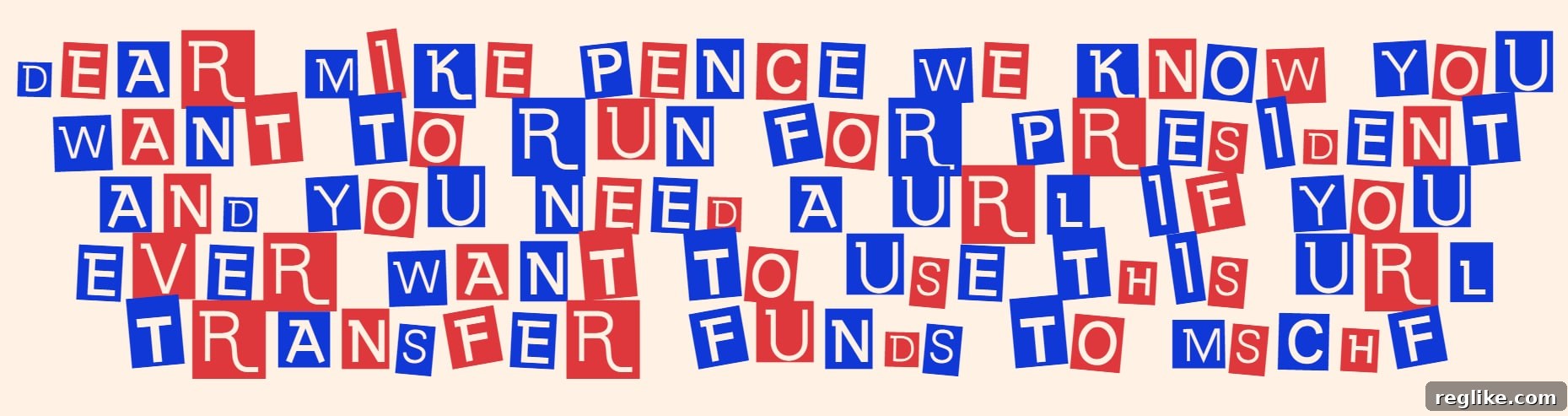
At the heart of the “InTheYear2024.com” campaign lies a simple yet profoundly disruptive concept. MSCHF proactively registered a portfolio of domain names directly associated with individuals widely considered potential contenders for the 2024 presidential election. Examples of these strategically acquired digital assets include highly relevant URLs such as MikePence4President.com, ElectCruz.com, and ElectJulianCastro.com. These aren’t just generic registrations; they are meticulously chosen to be impactful and desirable for the respective political figures.
Once these domain names were secured, MSCHF opened them up for public investment. The agency offered 100 shares in each registered domain name, priced at an accessible $1 per share. This fractional ownership model allows ordinary citizens to buy into a piece of digital real estate that could potentially become a cornerstone of a national political campaign. The innovation doesn’t stop there; each domain name features a unique landing page adorned with what MSCHF provocatively refers to as a “ransom note.” This note directly addresses the implied candidate, essentially challenging them to reclaim their digital identity by purchasing the domain from MSCHF.
The financial incentive for participants is clear: should a presidential candidate or their campaign decide to acquire one of these domain names from MSCHF, the collective proceeds from the sale will be equally distributed among all shareholders of that specific domain. This mechanism creates a direct financial link between public investment and a candidate’s potential need for a crucial digital asset, transforming traditional passive political observation into an active, albeit speculative, form of engagement.
Unpacking MSCHF’s Manifesto: Philosophy Behind the Provocation
While the immediate impact of the campaign is its financial mechanism and viral nature, MSCHF has also provided a “manifesto” on the InTheYear2024.com website, offering a deeper insight into their motivations. This manifesto isn’t merely a statement; it’s a pointed critique of modern politics and a justification for their unconventional approach:
Politicians come and go, the vast majority running purely in their own self interest or – as the case may be – the self-interest of the massive corporate donors who own them heart and soul. Yang, kanye, even trump, have shown that running for office is now a standard piece of brand-building.
Universally, however, candidates wear the idea that they are acting “for the people” loudly upon their sleeves. In some small way we can force that to be true: let us collectively hold hostage those assets a campaign needs, and force a prospective candidate to pay ransom back to the crowd before commencing their voyage of public aggrandizement.
As they say in the real estate business: location, location, location! And when it comes to urls, mostly available for paltry sums and entirely unique, well: it’s free real estate.
Pre-buying political domains is like laying a predictive minefield: a sale can potentially detect actions in advance of announcements.
Domain squatting is a plague: conniving scamsters seize premium land and prevent growth. If you don’t have a good idea for cookies.Me, don’t stop someone else from taking it! Of course our defense is that we did have a good idea, and this is it.
The savvy consider betting markets to be more reliable predictors than the polls. Because the political consultant class watches the betting markets, betting affects the race just as polls influence the electorate – a political observer effect. Let’s kick that up a notch: by betting on an asset a candidate will be forced to buy back, these bets will interface with campaigns directly.
If the lion’s share of politics is performance and gamesmanship, let’s get in the game.
Political Self-Interest and Brand Building
MSCHF argues that modern political campaigns are often less about public service and more about personal brand enhancement or serving corporate interests. They cite figures like Andrew Yang, Kanye West, and Donald Trump as examples of individuals who have effectively utilized political bids as extensions of their personal brands. By highlighting this perceived shift, MSCHF suggests that political domains are not just logistical necessities but crucial components of a candidate’s market value and public persona.
Empowering “The Crowd” Through Digital Hostage-Taking
The manifesto provocatively calls for “collectively hold[ing] hostage those assets a campaign needs.” This act, framed as forcing a candidate to “pay ransom back to the crowd,” is presented as a mechanism to compel politicians to truly act “for the people.” It’s a digital twist on populist sentiment, aiming to redistribute a small piece of campaign finance back to ordinary citizens who participate in the fractional ownership scheme. This flips the traditional donor-candidate relationship on its head, even if symbolically.
The “Free Real Estate” of Domains and Predictive Value
Drawing an analogy to the real estate dictum of “location, location, location,” MSCHF emphasizes the unique and often undervalued nature of URLs. They assert that domain names, while cheap to acquire, are singular and indispensable digital addresses. The act of “pre-buying political domains” is likened to laying a “predictive minefield,” suggesting that the sale of such a domain could foreshadow a candidate’s official announcement or strategic moves, thus offering a unique form of political foresight for investors.
Redefining Domain Squatting
Conscious of the common critique of “domain squatting,” MSCHF directly addresses the issue. While acknowledging that squatting can prevent legitimate growth, they offer a defense: they claim to have a “good idea” for these domains, and “this is it.” Their argument transforms the act from mere speculation into a legitimate, thought-provoking artistic and political statement. It challenges the conventional definition of cybersquatting by imbuing their registrations with a clear, albeit controversial, purpose and narrative.
Betting Markets and Direct Campaign Interface
Finally, MSCHF connects their campaign to the world of political betting markets. They argue that these markets often serve as more reliable predictors than traditional polls, influencing political consultants and, by extension, the electoral race itself. By forcing candidates to buy back their own digital assets, MSCHF aims to create a direct interface between public “bets” (through fractional ownership) and actual campaign decisions. This elevates their project beyond mere observation, making it an active participant in the political drama.
Ethical and Legal Dimensions: A Grey Area?
MSCHF’s “InTheYear2024.com” campaign inevitably raises questions about ethics and legality, particularly concerning domain name policies. While MSCHF frames their actions as a creative and political statement, critics might view it through the lens of cybersquatting, which is generally defined as the registration of a domain name in bad faith to profit from the goodwill of a trademark owner. However, political figures are not always considered traditional “trademark owners” in the same vein as corporations, making the legal landscape more complex.
The Uniform Domain-Name Dispute-Resolution Policy (UDRP) is often the mechanism used to resolve such disputes. To win a UDRP case, a complainant must prove three elements: (1) the domain name is identical or confusingly similar to a trademark in which the complainant has rights; (2) the registrant has no rights or legitimate interests in respect of the domain name; and (3) the domain name has been registered and is being used in bad faith. MSCHF’s defense, that they have a “good idea” and a manifesto, attempts to establish a “legitimate interest” and counter the claim of “bad faith.” The artistic and satirical nature of the campaign could also serve as a strong defense, making any potential legal challenge a fascinating test case.
From an ethical standpoint, the campaign pushes boundaries. It could be seen as holding vital campaign infrastructure hostage, potentially hindering a candidate’s ability to communicate with voters. Conversely, proponents might argue it’s a form of digital activism, a creative protest against the corporatization of politics and an attempt to democratize a small sliver of political power. The public perception of such an act will largely dictate its success as a commentary piece, regardless of legal outcomes.
Broader Implications for Political Marketing and Digital Assets
This MSCHF campaign serves as a microcosm for several larger trends in political marketing and the management of digital assets:
The Essential Nature of Domain Names
It underscores the undeniable importance of owning key domain names for any public figure or organization. In an age where digital presence is paramount, a well-chosen and easily accessible domain name is not just a luxury but a fundamental necessity for communication, branding, and voter engagement. Losing control of such an asset can be a significant operational and reputational setback.
The Rise of Guerilla and Provocative Marketing
MSCHF’s strategy is a prime example of guerilla marketing—unconventional, creative campaigns executed with minimal budget but maximum impact. It highlights how agencies can generate significant media attention and public discourse by challenging norms and injecting elements of humor, satire, or even controversy. For political campaigns, this suggests that unconventional digital tactics may increasingly be used to cut through the noise.
Fractional Ownership and Democratizing Investment
The campaign also spotlights the growing trend of fractional ownership across various asset classes, from art and real estate to digital collectibles and, in this case, domain names. By lowering the barrier to entry ($1 per share), MSCHF effectively democratizes participation in what would typically be a large, exclusive investment. This model could inspire new forms of collective action and investment in digital assets beyond the political sphere.
The Future of Fractional Domain Ownership: A NamesCon Perspective
The concept of fractional domain ownership, while still niche, is gaining traction, and MSCHF’s campaign certainly brings it into sharper focus. This innovative approach allows multiple parties to own a percentage of a domain name, sharing in its potential value or utility. It opens up possibilities for crowdfunding the acquisition of premium domains, collaborative development, or creating new investment vehicles.
Indeed, this very topic is a subject of growing interest within the domain industry. I had the privilege of hosting a panel discussion about fractional domain ownership at NamesCon.online, a leading conference for the domain name industry. The conversation delved into the intricacies of selling shares in domains, exploring the legal frameworks, technological platforms, and market opportunities associated with this emerging model. It’s clear that while MSCHF uses it for provocative commentary, the underlying technology and financial model have broader, more serious applications in the future of digital asset management and investment.
Conclusion: MSCHF Continues to Challenge Conventions
MSCHF’s “InTheYear2024.com” campaign is more than just another viral stunt; it’s a multi-layered commentary on contemporary politics, digital asset valuation, and the evolving nature of brand-building. By daring to register the domain names of potential presidential candidates and offering fractional ownership through a “ransom” model, MSCHF forces us to confront uncomfortable truths about political motivations, the power of digital identity, and the fine line between creative disruption and ethical boundaries.
Whether viewed as a brilliant piece of performance art, a shrewd marketing tactic, or a provocative form of digital activism, this campaign undeniably ignites conversation. It challenges both political establishments and the domain industry to consider the implications of a world where digital assets are not just owned, but collectively leveraged and even weaponized for social, political, and financial ends. As we approach 2024, the impact of such campaigns will undoubtedly continue to shape our understanding of the interconnectedness of technology, commerce, and democracy.