
The International Floorball Federation is strategically forwarding emails from its traditional .org domain to its contemporary .sport domain, illustrating a common yet complex challenge in managing an organization’s digital identity. This move highlights the intricate nature of domain transitions, particularly for global entities striving to maintain seamless communication and online presence.
Navigating the Labyrinth of Domain Migration: More Than Just a Name Change
Changing domain names is one of the most challenging and crucial tasks for any organization with an established online presence. It’s not merely about acquiring a new web address; it involves a meticulous, multi-faceted process that can significantly impact search engine rankings, user experience, and overall brand continuity. The stakes are particularly high for international federations and sports bodies like the International Floorball Federation (IFF), where global reach and consistent communication are paramount.
The Web Perspective: Preserving SEO and User Experience
On the web front, a domain migration demands extreme precision. The primary goal is to transition your website to a new address without losing valuable search engine optimization (SEO) equity built over years. This involves painstakingly setting up 301 permanent redirects for every single page from the old domain to its corresponding new URL. Failing to do so can result in:
- Significant Loss of Search Rankings: Search engines like Google attribute authority and relevance to specific URLs. Incorrect redirects can cause a website to drop dramatically in search results, leading to a severe decline in organic traffic.
- Broken Links and Poor User Experience: Without proper redirects, users attempting to access old links (from bookmarks, social media, or other websites) will encounter “404 Not Found” errors, creating frustration and eroding trust in the brand.
- Diminished Link Equity: External websites linking to your old domain contribute to your site’s authority. Proper 301 redirects ensure that this valuable “link juice” is passed to the new domain, preserving your SEO foundation.
- Operational Disruptions: For large organizations, content management systems, internal tools, and integrations often rely on specific domain configurations, which can be disrupted during a migration if not carefully planned.
A successful website migration requires a comprehensive audit of all existing content, a detailed mapping strategy, and vigilant monitoring post-transition to identify and rectify any issues swiftly. It’s a technical marathon, not a sprint.
The Email Perspective: Ensuring Uninterrupted Communication and Trust
Equally, if not more, critical is the email side of a domain name change. Unlike website visitors who might discover a new URL through search or social media, email communication relies heavily on established addresses. People tend to send emails to contacts they haven’t communicated with in years, often relying on muscle memory or outdated address books. This presents a unique challenge:
- Historical Communications: Organizations often have a vast history of correspondence, and abrupt changes can mean crucial messages are lost, whether from past collaborators, media, or regulatory bodies.
- Brand Trust and Continuity: A sudden cessation of email service at an old, familiar address can convey an image of disorganization or instability, potentially eroding trust among stakeholders, partners, and the public.
- Avoiding Lost Opportunities: In a global context, missing an email can mean a lost sponsorship opportunity, a missed media inquiry, or a delayed critical administrative update.
- The “Muscle Memory” Factor: Even after announcing a new email address, many individuals will instinctively use the old one for a considerable period. Organizations must account for this human element.
Therefore, even if an organization successfully transitions its primary website, it is paramount to keep renewing the old domain name for an extended period and meticulously forward all old email addresses to their new counterparts. This strategy ensures that all communications, regardless of which address they are sent to, reach their intended recipients, providing a seamless and professional experience.
Case Study: The International Floorball Federation’s Strategic Transition
The International Floorball Federation (IFF) is currently undergoing just such a strategic digital transformation, transitioning its primary web presence from Floorball.org to Floorball.sport. This move is significant, reflecting a broader trend among sports organizations to adopt the new top-level domain (TLD) specifically designed for the global sports community.
Why the Move to .sport?
The .sport TLD was introduced to provide a dedicated online home for athletes, teams, leagues, federations, and fans. For an organization like the IFF, moving to a .sport domain offers several compelling advantages:
- Enhanced Branding and Relevance: A .sport domain instantly communicates the organization’s core identity and purpose, aligning it directly with the world of sports.
- Increased Credibility: It signals legitimacy and commitment within the sporting community, differentiating it from generic .org or .com domains.
- Clearer Identity: For a lesser-known sport, a .sport domain immediately contextualizes its identity, answering the implicit question of “what kind of organization is this?”
However, the IFF’s migration is not just about adopting a trendy new domain; it’s about executing a well-thought-out digital strategy. The organization has wisely chosen to maintain its old .org domain name specifically for the purpose of forwarding emails. This decision underscores a deep understanding of the challenges associated with domain changes and a commitment to uninterrupted communication for its global network of players, clubs, national associations, and fans.
By keeping the .org domain active for email forwarding, the IFF ensures that any message sent to an old @floorball.org address is seamlessly redirected to the new @floorball.sport inbox. This proactive measure prevents miscommunications, maintains historical contacts, and reinforces the federation’s professional image during its brand evolution. It is a textbook example of how to manage a digital identity transition with foresight and precision.
Unveiling Floorball: A Dynamic and Growing Sport
For many encountering the International Floorball Federation, the immediate question might be, “Wait, what’s Floorball?” This is a common reaction, but one that the IFF is actively working to change through global promotion and strategic digital presence. Floorball is a fast-paced, low-contact team sport that shares similarities with floor hockey, yet possesses its own unique characteristics and appeal.
Origins and Basic Rules
Originating in Sweden in the 1970s, Floorball quickly gained popularity across Scandinavia and is now played in over 80 countries worldwide, governed by the IFF. The game is typically played indoors on a court similar in size to a basketball court, often marked with simple lines. Teams of five field players and a goalkeeper compete to score goals using lightweight sticks and a hollow, perforated plastic ball, often referred to as a “wiffle ball.”
Key Distinctions from Floor Hockey
While often compared to floor hockey, Floorball has several distinct features:
- Equipment: Players use lightweight carbon-fiber or composite sticks, much shorter and more flexible than ice hockey sticks. The ball is extremely light and hollow, making for a faster game with quick changes of direction.
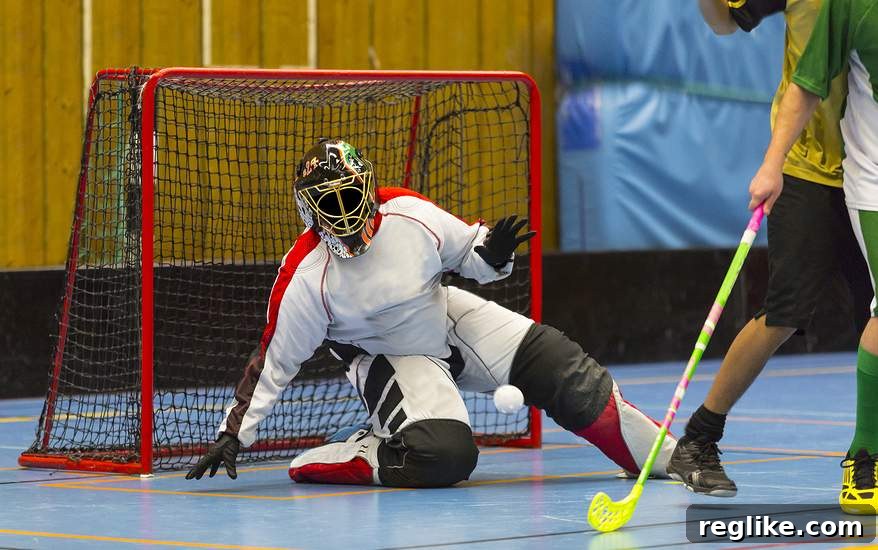
- Goalie Play: Perhaps the most striking difference is that the goalkeeper plays without a stick and primarily uses their body to block shots. They operate within a designated “crease” area where no field players (offensive or defensive) are permitted.
- Physicality: Floorball is designed to be a less physical sport than ice hockey. Body checking is strictly prohibited, emphasizing skill, speed, and stick handling over brute force. This makes it accessible to a wider range of ages and physical abilities.
- Simplicity: The relatively simple rules and minimal equipment requirements make Floorball an easy sport to pick up and play, contributing to its global growth, particularly at grassroots levels.
The IFF plays a crucial role in standardizing the rules, organizing international competitions such as the World Floorball Championships, and promoting the sport’s development across continents. Their strategic domain migration is integral to their mission of elevating Floorball’s global profile and fostering its community.
Best Practices for Seamless Domain Transitions: Lessons from the IFF
The IFF’s approach to its domain migration offers valuable lessons for any organization contemplating a similar change. A successful transition is built upon meticulous planning, robust execution, and continuous monitoring.
- Comprehensive Pre-Migration Audit: Before initiating any changes, conduct a thorough audit of your existing website, email accounts, and online assets. Map every URL and email address to its new counterpart. Identify all internal and external links that might need updating.
- Staged Approach: For large-scale migrations, consider a phased approach. Test redirects and new configurations in a controlled environment before a full public launch.
- Prioritize SEO: Implement 301 redirects correctly and verify them rigorously. Update internal links on the new site to point to the new domain. Notify search engines about the change through tools like Google Search Console.
- Maintain Email Continuity: As the IFF has demonstrated, retaining the old domain for email forwarding is a non-negotiable step. Plan to renew this old domain for at least 2-3 years, potentially longer for organizations with extensive historical contacts.
- Communicate Proactively: Inform all stakeholders – employees, partners, customers, and media – about the upcoming change well in advance. Provide clear instructions on how to update contact information.
- Post-Migration Monitoring: Continuously monitor website traffic, search rankings, error logs, and email deliverability after the migration. Use analytics tools to track performance and address any issues promptly.
- Update All Marketing Materials: Ensure that all digital and physical marketing materials, business cards, social media profiles, and directories are updated with the new domain and email addresses.
Conclusion: Strategic Foresight in the Digital Age
The International Floorball Federation’s carefully executed domain migration from Floorball.org to Floorball.sport serves as an exemplary case study in strategic digital management. It underscores that changing a domain name is far more than a technical task; it’s a critical decision with profound implications for an organization’s brand, communication, and overall digital footprint. By thoughtfully preserving its old .org domain for email forwarding, the IFF has successfully navigated one of the most challenging aspects of a digital transition, ensuring brand continuity and uninterrupted global communication.
In an increasingly interconnected world, maintaining a seamless online identity is vital for any organization, particularly for international sports federations dedicated to growing their sport globally. The IFF’s foresight in managing both the web and email aspects of their domain change provides a robust framework for others to emulate, emphasizing that a proactive and meticulous approach is the cornerstone of a successful digital evolution.