
Unveiling the Help Scout Domain Dispute: A Deep Dive into Trademark Claims, Cybersquatting, and the Quest for Digital Identity
In the digital age, a company’s domain name is often its most valuable online asset, serving as the cornerstone of its brand identity and customer reach. The intricate relationship between domain names and trademarks frequently leads to complex legal battles, none more illustrative than the case involving Brightwurks, Inc., the innovative company behind the renowned customer support service, Help Scout. This compelling dispute sheds light on the challenges businesses face when their chosen brand name conflicts with a pre-existing domain registration, leading to high-stakes legal maneuvers including UDRP proceedings and in rem lawsuits.
The saga began when Brightwurks, Inc. found itself in a legal quagmire, filing an in rem lawsuit (pdf) against the domain names HelpScout.com and Help-Scout.com. This legal action, a direct challenge to the ownership of these pivotal online addresses, underscores the fierce competition for prime digital real estate and the lengths to which companies will go to secure their brand online. At the heart of the matter lies a dispute that pits a rapidly growing company’s established trademark against an individual’s earlier domain registration, raising fundamental questions about intent, ownership, and the evolving landscape of intellectual property rights in the virtual world.
The Genesis of a Conflict: A Timeline of Digital Ownership
To fully grasp the complexities of the Help Scout domain dispute, it is essential to reconstruct the timeline of events that set the stage for this legal showdown. The chronological sequence of domain registrations, brand development, and trademark applications forms the backbone of the arguments presented by both sides.
The Domain Registrar: Andy Eder’s Early Claim
The story begins in 2009, when Andy Eder, a resident of Germany, registered the domain names HelpScout.com and Help-Scout.com. At this juncture, the entity known as Brightwurks, Inc. and its “Help Scout” brand did not yet exist. Eder’s registration, made years before the plaintiff established its business under that name, would later become a critical point of contention, forming the basis of his defense against claims of bad faith.
Brightwurks, Inc.: Forging a Brand Identity
The plaintiff’s journey began shortly after Eder’s registrations. In 2010, Brightwurks, Inc. registered the domain name HelpScout.net, a pragmatic choice given that the more desirable .com counterpart was already taken. This initial step marked the nascent stages of their business, which they diligently began to build and cultivate on the .net platform. The decision to proceed with HelpScout.net, while perhaps a compromise, did not deter the company from establishing a strong and recognizable brand.
The year 2011 proved to be pivotal for Brightwurks, Inc. It was during this period that the company officially commenced using the term “Help Scout” in commerce, actively marketing its support services under this distinctive moniker. Recognizing the importance of legal protection for its burgeoning brand, Brightwurks promptly filed a trademark application for “Help Scout.” This application culminated in the successful registration of the trademark in 2012, solidifying their legal claim to the brand name within the commercial sphere.
The Quest for HelpScout.com: Negotiations and Impasse
With its brand firmly established and trademark secured, Brightwurks, Inc. naturally sought to acquire the HelpScout.com domain, the most intuitive and commercially valuable online address for its service. The company understood the significant advantage of owning the .com version of its brand name, enhancing credibility, ease of recall, and overall market presence. This realization prompted Brightwurks to initiate contact with Andy Eder, the registrant of the desired domains.
Starting in 2011, Brightwurks embarked on a series of attempts to reach out to Eder, expressing their interest in purchasing the domain names. These initial communications, however, did not yield the desired outcome. After facing difficulties in establishing contact or making progress, Brightwurks escalated its efforts, sending another communication that included a concrete offer: $5,000 for the domain. This offer, while seemingly substantial for a domain name, represented Brightwurks’ valuation of the asset at that time, reflecting a desire to resolve the matter amicably and efficiently.
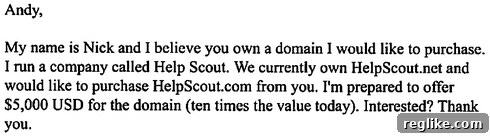
Eder’s response to the $5,000 offer was unequivocal and starkly different from Brightwurks’ expectation. He countered with a demand for a six-figure sum, indicating a significantly higher perceived value for his registered domains. This dramatic disparity in valuation created an immediate impasse, transforming what Brightwurks hoped would be a straightforward negotiation into a complex and potentially costly endeavor. The gap between a $5,000 offer and a six-figure demand highlighted a fundamental disagreement on the commercial worth of the domain names, setting the stage for legal intervention.
The Legal Battle Begins: UDRP and its Limitations
Faced with an intractable negotiation and Eder’s refusal to sell at a price Brightwurks deemed reasonable, the company opted to pursue legal avenues to acquire the domains. The first line of attack was the Uniform Domain-Name Dispute-Resolution Policy (UDRP), a streamlined administrative procedure designed to resolve disputes concerning abusive domain name registrations.
Understanding the UDRP Process
The UDRP is an international system administered by organizations such as the World Intellectual Property Organization (WIPO). It allows trademark holders to challenge domain registrations that they believe infringe upon their rights. To succeed in a UDRP complaint, a complainant must typically prove three elements: (1) the domain name is identical or confusingly similar to a trademark in which the complainant has rights; (2) the respondent (domain registrant) has no rights or legitimate interests in respect of the domain name; and (3) the domain name has been registered and is being used in bad faith.
The UDRP Outcome: A Predictable Loss for Brightwurks
Brightwurks, Inc. filed a UDRP complaint, asserting its trademark rights and claiming bad faith on the part of Andy Eder. However, the UDRP panel ultimately ruled against Brightwurks. The reason for this outcome was clear and, to many domain law experts, predictable: Eder had registered the domain names in 2009, predating Brightwurks’ establishment of the “Help Scout” brand in 2011 and its trademark registration in 2012. A core tenet of UDRP, particularly concerning the “bad faith” element, is that the registrant must have registered the domain name with the intention of capitalizing on a trademark that existed at the time of registration. Unless Eder possessed prescient knowledge of Brightwurks’ future brand, it was impossible for him to have registered the domains in “bad faith” with respect to the “Help Scout” trademark.
The UDRP decision underscored a critical principle: mere ownership of a trademark does not automatically grant rights to a domain name registered prior to the trademark’s existence or use. The panel found no evidence that Eder targeted Brightwurks’ future brand when he registered the domains, thus failing to meet the “bad faith registration” criterion essential for a UDRP victory.
Escalation to Federal Court: The In Rem Lawsuit and “Bad Faith Renewal”
Undeterred by the UDRP loss, Brightwurks, Inc. decided to pursue a more aggressive and resource-intensive legal strategy: an in rem lawsuit. This type of lawsuit, filed in a federal court in Virginia, targeted the domain names themselves rather than the individual registrant (Andy Eder). An in rem action is often employed when the domain owner is difficult to reach or resides in a foreign jurisdiction, allowing the court to exert jurisdiction over the property (the domain) directly.
Understanding In Rem Lawsuits and Cybersquatting
Brightwurks’ lawsuit claimed cybersquatting under the Anticybersquatting Consumer Protection Act (ACPA). The ACPA is a U.S. federal law enacted to protect trademark holders from individuals who register domain names in bad faith with the intent to profit from or dilute famous or distinctive trademarks. To succeed under ACPA, a plaintiff generally must prove that (1) the defendant registered, trafficked in, or used a domain name; (2) the domain name is identical or confusingly similar to a distinctive or famous mark; and (3) the defendant registered or used the domain name with a bad-faith intent to profit from that mark.
The suit explicitly mentioned the prior UDRP loss but critically introduced a new argument that the UDRP panel allegedly failed to address: Eder’s renewal of the domain name in bad faith. This argument represents a complex and often contentious aspect of domain law. Brightwurks contended that even if the initial registration was not in bad faith, Eder’s subsequent renewal of the domain, after Brightwurks had established its brand and expressed interest in the domain, constituted a new act of bad faith.
The Controversial “Bad Faith Renewal” Argument
The “bad faith renewal” argument posits that once a trademark owner has developed a brand and expressed interest in a pre-existing domain name, the domain owner should somehow relinquish it rather than continue to renew their legitimate registration. This argument challenges the traditional interpretation of bad faith under both UDRP and ACPA, which typically focuses on the intent at the time of the initial registration. While courts have occasionally entertained “bad faith renewal” in very specific and egregious circumstances, it is not a universally accepted or easily proven claim.
The general legal consensus is that a domain owner has a legitimate right to renew a domain name that was legitimately registered. Expecting an owner to surrender their property simply because another entity subsequently developed a brand around a similar name, particularly when the domain was registered first, is a high bar to clear. Such an argument often implies that a domain owner has an ongoing obligation to monitor new trademarks and voluntarily transfer their domains, which runs contrary to established property rights. Brightwurks’ pursuit of this argument in federal court showcased a determination to leverage every possible legal angle, pushing the boundaries of traditional cybersquatting interpretations.
Resolution and Lessons Learned: The Power of Settlement
The initial report expressed hope that the judge would see through the “bad faith renewal” argument and that Eder would defend his domain names vigorously. However, as is often the case in complex legal disputes, the parties ultimately opted for a pragmatic resolution outside of a protracted court battle.
[Update: the parties settled and Brightwurks now owns the domain name.]
This update reveals the conclusion of the dispute: a settlement was reached, and Brightwurks, Inc. successfully acquired the HelpScout.com and Help-Scout.com domain names. While the precise terms of the settlement were not disclosed, it is highly probable that Brightwurks paid a sum significantly higher than its initial $5,000 offer, and likely closer to, or even exceeding, Eder’s original six-figure demand. Settlements are frequently preferred by both parties to avoid the immense costs, uncertainties, and time commitments associated with ongoing litigation, even when one party believes it has a strong legal case.
Implications for Businesses and Domain Owners
The Help Scout case offers crucial lessons for both businesses seeking to establish their online presence and individuals who register domain names:
- For Businesses: This dispute highlights the paramount importance of conducting thorough domain name checks and acquisition strategies before committing to a brand name and filing for a trademark. The cost of acquiring a desired domain after a brand has been established and marketed can be exponentially higher, as demonstrated by this settlement. Early domain acquisition can prevent years of litigation, significant legal fees, and the strategic disadvantage of not owning the most intuitive domain for a brand.
- For Domain Registrants/Investors: The case underscores the strength of prior registration. Eder’s initial registration in 2009, predating the Help Scout brand, was his strongest defense against UDRP and initial cybersquatting claims. While the “bad faith renewal” argument was a novel approach, the eventual settlement suggests that his ownership was ultimately recognized, albeit at a negotiated price. It also illustrates the potential value of generic or short domain names, even if they later coincide with a developing brand.
- The Cost of Litigation: Domain disputes, particularly those escalating to federal court, are notoriously expensive and time-consuming. The Help Scout case is a testament to the fact that even if legal arguments lean one way, the practicalities of business operations and the desire to avoid prolonged legal battles often drive settlements.
Conclusion: Navigating the Digital Frontier
The Help Scout domain dispute serves as a compelling narrative in the ever-evolving landscape of digital asset ownership and brand protection. It illustrates the complex interplay between domain name registration, trademark law, and business strategy. While legal principles like “bad faith registration” and the intent behind domain ownership are critical, the ultimate resolution often hinges on negotiation and the strategic value a domain holds for a brand.
In the digital frontier, securing one’s online identity is not merely a formality but a strategic imperative. The Help Scout saga stands as a powerful reminder for all entities operating online: diligence in domain acquisition, a clear understanding of intellectual property rights, and a willingness to navigate complex legal challenges are essential components of safeguarding a brand’s presence in the interconnected world.