
The highly coveted Calculator.com domain will continue to point to its original owner’s website, following a crucial federal court decision upholding a Temporary Restraining Order (TRO) amidst claims of illicit transfer and outright theft.
Federal Judge Upholds TRO, Cementing Calculator.com’s Return to Original Owner in High-Stakes Domain Theft Case
In a significant legal victory for the original proprietor of the premium domain name Calculator.com, a federal judge has firmly rejected a request to set aside a Temporary Restraining Order (TRO). This ruling solidifies the domain’s immediate return and continued control by its original owner, pending further legal proceedings, highlighting the complexities and risks involved in high-value domain transactions and the severe implications of alleged domain theft.
Judge Beth Bloom delivered the decisive blow to Stands4, the company that had recently acquired the domain, by denying their motion to vacate the TRO. The order was initially approved last week, a swift response to a lawsuit filed by the original owner of Calculator.com, who alleged that their valuable digital asset had been unlawfully stolen and subsequently transferred through fraudulent means. This case underscores the increasing importance of robust security protocols and vigilant due diligence in the domain name industry.
The Contested Asset: Why Calculator.com Holds Such Value
The dispute over Calculator.com is not merely about a website address; it concerns a highly sought-after digital property. As a generic, keyword-rich domain, “Calculator.com” commands immense inherent value due to its direct relevance, memorability, and potential for vast organic traffic. Such premium domains are often seen as prime digital real estate, attracting significant investment and, unfortunately, the attention of malicious actors.
Stands4, a prominent operator of reference websites, had reportedly acquired Calculator.com last month for a substantial sum of $180,000. Following this significant investment, the company further committed an estimated $50,000 to develop and launch a new functional website on the domain, aiming to leverage its powerful brand recognition and reach. However, these considerable financial outlays are now under severe threat due to the court’s intervention and the original owner’s claims. The lawsuit contends that Stands4 may have unwittingly purchased a “hot” domain – an asset allegedly obtained through illegal means, which carries substantial legal and financial risks for any subsequent buyer, regardless of their good faith.
Unraveling the Elaborate Scheme: The Alleged Domain Theft Timeline
The narrative detailed in the original owner’s lawsuit paints a troubling picture of a systematic and persistent effort to steal Calculator.com, exposing critical vulnerabilities in domain security and transfer processes. This sequence of events serves as a stark warning to all domain owners and registrars about the sophistication of modern domain fraud.
The Initial Attempt and Impersonation in 2018
The alleged theft plot reportedly commenced in 2018 when an individual, later identified as a purported thief, attempted to sell Calculator.com on Sedo, a leading domain marketplace. This initial attempt, fortunately, did not succeed; the prospective buyer, performing commendable due diligence, canceled the sale after suspicions arose regarding the legitimacy of the domain’s ownership. This incident, while a failure for the thief, should have signaled a red flag for the domain’s security.
According to the lawsuit, despite the aborted sale, the alleged thief escalated their efforts in the same year. They reportedly impersonated the legitimate domain owner, utilizing false documents and deceptive tactics to manipulate Network Solutions, the domain’s then-current registrar, into transferring the domain name into their own control. This act highlights a critical lapse in identity verification protocols, a common vector for domain hijacking.
The Critical Error: Network Solutions’ Unreverted Contact Information
Following the fraudulent transfer in 2018, Network Solutions apparently became aware of the unauthorized activity and took corrective action to move the domain back to an account associated with the original owner. However, a pivotal and ultimately costly oversight occurred: Network Solutions allegedly failed to revert the contact information – specifically the administrative and technical contacts – back to the legitimate owner’s details. This administrative misstep left a crucial vulnerability open, providing the alleged thief with a continuous pathway to control the domain.
Armed with this persistent access through fraudulent contact information, the perpetrator was reportedly able to initiate another transfer in 2020, moving Calculator.com from Network Solutions to GoDaddy. Once the domain was under the thief’s control at a new registrar, the path was cleared for its eventual sale to Stands4, potentially bypassing any further scrutiny that might have been applied by the original registrar had the contact details been correctly reinstated.
The Legal Implications of a Temporary Restraining Order
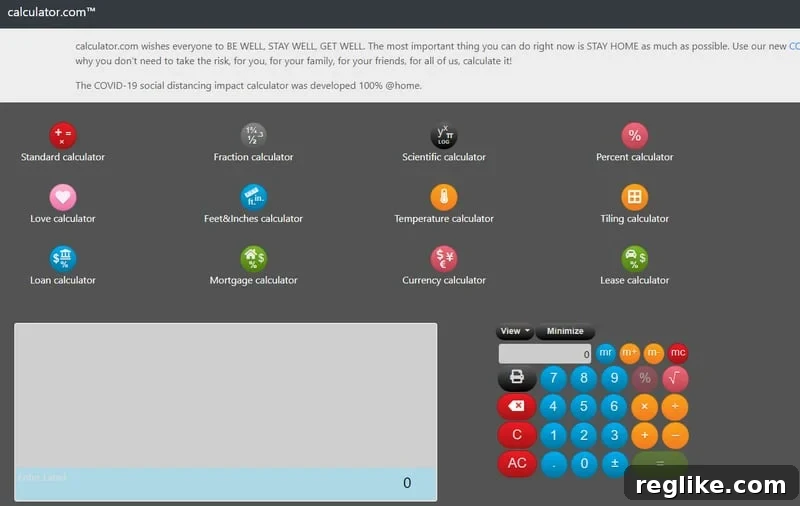
The judge’s decision to deny Stands4’s request to set aside the Temporary Restraining Order has immediate and profound consequences. For the foreseeable future, the Calculator.com domain name will continue to resolve to the Plaintiff’s (the original owner’s) website, effectively denying Stands4 control over the domain’s traffic and content despite their significant investment. This measure is designed to protect the original owner from further irreparable harm while the broader legal merits of the case are adjudicated.
A TRO is a powerful, albeit temporary, legal instrument. It is typically granted in emergency situations where a court believes that immediate action is necessary to prevent severe and lasting damage to a party. It is crucial to understand that upholding a TRO is not a final judgment on the ultimate ownership of the domain or the culpability of any party. Instead, it serves as a provisional measure to maintain the status quo, allowing the court to conduct a more thorough investigation and deliberation without prejudice to the original owner’s interests.
Lessons for the Domain Aftermarket: Prioritizing Due Diligence
The Calculator.com case is a potent reminder of the indispensable role of comprehensive due diligence in the domain aftermarket. For entities like Stands4, investing substantial capital in a premium domain necessitates an exhaustive verification process regarding the seller’s identity and the domain’s ownership history. Key questions that must be rigorously addressed include:
- Is the seller the undisputed legal owner of the domain, or are there any existing claims?
- Has the domain been subject to any past disputes, UDRP proceedings, or security incidents?
- Do the seller’s identification documents align with the domain’s public registration (WHOIS) information?
- Are the historical transfer records for the domain transparent and free of suspicious activity?
- Is the domain registrar facilitating the transfer reputable and compliant with ICANN’s policies?
The acquisition of a “hot domain,” one obtained through fraudulent means, poses significant risks, including potential legal challenges, forced reversals of ownership, and considerable financial losses, even for an innocent buyer. This scenario highlights that acting in good faith alone may not be sufficient protection if the underlying asset was compromised.
Furthermore, this case underscores the critical responsibility of domain registrars. The alleged failure of Network Solutions to completely restore the original owner’s contact information after an initial breach illustrates how a seemingly minor administrative oversight can become a gateway for subsequent, more successful theft attempts. Registrars are custodians of valuable digital assets and must implement and enforce the most stringent security and identity verification protocols to prevent impersonation and unauthorized transfers.
The Path Forward: What Lies Beyond the TRO
While the upholding of the TRO offers immediate relief to the original owner, the legal journey for Calculator.com is far from concluded. This ruling represents an interim step in what is likely to be a complex and protracted lawsuit. The subsequent phases will involve extensive discovery, where both parties will gather and present evidence, witness testimonies, and expert analyses to support their respective claims. The federal court will ultimately be tasked with determining the rightful owner of the domain, evaluating the validity of the theft allegations, and potentially assigning liability for any damages incurred.
This case could culminate in a permanent injunction, definitively confirming the original owner’s rights, or it could take a different turn if Stands4 successfully challenges the theft claims or can demonstrate its legitimate acquisition under circumstances that were beyond its control. Moreover, the legal actions could extend to the alleged thief and potentially involve claims against registrars for perceived negligence in their security and transfer processes.
Conclusion: A Watershed Moment for Domain Security
The ongoing legal battle over Calculator.com stands as a landmark case and a compelling cautionary tale for the entire domain name industry. It vividly illustrates the severe financial, operational, and reputational risks associated with domain theft and underscores the absolute necessity for impenetrable security measures, meticulous due diligence, and robust legal recourse in the digital landscape.
For domain owners, the message is unequivocal: prioritize advanced security features such as two-factor authentication, regularly audit and update domain contact information, and vigilantly monitor all domain activity. For buyers operating in the secondary market, the lesson is equally profound: never cut corners on due diligence. The immense appeal of a premium domain must always be balanced with a thorough investigation into its provenance to avoid the costly pitfalls of inadvertently acquiring a compromised asset.
Ultimately, the Calculator.com dispute reinforces the fundamental principle that in the increasingly digitized world, the security and rightful ownership of online assets are as paramount as physical property, and the legal system is evolving to effectively protect these crucial digital investments against sophisticated acts of fraud.