
Unlocking Domain Potential: A Comprehensive Review of GoDaddy CashParking
For domain investors and website owners, effective domain monetization is a cornerstone of a profitable portfolio. Among the myriad options available, domain parking services stand out as a popular method to generate passive income from undeveloped domains. GoDaddy, a colossal figure in the domain and hosting industry, ventured into this space with its CashParking program. However, from its initial launch, GoDaddy’s approach to domain parking has raised eyebrows, primarily due to its unconventional pricing model and a user experience that often leaves much to be desired. This in-depth review delves into the intricacies of GoDaddy CashParking, examining its pros and cons, and ultimately evaluating whether it truly offers value for domainers seeking to maximize their revenue.
The Controversial Foundation: GoDaddy’s “Pay-to-Park” Model
When GoDaddy first unveiled its domain parking program, it immediately bucked industry trends by requiring users to pay a monthly fee to participate. While most domain parking services operate on a revenue-share model where the service provider takes a percentage of the generated income without an upfront cost, GoDaddy initially demanded a significant $39.99 per month for an 80% revenue share. This model was met with skepticism, as it fundamentally altered the typical risk-reward equation for domainers.
Over time, GoDaddy adjusted its pricing tiers, making them slightly more accessible but still retaining the “pay-to-park” philosophy. Currently, domainers can expect the following structure:
- $3.99 per month: Grants a 60% revenue share.
- $9.99 per month: Increases the revenue share to 70%.
- $19.99 per month: Offers the highest revenue share at 80%.
This fee structure remains a point of contention. For domainers managing large portfolios or those with lower-traffic domains, these recurring fees can quickly erode potential profits, making the service less attractive than its free counterparts. The fundamental question for many remains: why pay to park domains when numerous reputable providers offer the same service without an upfront cost, often with competitive revenue shares?
The Fleeting Allure: Premium Auctions at TDNAM
In an effort to sweeten the deal and potentially justify its monthly fees, GoDaddy briefly introduced an enticing perk for CashParking subscribers. Members at the $19.99 tier were granted exclusive access to bid on “premium” auctions through TDNAM, GoDaddy’s aftermarket platform. These auctions featured expiring domains, often accompanied by valuable traffic statistics, and typically started at a modest $10. The limited pool of bidders created a unique opportunity for domain investors to acquire promising domains with reduced competition, potentially yielding high-value assets for their portfolios.
Many, including myself, invested in the $19.99 CashParking plan specifically for this exclusive access. The prospect of uncovering hidden gems with established traffic at competitive prices was a significant draw. However, this appealing perk proved to be short-lived. Without much prior notice, the premium auctions mysteriously vanished from TDNAM. Subsequent confirmation from GoDaddy officially announced the discontinuation of this feature. While the opportunity allowed some to acquire a handful of valuable domains during its brief existence, its abrupt removal underscored an inconsistency in GoDaddy’s offerings and left many subscribers feeling shortchanged on the additional value proposition that had initially swayed their decision.
Navigating the GoDaddy Ecosystem: User Experience and Interface Frustrations
Beyond the pricing model, the user experience within GoDaddy CashParking presents its own set of challenges. Unlike “pure play” parking services where domain monetization is the sole focus, CashParking is just one of dozens of services offered by GoDaddy. This vast ecosystem, while offering convenience for users who consolidate all their domain-related needs, often leads to a convoluted and frustrating user interface for specific services.
A Cumbersome Login and Management Path
Accessing your CashParking statistics and managing your parked domains is surprisingly inefficient. Instead of a streamlined process, users are forced to navigate through multiple layers:
- Click on “My Account”
- Click “Cash Parking”
- Click “Manage Account”
This multi-step journey opens a new window, further interrupting the workflow. A more intuitive design would integrate CashParking management directly within the main domain management interface, perhaps via a simple drop-down menu under “Domains.” The current path adds unnecessary clicks and time, detracting from an efficient domain management routine.
Streamlined Domain Submission, Limited Customization
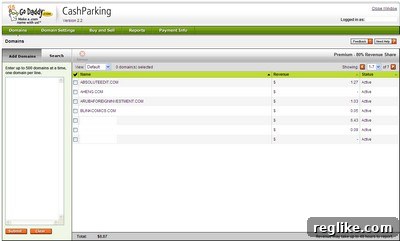
Once you finally access the CashParking dashboard, submitting domains is relatively straightforward. The platform allows for easy batch submission by copying and pasting domains into a text box. A commendable feature for GoDaddy-hosted domains is the automatic nameserver update to CashParking’s servers, simplifying the setup process significantly. This automation is a definite positive, reducing manual configuration steps.
However, the ease of submission quickly gives way to limitations in customization. Setting up your parked pages involves a few basic steps:
- Select 1-click or 2-click pages.
- Choose a primary category for your domain.
- Select a relevant subcategory (these categories are used for targeting ads).
- Choose a visual “theme” for your parking page.
While this process is simple, it lacks depth and flexibility. The categories, though intended for targeting, can feel overly broad or sometimes misaligned with niche domains. The true frustration, however, lies in the scarcity and quality of the available themes.
The Problem of Generic and Skewed Themes
The visual appeal and user experience of a parked domain can significantly influence click-through rates and overall monetization. Unfortunately, GoDaddy CashParking’s theme selection is severely limited. With fewer than 20 header graphics to choose from, domainers often find themselves resorting to generic, uninspired designs. This lack of variety makes it challenging to create a distinct or highly branded parking page that resonates with specific domain niches or target audiences.
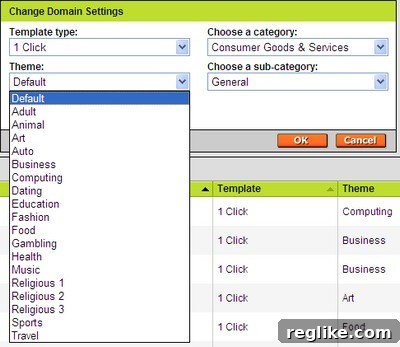
Furthermore, the available themes can appear somewhat skewed or oddly specific. For instance, the presence of multiple religious themes (including one previously named “Islam”) highlights a peculiar allocation of design resources, especially when general-purpose, high-quality themes for common industries are lacking. This limited and sometimes inappropriate theme selection can negatively impact the professional appearance of parked domains, potentially reducing visitor engagement and trust.
GUI Headaches: Editing Domains
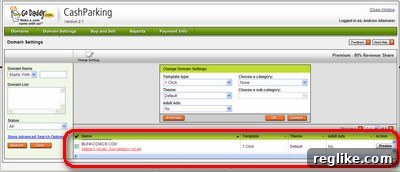
Even basic tasks like editing existing domains within CashParking can be unnecessarily difficult due to poor GUI design. For example, selecting multiple domains for bulk editing is hampered by an extremely small and hard-to-use scroll bar. This seemingly minor design flaw becomes a significant point of frustration for users managing more than a handful of domains, turning what should be a quick task into a tedious exercise in precision clicking.
Performance Metrics: The Critical Delay in Statistics
Ultimately, the success of any domain parking program hinges on its ability to generate revenue and provide transparent, timely performance data. On both fronts, CashParking exhibits notable shortcomings. Perhaps the most significant drawback is the inexplicable 48-hour delay in reporting statistics. In the fast-paced world of domain monetization, real-time or near real-time data is crucial for optimizing performance, identifying trends, and making informed decisions. Most leading domain parking services provide daily or even hourly updates, allowing domainers to quickly adjust categories, themes, or even switch providers if performance falters.
GoDaddy claims this delay is necessary to ensure accurate reporting, but this justification rings hollow when compared to industry peers who manage to deliver timely and accurate data. A 48-hour lag means domainers are always operating two days behind, potentially missing critical windows to improve monetization for high-traffic events or quickly identify underperforming domains. This delay fundamentally undermines a domainer’s ability to effectively manage and optimize their portfolio.
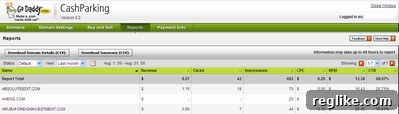
The statistics screen itself is fairly standard, offering common metrics such as views, clicks, revenue per click (RPC), and revenue per 1,000 views (RPM). While the data points are clear, their delayed availability significantly diminishes their utility. In personal experience, average RPMs hovered around $12.38 after several weeks of parking. While some domains might perform adequately, or even surprisingly well compared to other services like TrafficClub or Parked.com, others lagged. The critical factor remains the $19.99 monthly fee required to access the 80% revenue share tier. When factoring in this recurring cost, the net revenue often becomes far less appealing, making the “good” performance of individual domains less impactful on the overall profitability of the portfolio.
A Glimmer of Design: The Parking Page Layout
Despite the numerous criticisms, one area where CashParking manages to impress slightly is the layout of its actual parking pages. The one-click design is thoughtfully structured to optimize user engagement and ad visibility. It typically features targeted keywords prominently on the left side, a general directory at the bottom left, and paid listings strategically placed on the right side of the page.
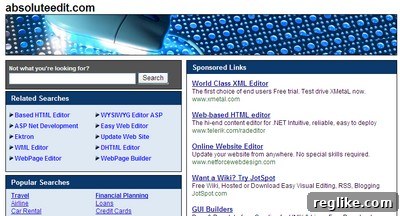
This clean and intuitive layout potentially contributes to higher click-through rates by presenting relevant information and advertisements in an easily digestible format. While the themes might be limited, the underlying structural design of the parking page itself is competent, effectively guiding visitors towards monetizable links. This positive aspect, however, is often overshadowed by the larger operational and cost-related issues that plague the service.
The Verdict: Is GoDaddy CashParking Worth Your Investment?
Considering the analysis of its pricing model, user experience, and performance metrics, GoDaddy CashParking struggles to present a compelling case for domainers. The foundational “pay-to-park” model inherently places an upfront financial burden on users, a stark contrast to the industry norm. The abrupt discontinuation of the premium auction perk further eroded trust and removed a key incentive for higher-tier subscriptions. Operationally, the cumbersome navigation, restrictive themes, frustrating GUI elements, and the unacceptable 48-hour delay in statistics reporting significantly hinder a domainer’s ability to efficiently manage and optimize their portfolio.
While the design of the actual parking page layout shows some promise, it is insufficient to compensate for the program’s fundamental flaws. For most domainers, particularly those new to the field or managing extensive portfolios, the ongoing monthly fees combined with the operational frustrations make CashParking a less-than-ideal solution. There are numerous alternative domain parking services available that offer competitive revenue shares without any upfront cost, boast more intuitive interfaces, provide timely statistics, and offer greater customization options.
In conclusion, it is difficult to recommend GoDaddy CashParking as a primary domain monetization solution. Domainers seeking to maximize their returns and streamline their management process would likely find greater value and efficiency with other providers in the market. If you, like many others, subscribed to CashParking specifically for the short-lived TDNAM premium auctions, exploring the option of requesting a refund for your membership fee might be a prudent step.