
Understanding the Latest UDRP Trends: Q3 Report Reveals Increased Activity and Key Shifts in Domain Disputes
The landscape of domain name disputes is constantly evolving, reflecting shifts in online business, brand protection strategies, and even technological advancements. For brand owners, legal professionals, and domain name registrants alike, staying abreast of the latest trends in Uniform Domain Name Dispute Resolution Policy (UDRP) decisions is crucial. The recently published GigaLaw Q3 UDRP report offers invaluable insights, revealing a significant uptick in UDRP decisions and a notable rise in findings of Reverse Domain Name Hijacking (RDNH). These findings not only reverse previous trends but also highlight critical developments that warrant close attention.
Q3 UDRP Activity Surges, Reversing Previous Decline
According to GigaLaw’s comprehensive Q3 UDRP report, the third quarter witnessed a robust increase in UDRP decisions, rising by a significant 9.89% compared to the same period in the previous year. This surge marks a pivotal turnaround from the trend observed in Q2, where decisions had seen a 2.6% decline year-over-year. The increased activity in Q3 suggests a renewed focus on brand protection through domain dispute resolution, or perhaps an escalation in opportunistic domain registrations targeting well-known trademarks.
While the volume of UDRP cases increased, an interesting paradox emerged: the number of domain names covered by these cases actually decreased compared to a year ago. This suggests that while more individual disputes are being filed, fewer cases are bundling large numbers of domain names. For instance, the high-profile 7-Eleven case decided in a prior quarter encompassed an astonishing 295 domain names under a single complaint. Such large-scale complaints can significantly skew the statistics for domain names covered. The Q3 data indicates a shift towards more targeted, individual disputes rather than broad portfolio challenges, which could impact the average cost and complexity of UDRP proceedings for complainants.
Key Data Insights from the Latest UDRP Report
Beyond the overall volume of decisions, the GigaLaw report delves into several fascinating metrics that paint a detailed picture of the UDRP landscape. These statistics offer valuable insights for anyone involved in online brand management and domain name strategy.
Slight Dip in Transfer Rates, but Complainants Still Largely Victorious
The UDRP mechanism is designed to facilitate the transfer of unlawfully registered domain names to rightful trademark owners. In Q3, transfers were ordered in 93.3% of all decisions, a marginal decrease from the 94.2% observed in the previous quarter. Despite this slight dip, the persistently high transfer rate underscores the effectiveness of the UDRP in favor of trademark holders. It highlights that the vast majority of UDRP complaints filed are indeed well-founded, demonstrating clear cases of cybersquatting or abusive domain registration. This consistent success rate reinforces the UDRP’s standing as a powerful and relatively efficient tool for brand owners to reclaim their intellectual property online.
Czech Arbitration Court Leads with Highest Complainant Win Rate
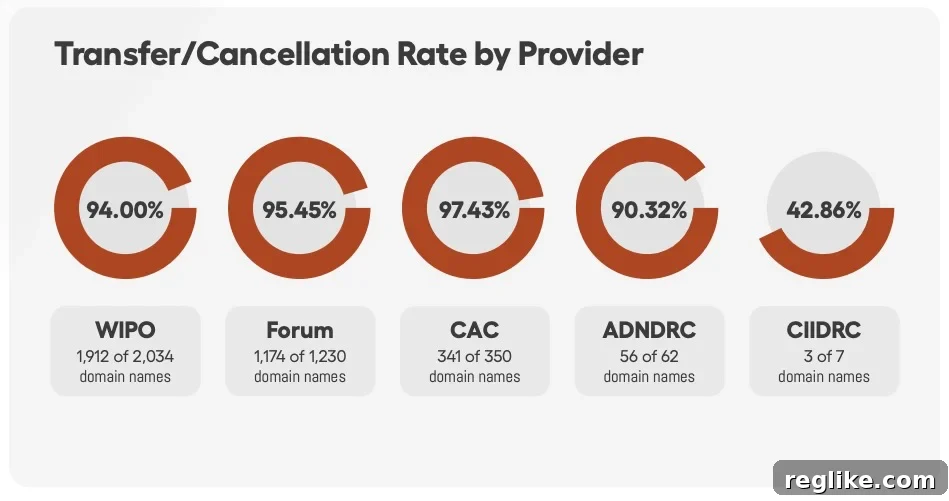
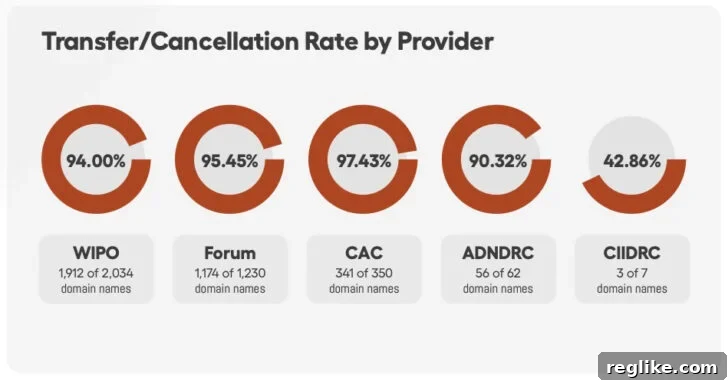
Among the various UDRP service providers, the report singles out the Czech Arbitration Court (CAC) for its exceptional performance. In Q3, the CAC recorded the highest win rate in favor of complainants, reaching an impressive 97.4%. This figure surpasses that of the World Intellectual Property Organization (WIPO), which is the most prolific UDRP provider globally, with a 94.0% success rate for complainants. The reason behind CAC’s higher rate could be multi-faceted, potentially stemming from the specific types of cases it handles, its panelist selection process, or its regional focus. Brand owners considering their choice of UDRP provider might take such statistics into account, although WIPO remains the go-to for many due to its international reach and extensive experience.
Significant Rise in Reverse Domain Name Hijacking (RDNH) Findings
One of the most noteworthy trends in the Q3 report is the substantial increase in Reverse Domain Name Hijacking (RDNH) findings. There were 26 cases where panelists determined that complainants had attempted RDNH, up from 20 in Q2. RDNH occurs when a trademark owner attempts to use the UDRP process to unfairly obtain a domain name from a legitimate registrant, without fulfilling the policy’s criteria. This includes cases where the complainant knew, or should have known, that they had no reasonable chance of success. The rise in RDNH findings signals a few potential developments: it could suggest a more aggressive stance from some brand owners, an increased awareness among domain registrants about defending their rights, or a stricter application of UDRP principles by panelists keen to uphold the integrity of the system and prevent its misuse. This trend is a crucial reminder for complainants to thoroughly assess the merits of their cases before filing, as an RDNH finding can have reputational and, in some jurisdictions, legal implications.
Emerging TLDs Become Hotbeds for Disputes Beyond .com
While .com remains the dominant TLD for domain disputes, the report sheds light on the increasing prominence of other extensions as targets for cybersquatting. In Q3, .Shop, .net, and .sbs were the subject of the most disputes that did not involve the ubiquitous .com. The rise of disputes in these new generic Top-Level Domains (gTLDs) and older established TLDs like .net reflects the diversification of the internet’s naming architecture. As more businesses and individuals adopt these alternative TLDs, they naturally become more attractive targets for domain squatters seeking to capitalize on brand recognition.
The .AI Domain Boom: A Clear Target for Cybersquatters
Perhaps the most telling trend regarding TLDs relates to .ai domains. The report indicates 32 disputes over .ai domains in Q3, marking a significant increase of 10 cases from Q2. This surge is hardly surprising given the explosion in interest and investment in artificial intelligence (AI) technologies globally. As AI becomes an increasingly critical sector, domain names associated with it naturally gain immense value. Cybersquatters are quick to register relevant .ai domains, hoping to sell them for a profit or exploit them for various nefarious purposes. This trend is expected to continue its upward trajectory as the importance and economic value of AI-related ventures grow exponentially, making .ai domains a critical area for proactive brand monitoring and protection strategies.
Carrefour Leads as Top Complainant
In terms of individual complainant activity, the European retail giant Carrefour filed the most disputes in Q3, initiating 33 UDRP cases. This level of activity is indicative of a large, multinational brand’s ongoing battle against cybersquatting. Major retailers with extensive global presence and diverse product lines are particularly vulnerable to domain name abuses, which can range from phishing scams and counterfeit sales to general brand dilution. Carrefour’s aggressive approach to domain dispute resolution underscores the proactive measures major corporations must take to safeguard their online identity and protect consumers from misleading websites.
Implications for Brand Protection and Domain Registrants
The GigaLaw Q3 UDRP report provides more than just statistics; it offers a critical barometer for the state of online brand protection. For brand owners, the increased volume of decisions and the continued high transfer rates signal that the UDRP remains a highly effective mechanism for reclaiming infringing domain names. However, the rise in RDNH findings serves as a potent warning against overzealous or ill-prepared complaints. It emphasizes the importance of meticulous investigation and adherence to UDRP criteria before initiating proceedings. Engaging experienced legal counsel specializing in domain disputes is more vital than ever.
For domain registrants, the report highlights the growing risk of inadvertently or intentionally registering domain names that infringe on existing trademarks, particularly in emerging TLDs like .ai. Understanding trademark law and conducting thorough clearance searches before registering a domain name is paramount to avoid potential disputes and the costly process of losing a domain or facing an RDNH finding. The UDRP process, while primarily a tool for trademark owners, also provides a mechanism for legitimate registrants to defend their rights against unwarranted complaints.
The evolving landscape of domain disputes, driven by technological shifts, the proliferation of new gTLDs, and the increasing value of digital assets, necessitates constant vigilance. These quarterly reports serve as crucial navigational tools for stakeholders in the digital realm, guiding strategies for both brand protection and responsible domain name registration.
Conclusion: Stay Informed, Stay Protected
The GigaLaw Q3 UDRP report paints a dynamic picture of the domain dispute resolution world. With an increase in overall UDRP decisions, a high success rate for complainants, and a notable rise in RDNH findings, the third quarter brought significant developments. The growing importance of disputes in TLDs like .ai and the proactive efforts of brands like Carrefour underscore the continuous need for robust online brand protection strategies. We encourage all interested parties to review the full GigaLaw report for a deeper dive into these critical trends and data points. Staying informed is the first step towards effective brand safeguarding in the ever-expanding digital frontier.