
A Nostalgic Journey Through Early Internet Ventures: Unearthing Domain Names, Website Sales, and AdSense Gold
There’s a unique joy in sifting through relics of a bygone era, especially when those relics offer a tangible connection to the early days of the internet. This past weekend, a simple task of tidying up old boxes of files unexpectedly transformed into a profound trip down memory lane. Tucked away amongst forgotten papers was a box, modestly labeled “domain names,” which held within it a treasure trove of documents spanning over two decades of my personal journey into the fascinating world of domain name investing and online entrepreneurship. It was an involuntary rewind to a time when the digital landscape was still largely uncharted, full of untapped potential and manual processes that now seem almost comically antiquated.
The Dawn of Domain Registration: Network Solutions and Snail Mail Confirmations
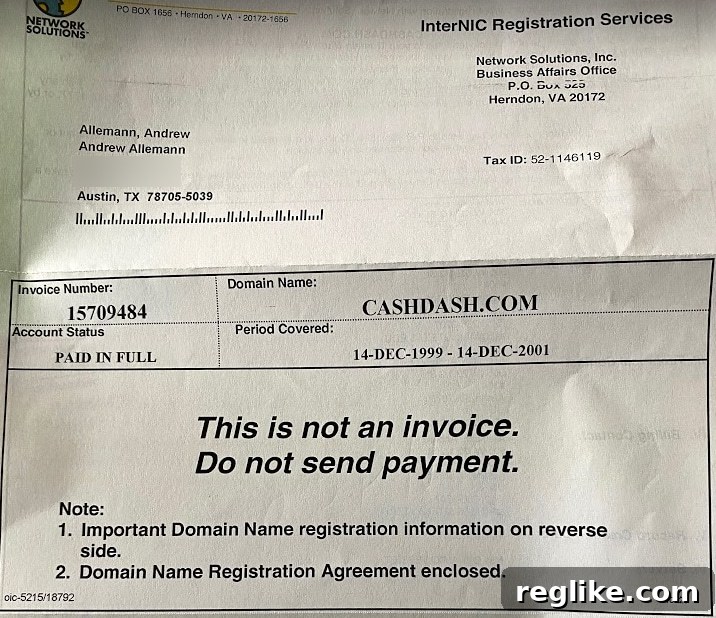
Among the most evocative items in this archive were a collection of Network Solutions receipts. For anyone involved in the internet during the late 1990s and early 2000s, Network Solutions was synonymous with domain registration. They were, for a significant period, the sole gatekeeper of the internet’s naming system, a monopoly that shaped the very fabric of early online identity. These paper receipts, dating back to my college years, serve as a stark reminder of how dramatically the process of acquiring a domain name has evolved. Back then, the digital convenience we now take for granted was a distant dream.
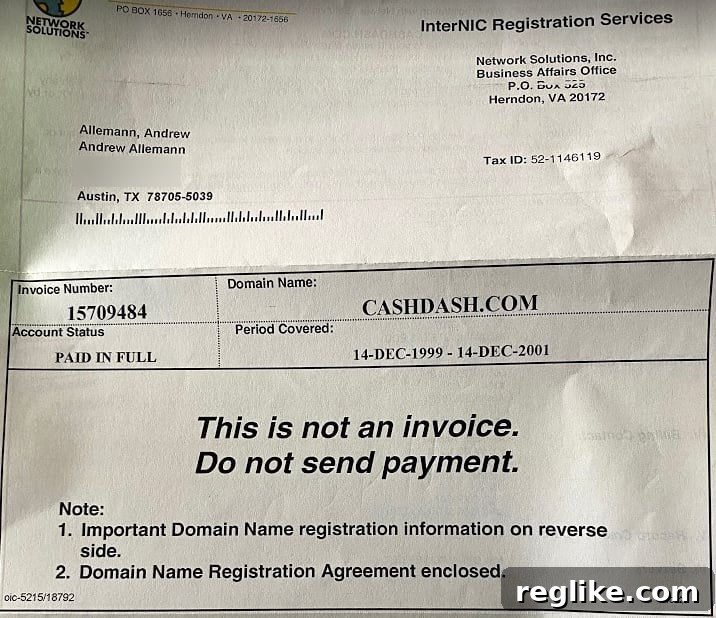
Imagine, if you will, the anticipation of registering a new domain name—a virtual piece of prime internet real estate—and then patiently waiting for a physical confirmation to arrive via snail mail. This was the norm. Each registration triggered a paper receipt, complete with transaction details, sent directly to your physical address. I distinctly recall those days in college, heading to the mailbox not just for letters from home, but often finding a dozen or more envelopes bearing the familiar Network Solutions logo. Each one represented a successfully secured domain, a potential digital venture, and a small victory in the nascent world of online business. It was a tangible, almost ritualistic validation of a digital act, a stark contrast to the instant email confirmations and online dashboards we rely on today.
These receipts aren’t just paper; they’re artifacts of a foundational period, illustrating a slower, more deliberate pace of internet infrastructure. They represent the initial investment, often a significant one by today’s standards, in carving out a niche in a burgeoning digital universe. The practice of investing in domain names, even back then, was driven by a foresight that these simple addresses would become crucial assets. The excitement of those early registrations, fueled by the promise of the internet, is vividly brought back by these faded documents.
My First Online Venture: Building, Selling, and the Ordeal of Domain Transfers
The journey through these files continued to reveal more layers of my early internet experiences. I stumbled upon the transfer documents for my very first website sale. This particular project was a testament to the DIY spirit of the early web, conceived and built entirely in my college dorm room. The tool of choice? Microsoft Frontpage, a groundbreaking (for its time) WYSIWYG editor that empowered countless novices to craft their own corners of the internet without delving deep into complex code. It represented a democratizing force, enabling individuals like myself to become instant webmasters, creating static pages that formed the backbone of many early online communities and businesses.
The decision to sell this website was a significant milestone. Finding a buyer and facilitating the transaction took place on eBay, another pioneering platform that extended beyond physical goods to embrace digital assets. Selling a website on eBay was an adventure in itself, navigating listings and communicating with prospective buyers, culminating in a successful sale that felt immensely gratifying. It wasn’t just about the monetary gain; it was the validation of effort, the realization that an idea brought to life in a dorm room could hold value in the burgeoning online marketplace.
However, the real challenge, and perhaps the most vivid memory evoked by these documents, lay in the domain transfer process itself. Compared to today’s streamlined, often automated procedures, transferring a domain name back then was an exercise in patience and persistence. I vividly recall the multi-page transfer documents I had to prepare and, astonishingly, *fax* to registrars like Dotster. Fax machines, now largely relegated to historical documentaries, were essential communication tools for these vital digital transactions. Each transfer request wasn’t just a simple form; it often required a copy of my photo ID, an extra layer of bureaucratic hurdle designed to ensure security in an era less equipped with robust digital identity verification.
The act of photocopying my driver’s license, attaching it to a multi-page transfer request, and then locating a working fax machine—often a rare commodity on a college campus—was a time-consuming ritual for every single domain transfer. It truly highlights the dramatic evolution of internet infrastructure and user experience. Today, a domain transfer can often be initiated and completed within minutes or hours, largely through secure online portals. But in those days, it was a manual, paper-intensive, and somewhat nerve-wracking process, underscoring the early internet’s blend of groundbreaking innovation and surprising analog dependencies.
The AdSense Era: Riding the Gravy Train and the Subsequent Reality Check
Further delving into the box, I unearthed another fascinating relic: a printout of Google AdSense earnings from January 2005. This single sheet of paper, an unassuming document to an outsider, represents a pivotal moment in the history of web monetization and a personal high point for many early online publishers. AdSense, launched by Google in 2003, revolutionized how websites could earn revenue. It provided a remarkably simple and effective way for content creators to display targeted advertisements, allowing even small sites to generate income that had previously been the exclusive domain of large media corporations.
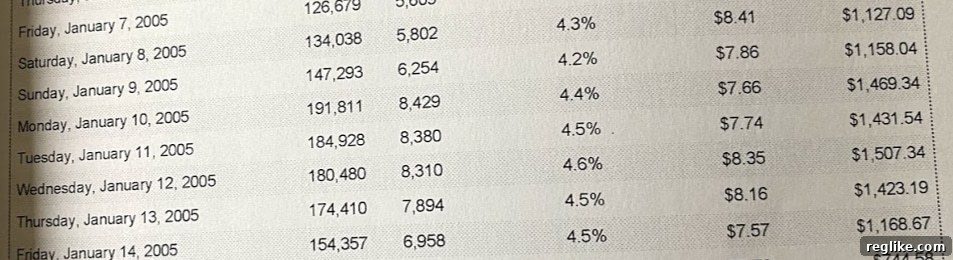
For a period, affectionately known as the “AdSense gravy train,” the earnings potential was extraordinary. High click-through rates (CTRs) and relatively generous cost-per-click (CPC) rates meant that even moderately trafficked websites could generate substantial income. It was an exciting time, a true gold rush for online content creators, where passion projects could quickly become financially viable businesses. This printout from early 2005 captures a snapshot from near the peak of that lucrative era, a reminder of what felt like effortless revenue generation. It symbolized a dream come true for many independent webmasters, offering financial independence and the ability to pursue online ventures full-time.
However, as the saying goes, all good things must come to an end, and unfortunately, January 2005 marked just about the culmination of that “gravy train” period. The internet was rapidly evolving, and with the increased popularity of AdSense came increased competition, saturation, and inevitably, a decline in average earnings. Google began refining its algorithms, implementing stricter policies, and advertisers became savvier, leading to a general decrease in CPCs and a more competitive landscape for ad placement. The initial ease of earning gave way to a need for more sophisticated SEO strategies, higher quality content, and more diverse monetization approaches. The heady days of seemingly passive income slowly transitioned into a more challenging, albeit still viable, environment for web publishers.
Reflecting on a Digital Past and the Internet’s Evolution
Looking back at these documents, it’s clear they are more than just old papers; they are tangible anchors to a rapidly changing digital history. They tell a story of innovation, adaptation, and the relentless march of technological progress. From the monopolistic power of Network Solutions and the laborious process of faxing domain transfers to the revolutionary impact and subsequent evolution of Google AdSense, these artifacts provide a fascinating glimpse into the nascent stages of the internet as a commercial and entrepreneurial frontier.
The journey from paper receipts and faxed IDs to instant digital transactions and sophisticated programmatic advertising is a testament to the incredible pace of change in the technology sector. These memories serve as a powerful reminder of how far we’ve come, the challenges overcome, and the foundational steps that paved the way for the hyper-connected, digitally-driven world we inhabit today. They evoke a profound sense of nostalgia for a simpler, yet incredibly exciting, era of online exploration and opportunity, underscoring the ever-present human drive to innovate and build in the digital realm.