
Decoding Google Ads: When New TLDs and Contextual Marketing Collide
In the dynamic world of digital marketing, where precision and relevance are paramount, an intriguing observation recently surfaced regarding a Google Ad. This particular ad, which seemingly targeted individuals interested in the burgeoning landscape of new Top-Level Domains (TLDs), led to a rather unexpected destination: an end-user website for marina management software. This peculiar case prompts a deeper dive into the intricacies of contextual advertising, the effective promotion of new TLDs, and the critical need for alignment between ad copy, keyword targeting, and user intent.
The incident began with a seemingly straightforward contextual Google Ad that appeared in search results. The ad text itself, as recalled by the observer, was crafted in a manner that strongly suggested it was promoting new TLDs – perhaps a registrar or an informational site dedicated to these modern domain extensions. Such an ad would naturally attract users curious about the expanded options beyond traditional .com, .org, or .net domains. The presence of a domain like marina.equipment within the context of the ad immediately signaled its relevance to new TLDs, as .equipment is one of the many innovative generic Top-Level Domains (gTLDs) introduced in recent years.
The Rise and Relevance of New Top-Level Domains (TLDs)
Before dissecting the specific ad, it’s essential to understand the significance of new TLDs. For decades, the internet’s address book was limited to a handful of popular extensions. However, the Internet Corporation for Assigned Names and Numbers (ICANN) initiated a program to expand the number of generic Top-Level Domains (gTLDs), leading to the introduction of hundreds of new options like .tech, .shop, .online, .blog, and, pertinent to our discussion, .equipment. These new TLDs offer businesses and individuals unprecedented opportunities for branding, specialization, and creating more memorable and descriptive web addresses.
For instance, a business selling specialized industrial machinery could opt for a .equipment domain to clearly convey its niche from the URL itself. Similarly, a coffee shop might choose .cafe, or a technology startup might leverage .tech. The promise of new TLDs lies in their ability to offer greater choice, enhance brand identity, and improve discoverability in an increasingly crowded online space. They allow for more specific and creative domain names that can directly communicate the nature of a website or business, moving beyond the often-generic nature of older TLDs. Promoting these new options effectively requires targeted marketing that highlights their unique benefits and guides users to registrars where they can secure their preferred names.
An Encounter with Mismatched Advertising
The initial interaction with the ad was driven by genuine curiosity about new TLDs. The expectation was to land on a page offering information about .equipment domains, perhaps a registrar’s page showcasing available .equipment domains, or an article discussing the benefits of using such a specialized TLD. The ad in question presented itself in a way that aligned perfectly with this user intent, promising insights into new TLD offerings. Here’s how the ad appeared:
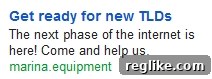
The ad text, combined with the visible `marina.equipment` domain, naturally suggested a connection to the broader topic of new TLDs. The inclusion of a domain utilizing a specific new TLD within an ad that appeared to target new TLD interest seemed a clever, albeit somewhat indirect, promotional tactic for these modern web addresses. It certainly piqued enough interest to warrant a click, anticipating a journey into the world of domain innovation and registration.
The Unexpected Destination: Marina Management Software
Upon clicking the ad, the anticipated exploration of new TLDs took an unexpected turn. Instead of a page discussing domain names or offering registration services, the user was directed to a website dedicated entirely to marina management software. This reveal immediately created a significant disconnect between the ad’s perceived message and the landing page’s actual content. The website displayed information about a software solution called “Pacsoft,” designed to assist with the operational complexities of managing a marina. Below is an image illustrating the landing page content:
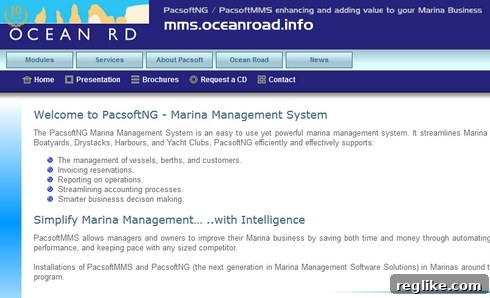
The landing page itself was perfectly relevant to the domain name marina.equipment. A software company providing tools for marina operations would indeed find great utility in such a descriptive and industry-specific domain. From a branding perspective, the use of .equipment for this particular business is an excellent example of how new TLDs can create clear, concise, and memorable web addresses. It effectively communicates the nature of the business (marina-related tools or software) directly through its domain. However, the relevance of the domain to the website content stands in stark contrast to the apparent irrelevance of the ad’s targeting to the user’s initial search intent.
Unraveling the Discrepancy: Potential Scenarios for Misaligned Ads
The central question arising from this observation is: What was the company attempting to achieve with such an ad placement, and why did it appear to a user searching for new TLDs? Several scenarios could explain this intriguing discrepancy, shedding light on the complexities and potential pitfalls of digital advertising:
- Misguided Keyword Targeting: This is arguably the most probable explanation. The company behind the marina management software, while effectively using its .equipment domain, might have adopted an overly broad or poorly researched keyword strategy for its Google Ads campaign. They may have targeted keywords like “equipment,” “new TLDs,” or even “domain names” in a bid to capture a wider audience. Without precise negative keywords to filter out irrelevant searches, their ad could inadvertently appear for queries far removed from their actual product offering. Users searching for “new TLDs” are looking to register or learn about domains, not to purchase marina software.
- Automated Ad Generation or Optimization Errors: Google Ads offers sophisticated automated tools, including smart bidding strategies and dynamic ad generation. While designed to optimize campaigns, these tools rely heavily on the initial setup and continuous monitoring. If the ad platform identified “equipment” within the company’s domain or website content, it might have algorithmically associated it with broader “equipment” related search terms, or even “new TLD” related terms if it perceived a pattern of users looking for examples of new domains. Without rigorous human oversight, such automation can lead to unexpected and irrelevant ad placements.
- Branding and Awareness (Less Likely): A less plausible, though not impossible, scenario is that the company intended to subtly promote the existence and effective use of the .equipment TLD through their own site, hoping to gain brand recognition in a broader tech-savvy audience. However, this would be an incredibly inefficient and expensive way to achieve such a goal, especially when direct response ads are typically focused on conversions. The cost of clicks from irrelevant users would quickly deplete an ad budget without yielding any tangible results related to software sales.
- Lack of Ad Copy-Landing Page Alignment: Even if the keyword targeting was somewhat broad, the ad copy itself (as perceived to be about new TLDs) failed to accurately represent the landing page’s content. Effective digital advertising demands a seamless transition from the ad’s promise to the landing page’s fulfillment. When this alignment breaks down, it leads to user frustration and wasted ad spend.
The most logical conclusion is that the company running the ad, the provider of the marina management software, was solely focused on promoting its software and had inadvertently (or through flawed strategy) cast too wide a net with its keywords, failing to differentiate between users interested in “equipment” in the context of machinery/software versus “equipment” in the context of a domain extension.
Implications for Digital Marketing and User Experience
This incident offers valuable lessons for both advertisers and users in the digital ecosystem:
For Advertisers:
- Precision in Keyword Targeting: The fundamental takeaway is the absolute necessity of precise keyword targeting. Advertisers must thoroughly research their audience’s search intent and bid on keywords that directly align with their products or services. Generic terms or broad matches without careful negative keyword implementation can lead to significant wasted ad spend.
- Ad Copy Relevance: Ad copy must accurately reflect what users will find on the landing page. Misleading or ambiguous ad text, even if unintentional, can damage brand credibility and user trust. The ad’s promise must match the landing page’s reality.
- Landing Page Optimization: Beyond relevance, landing pages must be optimized for conversions. Even if a relevant user clicks, a poorly designed or confusing landing page will fail to convert.
- Continuous Monitoring and Optimization: Digital advertising campaigns are not “set it and forget it.” Constant monitoring of performance metrics, keyword effectiveness, and user behavior is crucial for identifying and correcting discrepancies like the one observed.
- Budget Efficiency: Every irrelevant click costs money. An ad appearing for the wrong audience means valuable budget is being spent on users who have no intention of converting, significantly impacting the campaign’s return on investment (ROI).
For Users:
- Frustration and Distrust: Encounters with irrelevant ads can be frustrating, leading to a diminished user experience and potentially eroding trust in search engine results and the advertisers themselves. Users expect Google to provide highly relevant and accurate results based on their queries.
- Time Wasted: Clicking on an ad only to discover it’s completely unrelated to one’s search intent wastes valuable time and can deter users from engaging with future ads from the same brand or even similar categories.
Best Practices for Advertising New TLDs and End-User Products
To avoid such misalignments, clear distinctions in advertising strategies are vital:
- For New TLD Registrars/Promoters: If the goal is to promote new TLDs like .equipment, ads should target keywords like “register .equipment domain,” “buy .equipment TLD,” “new gTLD options,” or “benefits of .equipment domain.” The landing pages should then provide tools for domain search, registration, and comprehensive information about these TLDs.
- For End-User Businesses (like Marina.equipment): The marina management software company should focus its advertising efforts on keywords directly related to its product: “marina management software,” “boatyard software,” “yacht club management systems,” or “port operations solutions.” Their ad copy should clearly describe their software’s features and benefits, and the landing page should offer product details, demos, and pricing. While the .equipment domain is an excellent branding asset, its role in advertising should be as part of the brand identity, not as a primary keyword target for those seeking new TLDs.
Conclusion
The case of the Google Ad linking new TLD interest to marina management software serves as a compelling reminder of the complexities inherent in digital advertising. While the rapid expansion of new Top-Level Domains offers exciting opportunities for unique branding and clear online identities, their effective promotion and the successful advertising of businesses utilizing them demand meticulous attention to detail. The incident underscores the critical importance of aligning keyword targeting, ad copy, and landing page content with genuine user intent.
In the vast and competitive landscape of online advertising, every click represents a potential customer or a wasted budget. Therefore, continuous vigilance, precise strategy, and a deep understanding of the target audience are not just best practices, but absolute necessities for achieving impactful and cost-effective digital marketing results. The digital realm is powerful, but only when navigated with precision.