
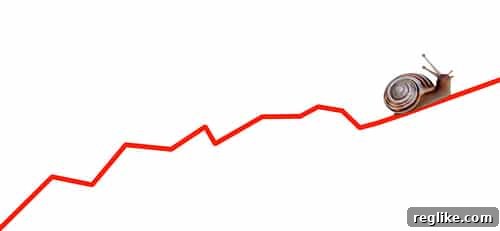
Without artificial stimulation, a new Top-Level Domain (TLD) is naturally predisposed to grow slowly and steadily. This fundamental principle is often overlooked in the rush to launch and market new domain extensions, leading to unrealistic expectations and unsustainable growth strategies. Understanding this inherent characteristic is crucial for TLD operators, registrars, and anyone invested in the future of the internet’s naming structure.
The wisdom of this approach was recently highlighted in a discussion with Jay Daley, the interim CEO of Public Interest Registry (.Org). In a recent podcast interview, Daley offered valuable insights into the long-term trajectory of domain growth, particularly concerning new generic Top-Level Domains (gTLDs).
The Historical Perspective: Learning from .Org’s Journey
During our conversation, Daley specifically addressed the Public Interest Registry’s ventures into new Top-Level Domain names. His perspective was grounded in historical precedence, emphasizing the organic, measured pace of domain adoption:
“We need to recognize that a new gTLD, when it is operated in a good way, will have slow growth, and it will take many years to get to a large size. That is pretty straightforward for when you examine the history of, say, .org or any ccTLD or any of the others.”
This statement encapsulates a critical lesson for the entire domain industry. He further elaborated that .org itself experienced a period of slow, deliberate growth before it gained significant traction and became one of the most recognized and trusted domain extensions globally. Its eventual success, of course, was greatly amplified by the exponential growth and widespread adoption of the World Wide Web itself, providing a foundational platform for digital communities and organizations to flourish.
The journey of .org serves as a powerful reminder that genuine adoption and utility are built over time, not overnight. Unlike some commercial ventures, the value of a domain extension often lies in its widespread acceptance, perceived trustworthiness, and the active communities it hosts. This long-term vision contrasts sharply with some of the immediate, aggressive marketing tactics seen in the new gTLD space.
Challenging Unrealistic Expectations in the New gTLD Era
Daley’s remarks sparked a deeper reflection on the contemporary market for new Top-Level Domain names, which began their widespread release in 2014. Many applicants for these new gTLDs harbored ambitious expectations for rapid initial demand and massive registration numbers. This optimism, while understandable, often overlooked the nuanced dynamics of domain adoption and the historical growth patterns of successful TLDs.
Even the CEO of Public Interest Registry at the time, for instance, set a goal of one million .NGO domain registrations. While wisely refraining from attaching a specific timeframe to this target, such an aspirational figure for a highly specialized extension now appears exceedingly challenging, if not entirely unlikely, to be met through purely organic means. These kinds of lofty projections illustrate a common pitfall: assuming that the sheer novelty or niche appeal of a new TLD will automatically translate into immediate, widespread adoption.
The reality is that the domain market, despite its vastness, operates with specific logical upper bounds, especially in the short to medium term. For example, if an analysis of existing .com registrations reveals fewer than 15,000 domain names containing a specific keyword like “rugby” or “cricket,” it would be unrealistic to expect a new, dedicated Top-Level Domain such as .rugby or .cricket to suddenly attract more than 15,000 registrations organically. The market size for a highly specific niche remains constrained by the actual number of individuals, organizations, or businesses actively engaged in that particular subject.
The Influence of Artificial Stimulation: Boosting Numbers vs. Building Value
When TLDs defy these natural market expectations and show significantly higher registration numbers, there is almost always an underlying, often artificial, reason. Consider the case of .cricket, which has accumulated approximately 30,000 registrations. This figure, while seemingly impressive for a niche TLD, tells a more complex story upon closer inspection. A substantial majority of these registrations were facilitated through specific registrars like Namecheap or Alpnames, and were almost certainly offered at extremely low, often promotional, prices. These domains were typically not registered with the immediate intent of creating active websites dedicated to cricket, but rather as part of speculative ventures, bulk acquisitions, or opportunistic grabs during heavily discounted periods.
Similarly, while the overall number of websites dedicated to rugby and cricket may gradually increase over time due to the natural growth of interest in these sports, this expansion is characteristically a slow trickle, not a sudden flood. Sustainable growth is predicated on genuine user demand and the creation of valuable online content, not merely on the volume of registered domain names.
Indeed, a close examination of virtually all new TLDs that have surpassed the one-million registration mark reveals a common thread: they have, to varying degrees, “purchased” these registrations. This artificial stimulation is achieved through aggressive discounting, promotional giveaways, bundling with other services, and various other incentives designed to drive up raw registration numbers rather than necessarily fostering active usage. While these strategies can certainly create buzz and establish a presence, they don’t inherently guarantee the long-term viability or intrinsic value of the domain extension.
It’s important to acknowledge that some TLD operators employing these tactics have also implemented other intelligent marketing strategies. .Club, for instance, is renowned for its vigorous marketing efforts, effectively promoting its TLD across various channels. However, even with strong marketing, the success of .Club is undeniably intertwined with its strategic use of heavy discounting. An interview with .Club CEO Colin Campbell provides deeper insights into the intricate economics behind this model, revealing how a balance is struck between market visibility and price accessibility.
Without such extensive discounting programs, the “natural” volume of .Club registrations would undoubtedly be considerably lower. This distinction between incentivized registrations and organic adoption is crucial for a realistic assessment of a TLD’s health and potential for sustained growth. While initial numbers might look appealing, the true measure of success lies in active usage, renewal rates, and the creation of a vibrant online ecosystem.
The Expected Growth Curve for a New TLD: A Phased Approach
Based on historical patterns and current market observations, a more realistic and sustainable growth trajectory for a new TLD typically follows a distinct, multi-phase curve:
- Initial Bump from Zero: The very first phase involves a surge in registrations during the “sunrise” period (for trademark holders), the “landrush” phase (for early access), and the initial weeks or months of general availability. This early activity is driven by brand protection, speculative investments, early adopters, and those keen to secure premium names. It represents a quick jump from zero to an initial baseline.
- A Slow Trickle Upwards During the First Year: Following the initial hype, the registration pace naturally decelerates. This period is characterized by more organic growth as individuals and businesses gradually discover the TLD, understand its purpose, and decide to adopt it for their specific needs. This is often a slower, more deliberate acquisition of users who genuinely intend to build something on their new domain.
- A Drop Around the One-Year Anniversary: A crucial and often anticipated phase is the decline in registrations, or more accurately, the non-renewal of many domains, around the one-year anniversary mark. This drop is primarily due to speculative registrations lapsing, or early adopters who experimented with the TLD deciding not to continue. It’s a natural cleansing period that separates short-term interest from long-term commitment. Many domains bought at steep discounts or for speculative purposes are often abandoned at the renewal stage if they haven’t generated expected returns.
- Slow, Sustainable Growth from There: After the anniversary correction, the TLD enters its most mature growth phase. This is where true, organic adoption and utility-driven registrations become the primary drivers. Growth during this period is typically slow, consistent, and reflective of the TLD’s perceived value, brand building efforts, community engagement, and genuine market penetration. It’s a testament to the TLD’s ability to integrate into the broader digital landscape and serve its intended purpose effectively.
Any significant deviation from this expected growth trend usually warrants investigation. It might indicate either a highly successful, genuinely viral adoption driven by unique value proposition, or conversely, a market heavily influenced by artificial stimulation, such as ongoing deep discounts, bulk sales, or other non-organic strategies. Recognizing these patterns is essential for TLD operators to develop sustainable business models and for registrants to make informed decisions about their online identity. True success in the Top-Level Domain space is ultimately measured not just by the sheer volume of registrations, but by the vibrancy, utility, and long-term commitment of its user base.