
Donald Trump’s Mar-a-Lago Domain Dispute: WIPO Panel Rules Against Cybersquatting Claim
A recent decision by a World Intellectual Property Organization (WIPO) panel has garnered significant attention within the domain name community, affirming the rights of a long-standing domain registrant against a high-profile complainant. In a notable ruling, the panelist sided with Marq Quarius, who registered the domain name mar-a-lago.com in 1997, effectively rejecting a cybersquatting complaint filed by DTTM Operations LLC, an entity associated with Donald Trump and his renowned Mar-a-Lago club. This case serves as a compelling example of the rigorous criteria required to establish cybersquatting under the Uniform Domain Name Dispute Resolution Policy (UDRP) and highlights the critical importance of timely trademark protection and irrefutable evidence of bad faith.
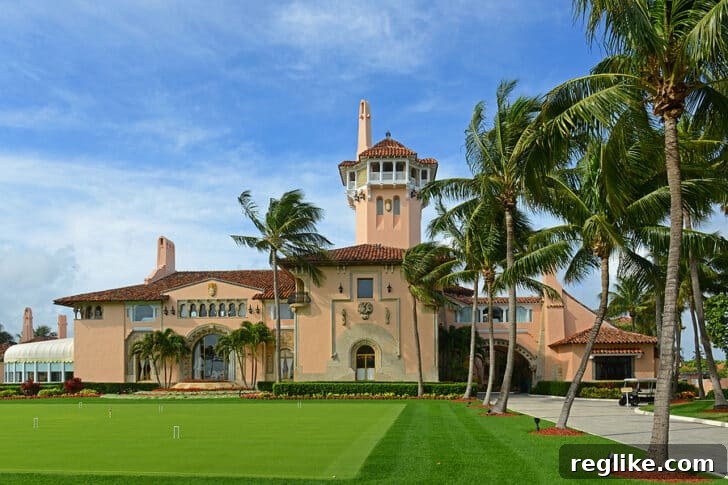
The Core of the Conflict: Mar-a-Lago.com
The dispute originated with DTTM Operations LLC, an affiliate representing Donald Trump and his iconic Mar-a-Lago club, initiating a complaint under the Uniform Domain Name Dispute Resolution (UDRP) policy through WIPO. The primary objective was to gain control of the domain name mar-a-lago.com from its current owner, Marq Quarius, representing “1 LLC.” This endeavor is not an isolated incident for Trump’s organization, which has previously shown a consistent interest in securing online representations of its properties and brands.
Understanding the Mar-a-Lago Brand and Its Digital Presence
Mar-a-Lago is far more than just a name; it is a storied estate with a rich history. Purchased by Donald Trump in 1985, this expansive property on Palm Beach Island, Florida, was meticulously transformed into the exclusive Mar-a-Lago Club in 1994. Since then, it has become synonymous with luxury, opulence, and, more recently, has served as a prominent residence and pivotal political hub for the former U.S. President. The club’s extensive media exposure and undisputed brand recognition render the associated domain name a highly coveted digital asset in today’s interconnected world.
Demystifying Cybersquatting and the UDRP Framework
At the heart of this particular disagreement lies the principle of cybersquatting – the practice of registering, trafficking in, or using a domain name with the malicious intent to capitalize on the goodwill of a trademark belonging to another party. To counter such abusive practices, the Internet Corporation for Assigned Names and Numbers (ICANN) introduced the UDRP in 1999. This policy offers a streamlined, administrative alternative to conventional litigation for resolving specific domain name disputes, particularly those involving clear instances of bad-faith registration.
For a complainant to succeed in a UDRP proceeding, they are required to prove three distinct, cumulative elements to the satisfaction of the administrative panel:
- The domain name in question must be identical or confusingly similar to a trademark or service mark in which the complainant possesses rights.
- The domain registrant (respondent) must be demonstrated to have no rights or legitimate interests in respect of the domain name.
- The domain name must have been registered and subsequently used in bad faith.
Crucially, the inability to prove even one of these three elements is sufficient grounds for the complaint to be denied, as was ultimately the decisive factor in the Mar-a-Lago domain dispute.
The Registrant’s Defense: A Story of Pets and Perseverance
Marq Quarius, the respondent in this compelling case, registered mar-a-lago.com in March 1997. Interestingly, records indicate he also secured maralago.com around the same period, although he no longer maintains ownership of the latter. The extended duration of his registration, spanning well over a quarter-century, emerged as a pivotal factor in the panel’s decision-making process. This longevity significantly differentiated Quarius’s situation from typical cybersquatting scenarios, where domain names are often registered with the explicit aim of rapid resale or exploitation.
A “Colorful” Explanation: More Than Just a String of Characters
In his defense, Quarius presented an explanation for his choice of domain name that panelist W. Scott Blackmer candidly described as “colorful.” This narrative revolved around a deeply personal story of remembrance, prompted by the passing of three cherished family pets. Panelist Blackmer meticulously summarized this poignant account:
He says that he registered the disputed domain name in March 1997, before the Complainant was using a similar domain name, after three family pets died, at his mother’s suggestion. “Mar” was a dog named in short after the Respondent’s first name, Marq. “A” represented “Alfred,” a duck that frequented the pond behind their home, named after Alfred Hitchcock. “Lago” was a nickname for “Lag,” a slow cat the family had rescued.
While the panelist acknowledged that such an explanation might “strain credulity” within a formal court setting, he recognized the inherent limitations of the UDRP process, which does not facilitate cross-examination or extensive discovery procedures. Critically, Quarius had established a pet memorial website on the disputed domain name, providing tangible evidence that corroborated his personal story and demonstrated a genuine, albeit unconventional, use of the domain.
Why the Complaint Failed: Key Findings of the Panel
The WIPO panel’s ultimate decision to deny DTTM Operations LLC’s complaint was predicated on several critical factors, primarily stemming from the complainant’s inability to sufficiently satisfy the second and third elements of the UDRP – specifically, the respondent’s alleged lack of legitimate interest and the assertion of bad-faith registration and use.
The Trademark Timeline: A Critical Deficit in Evidence
A significant obstacle for the complainant was the timing of their trademark rights. Although the Mar-a-Lago estate and club were undeniably in existence and operational prior to Quarius’s domain registration in 1997, Trump’s legal representatives failed to furnish adequate evidence demonstrating common law trademark rights for the name that pre-dated the domain registration. Common law trademarks are established through consistent and continuous use in commerce, but proving their precise existence and scope at a specific historical juncture can be exceptionally challenging without formal registration. The pivotal point emphasized by the panel was that DTTM Operations LLC only secured a registered trademark for “Mar-a-Lago” well after Quarius had already registered the domain name in question. This crucial timeline proved detrimental to the complainant’s ability to satisfy the first UDRP element, as they could not definitively establish pre-existing trademark rights at the moment the domain was acquired.
Decades of Non-Commercial Use: A Powerful Counter-Narrative
Perhaps the most compelling evidence that thoroughly dismantled the bad faith claim was Quarius’s consistent, non-commercial utilization of the domain name for an extraordinary period exceeding 25 years. Panelist W. Scott Blackmer specifically highlighted this aspect, noting its stark contrast with the typical behavior observed in cybersquatting cases, which are almost universally driven by commercial exploitation or speculative resale:
Importantly, the Respondent has retained and used the disputed domain name for essentially noncommercial purposes for more than 25 years, without trying to sell it to the Complainant or third parties. Even when the Complainant tried to purchase it, the Respondent asked for the proceeds to be given to a charity. These facts are not consistent with typical cybersquatting behavior and lend credence to the Respondent’s account.
This prolonged period of non-commercial engagement, combined with the undisputed fact that Quarius had never attempted to profit from the domain’s sale – even proposing that any potential purchase proceeds be directed to a pet charity – definitively undermined the complainant’s allegations of bad-faith registration and use. Cybersquatters habitually register domains with speculative intent, hoping to resell them at an inflated price to the rightful trademark holder or another interested party. Quarius’s actions, however, clearly did not align with this predatory intent, instead demonstrating a genuine, albeit deeply personal, interest in the domain that resonated with the panel.
A History of Previous Encounters and Unfulfilled Agreements
This WIPO complaint was not the first instance of Donald Trump’s organization attempting to secure the mar-a-lago.com domain. The documented history reveals a persistent effort spanning several decades. Quarius explicitly stated that he received cease-and-desist letters concerning the domain as early as 1998, a mere year after his initial registration. Another such letter followed in 2020, signaling renewed and vigorous interest from the Trump organization. According to Quarius, upon receiving the second letter, he expressed a willingness to transfer the domain, contingent upon the Trump organization donating the registration costs to a pet charity – a proposition entirely consistent with his original, sentimental explanation for the domain’s purpose. However, Quarius asserts that the Trump organization ultimately failed to honor this proposed arrangement, which subsequently led to the formal UDRP complaint.
It is also noteworthy that DTTM Operations LLC has initiated a separate UDRP case targeting the domain name maralago.com. While Quarius previously owned this domain, he no longer retains possession of it. The outcome of that particular case remains pending, suggesting a broader, concerted strategy by Trump’s organization to secure various online permutations and digital representations of the highly recognized Mar-a-Lago brand.
Broader Implications for Domain Name Dispute Resolution
This significant ruling establishes an important precedent and delivers a clear message to both trademark holders and domain registrants alike. For trademark holders, it unequivocally emphasizes the critical necessity for robust and timely trademark protection, whether through formal governmental registration or meticulous documentation of common law rights, particularly when seeking to challenge older domain registrations. The case definitively illustrates that brand fame alone, without demonstrable pre-existing trademark rights at the precise moment of domain registration, is insufficient to prevail in a UDRP dispute.
For domain registrants, the decision powerfully reinforces that a genuine, even if highly personal or unconventional, interest in a domain, when coupled with consistent non-commercial use over an extended period, can effectively constitute a legitimate interest and robustly counter allegations of bad faith. It also sheds light on the inherent limitations of the UDRP process itself, which, as Panelist Blackmer rightly observed, does not permit cross-examination or extensive discovery, thereby compelling panelists to render judgments based solely on the submitted evidence and the perceived credibility of the parties’ explanations within that restricted framework.
Conclusion: A Resounding Victory for Long-Term Registrants
In conclusion, the WIPO panel’s decisive ruling in the mar-a-lago.com dispute represents a significant victory for Marq Quarius and serves as a clear affirmation of the UDRP’s fundamental intent to protect legitimate domain registrants. It powerfully reaffirms that even when contending with influential entities and globally recognized brands, a respondent with a long history of non-commercial domain use and a plausible, albeit unconventional, explanation for their registration – especially when combined with a complainant’s failure to prove pre-existing trademark rights and demonstrable bad faith – can successfully defend their digital property. This case will undoubtedly be referenced in countless future UDRP proceedings, standing as a compelling example of the delicate balance and thorough scrutiny required in resolving complex domain name disputes.