
Navigating the New Frontier: The Complexities of Trademarking Top-Level Domains and “Proof of Use”
The digital landscape is in constant evolution, and with it, the highly coveted realm of domain names. The introduction of new generic Top-Level Domains (gTLDs) has sparked a fresh wave of innovation, opportunity, and, inevitably, strategic maneuvers by businesses aiming to secure their slice of the internet. This era has seen a rush to claim new TLDs, with many companies attempting to “frontrun” the official process by filing trademark applications for potential domains like “.whatever.” However, this pursuit often leads to contentious issues, particularly concerning what truly constitutes legitimate “proof of use” in commerce – a critical requirement for securing a trademark.
The process of trademarking is a rigorous one, designed to protect brands and prevent consumer confusion. For an applicant to register a trademark based on actual use, they must demonstrate that the mark is genuinely being used in commerce in connection with the specified goods or services. Many of these trademark applications initially commence as “intent to use” (commonly known as a 1B application), signaling a future plan to deploy the mark. Yet, a significant number eventually convert to “in use in commerce” (a 1A application), with applicants claiming to have initiated commercial activities. The “proof” provided for these claims, especially when it pertains to new TLDs, has raised numerous eyebrows within the intellectual property community and among domain name registrars.
The Double-Edged Sword of Domain Reseller Programs
A recurring pattern in these “proof of use” submissions involves screenshots from domain reseller accounts. One prominent example is Wild West Domains, which operates as GoDaddy’s extensive reseller program. These programs are designed to empower individuals and businesses to launch their own domain sales websites with minimal investment and technical expertise. For as little as $8.99 a month, an entrepreneur can establish a functional domain sales portal, complete with white-label branding, leveraging the robust infrastructure of a larger registrar like GoDaddy. While these programs are undeniably beneficial for fostering entrepreneurship in the domain industry, they have inadvertently become a tool for companies attempting to furnish questionable proof for their TLD-related trademark applications.
The core issue lies in the interpretation of “use in commerce” when the subject is a hypothetical or aspiring Top-Level Domain. When a company uses a reseller account, it is typically offering existing TLDs (like .com, .net, .org) for registration to end-users. It is not, in itself, operating or managing a new TLD. Therefore, merely setting up a website through a reseller program that happens to mention or feature a specific term, like “.secure” or “.cpm,” does not inherently equate to using that term *as a TLD* in commerce. It constitutes offering *domain registration services* for *other* TLDs, often merely using the desired TLD name as part of the reseller’s brand or website name, not as the TLD itself.
Case in Point: Scoop Interactive’s .cpm Trademark Application
A recent and illuminating example of this trend involves Scoop Interactive, an ad network, and its application to trademark “.cpm.” The term “CPM” is a widely recognized acronym in the advertising industry, standing for “Cost Per Mille” or “Cost Per Thousand,” referring to the cost an advertiser pays for one thousand views or impressions of an advertisement. Given its ubiquity and significance, a .cpm TLD would undoubtedly be highly desirable for businesses within the digital advertising ecosystem, offering a highly relevant and memorable domain space.
Scoop Interactive filed its trademark application as a 1A application, asserting that it was already actively using the term in commerce. The “proof” submitted by Scoop Interactive, as seen in similar past cases, was a screenshot indicative of its activity. This visual evidence, while perhaps demonstrating some form of online presence or business operation, is problematic because it frequently falls short of demonstrating the actual commercial use of “.cpm” *as a Top-Level Domain*. Instead, such evidence often depicts a reseller storefront or a website that merely *mentions* the term “.cpm” in a non-TLD context, or as part of a longer domain name used to sell *other* domain services. The image provided, illustrating the proof, often bears a striking resemblance to specimens previously furnished by entities like Asif, LLC for “.secure” and “.bank,” which have been frequently cited as examples of attempts to mislead USPTO examiners.
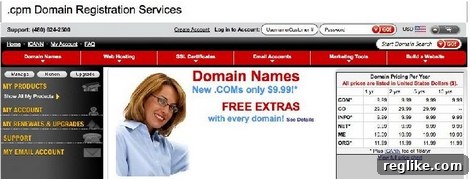
This method of presenting proof is contentious because it creates an illusion of “use” where genuine TLD operation has not yet begun. To truly use a TLD in commerce, an entity would typically need to have it delegated by ICANN, operate its registry, and allow others to register second-level domains under it. Simply selling domain registration services for other, existing TLDs through a reseller platform, even if the reseller platform carries the name of the desired TLD, does not equate to operating or commercially using *that specific TLD* itself. This distinction is critical for the integrity of the trademark system and the fair allocation of new gTLDs.
The Challenge for Trademark Examiners and the Integrity of the System
The practice of submitting reseller account screenshots as proof of use for nascent TLDs presents a significant challenge for examiners at the United States Patent and Trademark Office (USPTO) and similar bodies worldwide. These examiners are tasked with the arduous responsibility of scrutinizing myriad applications, discerning genuine commercial activity from speculative or manufactured evidence. The sheer volume of applications and the nuanced technicalities of the domain name system make this task increasingly complex.
If such evidence were routinely accepted, it could inadvertently create an unfair advantage for entities capable of rapidly deploying rudimentary reseller sites. This could undermine the merit-based system designed to evaluate genuine brand use and intellectual property. The integrity of the trademark system relies on clear, verifiable proof of commercial activity, and loose interpretations for TLDs could set a dangerous precedent. It could also lead to a “trademark squatting” scenario, where companies secure trademarks for desirable TLDs not through genuine intent to operate them as registries, but to leverage them for potential future sale or control over a digital namespace.
Moreover, the broader impact extends to fair competition and the spirit of the new gTLD program, which was intended to foster diversity, innovation, and consumer choice. If entities can secure a form of pre-emptive claim on TLDs through what some might deem as superficial proof of use, it could stifle legitimate players who are committed to the substantial investment and operational requirements of running a new TLD registry.
Ensuring Clarity and Fairness in the Digital Domain
To safeguard the integrity of both the trademark system and the evolving landscape of Top-Level Domains, there is a pressing need for heightened scrutiny and clearer guidelines regarding “proof of use” for TLD-related applications. Regulators and intellectual property authorities must ensure that the evidence submitted unequivocally demonstrates genuine commercial activity pertaining to the *specific TLD itself*, rather than merely tangential services or general domain sales. This might involve requiring applicants to demonstrate progress in ICANN’s delegation process, or to provide evidence of actual second-level domain registrations under the proposed TLD, once it is operational.
The appeal of new TLDs is undeniable, offering unique branding opportunities and specialized digital identities. However, the path to securing and operating these digital assets must be transparent, fair, and rigorously evaluated. The current environment, where companies attempt to shortcut the process with ambiguous “proof of use” via reseller accounts, poses a significant risk to the integrity of the trademark system and the equitable distribution of new digital resources. Moving forward, stricter interpretations and comprehensive guidelines are essential to foster a competitive, innovative, and trustworthy internet ecosystem, ensuring that only those with genuine commercial use and operational intent are granted the rights to these valuable digital properties.