
Map your Valentine with Google: A Journey Through Memory and Technology
Google’s Ingenious “Map Your Valentine”: Redefining Digital Romance
In an era where digital communication often feels impersonal, Google once unveiled a charming and innovative service designed to bring a heartfelt touch back to online greetings. Dubbed “Map Your Valentine,” this initiative ingeniously blended the power of Google Maps with the sentiment of Valentine’s Day, offering users a unique way to celebrate love and shared memories. It wasn’t just about sending an eCard; it was about reliving a moment, anchored to a special place that held significance for both the sender and the recipient.
The Genesis of a Brilliant Idea: Google’s Domain Strategy
The anticipation around “Map Your Valentine” began building when it was revealed that Google had registered a series of intriguing domain names. Initially, the tech giant secured GoogleValentine.com and .org, alongside MapYourValentine.com and .org. This strategic move hinted at an upcoming, holiday-themed project that would undoubtedly leverage Google’s vast technological ecosystem. Industry watchers and users alike speculated about what form this Valentine’s Day offering would take. Would it be a simple greeting card service? A themed search page? The eventual launch of MapYourValentine.com quickly answered those questions, revealing a concept far more engaging and personal than many had anticipated.
How “Map Your Valentine” Captured Hearts and Locations
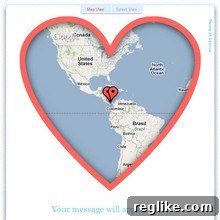
Upon its activation, MapYourValentine.com invited users with a simple, yet profound prompt: “Use Google Maps to remind your Valentine of a special place.” This wasn’t merely a decorative feature; it was the core mechanism of the service. Senders could pinpoint a specific location on a Google Map – perhaps the spot of their first date, the university dorm room where their love story began, a memorable vacation destination, or even a cozy cafe they frequented. This chosen location was then seamlessly integrated into a digital Valentine’s eCard, presented elegantly within a heart-shaped overlay on the map itself.
The beauty of this integration lay in its simplicity and profound emotional impact. Instead of generic images or stock greetings, “Map Your Valentine” provided a canvas for truly personalized messages. Users could craft heartfelt notes that directly referenced the chosen location, prompting their Valentine to recall a shared memory. Imagine sending a card with the precise coordinates of a college dorm, accompanied by a cheeky message like, “Remember when your roommate caught us?…” Or, for a more overtly romantic gesture, marking the exact park bench where a proposal took place, along with a message reliving that magical moment. The possibilities for personalization were endless, transforming a simple eCard into a powerful mnemonic device for love and nostalgia.
A Step-by-Step Guide to Creating Digital Memories
The process of creating a “Map Your Valentine” card was intuitively designed for ease of use, reflecting Google’s user-centric approach:
- Visit MapYourValentine.com: Users would navigate to the dedicated microsite.
- Search for a Special Place: Leveraging Google Maps’ robust search capabilities, users could easily find and select any location on Earth.
- Pinpoint the Exact Spot: A draggable marker allowed for precise placement, ensuring the memory was tied to the exact coordinates.
- Craft Your Message: A dedicated text box allowed for personalized messages, encouraging users to reminisce about the selected location.
- Preview and Send: Before finalizing, users could preview their eCard, seeing the map, the heart overlay, and their message. Once satisfied, it could be sent directly to their Valentine via email.
This streamlined process ensured that anyone, regardless of technical proficiency, could create a meaningful and unique Valentine’s greeting.
Beyond the Digital Card: Fostering Emotional Connections
What made “Map Your Valentine” truly stand out was its ability to transcend the typical digital greeting. It wasn’t just about conveying a message; it was about evoking a feeling, triggering a memory, and strengthening an emotional bond. In a world saturated with ephemeral digital content, this service offered something tangible in its sentimentality – a digital artifact of a shared experience, made permanent by its geographical anchor.
The Power of Shared Geography and Nostalgia
Human beings are intrinsically linked to places. Our memories are often tied to locations where significant events occurred. “Map Your Valentine” tapped into this fundamental aspect of human experience. By highlighting a specific spot on a map, Google created a powerful tool for nostalgia. It allowed couples, friends, and family members to revisit cherished moments, bringing smiles, laughter, and sometimes even a few sentimental tears. This unique blend of geography and emotion transformed the act of sending a Valentine into an intimate journey down memory lane.
Broadening the Scope of Digital Greetings
While branded for Valentine’s Day, the underlying concept of “Map Your Valentine” had broader implications for digital greetings. It demonstrated how location-based services could be integrated into personal communication to create deeply personalized and meaningful interactions. This wasn’t just for romantic partners; it could be used to remind a friend of a hilarious adventure, thank a family member for a memorable gathering at a specific home, or even celebrate a professional milestone at a particular office location. The potential applications for fostering connection through shared geographical context were immense.
Google’s Legacy of Innovation in Festive Campaigns
“Map Your Valentine” was a prime example of Google’s consistent efforts to engage users through creative, holiday-themed initiatives. From its iconic Google Doodles that celebrate historical figures and events to various seasonal campaigns, Google has a long history of integrating cultural moments with its technological prowess. These campaigns serve multiple purposes: they enhance Google’s brand image as an innovative and culturally aware company, they drive user engagement with its core products (like Google Maps), and they often introduce novel ways of interacting with technology.
By leveraging Google Maps – a product primarily known for navigation and local search – for a romantic endeavor, Google showcased the versatility and depth of its platforms. It demonstrated that even utilitarian tools could be imbued with personal significance and used for emotional expression. This cross-pollination of functionality is a hallmark of Google’s approach to product development and marketing, consistently finding new and unexpected ways for its services to enrich daily life.
Crafting the Perfect Message for Your Mapped Valentine
The success of a “Map Your Valentine” card hinged as much on the accompanying message as on the chosen location. Here are some tips for crafting a truly impactful and memorable note:
- Be Specific: Instead of a generic “Remember this place?”, try “Remember the first time we shared ice cream at this exact spot?”
- Evoke Emotion: Use words that convey the feelings associated with that memory – joy, love, excitement, comfort.
- Keep it Concise: While heartfelt, a succinct message can be more powerful. Let the map do some of the talking.
- Humor is Welcome: For lighter relationships or inside jokes, a funny anecdote tied to the location can be incredibly endearing.
- Look to the Future: While reminiscing, you can also hint at future memories to be made at that location, or new ones to explore.
The beauty was in its flexibility – allowing for messages that ranged from deeply romantic and nostalgic to playful and endearing, all centered around a shared geographical anchor.
The Enduring Appeal of Digital-Physical Blends
Even though “Map Your Valentine” may have been a seasonal offering, its underlying principle — the fusion of digital tools with tangible, real-world memories — resonates deeply. In an increasingly digital world, there’s a growing appreciation for experiences that bridge the gap between our online lives and our physical realities. Services like this remind us that technology, at its best, can enhance human connection, not diminish it. It demonstrated how a simple map could become a portal to cherished moments, making the digital expression of love more profound and personal.
In essence, “Map Your Valentine” wasn’t just a fleeting Valentine’s Day gimmick. It was a clever proof-of-concept for how location data, often seen as impersonal, could be transformed into a deeply personal and emotionally resonant medium for communication. Google, with its characteristic innovation, showed us that the shortest distance between two hearts might just be a carefully chosen point on a map.