
The Illusion of Scarcity: From Baseball Cards to NBA Top Shot and the Rise of NFTs
What do you call too many rare things? Something that’s not rare at all. This profound paradox lies at the very core of the collectibles market, a principle that has consistently played out across various generations and formats. From the cherished physical baseball cards of yesteryear to today’s burgeoning digital frontiers such as NBA Top Shot and Non-Fungible Tokens (NFTs), the concept of scarcity—both genuine and artificially created—dictates perceived value. Understanding this crucial dynamic is paramount for anyone keen on collecting, investing, or simply appreciating items that capture our collective imagination.
The Enduring Allure: My Childhood with Baseball Cards
Like countless boys who grew up in the 1980s and 90s, I found myself captivated by the vibrant world of baseball card collecting. It was a ritualistic pastime, often commencing with my brother and me pooling our modest allowance. Our destination was typically the local Magik Market convenience store, where for a mere 35 cents, we could procure a fresh pack of cards, invariably accompanied by a rock-hard, stale stick of gum. On more ambitious occasions, when our combined savings accumulated sufficiently, we would persuade our parents to take us to Sam’s Club, a veritable treasure trove where we could acquire an entire box of packs.
My enthusiasm for collecting was fueled by two primary motivations. First and foremost, it was undeniably fun. The camaraderie of trading cards with other neighborhood kids, strategizing to acquire our favorite players, and the ambitious goal of completing the daunting 792-card set provided endless hours of entertainment and social interaction. Second, there was the exhilarating prospect of financial gain. We were constantly hearing stories about how popular cards could transform a cheap pack into significant money for a young kid. Iconic examples like the 1985 Topps Mark McGwire rookie card or the highly coveted 1989 Upper Deck Ken Griffey Jr. rookie were whispered about with reverence, representing potential windfalls.
We nurtured a collective hope, inspired by tales from prior generations, that if we meticulously held onto these cards, preserving them until our own children were born, we would possess the equivalent of a legendary 1952 Topps Mickey Mantle – a card renowned for its extreme rarity and astronomical market value. This dream, however, was fundamentally built upon a misunderstanding of what constitutes true scarcity.
The “Junk Wax Era”: The Perils of Overproduction
What we failed to fully grasp at the time was the actual supply mechanism governing the baseball card market. The legendary 1952 Mickey Mantle card commanded immense value, in large part, precisely because it was genuinely rare. Only a limited number of these cards were printed to begin with. Furthermore, the prevailing attitudes of the era meant that most children who owned a ’52 Mantle didn’t treat it as a precious artifact; perhaps it was affixed to bicycle spokes, subjected to wear and tear, or even unceremoniously discarded by parents during a college clean-out. This natural attrition significantly reduced the circulating supply, solidifying its status as an exceptionally scarce and valuable collectible.
However, the baseball card companies of the 1980s and 90s operated with a vastly different philosophy. Unbeknownst to their young consumers, these companies were running their printing presses faster than ever before, churning out cards at an unprecedented volume. Simultaneously, the burgeoning collector culture meant that kids, unlike their predecessors, were increasingly aware of potential future value and meticulously preserved their collections. This confluence of massive overproduction and widespread preservation created a catastrophic imbalance. The perceived scarcity was, in fact, an illusion, leading to what is now famously termed the “Junk Wax Era.”
The vast majority of collectors from my generation, who diligently saved their collections, were met with profound disappointment a generation later. Their once-cherished cards, hoped to be future heirlooms, were largely worthless, their value decimated by sheer abundance and the absence of genuine scarcity.
Manufacturing Rarity: Strategies for Recreating Demand
Once the market was saturated with common cards, manufacturers faced a critical challenge: how to reintroduce the “thrill of the chase” – that exhilarating possibility of pulling an instant payday from a fresh pack. Their solution was to invent “manufactured scarcity,” a deliberate strategy to create artificial rarity where natural rarity no longer existed.
The Emergence of Card Grading
One of the earliest and most transformative innovations was the introduction of third-party card grading services. Companies like Professional Sports Authenticator (PSA) and Beckett Grading Services (BGS) established themselves as arbiters of quality, meticulously evaluating cards for condition, centering, corners, and surface. Only the most pristine examples, often encapsulated in tamper-proof slabs, were awarded the coveted “Gem Mint” designation. This process effectively created an artificial hierarchy of value; a common card could become highly valuable if it achieved a top grade due to its extreme scarcity in perfect condition. My first e-commerce business capitalized on this trend: in the early 2000s, I would purchase boxes of old, unopened baseball card packs on eBay and then resell the individual packs on my website. The appeal for buyers was the tantalizing prospect of unearthing a rookie card of an 80s star that, if graded Gem Mint, could command a significant premium.
While advantageous for card graders and the secondary market, this didn’t directly address the primary goal of card companies: boosting sales of brand new packs. A more direct form of manufactured scarcity was needed within the packs themselves.
Insert Cards and the Lottery Mentality
To directly inject rarity into their new products, manufacturers introduced “insert cards.” These special cards were distinguished by various unique features: some featured authentic player autographs, others contained genuine pieces of game-used material (such as a jersey swatch or a fragment of a bat), and many were simply numbered to a specific, limited print run (e.g., #1/1000). The unifying factor among all these inserts was their explicitly limited production, creating an artificial constraint on supply and thus, perceived value.
Card manufacturers began transparently printing explicit odds on their packaging, detailing the probability of pulling these rare inserts. Opening a pack of cards transcended mere collecting; it transformed into an experience akin to buying a lottery ticket, where the potential reward for hitting a rare card far outweighed the modest cost of the pack. This strategy successfully reignited consumer excitement and significantly drove sales, revitalizing a flagging market.
The Inevitable Dilution of “Rare” Items
However, this strategy, too, eventually became a victim of its own success. What happens when every manufacturer begins producing a multitude of “rare” numbered cards, autographs, and relic pieces across numerous different sets, sub-sets, and parallel versions each year? The very definition of rarity becomes diluted. By generating an abundance of “limited edition” items, the perceived value of each individual piece inevitably diminishes.
The predictable consequence was a sharp and widespread decline in prices. Many game-used relic cards, which once commanded high prices, saw their market value plummet by 90% or even more as the market became utterly flooded. The sheer volume and complexity of different sets and versions released annually became unsustainable and confusing for collectors. This chaotic market environment ultimately prompted Major League Baseball to sign an exclusive licensing deal with Topps in 2009, drastically reducing the number of different card options available, at least for a significant period. The fundamental lesson was clear: while deliberate scarcity can initially create buzz and value, if it’s not truly limited in a broader, systemic context, it inevitably becomes a mirage, easily dispelled by increasing manufacturing output.
NBA Top Shot and the Digital Renaissance of Collectibles
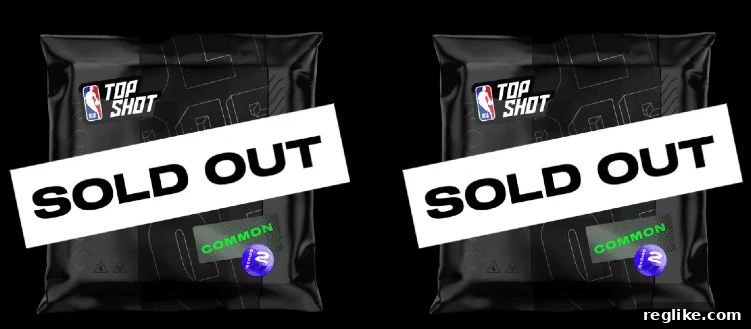
Fast forward to 2021, and the perennial dance between scarcity and abundance found a compelling new stage in the digital realm. My recent experience with NBA Top Shot, a platform for officially licensed NBA digital collectibles, served as a vivid contemporary example of these market dynamics. Just last weekend, I purchased a pack of three virtual basketball cards, or “moments,” for $14. Each of these moments is a unique digital asset, numbered, and some are inherently rarer than others based on their edition size. Remarkably, I was able to turn around and sell one of those moments for $189 on the very same day, illustrating the explosive short-term potential of this nascent digital market.
The platform’s strategy for creating demand closely mirrors the manufactured scarcity tactics employed by physical card companies. On a recent Sunday, Top Shot launched a new offering of packs for $199, intentionally limiting the drop to approximately 35,000 packs. This deliberate limitation ensured that not everyone who desired a pack could acquire one, thereby creating immediate demand and a premium on the secondary market. The marketing pitch for these drops heavily leaned into the concept of rarity, often highlighting specific edition sizes:
This rare drop comes packing an extra surprise, as collectors will additionally find one Seeing Stars Moment within each pack as well. Yes, every single Rising Stars pack will come with a rare Rising Stars Moment limited to 2,021 and a common Seeing Stars Moment limited to 10,000.
A quick back-of-the-envelope calculation reveals that these new packs generated approximately $7 million in revenue within a single hour. This impressive figure, however, underscores a critical and often overlooked point: while individual “moments” might be limited to editions of 2,021 or 10,000, the sheer volume of *different* such “rare” moments and series that Dapper Labs (the creator of Top Shot) can mint means that true, overarching scarcity across the entire platform is perpetually at risk of dilution. A specific card numbered out of 2,021 might be rare in isolation, but when there are thousands of other “rare” cards across dozens of different series and tiers, the overall market for “rare” digital items becomes highly abundant. Once again, manufactured scarcity, however cleverly implemented, is always threatened by the potential for further manufacturing – in this case, the continuous minting of more digital “moments” and series.
NFTs: The Promise and Peril of Digital Ownership
A significant portion of the excitement and speculative fervor surrounding platforms like Top Shot stems from their nature as Non-Fungible Tokens (NFTs). For many, this represents a unique opportunity to engage with the burgeoning world of cryptocurrency and blockchain technology, akin to getting in on the ground floor of something potentially revolutionary like Bitcoin. NFTs offer a compelling proposition: verifiable digital ownership, authenticated and recorded on a decentralized blockchain, promising an immutable record of provenance and authenticity. Early adopters and shrewd investors in the broader NFT space, including those in Top Shot, have undoubtedly realized substantial gains, with many witnessing their account values skyrocket. I personally know at least one individual in the domaining community who has generated enough profit from Top Shot to cover the college tuition for one of his children. Stories of collections valued in the millions have widely circulated, fueling further interest and often irrational speculation.
However, despite the undeniable technological advancements and the impressive short-term profits for some, a sense of historical precedent looms large over this nascent market. The trajectory of many speculative markets throughout history, from tulip bulbs in the 17th century to Beanie Babies in the 1990s, often follows a strikingly similar pattern: initial hype, rapid price escalation driven by speculation and the “greater fool theory,” followed by an inevitable and often devastating market correction. My strong suspicion is that the current boom in many digital collectibles will ultimately mirror the fate of past speculative bubbles, akin to the infamous Beanie Babies craze.
This perspective is not to suggest that opportunities for short-term profit don’t exist in the current landscape. Indeed, I fully intend to continue participating in NBA Top Shot drops when feasible, as long as I can confidently acquire packs and subsequently sell individual moments for a profit greater than my initial outlay. This approach, however, is pure speculation, driven by market inefficiencies and fleeting hype, rather than a long-term investment in truly scarce or intrinsically valuable assets.
Understanding True Scarcity and Enduring Value: The Case for .COM Domains
For my personal investment philosophy and as my enduring favorite collectible, the acquisition of premium .COM domains continues to stand out as a beacon of true value. The fundamental principle here is one of verifiable, absolute scarcity: only one instance of any specific .COM domain name will ever be “minted” or registered. While it’s true that a second-level domain with the same name can be created in an alternative extension (e.g., example.net, example.org), it simply does not carry the same universally recognized authority, brand power, or inherent value as its .COM counterpart. The .COM extension remains, without dispute, the gold standard of the internet’s naming system, ingrained in global consciousness.
Beyond mere scarcity, a truly rare, memorable, and category-defining .COM domain possesses invaluable utility. It serves as a foundational digital asset for businesses, brands, and individuals alike, providing a unique online identity, an essential point of access, and a critical component of digital infrastructure. Its value is not solely speculative but is deeply rooted in its practical application and its role as a fundamental piece of the internet’s architecture. This intrinsic utility, combined with its absolute and verifiable scarcity, fundamentally differentiates it from many forms of manufactured scarcity, whether physical or digital. A premium .COM domain is not just a collectible; it’s a piece of digital real estate with perpetual utility.
The Enduring Thrill of Discovery
Ultimately, whether it’s the visceral, tactile experience of tearing open a physical pack of baseball cards or the digital anticipation of clicking to reveal virtual moments on a screen, the inherent joy of the collecting experience remains undiminished across generations. There’s an undeniable thrill in the chase, the hope of discovery, and the profound connection to a shared passion or historical narrative. However, in this ever-evolving landscape of collectibles, discerning true, enduring value from transient, manufactured hype remains the critical distinction that every collector and investor must learn to make for lasting success and satisfaction.