
The Alarming Spread of Misinformation by Infibeam Regarding Domain Names
The digital landscape is constantly evolving, with domain names serving as critical online real estate. In such a dynamic environment, accurate information is paramount. However, recent actions by Infibeam, the Indian e-commerce company behind the .ooo top-level domain (TLD), have sparked considerable concern. What initially appeared to be an ambitious marketing campaign has escalated into a pattern of disseminating demonstrably false and outdated information, raising serious questions about their competence and credibility.
My first encounter with Infibeam’s bold claims regarding the .ooo domain last month was met with a degree of amusement. I, like many others in the industry, initially dismissed their grand pronouncements as a mere publicity stunt. Industry veteran Kevin Murphy, for instance, aptly described the company’s ambitious sales targets, which included millions of first-year registrations, as “batshit crazy.” I mentally filed Infibeam under “PR stunt” or perhaps “delusional,” prepared to watch their ambitious projections fall short.
Unfounded Claims About .ooo Domain Adoption
My initial amusement, however, quickly turned to alarm after reading a report in The Economic Times. The article quoted Infibeam’s CEO stating, “all 34,000 global brands registered with the Trademark Clearing House from over 100 countries have purchased the dotooo domain name from Infibeam.” This assertion is not merely an exaggeration; it is unequivocally false. For the record, a comprehensive review of the .ooo zone file reveals a starkly different reality, with only 222 domain names currently registered. The chasm between Infibeam’s claim of 34,000 registrations and the actual figure of 222 is staggering and difficult to reconcile.
While one might charitably suggest that the reporter misunderstood Infibeam’s CEO – such miscommunications do occur – a deeper dive into Infibeam’s public communications reveals a more troubling pattern. It appears that the company has assigned individuals to research domain name facts, yet these individuals consistently fail to conduct adequate fact-checking, leading to a cascade of inaccuracies.
A Litany of Errors on Social Media
A look at Infibeam’s official Twitter feed uncovers a disconcerting array of misinformation regarding significant domain name sales and industry statistics. These errors are not minor discrepancies but fundamental inaccuracies that distort the true nature of the domain market:
- Fund.com Valuation: Infibeam’s tweets presented conflicting information regarding the sale of Fund.com. First, it claimed the domain was “priced at over $9 million,” only to follow up with a statement that Fund.com sold for “£10m.” Even assuming a $10 million valuation, equating that to £10 million demonstrates a significant misunderstanding of basic currency conversions. At the time of the sale, £10 million would have been considerably more than $10 million, highlighting a crucial error in financial reporting.
- Sex.com Sale Price: Another tweet inaccurately stated, “Highest priced domain name is http://sex.com which was of 14 Million Dollars.” While Sex.com did fetch a substantial price, the widely accepted figure for its sale in 2010 was $13 million. Furthermore, Infibeam’s own Twitter feed later contradicted itself by suggesting that other domains had sold for even higher amounts, creating internal inconsistencies within their own data dissemination.
- Privatejet.com Transaction: Infibeam cited the sale of Privatejet.com for $30.2 million. While this figure was indeed reported via a press release, it is crucial context that this was largely an equity transaction, not a cash sale. The actual cash value of such a deal is often heavily discounted by industry experts, and many remain skeptical of the reported headline figure as a true measure of the domain’s standalone value. Presenting it as a straightforward cash sale is misleading.
- Icloud.com Valuation: The company also tweeted that icloud.com sold for $35 million. Based on other related tweets, it is highly probable that Infibeam intended to specify this amount in Hong Kong Currency (HKD), not US Dollars. The difference between $35 million USD and $35 million HKD is immense, representing a colossal error in reporting if the currency was indeed misinterpreted. This kind of ambiguity can cause significant confusion and misrepresent market valuations.
Spreading Outdated Industry Statistics
Beyond misreporting individual domain sales, Infibeam demonstrates a concerning inability to reference current industry statistics. The domain name market is dynamic, with growth and changes occurring continuously. Relying on outdated data provides a distorted and irrelevant picture of the current landscape. Consider these examples:
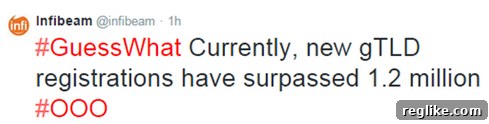
A tweet from Infibeam today presented data that was, in fact, “so last June.” In a rapidly evolving digital ecosystem, statistics that are several months old can already be significantly out of date, especially when discussing market growth or registration numbers. Businesses and potential investors rely on current data to make informed decisions, and presenting old figures as contemporary is irresponsible.
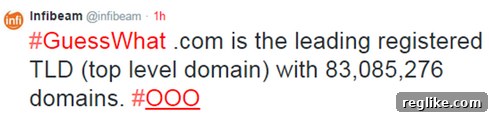
Another tweet showcased a figure for Verisign registrations that would undoubtedly surprise its shareholders with its drastic understatement. This particular inaccuracy appears to stem from Infibeam’s reliance on a 2009 article. It is critical for any entity discussing the domain industry to check the publication dates of their sources before disseminating information. The domain industry has seen tremendous growth and shifts since 2009, making data from over a decade ago completely irrelevant and misleading for current discussions. Infibeam compounded this error by also reporting 2009 numbers for other major TLDs, including .org, .info, .biz, and .us, painting an entirely inaccurate picture of their current market status and size.
The Broader Implications of Misinformation
This consistent pattern of spreading incorrect information has far-reaching consequences. Firstly, it severely undermines Infibeam’s own credibility. A company that cannot accurately report basic facts about the industry it operates in, let alone its own product, struggles to earn trust from potential customers, partners, and investors.
Secondly, it misleads the public. Inaccurate reporting on domain values can create unrealistic expectations for sellers and buyers, distorting market perceptions. Similarly, false statistics about TLD adoption can misguide businesses considering investing in new domain extensions, potentially leading them to make poor strategic decisions based on flawed data.
Finally, and perhaps most dangerously, such misinformation contributes to a general degradation of reliable information within the domain name space. The internet thrives on accurate data, and when key players actively or negligently spread falsehoods, it makes it harder for everyone to navigate this complex environment effectively. For a company managing a new gTLD like .ooo, which requires significant industry education and trust to succeed, this approach is not just counterproductive but genuinely harmful.
A Troubling Conclusion
My initial assessment of Infibeam has undergone a significant transformation. What began as a belief that their aspirations were merely delusional has evolved into a far more serious concern. It is now evident that Infibeam is not only clueless and incompetent in its understanding and reporting of fundamental domain name facts but, by actively disseminating incorrect information, poses a dangerous presence in the industry. For the health and integrity of the domain name ecosystem, accuracy and accountability are non-negotiable, and Infibeam’s current practices fall woefully short of these essential standards.