
Google’s new streamlined domain verification process offers a significantly faster and more user-friendly experience for webmasters, particularly those using popular registrars like eNom and Go Daddy. This innovation marks a pivotal step towards making powerful Google tools more accessible to a broader audience, regardless of their technical proficiency.
Streamlined Google Domain Verification: A Game-Changer for Webmasters
In an era where digital presence is paramount, managing and optimizing your website’s performance is crucial for success. Google, as the dominant force in search, provides an indispensable suite of tools designed to help website owners monitor, analyze, and improve their online visibility. However, accessing these powerful resources has historically been gated by a necessary but often cumbersome step: domain ownership verification. This process, essential for security and legitimate data access, frequently posed a significant hurdle for individuals without extensive technical expertise.
Recognizing this challenge, Google has recently rolled out a groundbreaking update, introducing a much speedier and more intuitive way to verify your domain ownership. This innovative approach simplifies the process dramatically, especially for customers of major domain registrars such as eNom and Go Daddy, transforming what was once a complex technical task into a few simple clicks. This article delves into the significance of this update, exploring its mechanics, benefits, and broader implications for webmasters and the digital marketing landscape.
Why Domain Verification is Absolutely Essential
Before diving into the new simplified method, it’s vital to understand *why* Google requires domain verification in the first place. This step isn’t merely a formality; it’s a critical security measure and a gateway to personalized, data-driven insights. By verifying ownership, Google ensures that only legitimate website owners or authorized representatives can access sensitive data and powerful configuration options related to a specific domain. This prevents unauthorized individuals from monitoring your site’s performance, manipulating its search presence, or gaining control over associated Google services.
The integrity of web data and the security of online properties are paramount. Domain verification acts as a digital key, unlocking access to information and tools that could otherwise be misused. For instance, imagine if competitors could monitor your site’s top-performing keywords or identify your most valuable traffic sources without your consent. Verification protects against such scenarios, ensuring that your valuable website data remains private and secure.
Key Google Services Requiring Verification:
- Google Search Console (formerly Webmaster Tools): This is perhaps the most critical tool for SEOs and webmasters. Verification grants access to invaluable data about your site’s performance in Google Search, including search queries, click-through rates, crawl errors, indexing status, sitemaps, and Core Web Vitals reports. Without verification, you cannot see how Google perceives your site, identify areas for improvement, or proactively troubleshoot issues affecting your search rankings. It’s the direct communication channel between your website and Google.
- Google Analytics: While Google Analytics primarily uses a tracking code on your site, verifying domain ownership can sometimes integrate with other Google services and provide a more robust setup, especially for advanced tracking, cross-platform data consolidation, and ensuring seamless data flow between different Google products linked to your domain. This ensures holistic insights into user behavior.
- Google Ads (formerly AdWords): For advertisers, verifying your domain can be crucial for certain ad formats, tracking conversions, and linking your ad campaigns directly to your website’s performance data. This ensures that your advertising efforts are accurately measured and optimized, preventing ad fraud and ensuring legitimate campaign management.
- Google My Business: Local businesses often need to verify their business address and domain to manage their presence on Google Maps and Search effectively. This ensures that business listings are accurate, legitimate, and controlled by the rightful owner, improving local SEO and customer trust.
- Google Workspace (formerly G Suite): Setting up custom email addresses (e.g., [email protected]) and other collaboration tools like Google Drive and Calendar requires verifying that you own the domain you wish to associate with your Workspace account. This ensures brand consistency and professional communication within your organization.
Access to these tools empowers webmasters to make informed decisions, troubleshoot issues, optimize content, and ultimately drive better online results. The lack of verification means operating in the dark, missing out on crucial data that can propel your website’s growth and help you stay competitive in the digital marketplace.
The Hurdles of Traditional Domain Verification Methods
For years, verifying domain ownership with Google involved several methods, each with its own set of technical requirements and potential pitfalls. While effective for those with a developer’s background, these methods often proved daunting and time-consuming for the average website owner or small business proprietor, creating unnecessary barriers to entry for essential web management tools.
Common Traditional Verification Methods:
- HTML File Upload: This method requires downloading a specific HTML file provided by Google and uploading it to the root directory of your website via FTP (File Transfer Protocol) or through your hosting control panel’s file manager. It demands knowledge of file transfer protocols, server directory structures, and often, specific login credentials for your hosting account, making it inaccessible to many beginners. Misplacing the file or issues with permissions could lead to failed verification.
- Meta Tag Addition: Webmasters could also verify by adding a unique meta tag (a short line of code) to the `
- DNS Record Configuration (TXT or CNAME): Perhaps the most technical and often intimidating method, this involved adding a specific TXT (Text) or CNAME (Canonical Name) record to your domain’s DNS (Domain Name System) settings. This required logging into your domain registrar or DNS provider, navigating complex DNS management interfaces, and understanding different record types. Furthermore, changes to DNS records can take hours, sometimes even days, to propagate globally across the internet, leading to frustrating delays and a test of patience for webmasters awaiting verification.
- Google Analytics or Google Tag Manager Code: If you already had Google Analytics or Google Tag Manager tracking code installed on your site, and it was associated with the correct Google account, Google could sometimes use this as an alternative verification method. However, this relied on prior setup and wasn’t always a primary or immediate option for initial verification, especially for new websites or those setting up these services for the first time.
The common thread among these methods was the necessity for varying degrees of technical skills, access to server files or intricate DNS settings, and a considerable amount of patience. For a non-technical user – which represents a significant portion of small business owners, bloggers, and aspiring entrepreneurs – these steps often translated into hours of frustration, reliance on third-party help, or even abandonment of vital Google tools altogether. This created an unnecessary barrier between website owners and the data essential for their online success.
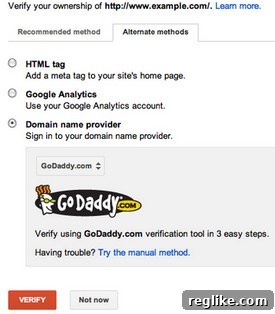
Introducing the Simplified Verification for eNom and Go Daddy Customers
Google’s latest update directly addresses these pain points by offering an elegant and straightforward solution. For customers of eNom and Go Daddy – two of the world’s largest and most widely used domain registrars – verifying domain ownership is now as simple as a few clicks, without needing to touch any code or navigate complex server settings. This feature signifies a major leap in user experience, making domain verification accessible to everyone, from seasoned web developers to first-time website owners.
How the New Process Works:
The core of this streamlined service lies in a secure, API-driven integration between Google and participating registrars. Instead of manual file uploads or DNS modifications, users can now complete a simple sign-on process directly within Google’s verification interface. This method leverages established and secure authentication protocols, making the process both easy and safe:
- Initiate Verification: From within Google Search Console or other Google tools that require verification, you will now see an option to “Sign in to your domain registrar.” This is the starting point for the new simplified method.
- Choose Your Registrar: Upon selecting this option, you will be presented with a list of supported registrars. If you’re an eNom or Go Daddy customer, you’ll find these options readily available to select. This step ensures that the verification process is tailored to your specific registrar.
- Secure Login: You will then be securely redirected to your chosen registrar’s official login page (or a secure pop-up window initiated by the registrar). Here, you enter your existing registrar login credentials, just as you would when managing your domain directly. It’s crucial to understand that Google itself does not store or see these credentials. The process adheres to strict OAuth-like security protocols, meaning your login information is exchanged directly and securely between your browser and your registrar.
- Grant Permission: After successfully logging in to your registrar’s account, you will be prompted to explicitly grant Google permission to verify your domain ownership through an automated API (Application Programming Interface) call to your registrar. This permission is typically limited to verification purposes only, ensuring Google only gets the information it needs, nothing more. You maintain control over what access is granted.
- Instant Verification: Upon granting permission, the verification is often instantaneous. Google receives confirmation directly from your registrar that you are the legitimate owner of the domain, and your domain is immediately verified within Google’s systems. This rapid process eliminates the frustrating waiting periods associated with DNS propagation or manual file checks.
This method entirely bypasses the need for technical skills, making it incredibly appealing to small business owners, bloggers, and anyone managing a website without a dedicated IT team. The speed and simplicity mean less time spent on setup and troubleshooting, and more time focused on actual website optimization, content creation, and growing their online presence.
Expanding Reach: BlueHost and Beyond
Google has already announced plans to extend this highly beneficial feature to BlueHost customers in the near future, indicating a clear trajectory towards broader integration with other major domain registrars and hosting providers. BlueHost, another prominent player in the hosting and domain registration space, serves millions of websites, and its inclusion will significantly broaden the impact of this simplified verification method.
This expansion is excellent news for the wider webmaster community. It suggests that this user-friendly verification method will become the new industry standard, significantly easing the onboarding process for countless websites across various platforms. As more registrars adopt this secure and efficient approach, the traditional barriers to accessing Google’s powerful webmaster tools will diminish, fostering a more inclusive and accessible digital environment.
The move by Google to partner with registrars reflects a growing trend in the tech industry to create more integrated and seamless user experiences. By removing technical barriers, Google encourages more website owners to engage with its ecosystem of tools, ultimately leading to a healthier, more optimized, and better-managed web for everyone. This collaborative approach benefits users, registrars, and Google itself, creating a win-win situation across the digital landscape.
The Profound Benefits for Webmasters and SEO
The introduction of simplified domain verification carries far-reaching benefits that impact not just convenience but also core aspects of website management and search engine optimization (SEO). This update is more than just a minor tweak; it’s a strategic enhancement designed to empower webmasters and improve the overall quality of online content.
Enhanced Accessibility to Critical SEO Tools:
- Democratization of SEO: This update significantly democratizes access to powerful tools like Google Search Console. Previously, the technical barrier often meant that only those with specific skills, dedicated IT teams, or ample resources could fully leverage these critical insights. Now, anyone with a domain from a supported registrar can easily tap into crucial SEO data, leveling the playing field for small businesses and independent content creators.
- Faster Onboarding: New website owners can get started with SEO monitoring and optimization almost immediately. This allows for quicker identification of issues, earlier implementation of optimization efforts, and a faster path to improved search rankings, providing a crucial head start in a competitive online world.
- Reduced Frustration: Eliminating complex technical steps significantly reduces the learning curve and the potential for errors, leading to a much smoother, less stressful, and more positive experience for webmasters, encouraging more active engagement with their website’s performance data.
Improved Website Performance and Strategic Decision-Making:
- Direct Access to Performance Data: With verified ownership, webmasters gain direct access to their site’s performance data in Search Console. This includes valuable insights into keyword rankings, impressions, clicks, average position, and even the specific queries users are typing to find their site. This data is indispensable for understanding user behavior and search visibility.
- Proactive Error Detection: Search Console provides timely alerts for crawl errors, mobile usability issues, security problems, and manual actions that might be affecting your site. Simplified verification means quicker setup and thus, quicker access to these alerts, enabling webmasters to identify and address critical problems before they significantly impact SEO, user experience, or site health.
- Sitemap Submission and Monitoring: Easily submit and monitor your sitemaps through Search Console, helping Google efficiently discover and crawl all important pages on your website. This ensures comprehensive indexing and better visibility for all your content.
- Core Web Vitals Insights: Gain access to detailed reports on Core Web Vitals (Largest Contentful Paint, First Input Delay, Cumulative Layout Shift), which are increasingly crucial ranking factors. Understanding and improving these metrics is easier with verified access, allowing webmasters to enhance page experience and meet Google’s quality standards.
- Enhanced Content Strategy: By understanding what users search for, how they interact with your site, and which content performs best, webmasters can refine their content strategy, create more relevant and valuable material, and target high-value keywords more effectively. This data-driven approach leads to better engagement and higher conversion rates.
Looking Ahead: The Future of Domain Management
This initiative by Google is a clear indicator of a future where domain management and website services are increasingly integrated, automated, and user-centric. As more registrars adopt this secure, API-driven verification method, we can expect a paradigm shift in how website ownership is confirmed and how webmasters interact with vital online tools. This isn’t just about verification; it’s about building a more connected and efficient ecosystem.
The benefits extend beyond just verification. Such integrations pave the way for other automated processes, potentially simplifying tasks like DNS changes, SSL certificate installations, or even website migrations, all directly from a centralized, secure interface. This moves the industry closer to a world where managing a complex website requires less technical heavy lifting and more focus on content, user experience, strategic growth, and ultimately, achieving business objectives. The vision is a web where technical barriers are minimized, allowing creativity and innovation to flourish.
Conclusion: A Step Forward for the Digital Ecosystem
Google’s introduction of streamlined domain verification for eNom and Go Daddy customers, with BlueHost soon to follow, represents a significant positive development for the entire digital ecosystem. By removing critical technical barriers, Google is empowering a wider range of individuals and businesses to fully leverage the robust analytical and optimization tools at their disposal. This move not only enhances user experience but also fosters a more informed, efficient, and ultimately, more successful web. As the internet continues to evolve, initiatives like this will be crucial in ensuring that everyone, regardless of their technical background, has the opportunity to thrive online and contribute meaningfully to the digital landscape.