
Strategic Domain Acquisition Prevails in UDRP, Yet Landing Page Content Prevents Reverse Domain Name Hijacking Finding
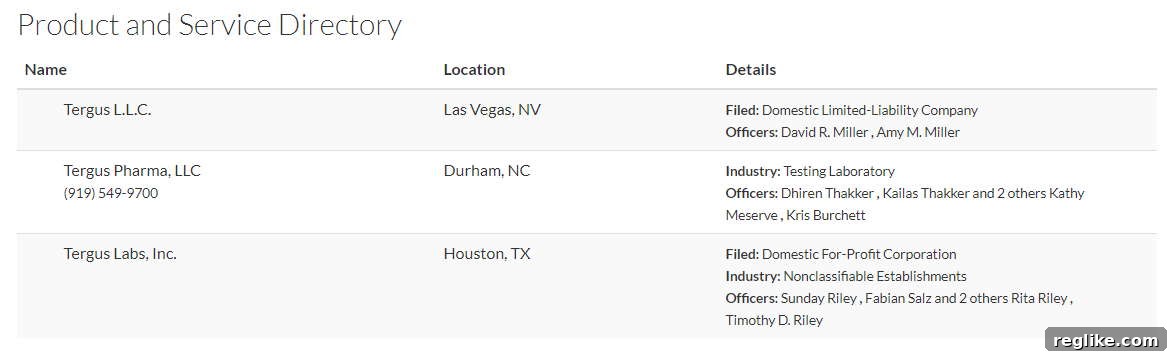
In a significant ruling that underscores the complexities of domain name disputes, prominent domain investor Mike Mann and his company, DomainMarket.com, have successfully defended the domain name Tergus.com against a Uniform Domain-Name Dispute-Resolution Policy (UDRP) complaint. While the victory solidified Mann’s legitimate ownership, the appointed panelist, Scott Blackmer, made a notable decision to decline a finding of Reverse Domain Name Hijacking (RDNH). This refusal was primarily attributed to the presence of a “Product and Service Directory” on the domain’s landing page, which listed several businesses associated with the Complainant, Tergus Pharma, LLC. This case serves as a crucial reminder for both domain investors and trademark holders about the intricacies of UDRP proceedings and the critical importance of website content strategy.
Understanding the Core Dispute: Tergus.com and UDRP Principles
The dispute centered on the domain name Tergus.com, a valuable asset in the digital landscape. Mike Mann, a renowned figure in the domain investment community known for his vast portfolio and strategic acquisitions, acquired Tergus.com in 2010. This acquisition date proved to be a pivotal factor in the UDRP outcome. The Complainant, Tergus Pharma, LLC, a pharmaceutical company, claimed trademark rights to “Tergus” stemming from dates after Mann’s acquisition, specifically in 2012. Given these established timelines, panelist Scott Blackmer rightfully concluded that the cybersquatting claim brought forth by Tergus Pharma, LLC could not be substantiated.
For a UDRP complaint to succeed, the Complainant must prove three essential elements:
- The domain name is identical or confusingly similar to a trademark or service mark in which the Complainant has rights.
- The Respondent (domain holder) has no rights or legitimate interests in respect of the domain name.
- The domain name has been registered and is being used in bad faith.
In this particular case, while the first element regarding similarity was likely met, the second and third elements proved insurmountable for Tergus Pharma. Mann’s acquisition of the domain name two years prior to Tergus Pharma’s claimed trademark rights definitively demonstrated that he could not have registered the domain in bad faith with the Complainant’s specific trademark in mind. This pre-dating acquisition is a strong defense against allegations of cybersquatting and typically leads to a favorable outcome for the domain investor.
The Nuance of Reverse Domain Name Hijacking (RDNH)
A fascinating aspect of UDRP proceedings is the concept of Reverse Domain Name Hijacking (RDNH). This is a finding by a UDRP panel that a complaint was brought in bad faith, an attempt to unfairly deprive a registered domain name holder of their domain name. RDNH serves as a crucial safeguard within the UDRP framework, deterring abusive filings and protecting legitimate domain owners from being harassed by baseless trademark claims. It signifies that the complainant knew, or should have known, that they could not establish one of the three elements required under the UDRP, and yet proceeded with the complaint anyway, often with the intent to reverse-engineer a domain transfer.
Typical scenarios leading to an RDNH finding include instances where:
- The complainant clearly lacked trademark rights at the time of the domain’s registration.
- The complainant engaged in clear misrepresentation of facts.
- The complainant attempted to procure the transfer of a domain name that the respondent had legitimate rights or interests in, with knowledge of these rights.
- The complaint was filed primarily to harass or inconvenience the legitimate domain holder.
Given the timeline—Mann’s acquisition in 2010 versus Tergus Pharma’s trademark claims in 2012—it seemed plausible that an RDNH finding could be made. Tergus Pharma arguably initiated a complaint knowing that the core element of bad faith registration was unlikely to be proven due to the pre-existing registration date.
The Panelist’s Decision: Why RDNH Was Denied
Despite Mike Mann’s clear victory on the merits of the UDRP complaint, panelist Scott Blackmer opted not to issue an RDNH finding. His reasoning hinged on a specific detail found on the landing page for Tergus.com. At the bottom of the page, a section titled “Product and Service Directory” prominently listed three of the Complainant’s businesses. This specific inclusion, as seen in the accompanying image, created a scenario that, in the panelist’s view, mitigated the bad faith nature of the complaint itself.
Blackmer’s decision suggests that while Mann legitimately owned the domain, the content on the landing page created a potential for confusion or a perceived attempt to capitalize on the Complainant’s brand. Even if not legally infringing in the context of domain ownership, such content might lead a reasonable complainant to believe there was an element of exploitation, thereby making their UDRP filing, while unsuccessful, not entirely an act of bad faith or harassment. The panelist essentially viewed the inclusion of Tergus Pharma’s businesses on the landing page as a complicating factor that justified the Complainant’s pursuit of the UDRP, preventing a finding that their complaint was an abuse of process.
From the perspective of a domain investor, including such a directory on a “for sale” landing page, especially one that directly lists the potential complainant’s businesses, is inherently risky. While the intent might be to demonstrate potential uses or even to attract the trademark holder as a buyer, it can easily be misconstrued as an attempt to create an association or leverage their brand, even inadvertently. This subtle but impactful detail prevented Mann from securing an RDNH finding, which would have further vindicated his position and potentially led to sanctions against the Complainant.
Implications and Key Takeaways for Domain Stakeholders
This UDRP case involving Tergus.com offers invaluable lessons for various stakeholders in the domain name ecosystem:
For Domain Investors and Registrants:
1. Prioritize Acquisition Dates: The timing of domain acquisition relative to trademark establishment remains the most critical defense against cybersquatting claims. Owning a domain before a trademark is recognized is a powerful shield.
2. Scrutinize Landing Page Content: This case highlights the often-overlooked importance of landing page content. While a domain investor might view a “Product and Service Directory” as a harmless way to showcase potential uses or generate leads, it can be interpreted differently by panelists. Exercise extreme caution and avoid any content that could even remotely suggest a connection to, or exploitation of, a specific trademark holder, especially if the domain is being offered for sale. Generic placeholder content or explicit “for sale” banners are generally safer. Any content that directly references a potential complainant’s business, even if factual, could be seen as an attempt to trade off their goodwill or cause confusion.
3. Understanding RDNH: While a successful defense is paramount, pursuing an RDNH finding requires the complainant’s bad faith in *filing* the complaint to be undeniable. The perceived justification (however weak) for the complaint, as demonstrated by the landing page content here, can preclude such a finding.
For Trademark Holders and Complainants:
1. Conduct Thorough Due Diligence: Before initiating a UDRP, trademark holders must meticulously research the domain’s registration history. If the domain was registered prior to the establishment of their trademark rights, the likelihood of a successful complaint, particularly on bad faith grounds, is exceedingly low. Such due diligence can save significant legal costs and prevent potential RDNH findings against them.
2. Focus on Strong Evidence: While the inclusion of the “Product and Service Directory” might have prevented an RDNH finding, it was ultimately insufficient to win the UDRP case for Tergus Pharma. Complainants still need to meet all three UDRP elements with robust evidence.
For UDRP Policy and Practice:
This case further illuminates the nuanced application of UDRP policies, particularly concerning RDNH. It demonstrates that even a seemingly strong RDNH case can be complicated by external factors, such as the actual content displayed on a domain’s landing page. Panelists often take a holistic view, and while the core legal arguments may favor the respondent, specific actions or displayed content can influence perceptions of intent and good faith, both for the respondent and the complainant.
Conclusion: A Deliberate Victory with a Caveat
Mike Mann’s successful defense of Tergus.com in this UDRP dispute is a clear victory for strategic domain investment and reaffirms the principle that prior registration trumps later trademark claims in many instances. However, the panelist’s decision to decline an RDNH finding based on the “Product and Service Directory” on the landing page serves as a potent reminder that every detail matters. Domain investors, even those with legitimate holdings, must be meticulously careful about the content they display, particularly on “for sale” pages. This incident underscores that while winning the domain is the primary goal, managing the public perception and potential legal interpretations of accompanying website content is equally crucial in the complex world of domain name disputes.