
The Strategic Embrace of English Brand Names by Chinese Enterprises
In today’s interconnected global economy, an intriguing and increasingly prevalent phenomenon is observed in the Chinese business landscape: the strategic adoption of English brand names. This trend, which I began referring to as “EnglishDotCom” several years ago, highlights a significant shift in corporate branding strategy among Chinese startups and established enterprises alike. What once might have been considered an anomaly is now a well-established practice, with countless ventures in China actively choosing English brands and securing the coveted .com domain extension for their primary online presence. This move is far from arbitrary; it reflects a deep understanding of global market dynamics, international investor expectations, and the undeniable power of a universally accessible brand identity.
The “EnglishDotCom” strategy is a powerful indicator of a company’s global aspirations from its inception. By selecting an English brand name and pairing it with a .com domain, Chinese companies are effectively laying the groundwork for international expansion long before they achieve significant domestic market share. This proactive approach distinguishes them from predecessors who might have focused solely on the domestic market with Chinese names and only later considered international rebranding efforts. The consistent rise of startups adopting this strategy underscores its perceived value and efficacy in a world where digital presence and global communication are paramount. It signifies a forward-thinking mindset aimed at transcending geographical and linguistic barriers.
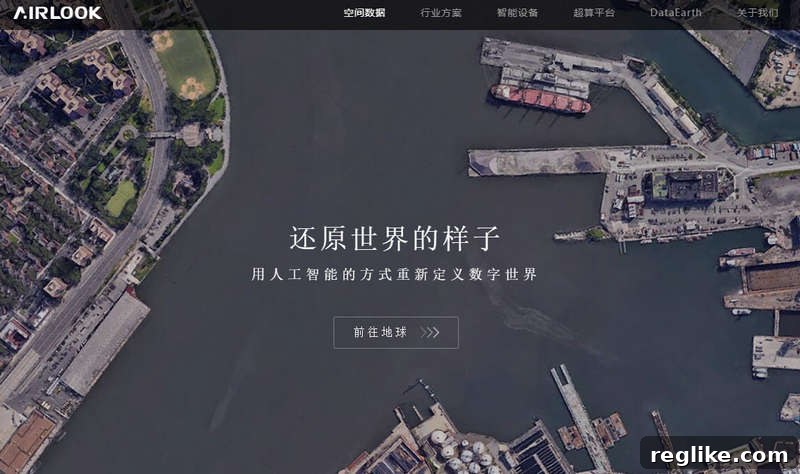
A prime example of this strategic foresight is Airlook, a cutting-edge Beijing-based mapping company. Founded in 2015, Airlook has rapidly established itself as a leader in the creation of sophisticated 3D maps designed to accurately model the real world. Their advanced technologies cater to a diverse clientele, including critical government agencies, prestigious research institutes, and both domestic and international corporations. Airlook’s innovative solutions are deployed across a multitude of essential sectors, ranging from meticulous land surveys and crucial highway control systems to intricate city planning initiatives and beyond. The company’s rapid growth and technological prowess have not gone unnoticed; it has successfully completed several substantial funding rounds, culminating in a remarkable $150 million investment secured just recently, demonstrating significant investor confidence in its vision and capabilities.
What makes Airlook particularly illustrative of the “EnglishDotCom” phenomenon is the origin of its name. The company’s Chinese name, 埃洛克 (Ai Luo Ke), is not an independently conceived entity later translated into English. Instead, it serves as a phonetic translation directly derived from its chosen English name, “Airlook.” This sequence of naming decisions reveals a crucial insight: the founders prioritized an English brand identity from the very outset of their venture. They conceptualized and finalized the English name first, subsequently adapting it into Chinese phonetically for local recognition. This approach starkly contrasts with the conventional wisdom that typically dictates conceiving a Chinese name first and then, if necessary, an English equivalent. Furthermore, the company’s corporate domain, Airlook.com, perfectly matches its English brand. The fact that Ailuoke.com (the Pinyin equivalent) is currently available for sale clearly emphasizes the company’s unwavering commitment to its English brand and its global outlook, signaling that their primary brand focus is designed for universal understanding and appeal.
The strategic merits of the EnglishDotCom approach for startups with global ambitions are multifaceted and profound. In an era dominated by the internet, virtually every startup, regardless of its initial geographical focus, must inherently consider its potential global reach. English unequivocally stands as the lingua franca of international business, technology, and communication. Concurrently, the .com extension remains the undisputed gold standard of domain names, universally recognized, trusted, and indicative of a professional, global presence. By adopting an EnglishDotCom domain strategy, a startup proactively positions itself as a global player from day one. This foresight eliminates future hurdles, as founders can avoid the often costly and complex processes of rebranding their company or attempting to acquire a brand-matching .com domain much later, once they have achieved sufficient scale to seriously contemplate international expansion. It is a fundamental investment in their future global market penetration.
Beyond the immediate benefits of seamless global communication, the EnglishDotCom strategy offers significant advantages in attracting international investment. Global venture capitalists and investors often gravitate towards companies with clear, universally understandable branding. An English name paired with a .com domain instantly signals professional intent, market sophistication, and a scalable business model, making the company more attractive for capital injection from diverse sources. Furthermore, it facilitates international partnerships and collaborations, as potential partners can easily understand and remember the brand. This branding decision also plays a crucial role in talent acquisition, enabling companies to recruit from a broader, more international pool of skilled professionals who are familiar with global business communication norms. The brand identity becomes a bridge, connecting the company to a global ecosystem of talent, capital, and opportunity.
For those who regularly monitor the dynamic Chinese domain market, the prevalence of companies embracing the EnglishDotCom domain strategy is unmistakable. Numerous high-profile Chinese enterprises have successfully leveraged this approach to build internationally recognized brands. Stellar examples include BabyTree.com, a leading parenting platform; VIPKid.com, a prominent online education service; SenseTime.com, a pioneer in artificial intelligence; Keep.com, a popular fitness application; and the tech giant Tencent.com, among many others. These companies demonstrate that an English name, coupled with a premium .com domain, can be a powerful catalyst for both domestic growth and international success. The implication of this widespread adoption is clear and compelling: there exists a substantial and continually growing market in China for high-quality, English-based .com domains. This trend signals immense opportunities for domain investors and developers.
The demand within China for domains based on simple, memorable English words is particularly robust. These are not merely for companies aspiring to global dominance; even domestically focused businesses recognize the modern, international appeal that an English brand conveys. Therefore, domain investors should adjust their strategies accordingly. Instead of exclusively focusing on Pinyin-based domains, which certainly still hold value in their niche, a broader perspective embracing English word domains can unlock significant potential. The criteria for valuable English word domains often include brevity, memorability, clear pronunciation, and descriptive power. Domains that are brandable, evoking positive associations or clearly indicating a product/service, are especially prized. This expanded view allows investors to tap into a wider pool of potential buyers within China who are increasingly seeking universal branding solutions.
In conclusion, the paradigm shift among Chinese companies towards English branding and the EnglishDotCom domain strategy is a testament to the country’s accelerating integration into the global economy. This strategic choice simplifies global communication, enhances brand recognition, and streamlines international expansion efforts. For domain investors, this trend presents a clear and lucrative opportunity. Therefore, if your primary focus has historically been on understanding and acquiring Pinyin domains, it is time to diversify your outlook. Do not be concerned if you are unfamiliar with the intricacies of Pinyin; there is a vast and fertile market waiting to be explored. By focusing on simple, impactful English words and securing the corresponding .com extensions, you will discover a wealth of opportunities, ensuring that there are still plenty of valuable “fish to catch” in your domain investment endeavors within the ever-evolving Chinese market and beyond.