
The digital landscape is a minefield of potential pitfalls, and even the most well-intentioned advertising campaigns can stumble upon unforeseen legal challenges. This became acutely clear when a prominent domain law expert, John Berryhill, identified a significant oversight within a new television commercial for .CA domain names, triggering a vital discussion about trademark protection in modern marketing.
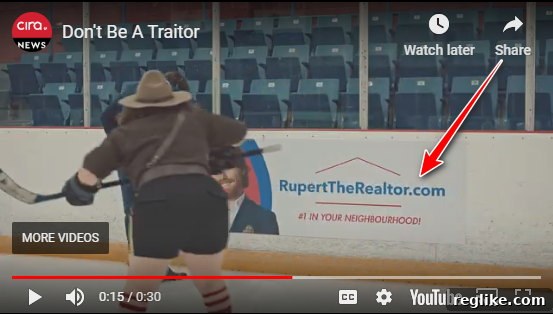
Recently, the Canadian Internet Registration Authority (CIRA), the organization responsible for managing the .CA top-level domain, launched an engaging and humorous TV commercial. The advertisement’s primary goal was to encourage Canadians to choose a .CA domain name for their online presence, subtly, or not so subtly, suggesting its superiority or perhaps more appropriate nature compared to the widely used .COM. While the commercial successfully garnered positive attention for its wit and relatable Canadian scenarios, an expert eye quickly spotted a detail that transformed a marketing triumph into a potential intellectual property dilemma.
Initially, many, including myself, were caught up in the lighthearted narrative and the effective messaging of the commercial. The ad portrayed a fictional character, “Rupert,” attempting to establish an online presence, with the narrative guiding viewers towards the benefits of registering a .CA domain. It was an effective piece of digital marketing, designed to resonate with Canadian businesses and individuals looking to brand themselves online. However, the seemingly innocuous domain name featured prominently in the advertisement, “RupertTheRealtor.ca,” contained a word that is far from generic: REALTOR®.
This subtle inclusion went unnoticed by many but immediately raised a red flag for those familiar with trademark law, especially in the domain name space. The ad firm tasked with creating this campaign, Giants & Gents, had gone the extra step of registering the domain names showcased in the commercial, securing both RupertTheRealtor.com and RupertTheRealtor.ca. While a common practice to ensure the authenticity of an advertisement, this action inadvertently brought them and CIRA into the crosshairs of a significant trademark issue.
The REALTOR® Trademark: A Protected Mark
At the heart of this controversy lies the term “REALTOR®.” This isn’t just a generic descriptor for a real estate agent; it is a federally protected collective membership mark in both the United States and Canada. In the U.S., it is owned and safeguarded by the National Association of Realtors (NAR), and in Canada, by The Canadian Real Estate Association (CREA). The mark signifies that a real estate professional is a member of these associations, adhering to their strict code of ethics and professional standards. Unauthorized use of “REALTOR®” can constitute trademark infringement, potentially leading to legal action.
The specificity and protection surrounding the REALTOR® mark are crucial. It differentiates members of professional associations from other real estate practitioners. Therefore, its use, especially in a commercial context that could suggest affiliation or endorsement, without proper authorization, is a serious matter that intellectual property rights holders vigorously defend. This context adds significant weight to John Berryhill’s astute observation.
John Berryhill’s Incisive Catch
It was John Berryhill, a highly respected attorney specializing in domain name and trademark law, who brought this critical detail to light. Known for his keen eye and deep understanding of intellectual property rights in the digital realm, Berryhill quickly identified the problematic inclusion. He took to social media to express his concern, highlighting the potential infringement and drawing a stark comparison that underscored the gravity of the situation. His tweet, shared widely, meticulously detailed the issue:
So, the Toronto ad firm @giantsandgents registered a .com and and .ca domain name (RupertTheRealtor) using the @nardotrealtor (US) and @crea_aci REALTOR® mark to advertise the #CIRA domain registry which competes with .realtor. Next up, using “HILTON” for Days Inn ads…
— John Berryhill (@Berryhillj) September 24, 2019
Berryhill’s analogy of “using ‘HILTON’ for Days Inn ads” brilliantly encapsulates the essence of trademark infringement and unfair competition. It illustrates a scenario where a brand known for one service or quality is inappropriately associated with another, potentially misleading consumers and diluting the distinctiveness of the established mark. In this case, CIRA, through its advertising firm, was effectively leveraging a protected professional designation (“REALTOR®”) to promote its .CA domain registry, which incidentally competes with the dedicated .realtor generic top-level domain (gTLD).
The Ad Agency’s Oversight and CIRA’s Position
The fact that Giants & Gents registered these specific domain names indicates a level of intent, even if the trademark implications were not fully understood or considered during the creative process. It highlights a common challenge in advertising: ensuring all elements, including seemingly minor details like domain names, are legally sound. Such an oversight underscores the critical importance of robust legal review for all advertising materials, particularly those entering the public domain via national campaigns.
It’s an easily made mistake; indeed, I can recall having registered a domain name containing the “Realtor” mark many years ago without fully grasping its trademarked status. However, the scale and visibility of a national television commercial are vastly different from an individual’s obscure domain registration. The impact and potential liability are magnified significantly, making the need for careful legal vetting paramount.
Following Berryhill’s public call-out, the question naturally turned to how CIRA and its ad firm would address the issue. The immediate options seemed clear: either the problematic scene within the commercial would need to be reshot, removing the infringing domain name, or CIRA and Giants & Gents would need to formally engage with The Canadian Real Estate Association to seek retrospective authorization or make amends. This situation presented a classic dilemma between the effectiveness of an ad campaign and compliance with intellectual property law.
Responding to inquiries regarding the issue, CIRA provided a statement to Domain Name Wire, reiterating their confidence in the campaign:
We are really proud of, and stand behind, the ad. The reaction so far has been overwhelmingly positive. We look forward to helping as many Canadian businesses as possible get online with a .CA domain name.
While CIRA’s pride in the ad’s positive reception is understandable, and indeed, the commercial was effective in generating buzz for .CA domains, their statement conspicuously avoided directly addressing the trademark infringement concern. The positive reaction from the general public, while important for marketing metrics, does not negate or resolve a potential legal challenge regarding intellectual property rights. The core issue remains a legal one, distinct from public sentiment or marketing success.
The Broader Lesson: Vigilance in Digital Branding and Advertising
This incident serves as a powerful reminder for all businesses and advertising agencies about the critical importance of thorough due diligence in every aspect of a marketing campaign. In an increasingly digital world, where domain names are central to online identity and branding, the intersection of domain law, trademark law, and advertising standards has never been more complex or vital.
Brand protection extends beyond registering a trademark; it involves actively monitoring its use and ensuring that advertising practices do not inadvertently infringe upon the rights of others. For CIRA, an organization deeply entrenched in the domain name ecosystem, and for Giants & Gents, a creative agency, this situation highlights the need for stringent legal review processes that consider all potential intellectual property implications before a campaign goes live. It also underscores the inherent value of a strong, distinctive brand like REALTOR® and the associations’ commitment to safeguarding its integrity.
Ultimately, while CIRA’s commercial successfully sparked interest in .CA domains, the oversight regarding the REALTOR® trademark introduced an unnecessary legal complication. This incident reinforces that even in the pursuit of engaging and memorable advertising, adherence to intellectual property law is paramount. The digital landscape demands not only creativity but also meticulous legal scrutiny, ensuring that campaigns are not only effective but also compliant and respectful of established brand rights. The conversation initiated by John Berryhill continues to be a crucial one for navigating the complexities of modern advertising in the digital age.