
Wix Stock Dips Despite Stellar First Quarter Performance: An In-Depth Analysis
In a surprising turn of events following its first-quarter earnings report, the stock of leading website creation platform Wix (NASDAQ: WIX) experienced a notable decline, falling by approximately 15% in intraday trading. This downturn occurred despite the company delivering robust financial results, which included impressive revenue growth and a narrower loss than analysts had anticipated. The divergence between strong fundamental performance and a negative market reaction often prompts investors to scrutinize the underlying factors influencing stock valuations in today’s dynamic digital economy. This comprehensive analysis will delve into Wix’s Q1 2021 report, dissecting its key performance indicators, strategic shifts, and exploring the potential reasons behind the market’s seemingly contradictory response to a growth-oriented tech company.
Wix’s Q1 2021 Financial Highlights: Exceptional Growth Across Core Metrics
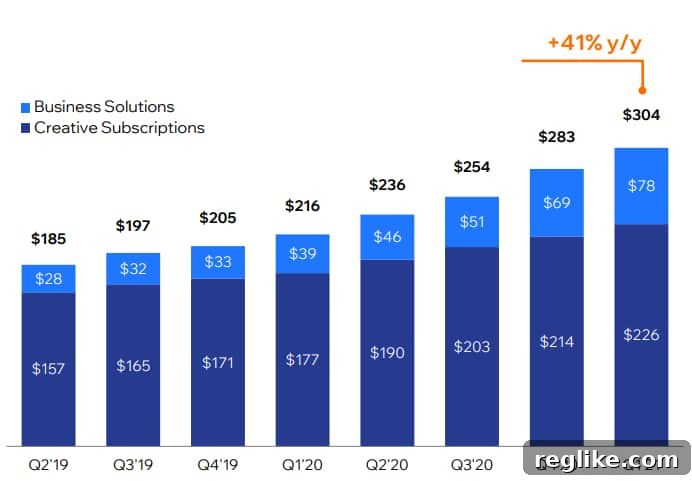
Wix, a globally recognized cloud-based web development platform empowering millions to establish and manage a professional online presence, posted a highly encouraging first quarter for 2021. The company announced total revenue of $304.1 million, marking an exceptional 41% increase year over year. This substantial growth underscores the sustained and accelerating demand for comprehensive online solutions as businesses worldwide continue to prioritize and accelerate their digital transformation initiatives. Furthermore, collections, which represent the cash generated from sales and subscriptions – a critical indicator for subscription-based models – mirrored this impressive trajectory, reaching $351.1 million, also up 41% compared to the same period last year. These figures not only surpassed internal and external expectations but also demonstrated Wix’s successful operational execution within an increasingly competitive global market landscape.
Adding to the positive financial narrative, Wix also reported a narrower net loss than projections, highlighting improving operational efficiencies and a strengthening business model as the company scales. Typically, such robust top-line growth coupled with indications of enhanced profitability would trigger a favorable investor response, driving stock prices upwards. However, the market’s reaction suggests that investor expectations might have been set even higher, or that other elements within the earnings report, such as future guidance or specific omitted metrics, played a more significant role in shaping immediate investor sentiment.
Deconstructing Wix’s Revenue Streams: Creative Subscriptions vs. Business Solutions
Wix strategically categorizes its revenue into two distinct yet interconnected primary segments: Creative Subscriptions and Business Solutions. Understanding the individual performance and growth trajectories of these segments is crucial for comprehending Wix’s evolving business model and identifying its primary drivers for future expansion.
Creative Subscriptions: The Foundation of Wix’s Digital Empowerment
The Creative Subscriptions segment forms the fundamental core of Wix’s offering, comprising its renowned website builder product. This is where individual users and small businesses subscribe to premium plans, gaining access to a wide array of intuitive design tools, professional templates, essential hosting features, and advanced functionalities to build and maintain their websites. In Q1 2021, this segment continued to be the bedrock of Wix’s financial performance, generating a significant $226.4 million. While still making up the substantial majority of the company’s overall revenue, its growth rate stood at a solid 28% year over year. This steady and consistent expansion indicates Wix’s continued success in attracting new users and retaining its existing customer base, leveraging its highly user-friendly interface and comprehensive platform to empower a broad spectrum of individuals and small enterprises to establish and enhance their online identities efficiently.
Business Solutions: The Engine of Accelerated Growth and Diversification
In stark contrast, the Business Solutions segment represents Wix’s strategic expansion beyond basic website creation, focusing on providing high-value, integrated services designed to help businesses operate, manage, and grow effectively online. This robust suite of tools includes critical functionalities such as sophisticated communication platforms, secure payment processing services, advanced marketing analytics and advertising tools, customer relationship management (CRM) features, and comprehensive e-commerce capabilities. This segment experienced explosive growth in Q1 2021, rocketing by an impressive 97% year over year. Although it constituted a smaller portion of the total revenue compared to Creative Subscriptions, this accelerated growth rate signifies a successful strategic pivot and effective diversification for Wix. It powerfully highlights the company’s commitment to transforming into a comprehensive digital partner for businesses, moving beyond merely offering website hosting to providing full-stack, end-to-end solutions for all aspects of online operations.
The disproportionate growth rates observed between these two segments reveal an important and evolving trend for Wix. While its foundational website builder remains a powerful and stable revenue generator, the future growth narrative is increasingly being driven by its higher-value, more integrated business tools. This strategic pivot positions Wix advantageously to capture a larger share of the burgeoning e-commerce and broader digital services market, offering a more holistic and indispensable platform for businesses navigating the intricate complexities of the modern online world. It underscores a shift towards deeper engagement with its business customers, providing tools that are essential for their daily operations and long-term growth.
Adapting to a Post-Pandemic World: Sustaining Growth Beyond the Digital Rush
The global COVID-19 pandemic undeniably served as an unprecedented catalyst for digital transformation, significantly benefiting companies like Wix. As physical storefronts faced closures and remote work models became the norm, businesses worldwide rushed to establish or enhance their online presence to maintain operations and reach customers. Wix, alongside other web presence providers, experienced an extraordinary surge in demand during this period. However, as global economies gradually reopen and the immediate urgency for digital migration shifts, crucial questions arise about the sustainability of this accelerated growth momentum.
Wix, with its forward-looking strategy, appears to be proactively preparing for this transitional phase. The company explicitly articulated its confidence in capturing further market upside even as the immediate pandemic-induced rush wanes. A key insight from its Q1 report that supports this optimism is the significant diversification of its customer base. Wix noted that over 40% of the gross payment volume processed through its platform in Q1 originated from non-retail store businesses. This includes rapidly digitizing sectors such as restaurants, fitness centers, beauty salons, and event organizers – industries that were profoundly impacted by the pandemic but are now undergoing substantial digital adoption to adapt to new consumer behaviors, operational models, and increased demand for online services.
This strategic diversification into service-based and experiential businesses is a shrewd and timely move. It unequivocally demonstrates Wix’s adaptability and its ability to expand its total addressable market beyond traditional e-commerce. By offering specialized tools and solutions tailored to the unique operational and customer engagement needs of these diverse sectors, Wix is cementing its role as an indispensable digital infrastructure provider. It is effectively positioning itself to support the “new normal” of doing business online, empowering a wider array of enterprises to manage bookings, appointments, online orders, client communications, and community engagement with greater efficiency and reach.
Navigating Future Expectations: Q2 Guidance and Free Cash Flow Concerns
Looking ahead, Wix provided forward-looking guidance that reflects its confidence in continued growth, albeit at a slightly moderated pace compared to the intense, pandemic-fueled surge of the past year. For the second quarter of 2021, the company anticipates year-over-year revenue growth to be in the healthy range of 30%-32%, with collections growth projected between 29%-32%. These are still exceptionally robust growth rates that many companies across various industries would undoubtedly envy, signaling a positive and healthy outlook for the coming months and continued expansion within its market segments.
Wix also made adjustments to its full-year guidance, specifically nudging up its expectations for both revenue and collections. This upward revision typically signals strong management confidence in the company’s operational performance, market opportunities, and the effectiveness of its strategic initiatives. However, a particular detail embedded within the guidance likely contributed to the market’s somewhat cautious reaction: a slight reduction in the expected free cash flow (FCF) range for the full year. Free cash flow is a critically important metric for investors, as it represents the cash a company generates after accounting for all cash outflows necessary to support its ongoing operations and maintain or expand its capital assets. For a growth-oriented technology company like Wix, strong FCF indicates robust financial health, operational efficiency, and the capacity for future strategic investments, debt reduction, or potential shareholder returns.
The slight reduction in FCF guidance, even amidst strong revenue projections, could be interpreted by astute investors as a signal of increased operational investments to fuel future growth, potentially higher customer acquisition costs in an increasingly competitive environment, or perhaps a longer pathway to achieving significant profitability than previously expected. While not a dire warning sign, it introduces a layer of caution and uncertainty, especially for growth stocks where consistent cash generation is meticulously scrutinized as a measure of sustainable expansion and intrinsic value.
The Omission of Key Subscriber Metrics: A Point of Contention for Investors
Perhaps one of the most notable and potentially impactful omissions from Wix’s Q1 earnings report was the complete absence of data pertaining to new registrations and net paying subscribers. In previous quarterly press releases and investor communications, these metrics were consistently highlighted and presented as crucial indicators of the company’s user acquisition momentum, conversion efficiency, and the overall health of its customer funnel. For a subscription-based business model like Wix, the number of paying subscribers serves as a direct and vital measure of its core customer base, the effectiveness of its marketing efforts, and the potential for future recurring revenue – which is highly valued by the market.
The decision to exclude these consistently reported figures from the current report has undoubtedly raised eyebrows among analysts, institutional investors, and individual shareholders alike. While companies occasionally adjust their reporting metrics to emphasize different aspects of their performance or to align with evolving strategic priorities, the complete absence of previously standard and highly relevant data can often lead to considerable speculation and concern. Investors might infer that these numbers did not meet internal expectations, or that growth in these critical areas has decelerated significantly. Without these crucial insights into subscriber trends, it becomes considerably more challenging for the market to fully assess the health and sustainability of Wix’s user acquisition engine and the long-term potential for consistent subscriber growth, potentially contributing significantly to the negative sentiment observed in the stock’s immediate performance.
The market generally views a lack of transparency regarding key performance indicators, especially those previously deemed important, with a degree of skepticism. Reinstating these essential metrics in future reports, or providing a clear and compelling explanation for their current exclusion, would likely go a long way in helping to rebuild investor confidence and offering a more complete and transparent picture of Wix’s underlying operational trends and growth trajectory.
Conclusion: A Complex Narrative for Wix Investors to Digest
Wix’s Q1 2021 report undeniably presents a complex and nuanced narrative for investors. On one hand, the company demonstrated truly exceptional top-line growth, with both revenue and collections surging by an impressive 41% year over year, significantly exceeding most analyst forecasts. Its Business Solutions segment is showing remarkable acceleration, indicating a highly successful diversification strategy that extends well beyond its foundational website builder. Furthermore, Wix is strategically positioning itself to not only maintain but to accelerate its growth in a post-pandemic landscape by effectively targeting diverse, service-based businesses that are actively digitizing.
On the other hand, the immediate market reaction, prominently marked by a 15% stock decline, strongly suggests that investors are weighing other critical factors heavily. The slight reduction in full-year free cash flow guidance and, perhaps more significantly, the conspicuous absence of new registrations and net paying subscriber data from the report, appear to have overshadowed the otherwise stellar financial performance. These elements collectively introduce uncertainties regarding the precise pace of future profitability, the efficiency of its operational investments, and the underlying health of its subscriber acquisition and retention engine.
For long-term investors focused on fundamental strength and market leadership, Wix remains a compelling player within the essential web presence and digital solutions market. Its robust platform, continuous innovation in product development, and strategic focus on empowering businesses of all sizes to succeed online provide a strong and durable foundation. However, the short-term market volatility vividly highlights the paramount importance of consistent and transparent reporting, coupled with effectively meeting—or clearly articulating and managing—investor expectations that extend beyond just headline revenue figures. As Wix continues to navigate the rapidly evolving digital landscape, clear communication regarding its subscriber growth metrics and free cash flow generation will be absolutely paramount in reassuring the market and sustaining its ambitious and promising growth story.