
Navigating the digital landscape can be tricky, especially when official government services are mimicked by deceptive online entities. Discover how entities like Oklahoma County can tackle abusive websites more effectively and affordably than through traditional litigation, safeguarding public trust and resources.
Effective Strategies for Combating Deceptive Websites: Beyond Costly Lawsuits
In an increasingly digital world, access to public information and government services has largely shifted online. While this offers unprecedented convenience, it also opens avenues for exploitation by deceptive websites designed to mislead the public. Government entities, tasked with providing transparent and free access to essential services, often find their official online presence challenged by look-alike sites that aim to profit from public confusion.
This article delves into a recent case involving Oklahoma County, illustrating the challenges posed by such deceptive practices and highlighting why an immediate jump to legal action may not always be the most strategic or cost-effective solution. Instead, we will explore a range of more efficient and affordable alternatives for addressing abusive domain registrations and ensuring online consumer protection.
The Oklahoma County Dilemma: A Case Study in Digital Exploitation
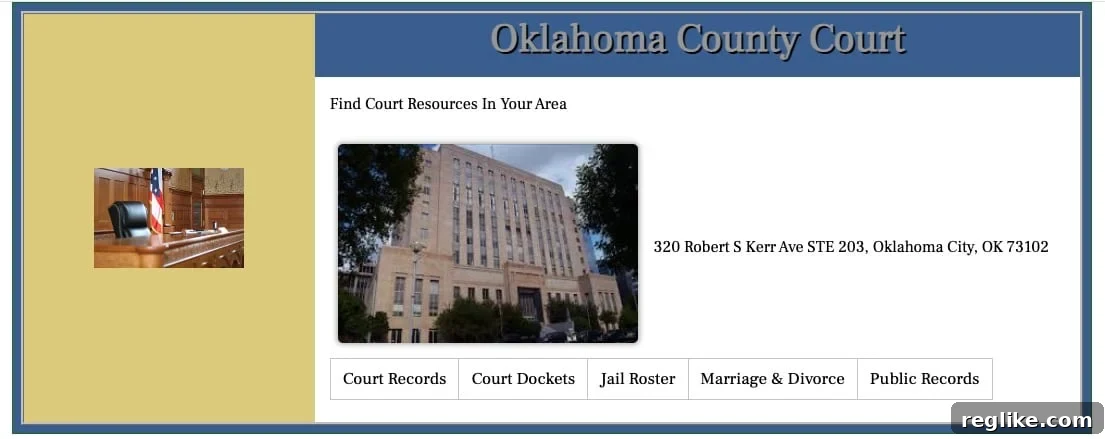
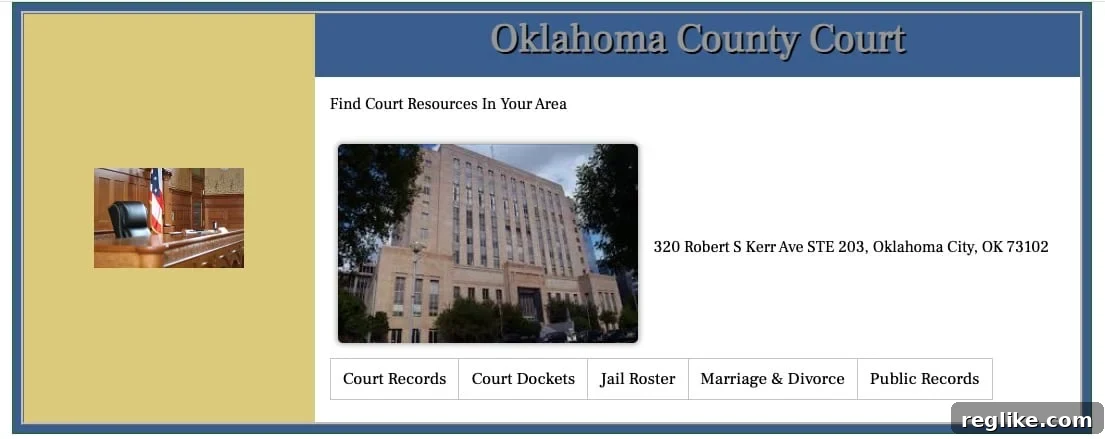
A recent story published by The Oklahoman brought to light a significant concern for Oklahoma County. A website operating under the domain name OklahomaCountyCourt.org was found to closely resemble an official court website. However, instead of offering free public records, as is the standard practice on the county’s legitimate website, OklahomaCounty.org, this unofficial site directed users to a business named TruthFinder, where they could purchase these very same records. The exact relationship between TruthFinder and the website – whether direct ownership or an affiliate partnership – remains unclear, but the intent to monetize freely available public information is starkly evident.
The fundamental problem with such look-alike websites extends beyond mere commercial activity; it represents a serious threat to public trust and direct access to justice. Citizens actively seeking crucial court information or public records might easily mistake this deceptive site for an official government portal. This confusion can lead to unwarranted financial outlays for information that is legally accessible without charge, create unnecessary delays, and potentially expose individuals to inaccurate or outdated data. Such practices erode public confidence in government transparency and can disproportionately impact vulnerable populations seeking essential services.
Understanding the Detrimental Impact of Deceptive Websites
The harm caused by websites that mimic official government or reputable brand sites is multi-faceted:
- Financial Exploitation: Users are frequently misled into paying for public information or services that are freely available, leading to unwarranted expenses.
- Erosion of Public Trust: Deceptive online presences undermine the public’s confidence in the authenticity and reliability of government digital services and information.
- Misinformation and Delays: Unofficial sites may contain incomplete, outdated, or incorrect information, potentially causing legal or administrative complications for citizens.
- Data Security Risks: Users might inadvertently share personal information on insecure or malicious sites, exposing themselves to identity theft or privacy breaches.
- Brand and Reputation Damage: The legitimate entity’s reputation can be tarnished when citizens associate negative experiences with look-alike websites.
- Resource Diversion: Government bodies are forced to allocate resources (time, money, personnel) to combat these deceptive practices instead of focusing on core public services.
In response to this troubling situation, the Oklahoma County Board of County Commissioners deliberated a potential lawsuit on its agenda for June 18. However, no immediate public action was taken. This pause suggests an opportunity to consider a more strategic approach, echoing the advice from domain industry experts who advocate for exploring alternatives before initiating costly litigation.
Why Litigation Isn’t Always the Optimal First Step in Domain Disputes
While the prospect of legal action provides a clear framework for redress, pursuing litigation against abusive domain names or deceptive websites often presents significant hurdles. Lawsuits are typically complex, time-consuming, and carry substantial financial burdens, making them an often impractical initial response for organizations, particularly those funded by taxpayers.
The Hidden Drawbacks and Expenses of Legal Action
- Prohibitive Legal Costs: Engaging specialized legal counsel, covering court filing fees, navigating extensive discovery processes, and potential appeals can quickly escalate costs into hundreds of thousands, or even millions, of dollars.
- Protracted Timelines: Litigation can span months or even years, during which the deceptive website may continue its operations, causing ongoing harm and public confusion.
- Significant Resource Drain: Beyond direct financial costs, lawsuits divert valuable administrative and personnel resources from an organization’s primary mission and public service responsibilities.
- Uncertain Outcomes: The success of a lawsuit is never guaranteed, and even a favorable judgment can be challenging to enforce, especially if the operators of the abusive site are anonymous, located offshore, or operate a network of similar sites.
- Limited Scope and Scalability: A lawsuit typically targets a specific domain or individual entity, potentially failing to address a broader network of similar deceptive sites or the underlying problem.
NameSilo, the domain registrar where OklahomaCountyCourt.org is registered, explicitly advised against suing them, labeling it a “waste of taxpayer money.” This statement highlights a crucial point: registrars are usually intermediaries and have their own established protocols for handling abuse. They emphasized the availability of several free and efficient methods for reporting abusive domain registrations, noting that they had not received any such report regarding the specific domain in question. This crucial detail suggests that a fundamental, no-cost step was potentially overlooked.
Exploring Faster, More Cost-Effective Alternatives for Website Takedown
Before committing to the arduous and expensive path of litigation, government entities and businesses should thoroughly investigate a range of administrative and technical solutions. These alternatives frequently offer a more rapid, cost-effective, and less complex route to neutralizing abusive or deceptive websites.
1. Leveraging Domain Registrar Abuse Policies
Domain registrars serve as a primary gateway to the internet, managing the registration and lifecycle of domain names. They typically operate under clear Acceptable Use Policies (AUPs) or Terms of Service (TOS) that strictly prohibit activities such as deceptive practices, phishing, trademark infringement, and other forms of online abuse. Engaging with the registrar involves a structured process:
- Identifying the Domain Registrar: A simple WHOIS lookup for the problematic domain name will quickly reveal its registrar.
- Reviewing Abuse Policies: Thoroughly examine the registrar’s AUP to ascertain how the abusive website’s activities violate their specific terms. Common violations include impersonation, misleading content designed to deceive, phishing attempts, or operations contrary to public interest.
- Filing a Detailed Abuse Report: Submit a comprehensive report, including all available evidence such as screenshots of the deceptive content, specific URLs, proof of misrepresentation, and a clear explanation of how the site infringes upon their policies. The more robust and well-documented the evidence, the more likely the registrar is to take swift and decisive action.
- Registrar’s Enforcement Powers: Upon verifying a legitimate abuse report, registrars possess the authority to issue warnings, suspend the domain registration, or, in severe and persistent cases, even cancel the domain entirely.
The fact that NameSilo had not received an abuse report about OklahomaCountyCourt.org is particularly instructive. This underscores that a fundamental, free, and potentially highly effective first step was not utilized, highlighting a common oversight in handling such online threats.
2. Engaging the Web Host Directly
Beyond the domain registrar, the web host—the company providing the server space and infrastructure that makes the website accessible online—represents another critical point of intervention. Web hosts also operate under AUPs that prohibit illegal or abusive content, and they often possess more direct control over the website’s content and operational status. The process for contacting a web host mirrors that of a registrar:
- Identifying the Web Host: Tools like WHOIS lookup services or specialized web hosting detectors can pinpoint the hosting provider for the problematic site.
- Reviewing Host’s AUP: Similar to registrars, web hosts have terms that forbid phishing, impersonation, copyright or trademark infringement, and various forms of content abuse.
- Submitting an Abuse Complaint: Provide detailed evidence of the deceptive practices and clearly explain how these activities violate the host’s policies. A web host can typically suspend the hosting service for non-compliance, effectively taking the infringing website offline.
As NameSilo correctly pointed out, the domain in question was hosted elsewhere. Contacting the web host presents a direct and often rapid method to disrupt the abusive website’s operations, potentially achieving a swift takedown without legal fees.
3. Exploring Intellectual Property Enforcement and UDRP
If the county’s name, logo, or specific terminology is protected by trademark or common law intellectual property rights, this opens additional avenues for action:
- Cease and Desist Letters: A formal letter from legal counsel demanding the cessation of infringing activity can be an effective, lower-cost initial legal step, particularly if the operator of the abusive site prefers to avoid formal legal disputes.
- UDRP (Uniform Domain-Name Dispute-Resolution Policy): This is an administrative procedure established by ICANN (the Internet Corporation for Assigned Names and Numbers) specifically for resolving domain name disputes, especially those involving cybersquatting or clear trademark infringement. UDRP proceedings are generally faster and significantly less expensive than traditional litigation. They involve submitting a complaint to an ICANN-approved dispute resolution provider, which then mediates or renders a binding decision. While not entirely free, UDRP is a highly specialized and cost-efficient mechanism designed precisely for domain disputes.
- DMCA Takedown Notices: If the abusive site copies copyrighted content (e.g., text, images) directly from the official county website, a Digital Millennium Copyright Act (DMCA) takedown notice can be sent to the web host or search engines, demanding removal of the infringing content.
4. Reporting to Consumer Protection Agencies and Search Engines
- Consumer Protection Agencies: Organizations such as the Federal Trade Commission (FTC) in the U.S. or equivalent state and national consumer protection bodies investigate deceptive business practices and online fraud. Reporting to these agencies can trigger investigations, official warnings, or even enforcement actions, putting significant pressure on the operators of abusive sites.
- Search Engine De-ranking/Removal: Major search engines like Google and Bing offer mechanisms for reporting spam, phishing, or deceptive websites. While this doesn’t directly take a site offline, having it de-indexed, flagged as unsafe, or significantly de-ranked drastically reduces its visibility and ability to attract victims. This can effectively neutralize its impact even if the site technically remains online.
Proactive Measures for Robust Digital Identity Protection
Beyond reactive measures, governmental bodies and other organizations must adopt proactive strategies to safeguard their digital identity and minimize the risk of such abuses:
- Comprehensive Domain Portfolio Management: Proactively registering key variations of official domain names, including common misspellings, plural forms, relevant keywords, and country-code top-level domains (ccTLDs), can effectively prevent cybersquatting and preempt future disputes.
- Clear Branding and Consistent Communication: Consistently utilizing official logos, established branding guidelines, and prominent disclaimers on all digital platforms helps users unequivocally distinguish authentic sites from fraudulent ones. Clear navigation and easily accessible contact information also build trust.
- Public Education Campaigns: Launching initiatives to inform citizens about official website addresses, how to identify legitimate government sites, and warning them about common online scams is critical for empowering the public to protect themselves.
- Continuous Brand Monitoring: Employing specialized tools and services to monitor new domain registrations that incorporate official names, trademarks, or close variants can provide early warnings of potential abuse, allowing for swift intervention.
Conclusion: A Smarter Approach to Online Integrity and Public Service
The situation faced by Oklahoma County regarding the deceptive court website serves as a compelling and timely reminder of the constant vigilance required in the digital age. While the impulse to protect public integrity and prevent fraud through legal means is entirely understandable and commendable, the realities of domain name disputes often favor a multi-faceted approach that prioritizes efficiency, speed, and cost-effectiveness.
As emphasized by brand domain experts like Lexsynergy, engaging in full-blown lawsuits, and even UDRP filings, should not always be the immediate first step. By strategically leveraging administrative tools such as abuse reports to registrars and web hosts, exploring specific intellectual property claims, and engaging consumer protection bodies, organizations can frequently achieve swift and decisive resolution without expending significant taxpayer money or corporate resources. Embracing these alternative, faster, and often free methods is not merely about saving costs; it is fundamentally about maintaining public trust, ensuring unimpeded access to authentic and free public services, and upholding the integrity of government operations in an increasingly complex and interconnected online world.