
Unlocking Insights: A Deep Dive into Domains That Have Sold Multiple Times
The world of domain name investing is often shrouded in mystery, with fortunes made and lost in the digital real estate market. For both seasoned investors and curious newcomers, understanding market dynamics and identifying profitable opportunities is paramount. One particularly fascinating area of study involves “frequent movers” – domain names that have changed hands multiple times. These repeat transactions offer a unique lens through which to analyze market trends, valuation shifts, and the strategies that lead to success or, at times, significant losses.
DnPric.es, a highly respected platform dedicated to compiling comprehensive domain name sales data, offers an invaluable resource in this regard. Their dedicated section on domain names that have sold more than once is a treasure trove of information. It provides an unparalleled dataset for examining how individuals have fared in their domain ownership journeys and for spotting long-term trends within this ever-evolving digital asset class.
The Significance of “Frequent Movers” Data
The “frequent movers” list is more than just a collection of past sales; it’s a living testament to the ebb and flow of market demand and investor sentiment. It meticulously tracks domains that have seen at least two publicly disclosed sales, offering a transparent view into their transactional history. The sheer volume of data available is staggering and speaks volumes about the liquidity and activity within certain segments of the domain market.
Consider these compelling statistics: the dataset reveals over 82,000 distinct domain names that have recorded at least two public sales. Delving deeper, more than 11,000 domains boast three sales, indicating a sustained interest and perceived value over time. An impressive 2,700 domains have even reached four sales, showcasing remarkable resilience and desirability. Furthermore, a select handful of elite domains have achieved an astounding seven, eight, or even nine recorded transactions, making them true rarities in the digital real estate landscape. This level of activity underscores the dynamic nature of domain investing and highlights specific domains that consistently attract buyers and sellers.
Crucially, DnPric.es doesn’t just list sales; it provides a vital metric: the annualized yield from the first sale to the last. This percentage offers a clear indicator of a domain’s performance as an investment, allowing investors to gauge the profitability of holding and reselling specific digital assets over various periods. Analyzing this yield helps reveal which types of domains appreciate consistently, which are subject to volatile swings, and which ultimately fail to deliver positive returns.
Understanding Domain Valuation and Investment Strategies
For those new to the space, understanding what makes a domain valuable is the first step toward successful investing. Key factors include: relevance and keywords (e.g., “insurance.com”), brandability (e.g., “Google.com”), length and memorability, the chosen Top-Level Domain (TLD) – with .com still reigning supreme – and the age of the domain, which often correlates with established trust and SEO benefits. The frequent movers data helps validate these factors by showing which types of domains consistently command higher prices and more frequent transactions.
Domain investors typically fall into a few categories: end-users who buy for immediate business use, speculators who aim to buy low and sell high, and developers who acquire domains for specific projects. The frequent movers list often captures the activity of speculators, whose strategies might involve short-term flips or longer-term holds, hoping for significant appreciation.
The principle of “buy low, sell high” is as fundamental in domain investing as it is in traditional markets. However, accurately identifying “low” and “high” in a market often driven by perception and niche demand can be challenging. This is where comprehensive sales data becomes indispensable. It allows investors to benchmark prices, identify historical trends, and make more informed decisions rather than relying on guesswork.
A Personal Anecdote: The Cathleen.com Journey
To illustrate the complexities and varied outcomes within domain investing, let’s consider a real-world example from the frequent movers list. While meticulously poring over the data for domains that had sold four times, an interesting entry caught the eye: Cathleen.com. This wasn’t just another data point; it was a domain that the original author had personally owned, offering a unique firsthand perspective on its journey through the market.
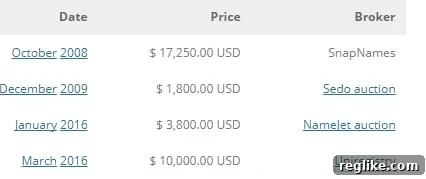
The record showed that Cathleen.com was acquired by the author in December 2009 for a sum of $1,800. Fast forward to January 2016, the domain was successfully sold on the popular marketplace NameJet for $3,800. After accounting for commissions, the net proceeds amounted to $3,230. This transaction yielded an annualized return of approximately 10%. While a 10% annual return might sound appealing in some investment contexts, for a domain investment held for over six years, it was perceived as “not so great.” The author reflected that a similar return could likely have been achieved with less effort and potentially lower risk in a diversified stock market portfolio over the same period, highlighting the often-high expectations within the domain community for significant capital gains.
However, the story of Cathleen.com didn’t end there. The person who purchased the domain on NameJet for $3,800 demonstrated a more aggressive and ultimately more profitable strategy. It appears this new owner managed to flip the domain just a couple of months later for an impressive $10,000. This rapid appreciation and substantial profit margin in such a short timeframe exemplify the potential for high returns when market timing, targeted marketing, or identifying a specific end-user buyer aligns perfectly. This stark contrast in outcomes between two consecutive owners of the same domain powerfully illustrates that success in domain investing often hinges not just on the initial acquisition, but also on the strategy, timing, and effort put into the resale.
The Reality of Domain Investing: Profits, Pitfalls, and Negative Returns
Looking through the comprehensive sales data of frequent movers is an incredibly enlightening experience. While stories like the quick flip of Cathleen.com for $10,000 capture attention, the data also reveals a less glamorous truth: you will see a lot of sales with negative returns. This observation is crucial for anyone considering entering the domain market. Not every domain investment yields a profit, and many result in losses, sometimes significant ones.
Why do domains sell for a loss? Several factors contribute to negative returns:
- Poor Initial Purchase: Overpaying for a domain based on speculative hype rather than fundamental value.
- Market Changes: Shifting trends, the emergence of new TLDs, or changes in technology can diminish the value of previously desirable domains.
- Lack of Marketing and Exposure: Even a great domain won’t sell if potential buyers don’t know it’s available or if it’s not listed on prominent marketplaces.
- Holding Costs: Annual renewal fees, while often small, accumulate over time and can eat into profit margins, especially for domains held for many years without appreciation.
- Illiquidity: Unlike stocks, domains can be illiquid assets. Finding the right buyer at the right price can take significant time and effort.
Domain investing, like any form of speculative asset trading, carries inherent risks. While the potential for substantial capital gains exists, so does the risk of depreciation, difficulty in valuation, and the ever-present challenge of finding the perfect buyer. It’s a market that rewards patience, shrewd negotiation, and a deep understanding of internet trends and business needs.
Strategies for Successful Domain Flipping and Portfolio Management
For those aspiring to generate positive returns from domain investing, several key strategies can increase the likelihood of success:
- Thorough Research is Paramount: Before acquiring any domain, conduct extensive keyword research, analyze current market trends, and investigate potential competitor domains. Tools that provide historical sales data, like DnPric.es, are indispensable for this. Look for domains with high commercial intent, strong brandability, or relevance to emerging industries.
- Strategic Acquisition: Domains can be acquired through various channels, including expired domain auctions, public marketplaces (e.g., NameJet, Sedo, GoDaddy Auctions), private negotiations, or drop catching services. Each channel has its pros and cons in terms of pricing and competition.
- Realistic Valuation and Pricing: Overpricing a domain can lead to it languishing on the market indefinitely, while underpricing leaves money on the table. Base your asking price on comparable sales data, current market demand, and the intrinsic value of the domain (e.g., exact match keyword, premium brandable).
- Effective Marketing and Sales: Simply listing a domain isn’t always enough. Promote your best domains through targeted outreach to potential end-users, utilize premium listings on major platforms, and consider brokering services for high-value assets. Patience is often a virtue, as finding the right buyer can take time.
- Focus on Quality over Quantity: While some investors build massive portfolios of lower-value domains, focusing on a smaller number of high-quality, high-potential domains often yields better returns and reduces management overhead.
- Understand Niche vs. Generic: Niche domains (e.g., “AIHealthcare.com”) can appeal to a very specific, motivated buyer, while generic domains (e.g., “Cars.com”) have broad appeal and command premium prices. Both have their place, but the valuation and target audience differ significantly.
The Evolving Landscape of Digital Real Estate
The domain market is constantly evolving. While .com remains the undisputed king, the proliferation of new generic Top-Level Domains (gTLDs) like .app, .online, .tech, and others has added new dimensions to the investment landscape. While these TLDs offer fresh opportunities, .com domains generally retain their premium status due to historical trust, ubiquity, and brand recognition. Investors must stay abreast of these developments and understand how they impact valuation and demand.
The importance of data-driven decisions cannot be overstated in this dynamic environment. Platforms like DnPric.es provide the transparency needed to navigate the market effectively, allowing investors to learn from past successes and failures. By dissecting the frequent movers data, one can uncover patterns in appreciation, identify undervalued assets, and steer clear of speculative bubbles that lead to losses.
Conclusion: The Enduring Value of Data in Domain Investing
The journey through domains that have sold multiple times offers a compelling narrative of ambition, strategy, and market volatility. From the initial acquisition to subsequent sales and the resulting annualized yields, each transaction tells a story. The data compiled by DnPric.es provides an invaluable resource, allowing both casual observers and serious investors to peer into the inner workings of the domain market.
Whether analyzing a modest 10% annualized return or witnessing a rapid, profitable flip like that of Cathleen.com, the lessons are clear. Successful domain investing requires more than just luck; it demands diligent research, strategic acquisition, realistic valuation, and effective salesmanship. It also means accepting that not every investment will be a winner, and understanding the reasons behind negative returns is just as important as celebrating the successes.
By leveraging comprehensive sales data and focusing on informed decision-making, investors can better navigate the exciting and challenging world of digital real estate, turning domain names into valuable, appreciating assets.